This series features three unconventional planners from Dentsu Inc., who have been involved in numerous regional revitalization initiatives, proposing a new approach called "Regional Quirks."
*"Regional Quirks" refers to the "unconscious behavioral patterns" underlying a region. By revealing these "quirks" present in the background of everything from local industries and tourism to regional specialties, this initiative aims to foster sustainable economic zones across Japan. For details, see Parts 1 and 2!
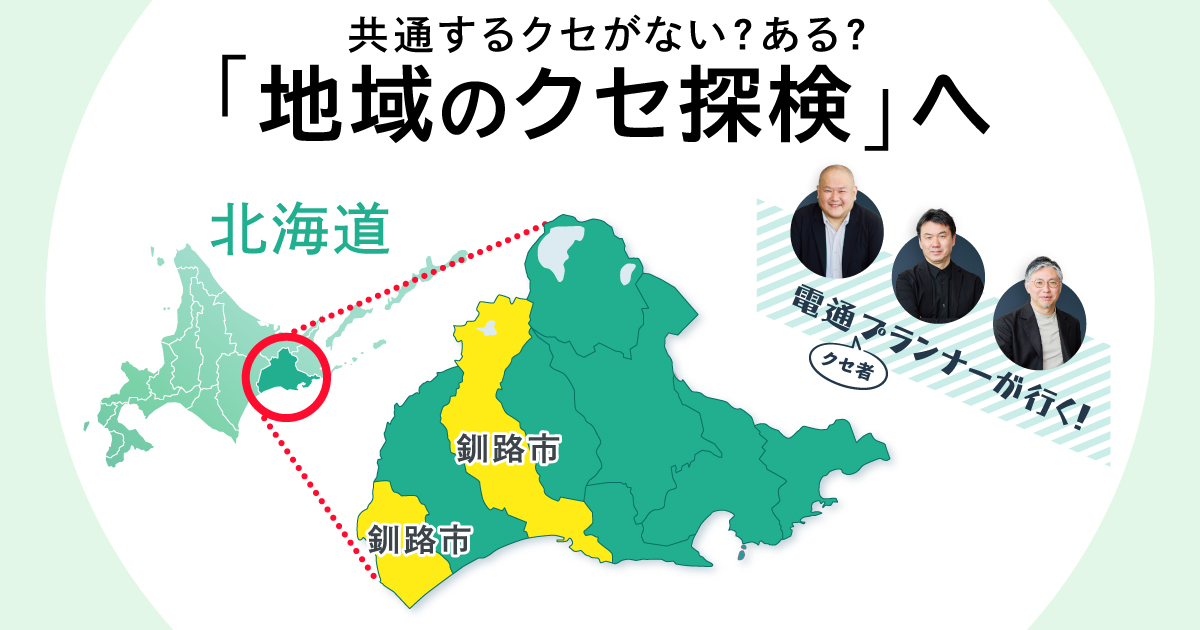
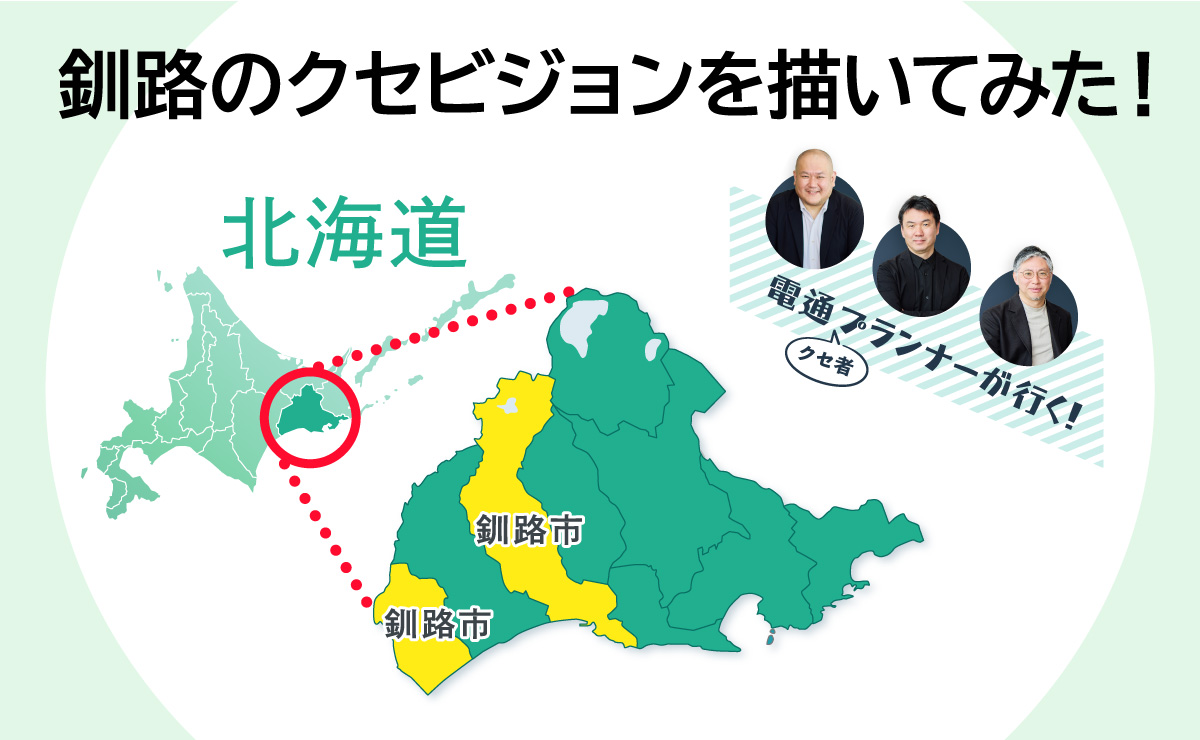
Starting this installment, we examine the "quirks" of Kushiro City, Hokkaido. What did we learn from conversations with local "quirky" community development players who insist, "There are no regional quirks here"?
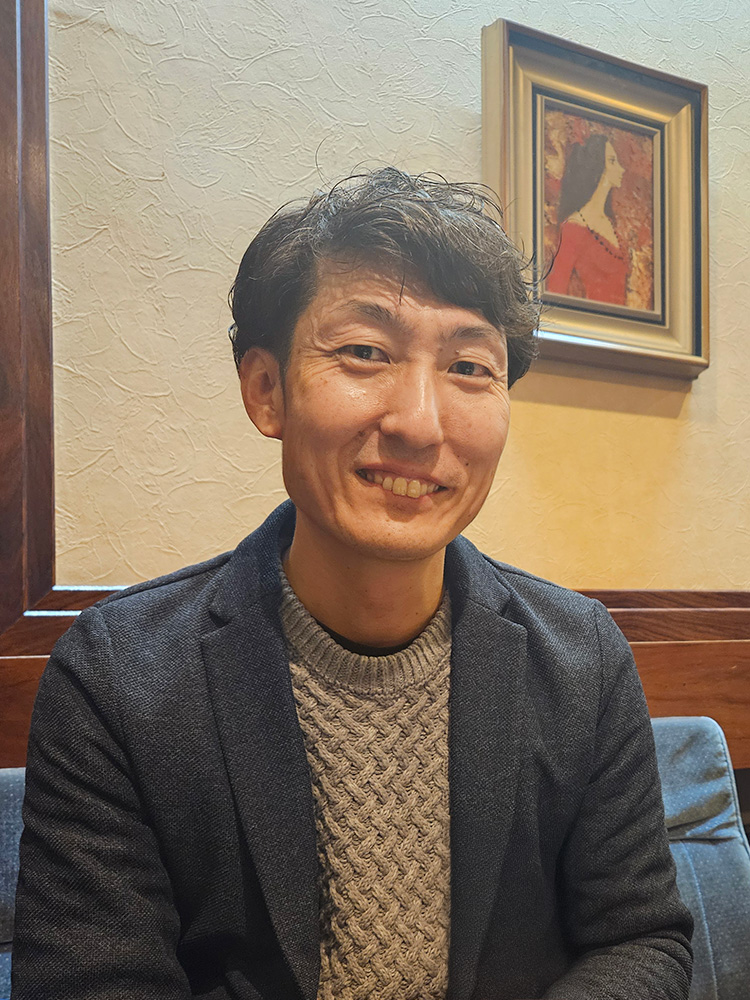
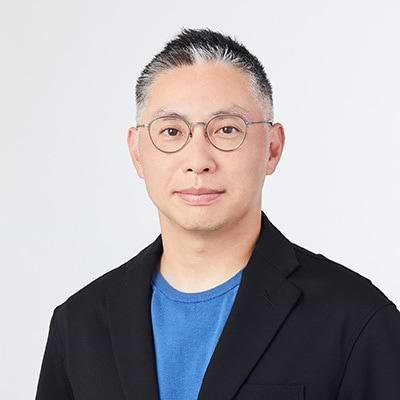
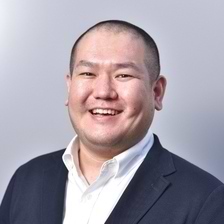
This installment is brought to you by three "quirky" individuals: Toshiaki Morio of 47CLUB Inc., Takuya Kagata of the Global Business Center, and Nobu Miyazaki of Dentsu Inc. Business Transformation Creative Center.
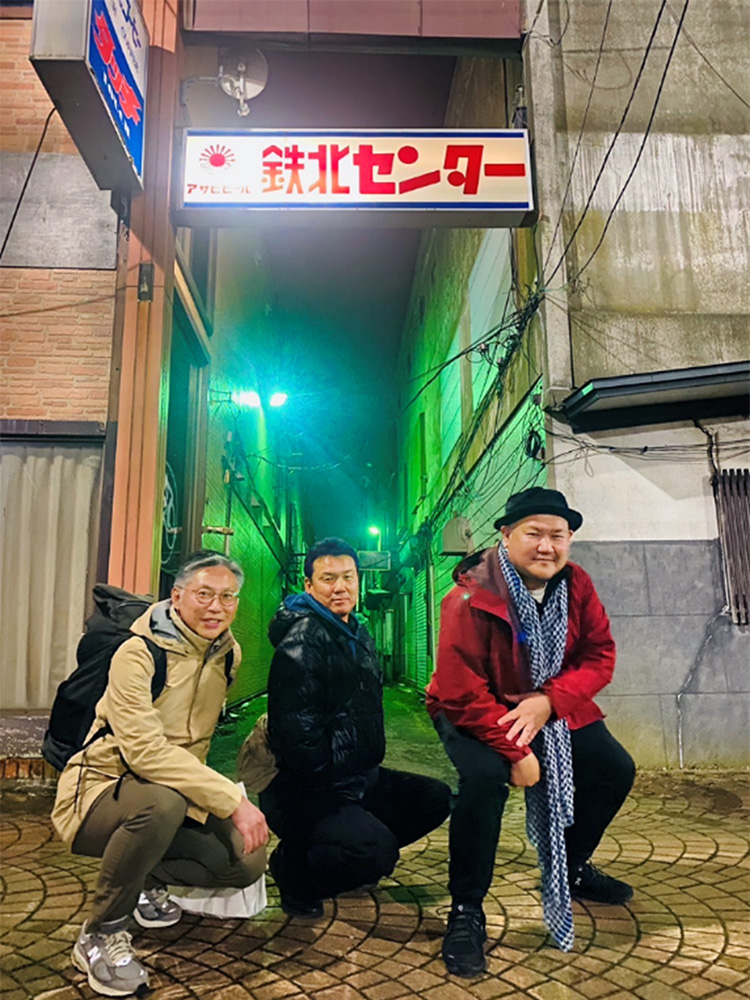
From left: Mr. Miyazaki, Mr. Morio, Mr. Kagata. This interview was conducted between February and July 2025.
Next Destination: What Kind of Town is Kushiro City, the "Ice Capital"?
Kagata: From this point on, we'll shift our focus to exploring the "quirks" of Kushiro City in Hokkaido.
Miyazaki: Mr. Morio has deep ties to Kushiro, right?
Morio: I was seconded from Dentsu Inc. to an NPO called the Akan Tourism Association Community Development Promotion Organization, where I mainly worked on tourism initiatives. The reason I chose Kushiro this time is that while the way a town grows varies from region to region, I thought it would be worthwhile to work on drawing a "vision" (the region's potential for growth) as an extension of its quirks.
Kagata: We touched on the idea of drawing a vision from quirks last time, using Omitama as an example. What we've discussed in this series so far is viewing the quirks existing in a region as resources and then drawing a vision based on that potential for growth.
Miyazaki: By the way, what perspective do you mean by "worth pursuing"?
Morio: Kushiro City has a mature history, having experienced all the major economic turning points of postwar Japan. Precisely because of that, it has complex challenges and "quirky" players tackling them. Creating a shared vision in such an environment is "S-level difficulty" (laughs). But that's exactly why we saw value in it and invited you two to visit.
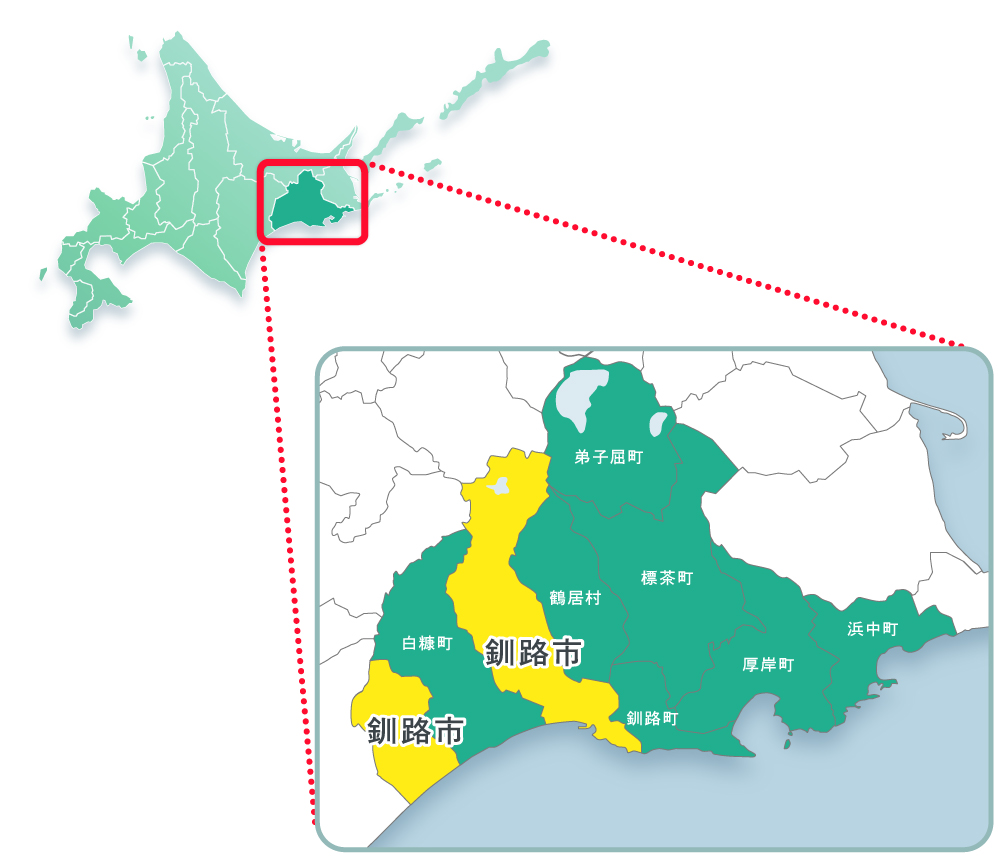
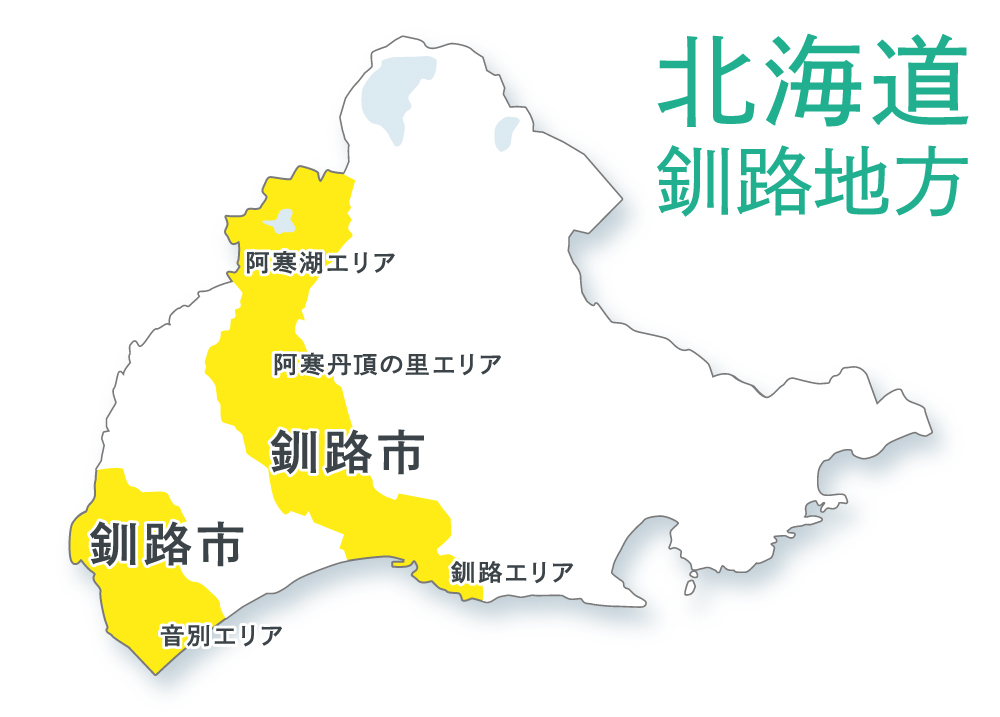
To briefly explain Kushiro City: It's located in eastern Hokkaido (Doto region), a port town blessed with forests, lakes, and wetlands. Historically, it had coal mines, served as a base for the North Pacific fishing industry, and hosted a large paper mill. By the 1970s, its population was booming, nearing 300,000. The city had multiple department stores, numerous movie theaters, and a bustling downtown district with the distinctive, spirited atmosphere typical of a fishing town.
However, coal mines subsequently closed, the establishment of the 200-nautical-mile economic zone led to the decline of the North Pacific fishing industry, and the paper company also withdrew. The current population is around 150,000.
Kagata: What is Kushiro's main industry now?
Morio: Tourism is thriving now. The city includes the forests and Lake Akan, and the Kushiro Marsh, a Ramsar Convention wetland, is a treasure trove of wildlife. Supported by these abundant tourist resources, visitor numbers consistently rank within the top five in Hokkaido.
Kushiro is also known as the "Ice City," offering the unique appeal of experiencing extremely cold winters with little snow. Even in today's era of persistent abnormal heat, it remains remarkably cool—you can't go without a cardigan even in midsummer. This coolness has attracted remote workers who maintain dual bases, spending only the summer months in Kushiro.
However, there is no influx of people like in the era when coal mining and northern ocean fishing were thriving. Many worry about the city's future, and local community development players are undertaking various initiatives.
Kagata: So this time, we gathered urban development players in Kushiro City to hold a workshop aimed at drawing out a vision from the region's unique characteristics.
However, rather than jumping straight into the workshop, we first conducted individual interviews with the community development players to grasp their true feelings. Through Mr. Morio's introduction, we spoke with two pairs of individuals.
Morio: Gathering everyone together right away wouldn't have allowed us to hear their true feelings. That's why conducting these preliminary, one-on-one "under-the-radar interviews" was a crucial step.
Testimony from Katsuyuki Yoshida of Marukatsu Yoshida Newspaper Store
Katsuyuki Yoshida... Former head of the Kushiro Chamber of Commerce and Industry Youth Division and president of Marukatsu Yoshida Newspaper Store. Beyond newspaper sales, he founded the company "Kushiro Bako LLC" and created the brand "Higashi Hokkaido Tsubugai Honpo" to promote Kushiro's tsubugai (whelks) nationwide.During the COVID-19 pandemic when tourists drastically decreased, he sold "Kushiro Boxes" packed with Kushiro specialties via mail order. He also operates the cafe "RHYTHM".
(What's the Kushiro temperament?)
Kushiro, once prosperous from coal mining and fishing , has a culture of "striking it rich." Many people in the construction industry utilize skills from coal mining, fostering a temperament that seeks large-scale projects. Historically, it wasn't a town known for steady, diligent effort.
People are generally laid-back and don't strictly set schedules at the start of projects. This temperament likely stems from the local environment, where weather (especially in winter) often dictates conditions and fish catches are unpredictable. So, they take things in stride. Consequently, they avoid making firm promises.
They avoid formalizing work processes. They flexibly adopt what's substantively good, but dislike prioritizing form over substance. ・Given the vast land and relatively sparse population, there isn't much of a regional sense of unity. However, memories of its prosperity during the coal mining and fishing eras remain. Until the 1980s, when I was in high school, there were many department stores. Some people who remember that era still haven't fully moved on from that time's atmosphere.
(What potential does Kushiro hold?)
Looking around Kushiro, I often feel it's a shame how abundant its resources are yet underutilized. It has wetlands, red-crowned cranes, the bustling Suehiro district, seafood gourmet— so many things —but they aren't tied together. There's no clear direction, no slogan saying "This is how we'll move forward!" It feels like individual measures are being taken without an overarching concept.
(What do you want to do going forward?)
I think interacting with the outside world is crucial. Since we have so many good things, I want to increase the number of people who can do business externally. In that sense, Kushiro has the capacity to be a big city that embraces diversity. However, people here aren't very good at opening up.
I hope it can become a city where outsiders and diverse people intertwine. With its comfortable summer climate and light snowfall in winter, it's a paradise for those who just need Wi-Fi. I wish people who can build the systems would come here.
(Who are Kushiro's key players?)
As Kushiro's economy shrinks, the surviving companies are filling the gaps left by those that exit. As a result, you could say the companies that survived and took over the businesses of those that left are becoming conglomerates. This means the city's challenges and their own challenges become synchronized. These players already have a "mayor's perspective" individually.
Kagata: That concludes Mr. Yoshida's remarks, which I, Kagata, have listened to. I think Mr. Yoshida is a wonderful example of a Kushiro entrepreneur.
What struck me was the commonality between Kushiro and Mr. Yoshida. While he's involved in a wide range of ventures, his original business was a newspaper distribution store.Newspapers are a globally declining industry, yet Mr. Yoshida is focused on sustaining this original business. Furthermore, he leverages the trust and resources cultivated through this original business as a "lever" to expand into various ventures. The city of Kushiro itself, facing industrial decline and population loss, shares parallels with Mr. Yoshida's personal journey. I've heard there are many such entrepreneurs in Kushiro.
For example, someone in the seafood processing industry, despite declining catches, leverages tangible and intangible assets built through their original business to expand into retail and restaurants, or to develop direct overseas sales channels. In other words, even in what seems like a shrinking industry, there are many ambitious people who are effectively using it as a "lever" to expand in various directions. And I think that's also a characteristic of Kushiro itself as a town.
Morio: We also discussed conglomerate formation, but the inherited businesses often synergize with the original industry, right? By the way, despite handling so many ventures, Mr. Yoshida himself seemed quite composed, didn't he? He tackles bold endeavors without any flashy flair.
Kagata: I definitely felt that! Starting with Mr. Yoshida, people in Kushiro don't seem rushed or impatient; they have this grounded, steady presence.Mr. Yoshida mentioned that many people in Kushiro don't create detailed business plans in advance or make meticulous appointments. That's because they're always on the lookout for business opportunities, ready to pounce. They don't get bogged down by formal "plans"; instead, they position themselves to act decisively when the moment arises. I felt this stems from the traditions of fishing and coal mining.
Morio: To cherish each moment, they prioritize flexibility over rigid structures, right?
Kagata: They've inherited that spirit of striking it rich—like hitting a coal vein or catching a huge haul of fish. That ethos even extends to related industries like construction and food service.However, precisely because major industries were always present, there's also a lack of crisis awareness. In that regard, Mr. Yoshida has an extremely strong sense of urgency: "If we don't sell Kushiro's various products outside, the town will disappear." This drives initiatives like the whelk company and Kushiro Bako.
Kushiro thrived with its major industries, but now it's entering a phase of population decline.Indeed, there are many vacant buildings, but entrepreneurs like Mr. Yoshida are stepping in to fill the gaps, saying, "Well, I'll take it on." They're doing this without being bound by traditional methods. As a result, many interesting small and medium-sized enterprises are emerging. Since they operate across industries, it's not just about their own sector doing well; in a sense, everyone has a "mayor's perspective." I felt that's where Kushiro's appeal lies.
Morio: As the range of industries expands, we're seeing more business leaders with broader perspectives. What Mr. Yoshida is focusing on now is attracting players from outside. He says it could be venture companies or challenging individuals – a town where outsiders can jump in and thrive. And he sees the future in these outsiders collaborating with the original players. Mr. Miyazaki also spoke with Mr. Yoshida. What were your impressions?
Miyazaki: The mindset of "promoting Kushiro to the outside world" is incredibly strong. They're spreading the use of the "tsubu geta" eating method for whelks nationwide. What stuck with me most from Mr. Yoshida was the "Kushiro Bako" initiative they launched during the pandemic. It started from the question: "How can we sell Kushiro's local products using newspapers when people stopped coming?" They immediately executed this kind of unprecedented approach.
Another interesting thing was when I mentioned the "Regional Quirks" series, they worried, "Kushiro is a big city with lots of people—can't we really pin it down to one quirk?" (laughs). They said the challenge is that while everyone is working on different initiatives, they aren't bundled together under one unified direction.
Kagata: I heard from several people, "There are so many people, there's no such thing as a regional quirk!" (laughs). I thought the series might be in trouble, but interestingly, as I listened to everyone's stories, distinct quirks really started to emerge.
Morio: As Mr. Yoshida mentioned, since each person has a mayor's perspective, the ideal town they envision is as numerous as the people themselves. That might seem like "disunity," but "everyone being a mayor" is itself a "trait." How this characteristic connects to revitalizing the town is what makes this so interesting.
Next up is Mr. Kagata, with interviews for the East Hokkaido Sports Commission.
Testimony from the East Hokkaido Sports Commission
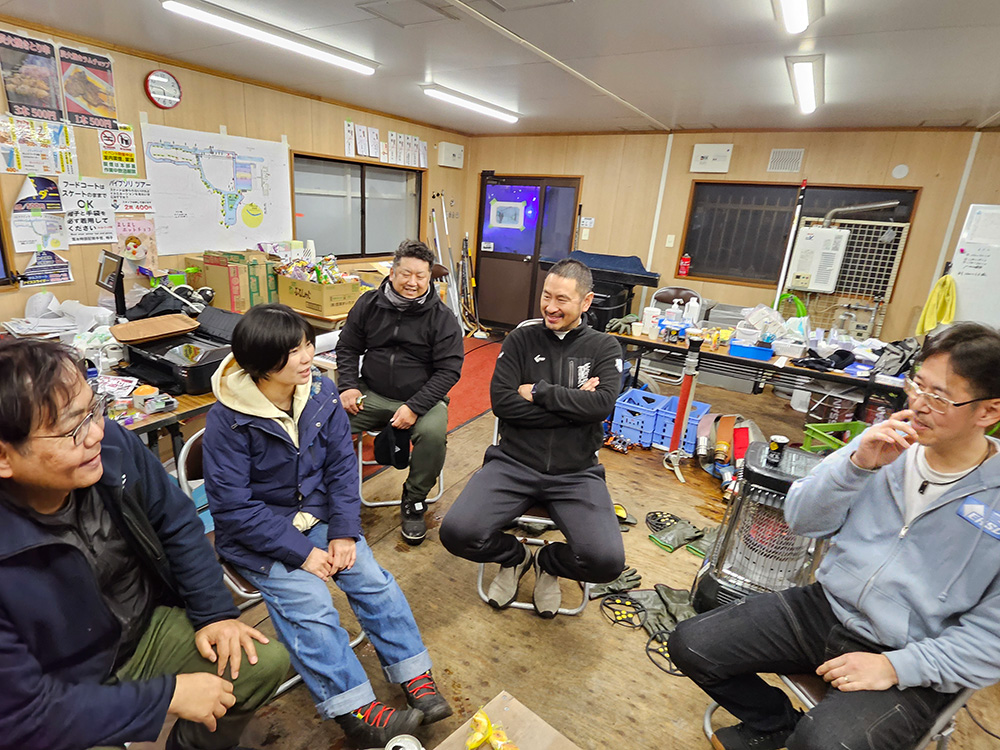
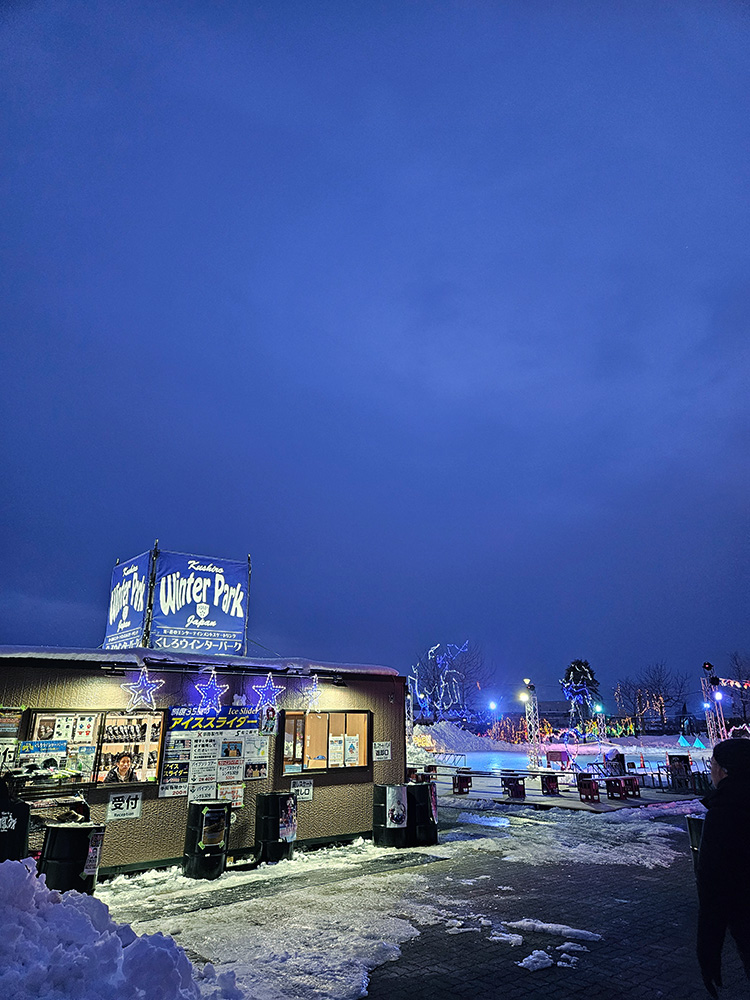
East Hokkaido Sports Commission... From left: Takahiro Shida, Rei Owada, (one seat apart) Hitomi Nakajima, Tomohiro Baba. Kushiro, known as the "Ice Capital," is a town thriving with winter sports like skating and ice hockey. The East Hokkaido Sports Commission brings together Kushiro's sports stakeholders to implement various initiatives for students and children, such as attracting and hosting training camps.They also run the annual "Kushiro Winter Park" initiative.
Kushiro Winter Park
(What's the local character like?)
People here love new things but lose interest quickly, often returning to Kushiro's own classics. Many prefer Izumiya's "Spaghetti Cutlet" over any Italian restaurant, and Kushiro ramen over any other ramen.
Even if something experienced in Tokyo or Sapporo is trendy and cool, such shops don't catch on in Kushiro. Instead, they show their presence by treating others at old-fashioned snack bars. Even today, such actions carry a certain status.
When new things become trendy again, you might hear, "Why isn't it in Kushiro?" or "Kushiro folks got bored and it left, right?"
People rarely post on social media themselves, and live events don't get very lively. Maybe everyone's just shy.
They're kind to outsiders. But their love for the local community is a bit lukewarm.
(What is the purpose of the East Hokkaido Sports Commission's activities?)
It's not about wanting to do new things. It's about breaking through what needs to be broken to keep the city alive. Because if things stay as they are, the outcome is already clear.
I think it's good when adults act like kids and get excited. It's play, so let's take it seriously. It'd be great if we could improve the town while laughing together. But we don't force people into these activities. It's better if it spreads naturally.
Everyone being happy is just an ideal. There will always be opponents. If the people doing it aren't having fun , it won't last. If we enjoy ourselves, I think a few people around us will start to feel a little happier and more joyful. If you start saying "everyone should be happy," you end up sacrificing yourself.
If we were to attract people to this town, we'd want venture types or oddballs. Above all, I think the most important thing is a sustainable sense of excitement.
(What characterizes Kushiro's community development players?)
Zangi (Kushiro Zangi Promotion Council), ramen (Menyu-kai), and Marimo (Marimo Kushiro Promotion Team) all gather freely. They don't become one entity, nor should they.
What people find fun varies. Gathering naturally means sharing that "fun." If that benefits the city, that's great.
I think it's good to have many boats, each with its own helmsman, loosely cooperating. Rather than following the helmsman of a big ship, I want to catch the prey I like. It's like the image of farming-oriented Obihiro versus hunting-oriented Kushiro.
Kagata: Loving new things but ultimately returning to the classics—that aligns with what Mr. Yoshida said too.
Morio: When a nationally famous Italian restaurant opens, everyone gets excited and goes, but they always end up coming back to Izumiya's spaghettikatsu (their signature dish: spaghetti topped with tonkatsu).
Kagata: And since it's a big city, even when someone comes to Kushiro for a live show! or when they announce, "We're having this festival!", a lot of people still don't know about it. You mentioned that lack of unity (laughs). On the other hand, you also feel a sense of crisis precisely because it was once prosperous.
Morio: Especially, the older generations aren't necessarily supportive of new initiatives, as was mentioned. They say they don't necessarily want to do new things themselves.
Kagata: Another point everyone emphasized was "doing what we genuinely want to do" and "above all, doing what we find enjoyable." This aligns with what Mr. Yoshida said too – meticulous long-term planning tends to get tainted with falsehoods. Instead, the focus is simply on making this year fun. As a result, things keep getting better every year.
This time, I actually visited "Kushiro Winter Park," and I was truly impressed by the quality of the ice slides you all created (laughs).I often travel to heavy snowfall areas for work or skiing trips, and looking back, I've slid down quite a few "snow slides." But in terms of height, angle, speed, and the course afterward—I've never seen such a perfect slide. Ah, I realized, this level of perfection comes from focusing on making the best possible slide for "this year" every single year.
Kagata, who has experienced countless ice slides, calls Winter Park's slide "an unquestionably perfect masterpiece."
Morio: Winter Park has a skating rink that loops through the park like a promenade, designed specifically for Kushiro kids to enjoy more than anyone else. It's a proper rink with no handrails and ups and downs – in a way, it's so authentic that visitors from Honshu probably can't skate properly on it (laughs).
Kagata: Above all, there was a consistent attitude of wanting to entertain the children of Kushiro, and wanting to enjoy it themselves. They were truly enthusiastic about it.
Miyazaki: Winter Park started as a completely self-funded initiative, right? They mentioned that over the years, it grew into a major event, attracting more people and companies, and eventually reached a point where it became financially viable. Even though they say they don't plan things out, it's amazing how they've managed to build something sustainable.
Morio: Exactly. Their goal is "sustainable excitement." Their consistent stance is that if they themselves aren't excited, the children watching won't be excited either. The East Hokkaido Sports Commission's initiative is about naturally passing that excitement on to the children.
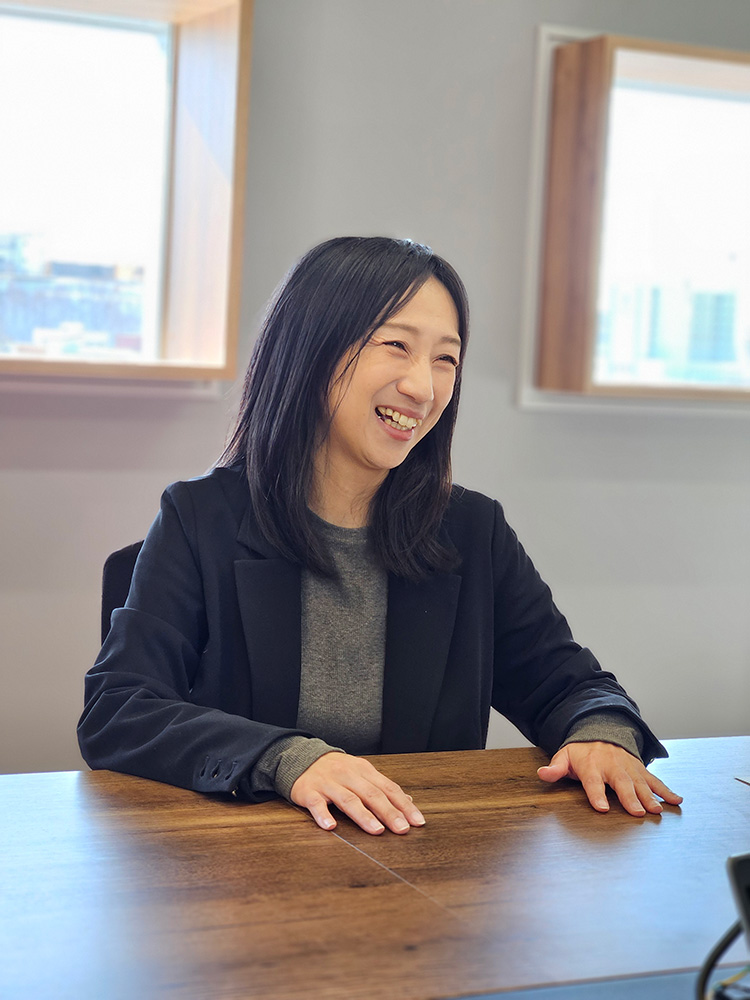
Finally, we have Ms. Kana Harada (Kanae Harada), whom Ms. Miyazaki interviewed.
Kana Harada's Testimony
Kana Harada... As a freelance tourism creator, she is dedicated to developing tourism content for Kushiro.A multi-talented individual with various catchphrases like "ballpoint pen artist who can also be a bus guide" and "the bus guide who gets motion sickness." She occasionally serves as a guide aboard JR Hokkaido's Senmo Line trains, such as the Norokko and Winter Wetlands trains. As the proponent of the "Eastern Hokkaido Women's Travel Project," her activities are diverse, including attracting the LCC Peach Aviation. She also designed the label for Akkeshi Whisky.
(What's great about Kushiro?)
Kushiro is a composite industrial city. It's incredibly rich in resources, but perhaps because it's too rich, it's saturated, and the locals don't even realize it. Since I work in travel and tourism, I think my job allows me to understand Kushiro's appeal in a way. People who don't know Kushiro's appeal should go see other cities.
From a tourism perspective, in terms of visitor numbers, Kushiro consistently ranks in the top 5 out of all 179 municipalities in Hokkaido. You could say tourism is delivering results as a core industry . Yet, despite being such a tourist city, the citizens themselves aren't aware of it. It feels like a one-sided effort, like we're trying hard but no one else notices.
(Thoughts on the younger generation)
When I ask young people what they're proud of in Kushiro, they mention things like the sunset or the Nusamai Bridge. But the real center of their daily lives is AEON. I wish the center of their lives and the things they're proud of could align. I want the heart of the city to be a space where high school students spend their money.
High schoolers might feel like they can't do anything in Kushiro. I want the younger generation to feel the same opportunities adults perceive. I want them to realize it. If they truly understand, they will truly change.
(Kushiro's Goal as a Tourist Destination)
It would be great if we could establish how to use Kushiro City as a "port." So people can gather here as a central point. And I want visitors to come to the places where we ourselves are enjoying ourselves. The premise is that citizens are enjoying it. I think it's only when people come there that they become repeat visitors. Kushiro can become a destination. People often say "travel as if you live there," but I want to "live as if I'm traveling."
Morio: Mr. Harada considers "tourism resources" from an extremely broad perspective. Mr. Miyazaki, what were your impressions after interviewing him?
Miyazaki: Given his long involvement in tourism, Mr. Harada's assessment was that "Kushiro is blessed beyond measure." It's blessed with fisheries, a national park, food resources, value, and scenery – yet locals often don't realize it. In a way, civic pride is low.
He also expressed strong concern about the youth, especially high school students. Near the Saibai Bridge, there used to be a complex commercial facility called Kushiro Fisherman's Wharf MOO, which included a Seibu Department Store and Muji. High school students used to gather there. However, with the disappearance of such facilities, the area where high school students spend their time has become separated from the Saibai Bridge area.But when you ask high schoolers, "What's good about Kushiro?" they all answer, "Hiraibashi Bridge and the sunset." He was deeply concerned about this disconnect between their awareness and their actual lives.
Morio: Mr. Harada was worried about the disconnect between the tourist hub and the areas where Kushiro citizens actually live, right?
Miyazaki: Yes, and he said he wanted tourists to experience not just the national park, but also the areas where Kushiro citizens actually live. It's like lifestyle tourism – Mr. Harada himself has a strong desire to fuse daily life with tourism. It was also striking that he said he wanted to "live as if traveling" even in the place he currently resides.
Kagata: What's the reasoning behind his concern about high school students?
Miyazaki: This also relates to population decline. About half of Kushiro's high school students leave the city or even the prefecture for university, and half of those don't return to Kushiro. Mr. Harada analyzes that this is likely because young people feel, "Maybe there's nothing I can do in Kushiro," or "Maybe there aren't companies I want to work for here."
But as you can see from Mr. Yoshida and the folks at the East Hokkaido Sports Commission, there are adults out there taking on new challenges and having fun together. We want Kushiro's high school students to know about that too. We want them to see that if they come back to Kushiro, fun jobs like this are waiting for them, or that it's a city where you can create new jobs.
Kagata: The East Hokkaido Sports Commission joked about "no successors," but actually, high schoolers help manage the slides, and there's a clear flow where the "fun" aspect is being passed on.
Miyazaki: That's right. But one of Mr. Harada's concerns is the significant gap in awareness between business owners, chamber of commerce members, and the general public. There seems to be a structure in Kushiro where people think, "The bigwigs are having fun with it, but it doesn't concern us."
That's why he mentioned the need for a "pathway," so to speak. He suggested it would be good if young people from the "general public" side could also see a clear route to becoming players in town development, perhaps by starting their own businesses. If such role models or real examples increase, high school students might start thinking, "Maybe we can find enjoyable work in Kushiro too."
Morio: Mr. Harada's primary concern seems to be the excessive disconnect between community development players and ordinary citizens, or between tourist destinations and residential areas.I often use the phrase "shifting from tourism to related industries." I don't think we're in an era where tourism is just about sightseeing anymore. It's not just about visiting typical tourist spots; when visitors interact with Kushiro citizens and get a glimpse of the real local life, it increases repeat visitors and creates a deeper dimension to tourism.
And when outsiders experience Kushiro's deeper charm, finding joy and delight in it, that can also foster civic pride among local children.
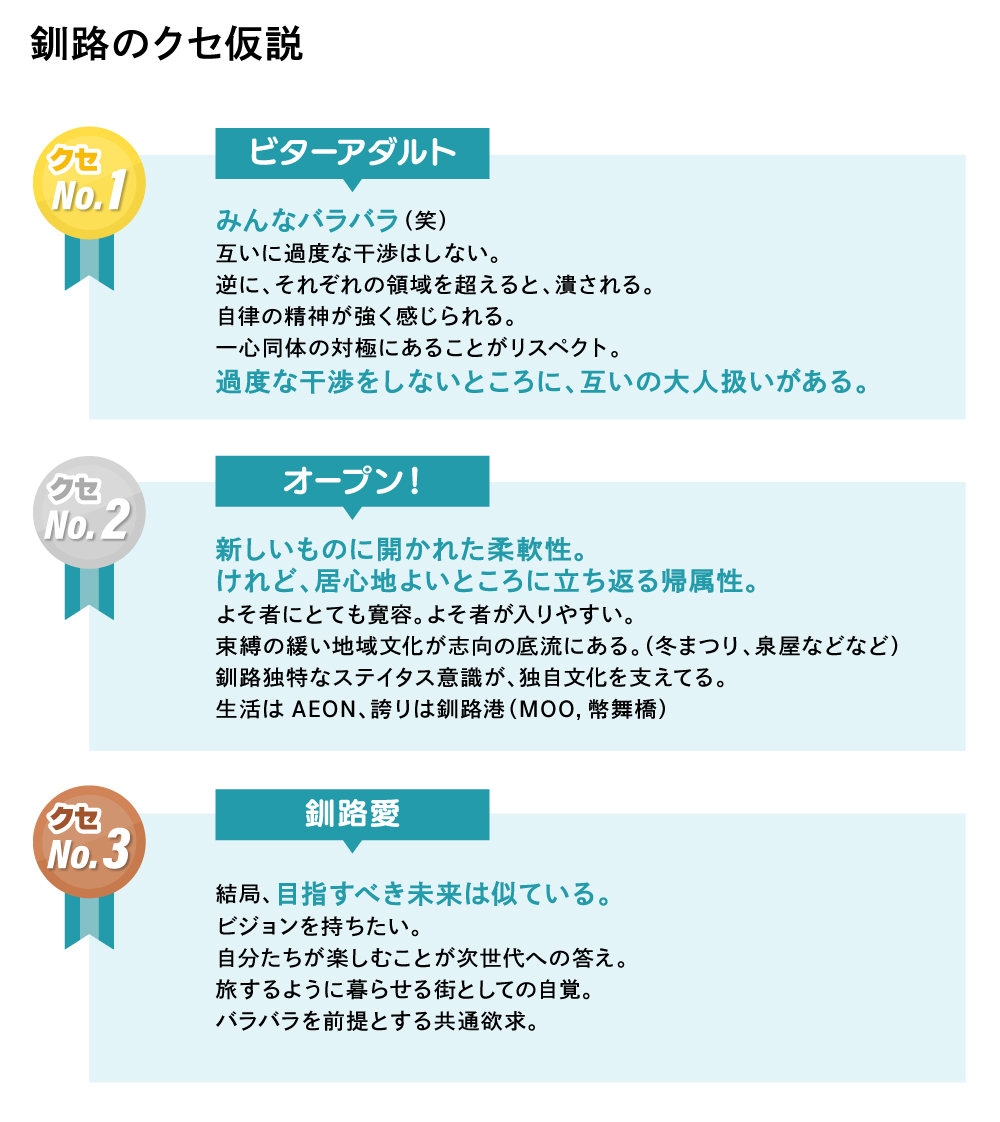
We formulated a hypothesis about Kushiro's quirks
Kagata: After interviewing these three groups, we three discussed how, despite seeming disparate, there might be an underlying "Kushiro quirk" at the core. Together, we listed the "sources of these quirks" and formed the following hypothesis.
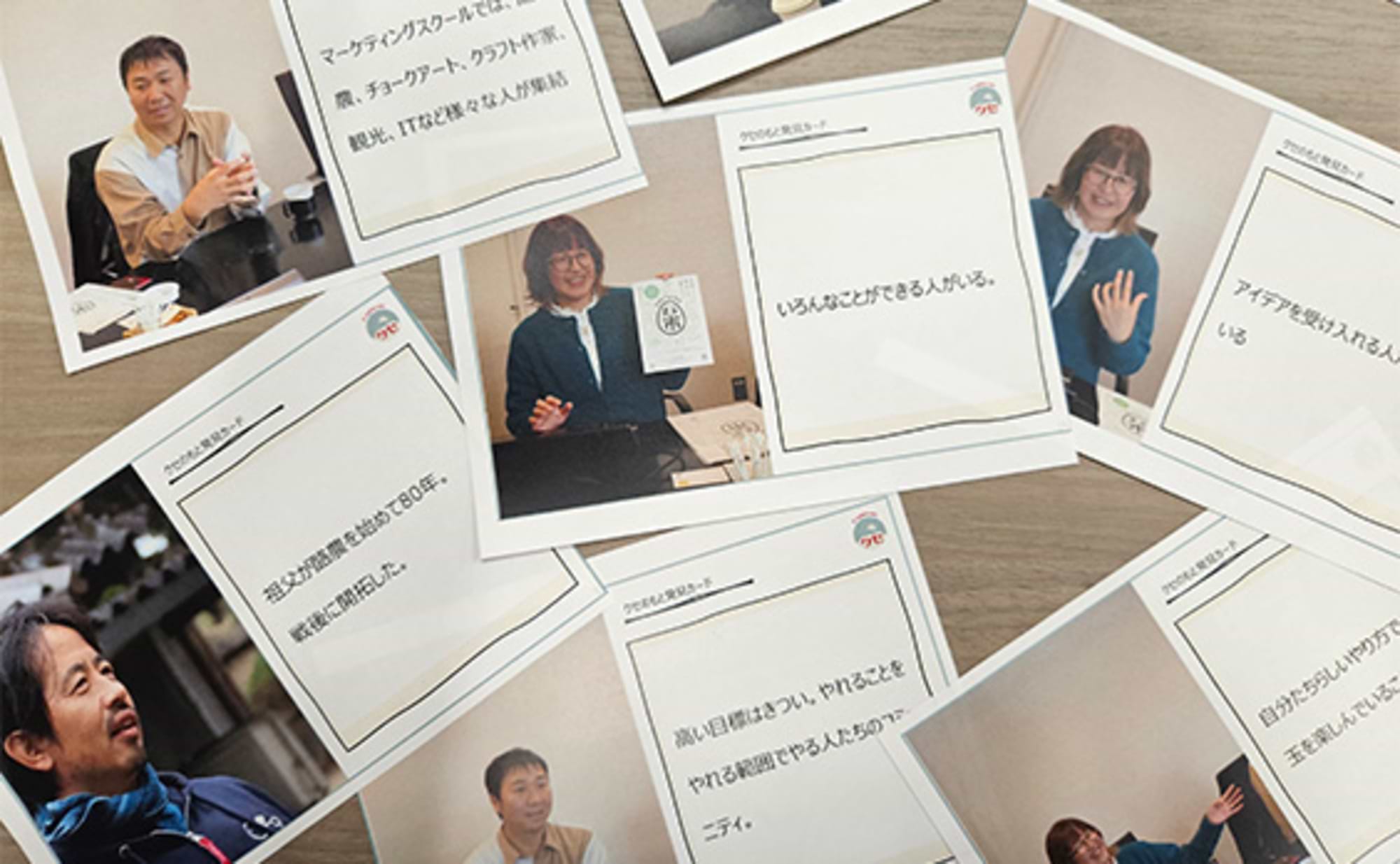
Morio: So, armed with these quirk hypotheses, we flew back to Kushiro and held a workshop to test these hypotheses directly with the people involved.
Kagata: What kind of ideas and visions will emerge from these seemingly disparate Kushiro quirks? We'll deliver that next time!
<Summary of This Session>
To uncover "regional quirks" that connect to a "resource-expansion vision," let's engage with people and unravel them.
In quirk-finding interviews, delve into the background of actions and even emotions. Create a space where people can speak openly, including their feelings, rather than just sharing knowledge or achievements.
Listen to the voices of several key individuals. Sometimes, quirks might be hidden in seemingly disparate or differing opinions!
After serving as a strategic planner at Dentsu Inc., he engaged in regional solutions, including participation in the Tohoku Reconstruction Support Network. He served as an Industrial Creation Advisor for Iwate Prefecture and as Director of DMO Promotion at the NPO Akan Tourism Association Town Development Promotion Organization. Subsequently, he served as an expert/advisor at the Japan Tourism Agency, the Ministry of Agriculture, Forestry and Fisheries, and the Japan Patent Office. His primary areas of expertise are regional product branding, tourism promotion, and industrial development.
After joining Dentsu Inc., I leveraged my experience in magazine publishing to collaborate with editors on content development and campaign planning for clients across diverse industries. Since 2018, I have participated in the "Dentsu abic project," an industry-academia collaboration supporting regional branding, serving as its representative since 2022. I plan and drive projects that re-edit regional assets from Hokkaido to Kyushu, branding them through collaboration and co-creation with local players.
Supports corporate business design at Dentsu Marketing Division ~ Dentsu Digital Inc. ~ Dentsu Consulting Inc., including an insurance company's 2050 vision, an automaker's smart city concept, and a food company's new ventures. Currently involved in business planning and service design in Japan, India, ASEAN, China, and Taiwan. Specializes in consulting with an urban engineering background and facilitation that breaks down silos. Captain of the Dentsu Sumo Club. Right-handed. Signature move: Ushiro Nage (back throw).

 Local "quirks" hold the key! How to build sustainable regional economies [6/7]