How can Dentsu Inc.’s creative team contribute to the ever-evolving field of CX (Customer Experience)? “Monthly CX” is a series of articles written by members of Dentsu Inc.’s dedicated CX division, the “CXCC” (Customer Experience Creative Center) ( click here for more on Monthly CX).
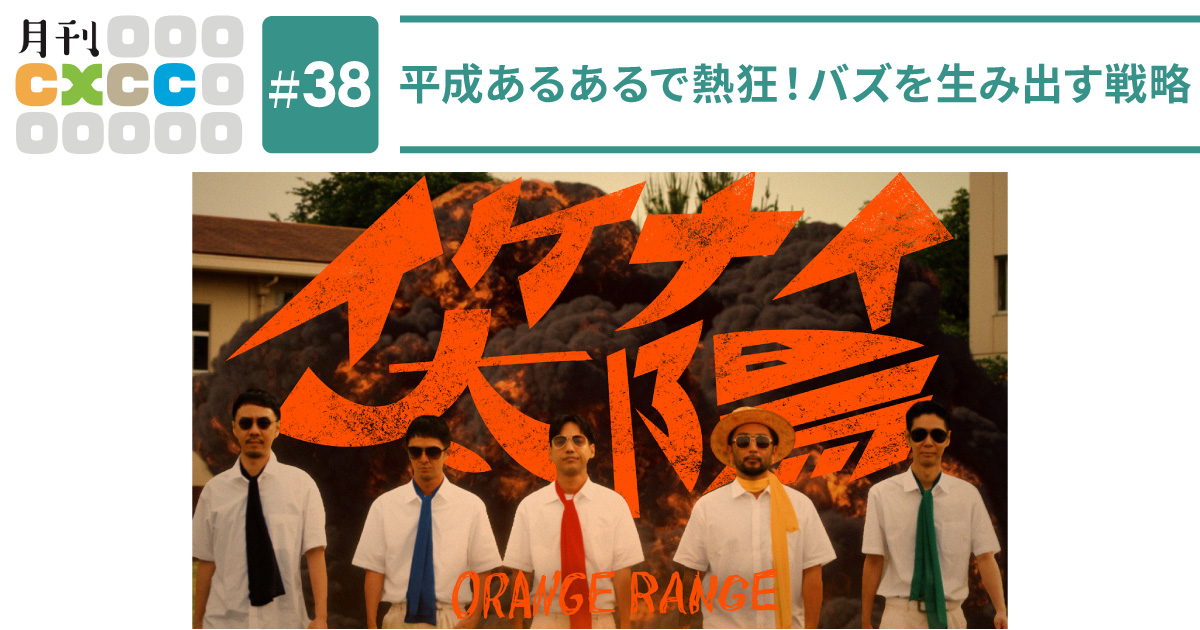
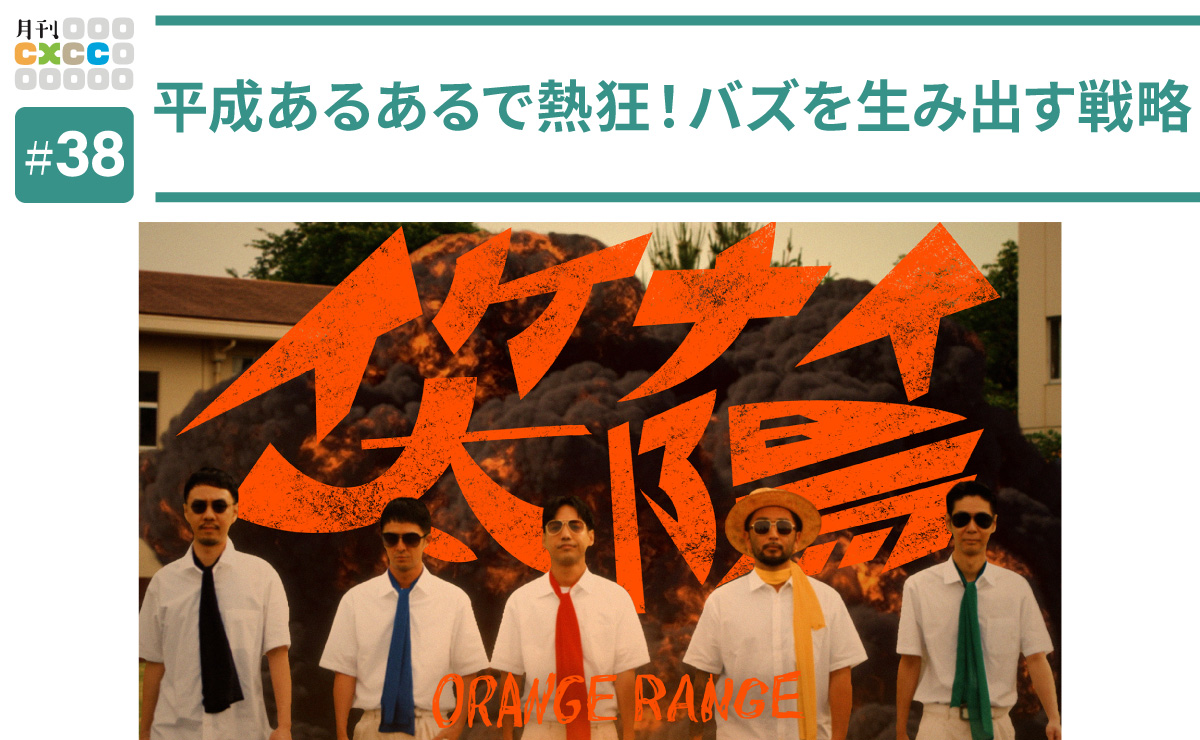
This time, we’re featuring the music video (MV) for ORANGE RANGE’s “Ikenai Taiyo (Reiwa Ver. Music Video).” Created for the “Heisei ORANGE RANGE generation”—primarily people in their 30s—this MV generated a huge response, ranking No. 1 in Japan and No. 14 worldwide for weekly views on YouTube.
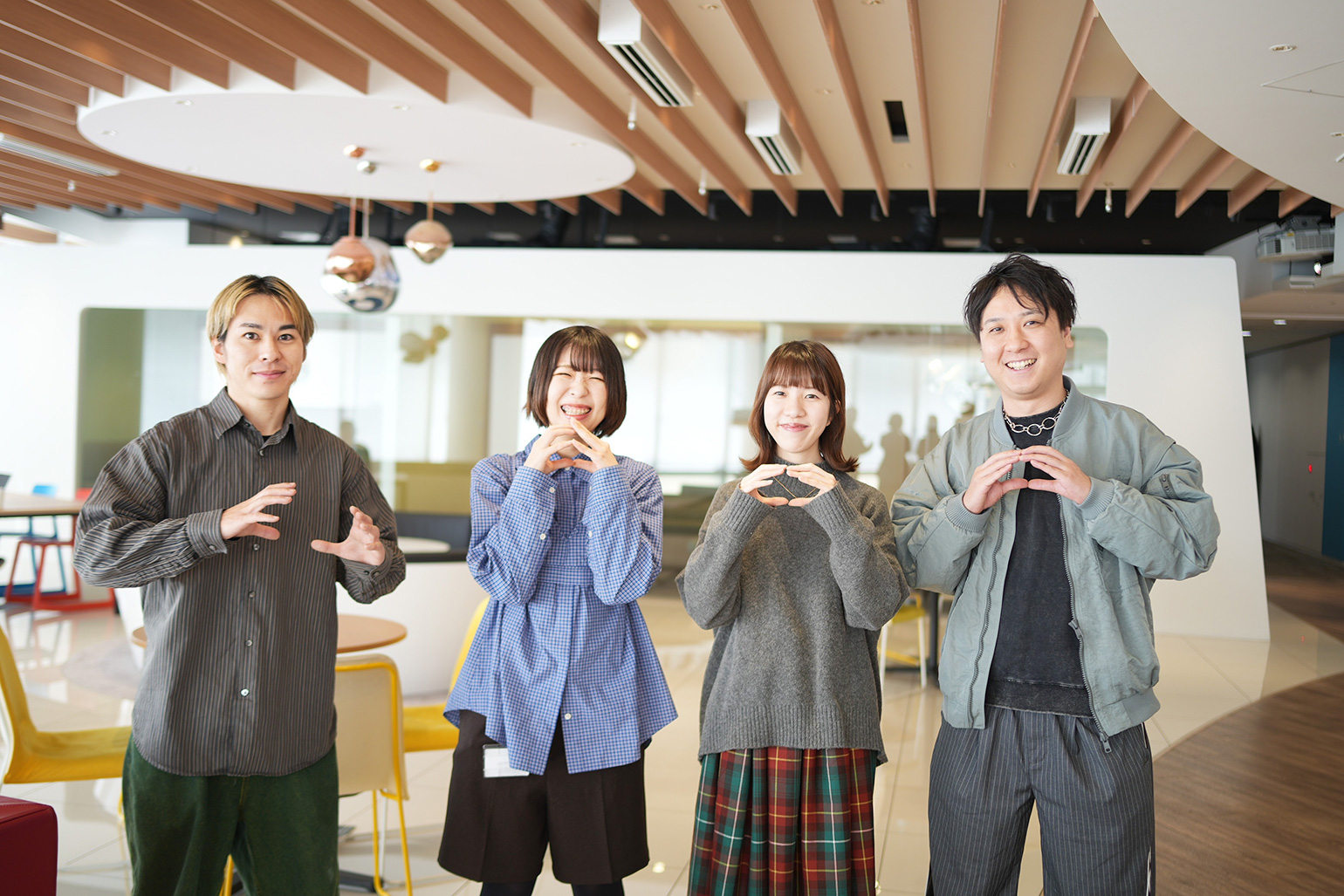
Why did they decide to create this MV, and what creative approaches were taken during production? We spoke with Yuta Sawada and Genki Akiyama, who were in charge of planning, as well as Art Directors Kano Komori and Risa Saito.
[Yuta Sawada Profile] Dentsu Inc. Creative Planning Division 3 Copywriter Joined Dentsu Inc. after earning a master’s degree in Marketing Science. After working as a data scientist at the Data & Technology Center for five years, he assumed his current position. As a data-savvy copywriter, he consistently plans advertising campaign strategies, concepts, AI implementation, and effectiveness verification.Specializing in the entertainment sector, she has provided marketing communications support for numerous artists and anime titles. She has received numerous awards for copywriting and TV commercials, including the Senden Kaigi Award.
【Profile of Genki Akiyama】 Dentsu Inc. Customer Experience & Creative Center Planner / Copywriter He is responsible for planning TV commercials, designing social media posts, and planning and producing integrated digital promotions.
[Profile of Kano Komori] Dentsu Digital Inc. Art Director / Designer / Illustrator For ORANGE RANGE’s “Ikenai Taiyo (Reiwa Ver. Music Video),” she was responsible for the logo, the music video’s title thumbnail, and poster design. She is active in a wide range of fields, not limited by her job title.
[Profile of Risa Saito] Dentsu Inc. Customer Experience Creative Center Art Director / Designer / Illustrator For ORANGE RANGE’s “Ikenai Taiyo (Reiwa Ver. Music Video),” she was in charge of poster production. While working on a variety of projects, she is currently exploring her areas of expertise.
*Affiliation and title are as of the time of the interview.
ORANGE RANGE’s “Hot Summer★” Project, Which Began with a Single Viral Moment
Monthly CX: Please give us an overview of the promotion for ORANGE RANGE’s “Ikenai Taiyo.”
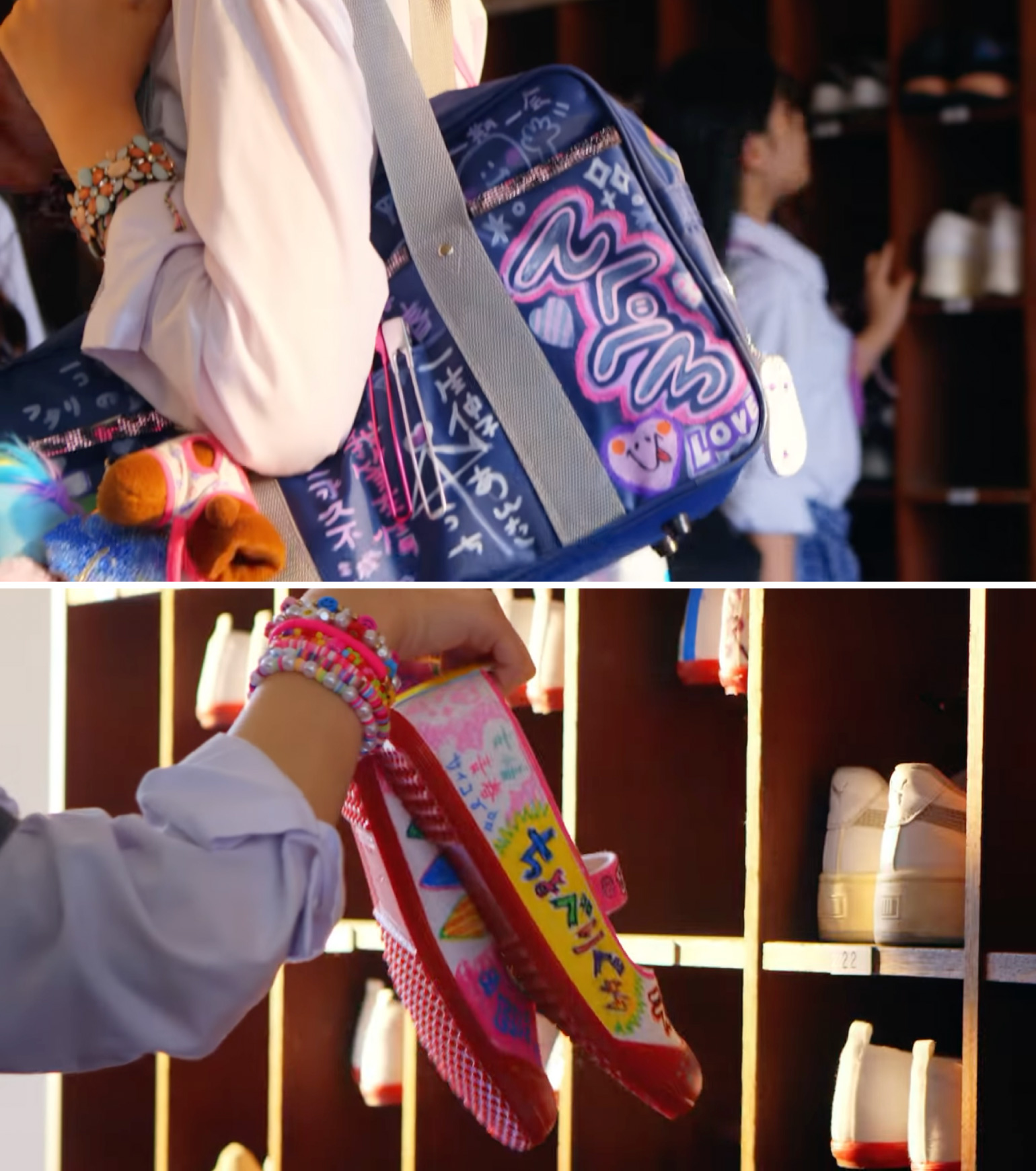
Akiyama: This music video was produced as a rebranding project for ORANGE RANGE, who returned to Sony Music in 2025 after an absence of about 15 years. Since the production team was from the same generation as ORANGE RANGE, we planned it with the goal of creating “a music video that resonates with our peers.”Set at “Midsummer Hill Koiiji Renji Academy,” the video features ORANGE RANGE members and the duo Mayurika, and is sprinkled with 72 “Heisei-era 2000s” references.
Furthermore, under the title “Natsu-i Natsu★Project,” we implemented a range of initiatives to boost buzz, including videos paying homage to Mayurika’s comedy routines, social media campaigns, promotions at izakayas and karaoke bars, limited-edition original T-shirts, and a poster takeover at the Hiroshima amusement park “Miroku no Sato.”
As a result, the campaign reached No. 1 on X and garnered over 21 billion total impressions across all media, including social media. The music video surpassed 20 million views on YouTube, ranking No. 1 in Japan and No. 14 globally in weekly views, becoming a major sensation, particularly on social media.
When we were commissioned to produce the new music video, the KPI was a challenging one: “Get ‘Ikenai Taiyo’ into the top 100 on Apple Music.” We were thrilled to not only far exceed that goal by reaching a peak position of No. 27 but also to see the song remain on the charts for an extended period. Furthermore, this music video served as the catalyst for ORANGE RANGE’s appearance on the NHK Red and White Song Contest.
Monthly CX: So the production of the new music video began with a request from the client.
Akiyama: That’s right. It all started when we proactively pitched a rebranding plan for ORANGE RANGE to Sony Music Labels (hereinafter SML) at the end of 2024. The SML representative in charge of ORANGE RANGE is from our generation and had spent his youth listening to ORANGE RANGE, so he said, “Let’s work together to make this a success!”
Around that time, Mayurika performed a skit on the “M-1 Grand Prix” where they used “Shanghai Honey” as their school anthem. So, I immediately created some visuals to match the skit and sent them to the person in charge. They posted them on X right away, and it became a hot topic. This also served as a catalyst, leading to us being commissioned to produce the new music video for “Ikenai Taiyo.”
#Mayurika, that was a passionate comedy routine! 🍊
The key to their victory: “It’s not just about being cool—it’s about capturing the spirit of the Heisei era”
Monthly CX: The music video was incredibly well-made and received a lot of attention on social media and in the news. What was the most important point for you during the planning stage?
Sawada: We wanted to differentiate ourselves from the Heisei era that’s often stylishly referenced in the Y2K boom, and instead recreate the unique atmosphere specific to the Heisei era. We aimed to recreate the distinctive vibe of the 2000s to 2010s—an era that wasn’t just cool, but also had a certain endearing tackiness.
Akiyama: Since Sawada and I are part of that generation, we prioritized the perspective of “Does this excite us? Does it resonate with us?” Because we adopted a strategy of narrowing our target audience to our own generation, we were a bit anxious before the release. But thanks to that focused approach, I think we were able to pursue content that really resonated with our viewers.
There was a comment on the music video we posted on YouTube saying, “The production meetings must have been a lot of fun,” and it really was.
Sawada: Even with the relatable humor, I think we managed to hit that perfect balance—things that hadn’t been put into words before, but when someone says them, you go, “Oh, that’s right!” and slap your knee in recognition.
Monthly CX: Were there any specific strategies you employed on social media to generate buzz?
Sawada: We prepared creative strategies tailored to each phase: building excitement with teasers before the launch, promoting the content directly on the day of release, and then sustaining the buzz afterward.
Akiyama: This project moved at a breakneck pace—it was like “creating today what’s set to be released tomorrow.” For example, the day after we received a comment saying, “I want to see this as a karaoke video,” we posted content that incorporated that request. I think our ability to move quickly and nimbly really contributed to the overall momentum.
As a viewer myself, I really enjoyed thinking about what kind of posts would be interesting for this project. It was also great to work closely with the SML representatives and the digital team.
Focusing on a "Heisei-era" vibe, we pursued creative work that holds meaning for release in the Reiwa era
Monthly CX: Please tell us about the scope of responsibilities for Mr. Komori and Mr. Saito, as well as the creative approaches you took in developing the work.
Komori: I was mainly in charge of the logo and the music video title thumbnails. Visually, I went through a lot of trial and error to ensure the design felt meaningful for the Reiwa era—retaining elements from the old logo while incorporating vivid colors that weren’t present in the Heisei era.
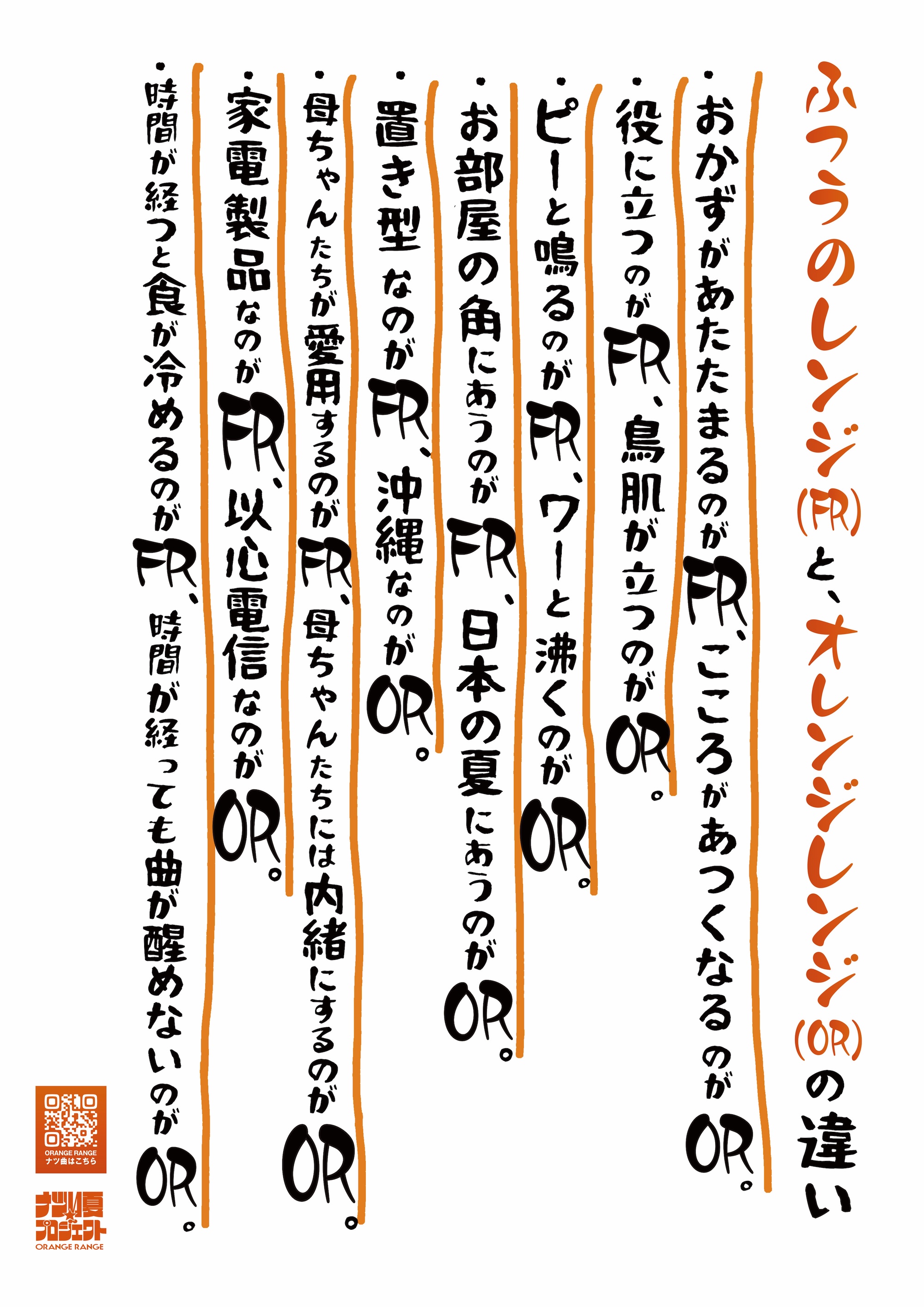
Saito: I was in charge of poster production. In addition to the elements of “Heisei-style” and “summer,” the key point was intentionally leaving a slightly cheap, approachable vibe—avoiding making it too stylish.
Saito: For the first poster, I thought it would be interesting to combine summer motifs—cucumbers and eggplant spirit horses—with ORANGE RANGE elements, so I drew the watercolor illustrations myself. For the second poster, which compares a microwave oven to ORANGE RANGE, I focused on creating something that would convey a genuine Heisei-era feel even to people outside that generation.
Monthly CX: Wasn’t it difficult to produce the creative work under such tight deadlines?
Komori: That’s right. Speed was crucial for this project. We learned that to ride the wave of a major viral trend, timing is everything.
Sawada: The MV logo, which was created despite the tight deadline, effectively captures the energy of that era in an abstract way, and I think it left a strong impression on viewers!
The music video showcased the director and art team’s meticulous attention to detail. Did you spot any “hidden inside jokes”?
Monthly CX: Is there a scene in the music video that particularly stands out to you?
Akiyama: The scene where all the cast members gather and sing by the pool. Watching it on set, I felt a surge of emotion and thought, “I’m so glad to be alive.” Hearing ORANGE RANGE’s live vocals echoing through the school pool brought back memories of my own elementary school days—it really moved me.
Sawada: Despite the short production schedule, the director, production team, and art staff really went above and beyond. I imagine it was tough to gather the cast and crew and prepare the sets in just one month, but the production team was from the same generation and had a deep love for ORANGE RANGE, so they put a lot of care into creating the classroom set and other details.
Monthly CX: It was full of things that symbolize the Heisei era, and it was a joy to watch.
Akiyama: Each character has a different pair of indoor shoes, right? They also prepared several different designs for the graffiti on the school bags.
Monthly CX: So, the show is sprinkled with Heisei-era "relatable moments" right down to the smallest details. When coming up with these relatable ideas, what were you focusing on?
Akiyama: Since Y2K-style expressions have already been done to death, we tried to find topics that hadn’t been covered yet. Things like hibiscus flowers, “kamachari” (bicycles with handlebars modified to a mantis-like angle), and drinking milk tea from paper cartons in the classroom—I recalled who I was back then and thought about it as if I were time-traveling back with high resolution.
Sawada: As for the relatable moments, music video director Shota Nakano made an exquisite selection from the ideas our team came up with—ones that aimed for that sweet spot between niche and mainstream. His sense of control is amazing. By adding relatable moments from both the early and late Heisei eras, I think he created a nice gradient to complement the 2000s-focused ideas we came up with.
Monthly CX: Finding 72 different ideas was one thing, but wasn’t it also difficult to incorporate them all into the video?
Akiyama: Actually, we debated right up until the very end whether we should include all 72. Even during filming, we couldn’t confirm if we had all of them, but when we counted them after completion, they were all there, so we were relieved.
Saito: It was also really nice that viewers went out of their way to find and list all 72 Heisei-era “that’s so true” moments. Some people even pointed out things that were accidentally caught on camera—unintended details—as “that’s so true” moments, which was a fun discovery for us on the production side too (laughs).
We created a buzz that felt like a social phenomenon. We want to continue working on projects that people will want to talk about.
Monthly CX: What were your thoughts in response to the project’s reception?
Sawada: When I heard people at hair salons or restaurants talking about the music video with the person next to them, I really felt that a lot of people had watched it. I became convinced that it’s those little, often unspoken “relatable moments” and nostalgia that really resonate with people and make them want to talk about them.
Akiyama: In today’s world, with its diverse “subcultures,” seeing the music video’s comment section turn into a sort of reunion for the ORANGE RANGE generation taught me that a generation itself can be a kind of community. It also made me realize once again just how powerful ORANGE RANGE is.
Komori: We received comments like, “I’m so happy ORANGE RANGE is making a comeback,” and “It made me want to work hard tomorrow.” It made me happy to know we had a positive impact on someone’s life, even if just a little, and it reaffirmed my resolve to approach design with even greater dedication.
Saito: This was the first project I worked on since joining the company, and I was thrilled to be involved in music video production, which I’ve always been interested in. After this MV, I felt like there was a bit of a real “Heisei boom” happening, and I realized just how much influence we can have—that music video production can actually spark a new trend.
Monthly CX: Is there anything you’d like to tackle in the CX field going forward?
Saito: I want to create things that actually make people want to go out and experience them. I’d like to be involved in offline events and projects that make use of my expertise in illustration.
Sawada: I want to plan promotions based on my own hypotheses, such as “relatable themes resonate” and “nostalgia strikes a chord with specific generations,” just as we did this time. I enjoy taking abstract concepts and turning them into concrete, buzzworthy ideas, so I hope to continue contributing to CX by testing these ideas in future projects.
Komori: I’ll keep working hard to create strong visuals that further amplify the impact of our projects.
Akiyama: I’d like to be involved with content and IP, and I think it would be exciting if we could eventually create our own.
(Editor’s Note) In this article, we introduced the music video for ORANGE RANGE’s “Ikenai Taiyo (Reiwa Ver. Music Video).”
During the interview, seeing the members talk with such genuine enthusiasm made me feel as if I had slipped back in time to a classroom after school. When creators enjoy what they’re making, that passion spreads beyond the screen. I feel like I witnessed the very essence of creativity.
If you have any requests for future topics or themes you’d like us to cover, please send a message to the Monthly CX editorial department via the contact page below. Thank you for your continued readership.
Monthly CX Editorial Department Dentsu Inc. CXCC: Kobata, Koike, Otani, Okumura, Kosugi, E, Saito, Oda, Takakusaki, Kanasaka
The information published at this time is as follows.
After earning a master’s degree in marketing science, I joined Dentsu Inc. Following five years as a data scientist at the Data & Technology Center, I assumed my current position. As a data-savvy copywriter, I handle the end-to-end planning of advertising campaigns, including strategy, planning, AI implementation, and effectiveness verification. I specialize in the entertainment sector and have provided marketing communications support for numerous artists and anime titles. I have received numerous awards for copywriting and TV commercials, including the Senden Kaigi Award.
I am responsible for planning and producing TV commercials, designing social media posts, and planning and producing integrated digital marketing campaigns.
Kano Komori
Dentsu Digital Inc.
Art Director / Designer / Illustrator
For ORANGE RANGE’s “Ikenai Taiyo (Reiwa Ver. Music Video),” he was responsible for creating the logo and the music video’s title thumbnail. He works across a wide range of fields, not limited by his job title.
Rie Saito
Dentsu Inc.
Customer Experience Creative Center
Art Director / Designer / Illustrator
I was in charge of poster production for ORANGE RANGE’s “Ikenai Taiyo (Reiwa Ver. Music Video).” While working on a variety of projects, I’m currently exploring my areas of expertise.
Monthly CX Editorial Department
Dentsu Inc.
CXCC (CX Creative Center)
The editorial team for "Monthly CX," a series where members of Dentsu Inc.'s CX-specialized division "CXCC" share insights on CX and creativity. By covering outstanding CX creative success stories within the agency or company, we unravel the essence and potential of CX creativity. Core members are Yoko Kibata, Hiroshi Koike, Nao Otani, Hirono Okumura, Yutaro Kosugi, Espin, Keisuke Saito, Kenji Oda, Hirozumi Takakusagi, and Motofumi Kanasaka, all belonging to CXCC.

 Monthly CX [38/39]