Dentsu Live Inc. is Japan’s largest company specializing in event spaces. It plans and operates a wide variety of events—both in-person and virtual—and also handles spatial design. This series focuses on Dentsu Live Inc.’s “Business Transformation (BX) through Experience Design.” In each installment, a highly specialized member of the Dentsu Live Inc. team will share insights using real-world case studies.
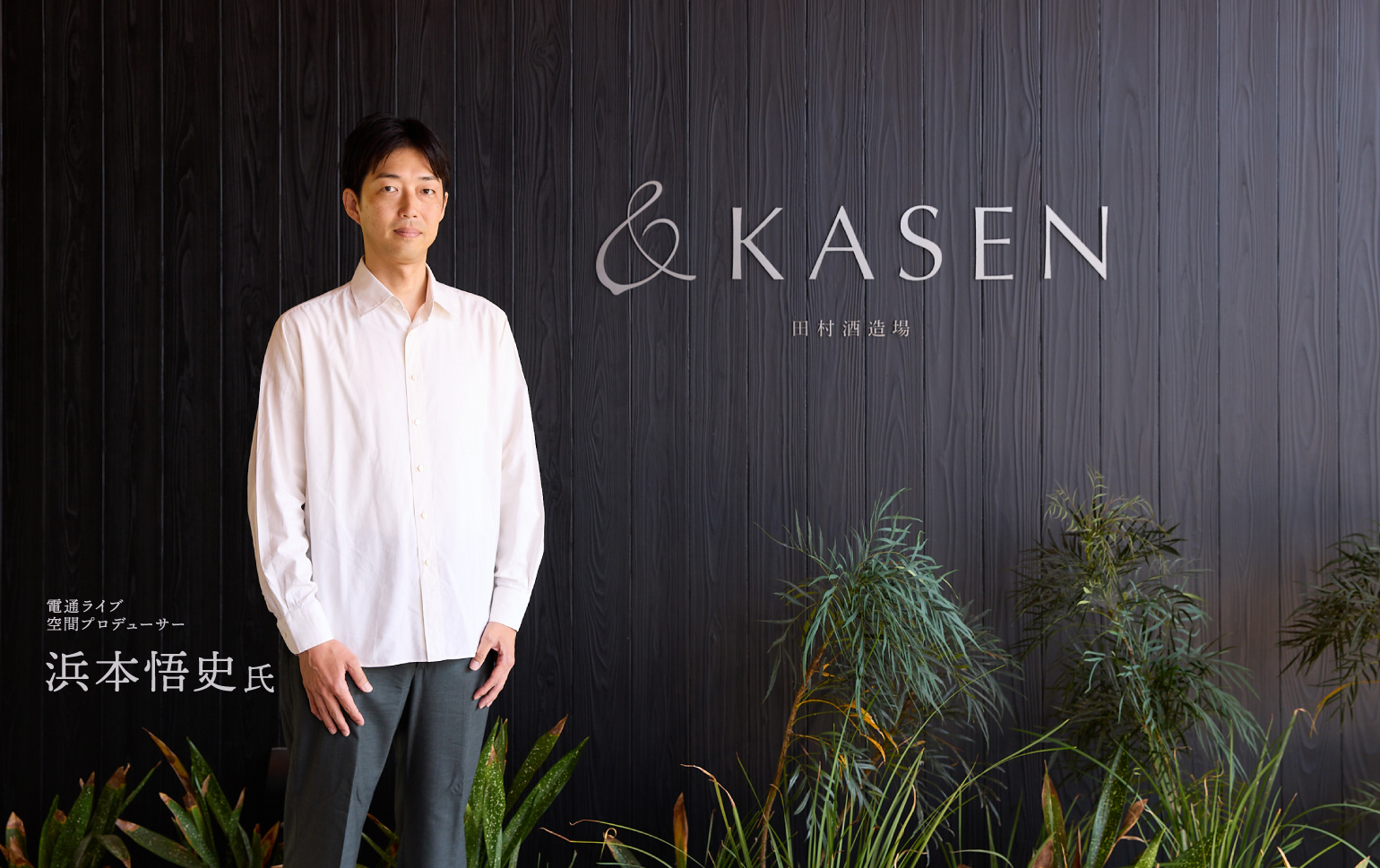
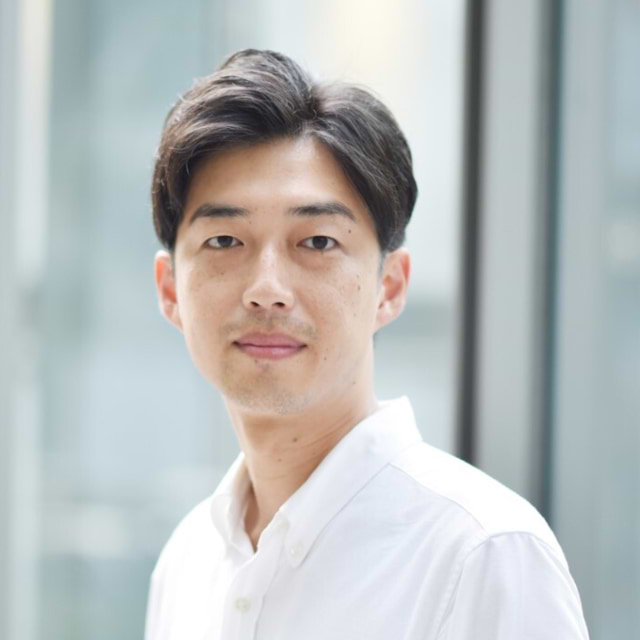
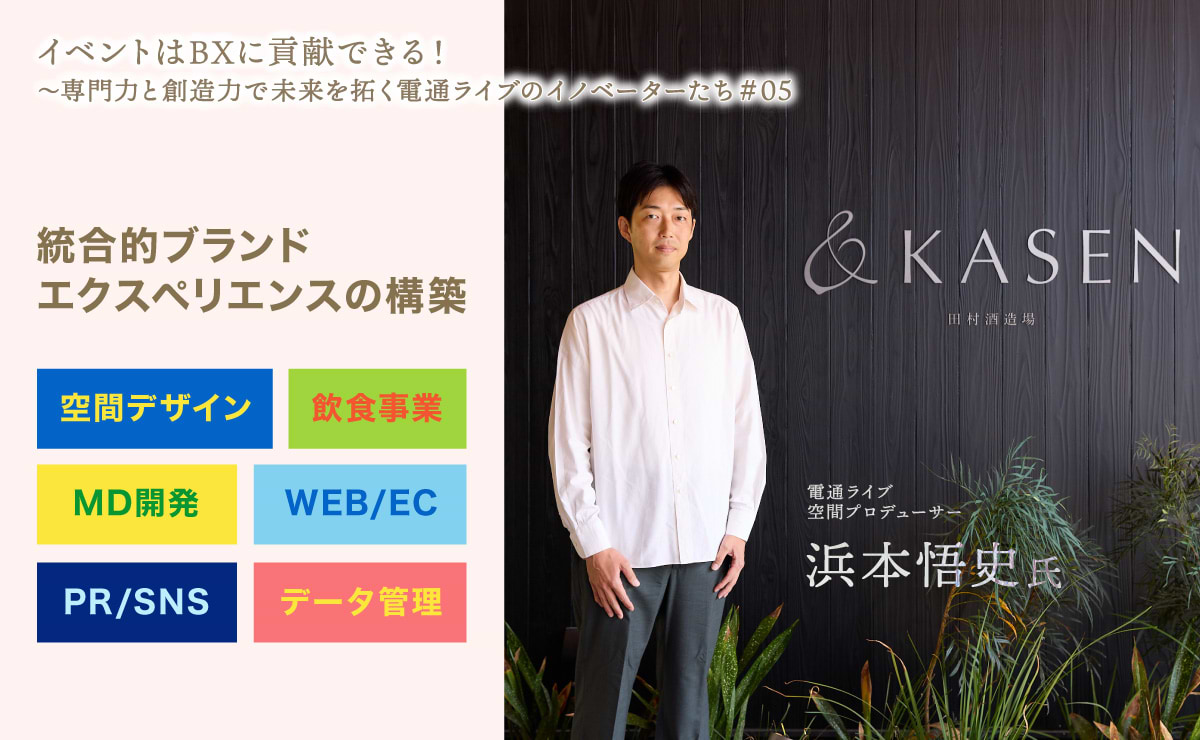
Our guest this time is Satoshi Hamamoto, a spatial producer. As the executive producer, he led the “&KASEN Project,” which opened the 200-year-old Tamura Sake Brewery in Fussa City, Tokyo, to the public.
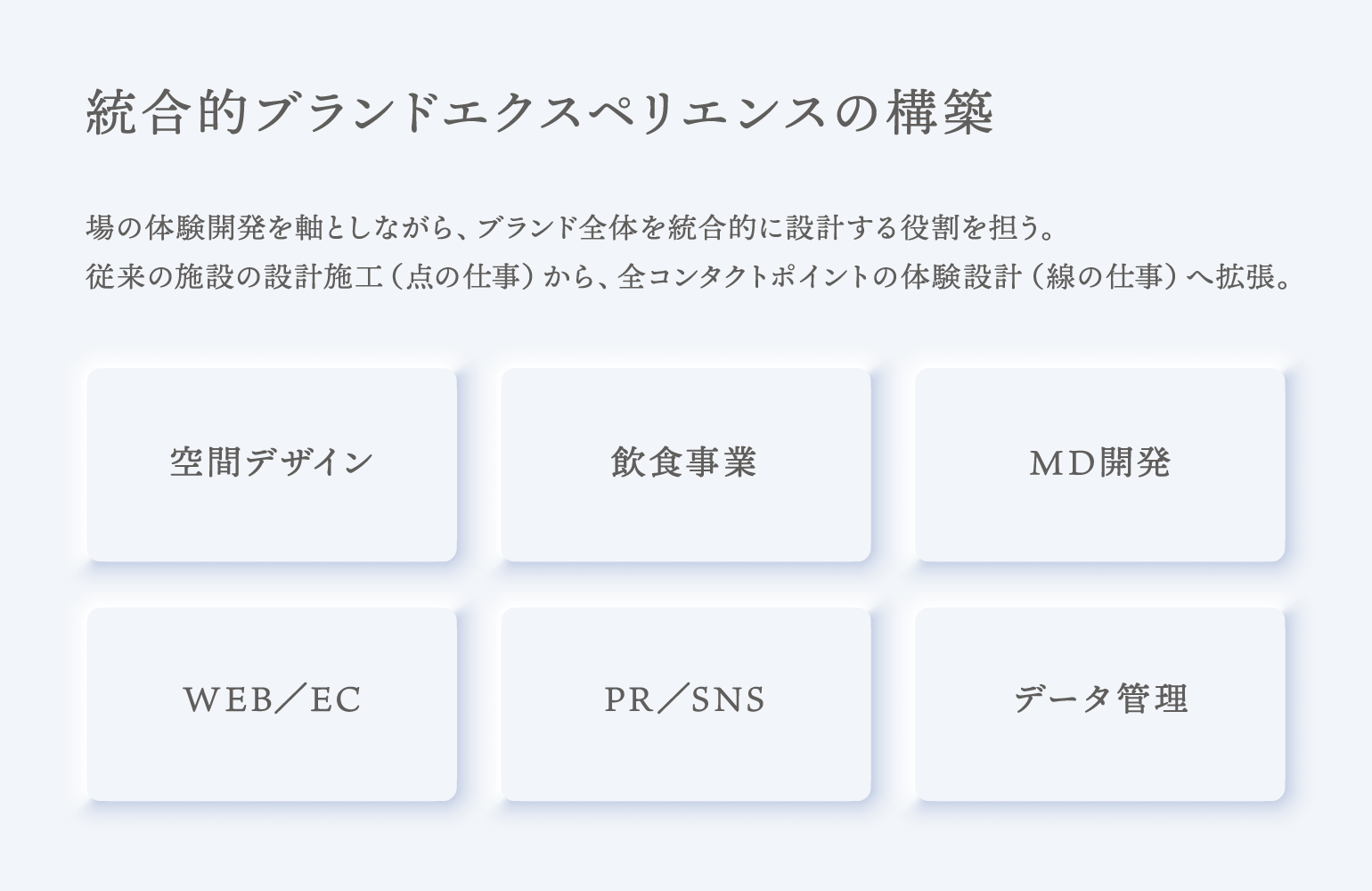
Through an interview with Mr. Hamamoto, we present a case study of how Dentsu Live Inc. proposed and built an integrated brand experience spanning all touchpoints—including facility development, the launch of food and beverage operations, merchandise development, the commercialization of guided tours, and PR strategies—over a five-year period from initial discussions in 2021 to the facility’s opening in July 2026.
Opening a Sake Brewery That Has Been Closed for 200 Years to the Community
—First, please introduce yourself.
Hamamoto: I work as a space producer at Dentsu Live Inc. I originally got involved in space design with a background in architecture and facility development, but recently, I’ve been taking on more projects that involve producing not just the space itself, but the entire experience within it. For this “&Kasen Project,” I served as the executive producer.
—Could you tell us what led Dentsu Live Inc. to take on the Tamura Sake Brewery project?
Hamamoto: Since its founding in 1822, Tamura Sake Brewery has been producing sake rooted in the local community while preserving traditional brewing methods. However, the brewery was facing challenges such as a decline in alcohol consumption—including a shift away from sake—due to the COVID-19 pandemic, as well as a decrease in the number of customers visiting the brewery.It all began when Dentsu Live Inc. offered our consultation services, even though no specific outcomes had been decided yet. From there, we arranged opportunities to speak with the employees and the president to understand their challenges and vision. We then held a series of workshops and spent about a year designing the project from scratch.
──What kinds of challenges came up during these discussions?
Hamamoto: They viewed their 200-year history of being deeply rooted in the local community and carefully producing small batches of sake as a very positive asset. However, on the other hand, they faced the challenge that young people were reluctant to try their products, and they were losing touch with new customers. Consequently, through the workshops, we arrived at the overarching goal of “opening Tamura Sake Brewery to the community.”
──What was the first step you took?
Hamamoto: Tamura Sake Brewery has a family motto: “Brew with care, sell with care.” During discussions on how to evolve this motto, the president ultimately suggested adding a new element: “Communicate with care.” This philosophy became a shared understanding within the team, and the idea of building a new facility emerged as one way to put it into practice.
──How did you identify and define the project’s purpose?
Hamamoto: Everyone at Tamura Sake Brewery shared a strong conviction that, while preserving the excellence of sake, there must surely be a way to enrich people’s lives through sake that is suited to the new era. For example, driven by the determination that we must go beyond the classic pairings—such as sashimi—that have traditionally been considered ideal for sake, and instead create new ways to enjoy it ourselves, the purpose “to create a life (and value) enriched by sake” was born.
The project name “&KASEN” was actually my suggestion, intended to convey a meaning closely aligned with that purpose.Taking Tamura Sake Brewery’s long-cherished sake brand “Kasen” as our starting point, we named the project “&KASEN” to symbolize our approach of connecting with new people, collaborating, and welcoming new participants. We then developed facilities and products in line with this name. We spent a great deal of time defining our purpose, and it ultimately took about a year for the name “&KASEN” to take shape.
──Once the core of the brand was established, how did the scope of the project expand?
Hamamoto: We were initially approached about facility development, but from there, it expanded—before we knew it—into more than eight areas, including food and beverage, retail, rebranding, new sake development, web/e-commerce, and PR.It began with an interview with the president in 2021 and spanned about five years until the grand opening in July 2026. We didn’t propose doing everything from the start; rather, it was the result of building upon each step one by one through repeated dialogue. That’s precisely why I believe we were able to move forward in a way that satisfied the client in each and every area.
Enhancing and Expanding the Appeal of Tamura Sake Brewery Through Collaboration
—Once the purpose and project name were decided, what specific steps did you take?
Hamamoto: Alongside our policy of “communicating thoughtfully,” there was already an idea among the team at Tamura Sake Brewery to create a dining facility as a platform for sharing their story. So I believed we should position this facility not merely as a restaurant, but as a space where people could experience our products in their best possible form. We also decided to create a facility equipped with a retail component to deliver our products directly to customers.
──What did you focus on in particular while moving forward with the dining project?
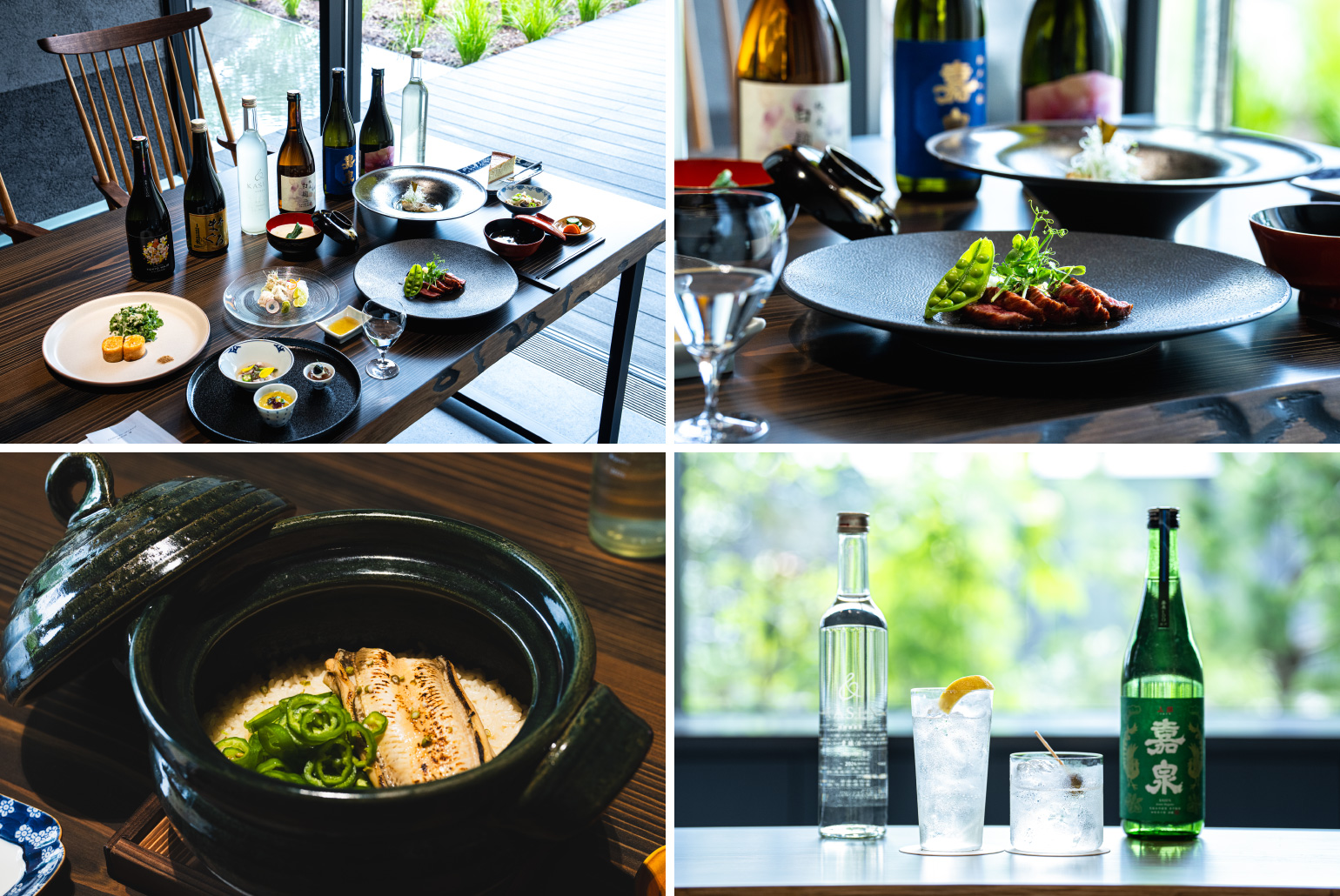
Hamamoto: Since the new facility is a space for experiences, we didn’t want it to be like a typical restaurant where people simply order food and drink. In developing the menu, we focused not just on pairing with sake, but on providing new discoveries—such as realizing, “Oh, this goes well with sake!”By incorporating Tamura Sake Brewery’s sake and sake lees into the dishes themselves, we designed the dining facility to function as a space where guests can experience the brewery itself. This aims to go a step beyond the tasting session at the end of a factory tour. The concept is structured to bring out the appeal of our products—which cannot be fully conveyed through tasting alone—through the immersive experience of dining.
──Were there any particular points you paid special attention to regarding merchandise sales?
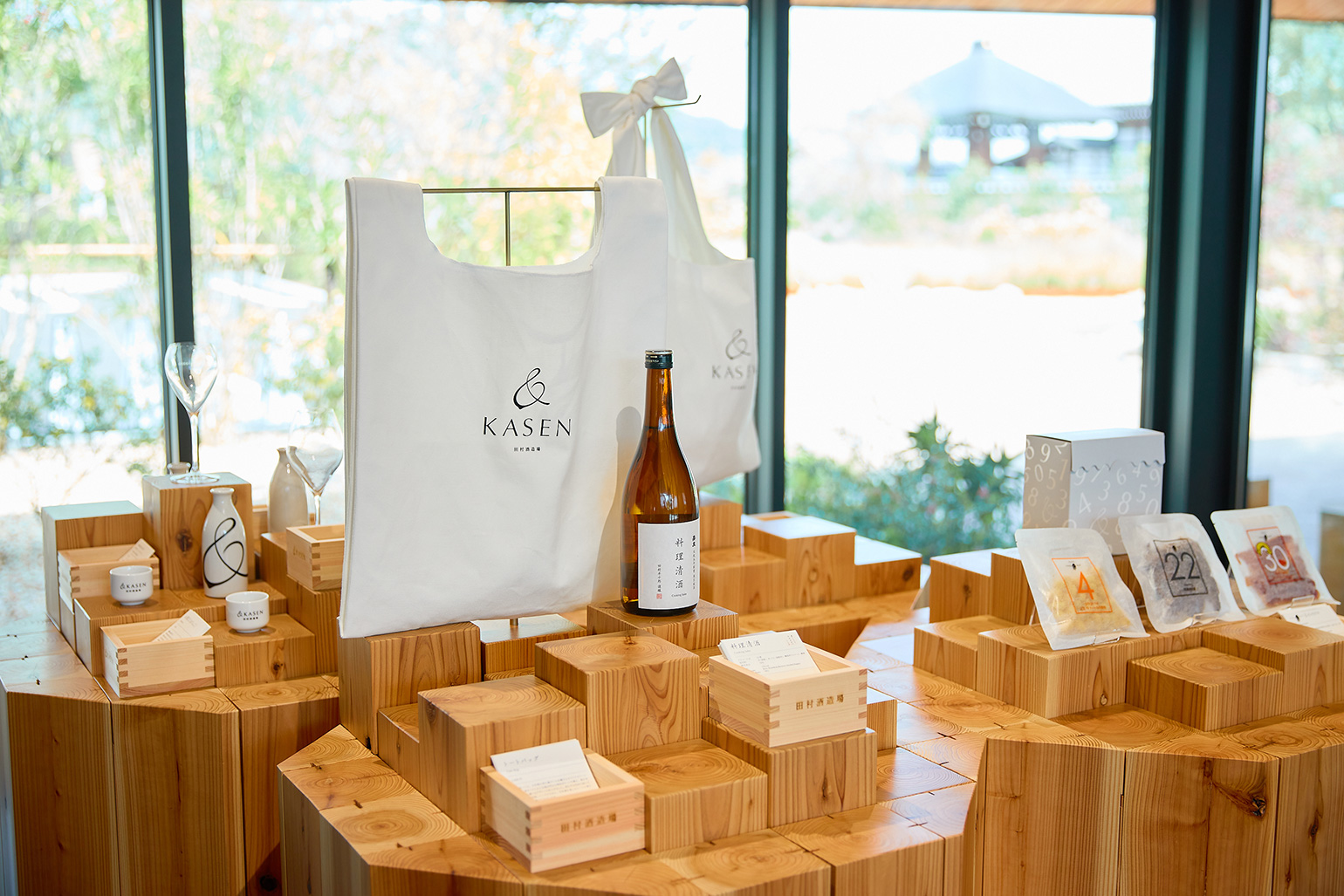
Hamamoto: As the “&” in “&KASEN” suggests, we aimed to enhance and expand the appeal of Tamura Sake Brewery through collaborations with others. To that end, we developed collaborative products with companies we had never worked with before—such as glass manufacturers, snack brands, and popular Western-style pastry shops—using Tamura Sake Brewery’s sake as the common thread.
We developed seven types of collaborative products, including glasses, eco-bags, smoked foods, and desserts. We achieved a level of product quality that goes beyond mere commemorative items or souvenirs, establishing the store as a true “destination store.”
Focusing on the Unique Experiential Value of Tamura Sake Brewery
──I hear you also developed a new sake to coincide with the facility’s opening.
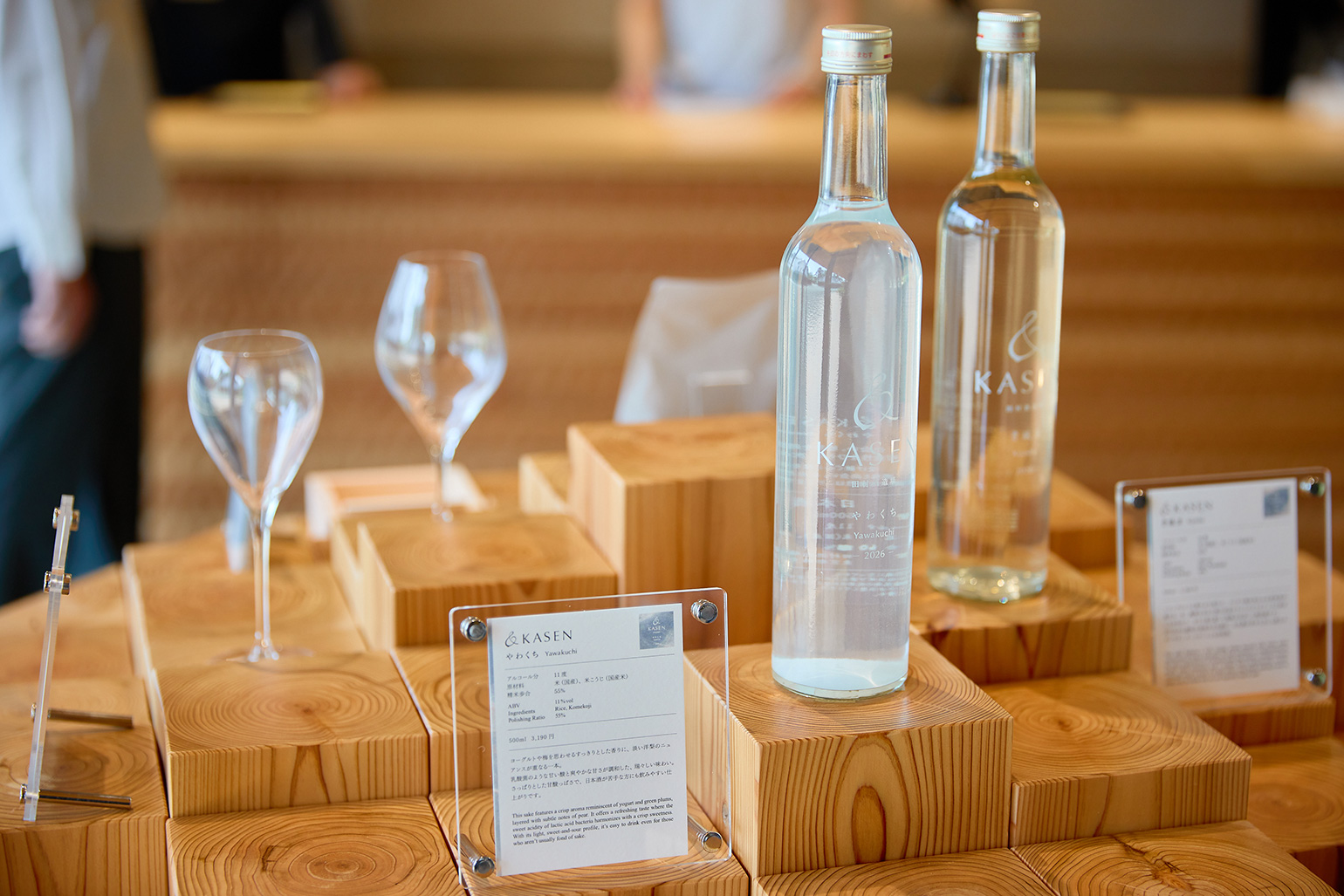
Hamamoto: As we considered how to create experiences through food, we realized that to broaden the range of pairings, we needed a wider variety of sake. To help guests enjoy sake even more through their dining experiences, we decided to try making types of sake we hadn’t produced much before. We pursued this as a major project, and as a result, two new sakes were born: “&KASEN Kijōshu” and “&KASEN Yawakuchi.”
──Specifically, what types of sake do you mean by “sake we haven’t produced much of before”?
Hamamoto: While Tamura Sake Brewery specializes in dry sake, in recent years, wine-like, fruity sakes and sweet sakes have also been gaining popularity. We hadn’t produced many sakes of that type before, but we believed that offering a diverse range of flavors was essential for reaching younger generations and broadening the ways people can enjoy sake, so we developed them.
──What role did Dentsu Live Inc. play in the development of these new sakes?
Hamamoto: Since we aren’t professionals in sake brewing, we didn’t get involved in the actual development process. Our role was to research popular alcoholic beverages on the market and organize repeated tasting sessions to create a space where the entire team could share insights such as, “This flavor is selling well right now” or “I didn’t know this kind of flavor existed.” We also provided support by offering test-marketing opportunities through events aimed at young people, and then compiling the customer feedback gathered there to help inform the development process.
──I hear you also reviewed existing brands.
Hamamoto: The president himself was aware of the issue that the company had not systematically organized the products it had released over the years.It all started when I imagined how the products would look in the new facility and on the website. From the perspective of the customer experience, I suggested that there might be a way to present them that would make them easier for customers to buy and more appealing. I proposed dividing the existing categories into two and adopting the concepts of “Kasen EDO (Tradition)” and “Kasen TOKYO (Continuity).” They accepted the idea, saying, “That might be interesting,” and ultimately, we were even entrusted with designing the labels.
──What was the thought behind the names “Kasen EDO (Tradition)” and “Kasen TOKYO (Continuation)”?
Hamamoto: Sake breweries in Tokyo are actually quite rare, and I’d heard that products bearing the name “Tokyo” had long been popular among inbound tourists. So, I felt we should highlight our identity as a Tokyo-based brewery through our brand, which is why we chose the names “EDO” and “TOKYO.”By distinguishing between “EDO”—products made using traditional methods over our 200-year history—and “TOKYO”—products developed since then that expand the range of flavors—we believed we could organize the information in a way that’s easy for customers to understand.
Creating content that makes people want to visit the facility
――As you mentioned earlier, were there any particular aspects you focused on regarding the design of the dining facility?
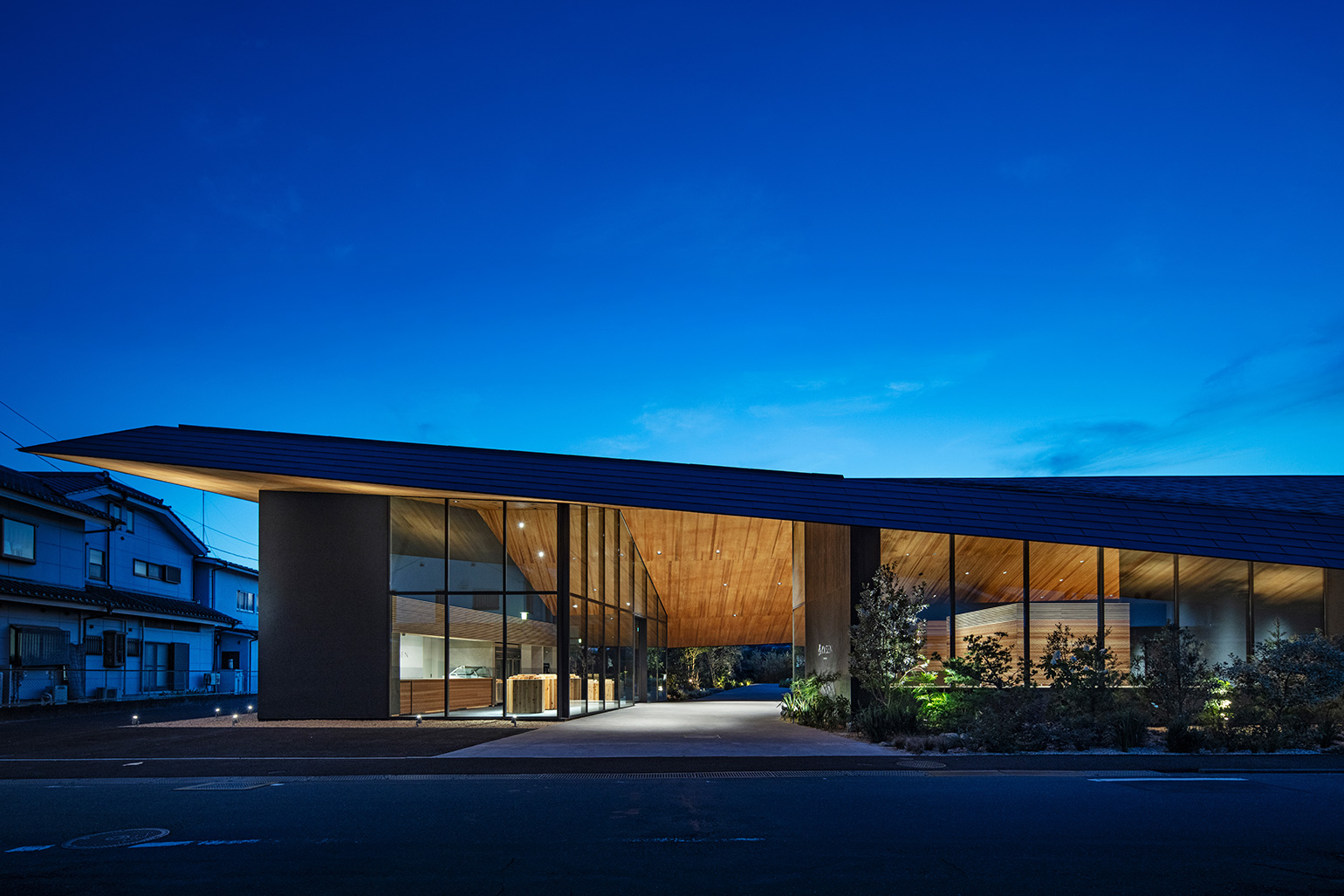
Hamamoto: The dining facility includes a restaurant and a retail space. Since we want people to visit from far away, we placed a strong emphasis on the promotional aspect. It’s crucial to design the space so that it looks appealing when featured in articles or when customers post about it on social media. Although we had budget constraints, we designed the building itself to be a destination that makes people want to visit. The newly created garden is one example of this.
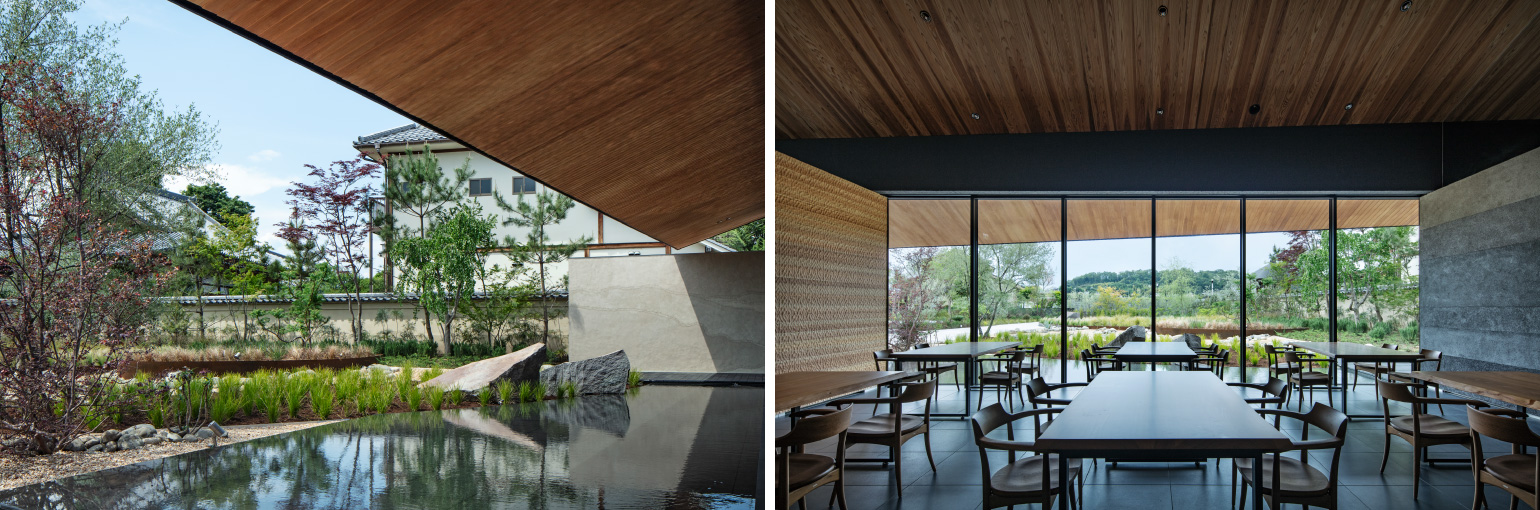
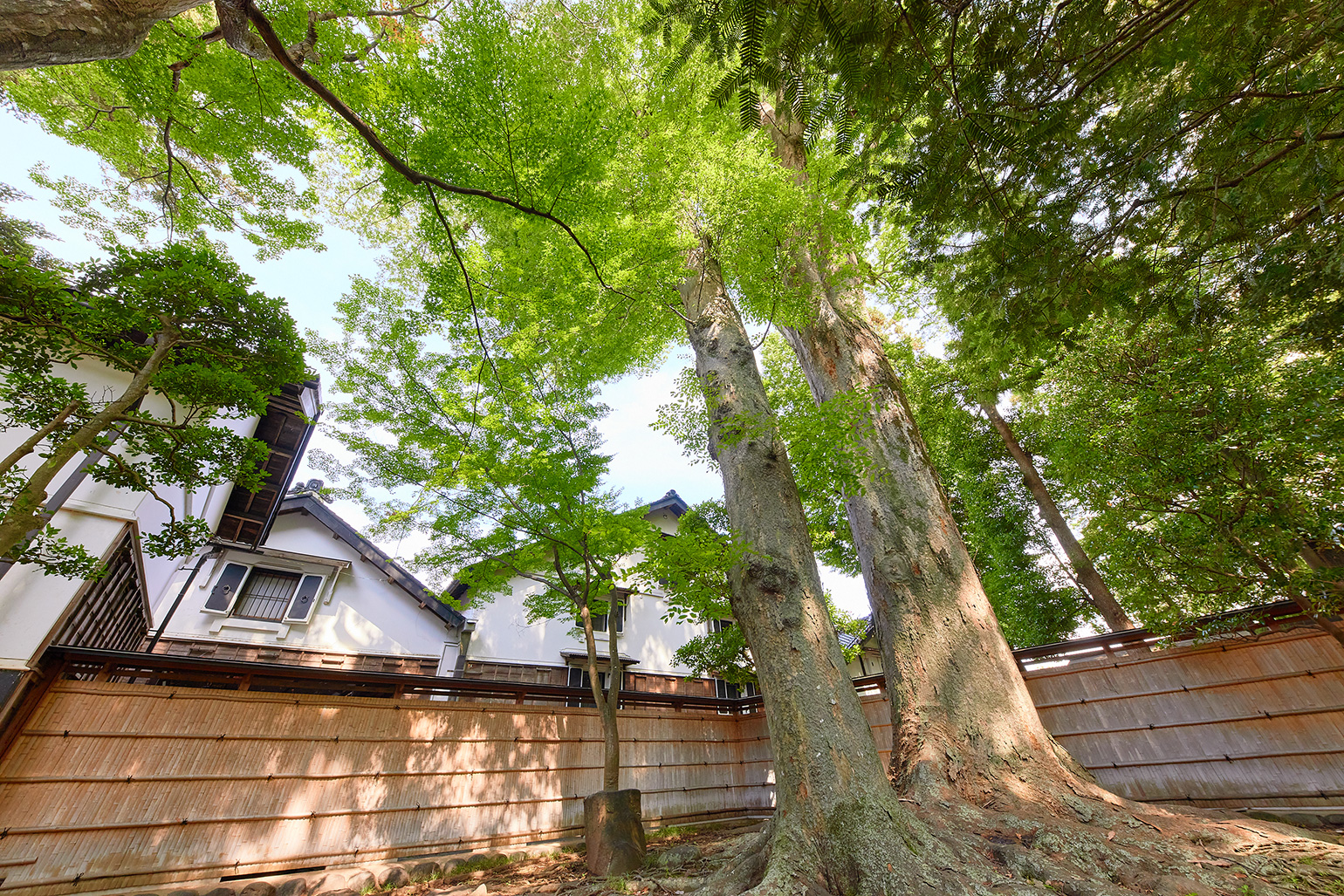
A modern garden evoking a sense of innovation, featuring a water feature that recreates the Tama River.
──What specific design elements did you focus on, and how did you approach the relationship with the existing sake brewery?
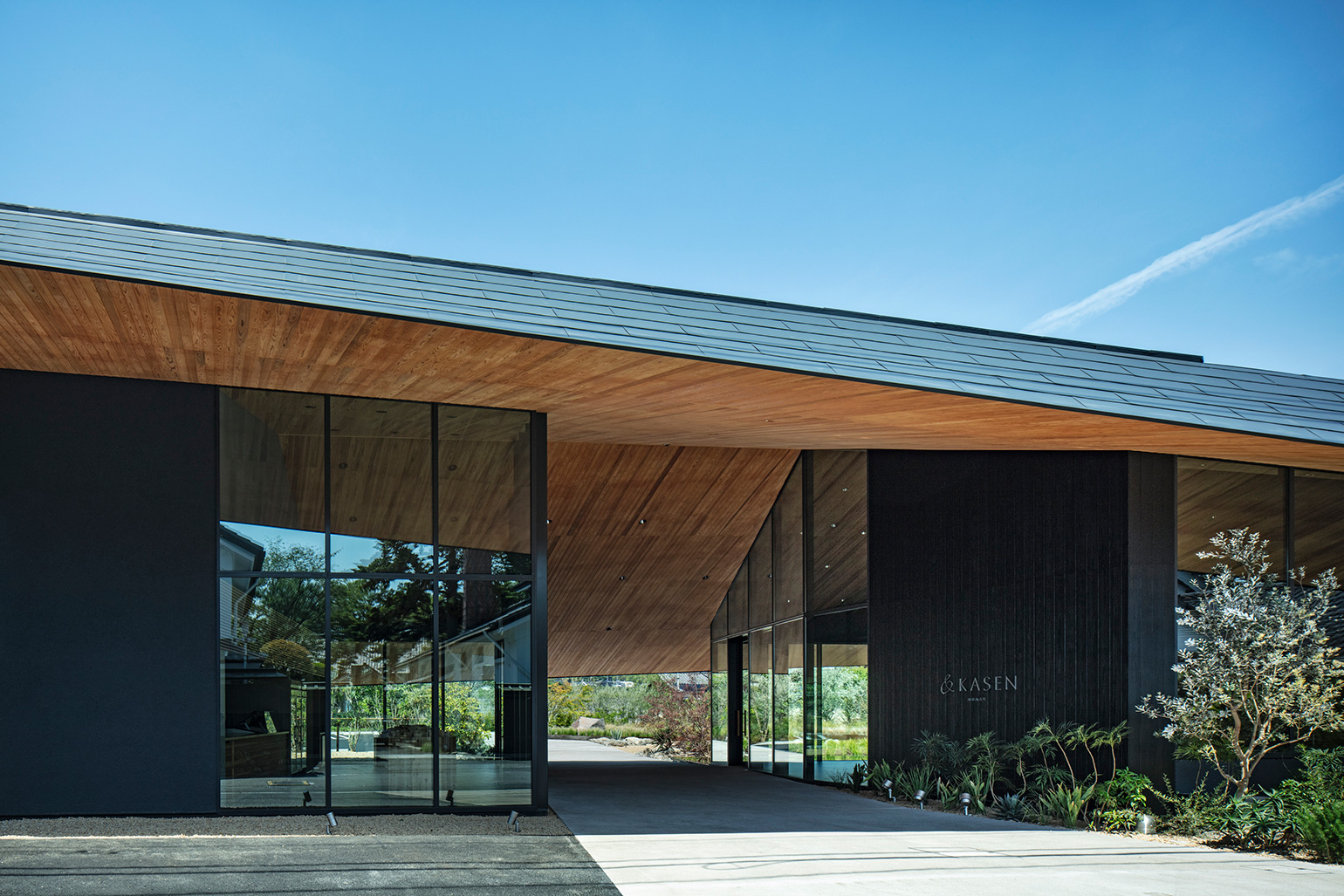
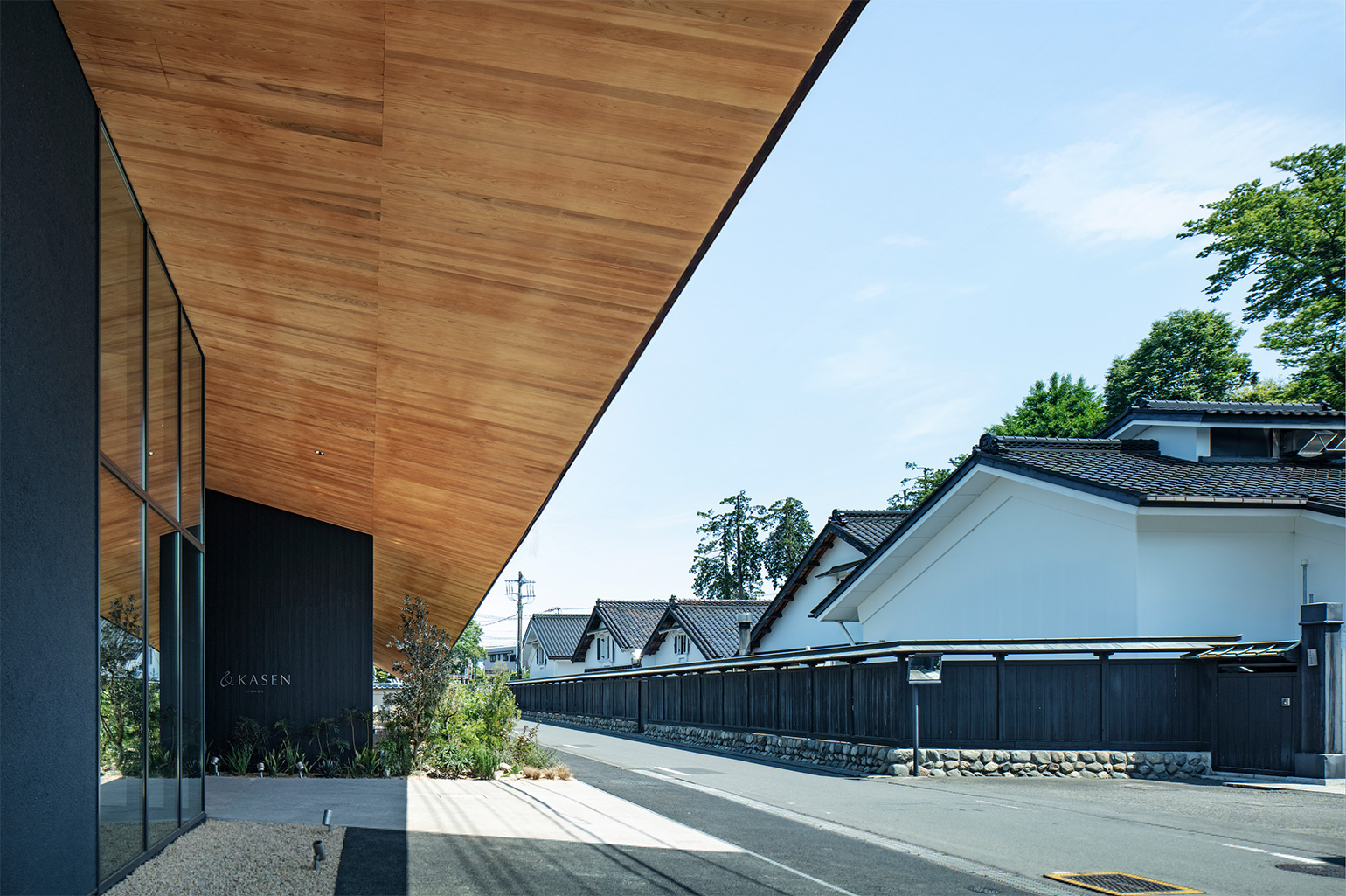
Hamamoto: To embody the project’s goal of “opening up to the community,” we gave the entrance roof a dramatic twist to create an open, inviting design that makes it easy for anyone to enter. Additionally, as the president put it—referring to “the past 200 years and the next 100”—we incorporated the gabled roof form of the original brewery while evolving it in a contemporary style to symbolize the connection between tradition and evolution.
An exterior open to the community that embodies the concept. In line with Tamura Sake Brewery’s desire to contribute to the local community, the facility is constructed entirely from wood sourced in the Tama region.
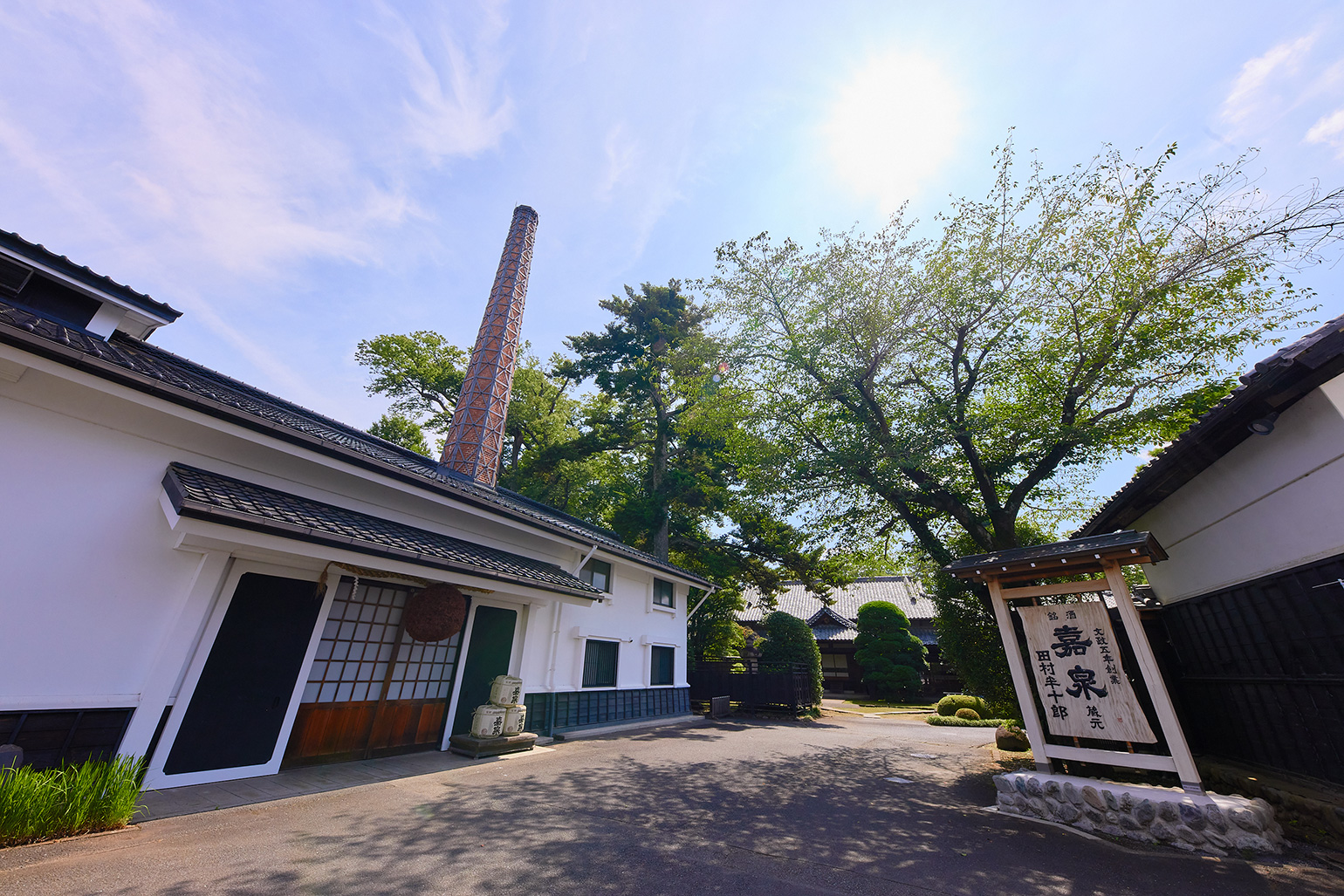
Hamamoto: The Tamura Sake Brewery grounds contain historical assets—such as the sake cellars, octagonal chimney, well, and garden—that have been built up over 200 years and cannot be replicated elsewhere. We believed the role of the new facility was not to overshadow these assets, but rather to “transform what exists only here into an experience that can be enjoyed only here.”
For example, the Sake-Bar is positioned so that the sake cellars serve as a borrowed landscape beyond the windows, allowing guests to enjoy sake fresh from the cellars while gazing at the cellars themselves. I believe that my background in architecture enabled me to discuss these ideas with the design team on an equal footing and successfully fuse the principles of “preservation” and “evolution” into a single experiential concept.
──Speaking of experiences, I hear the sake brewery tours have also been revamped.
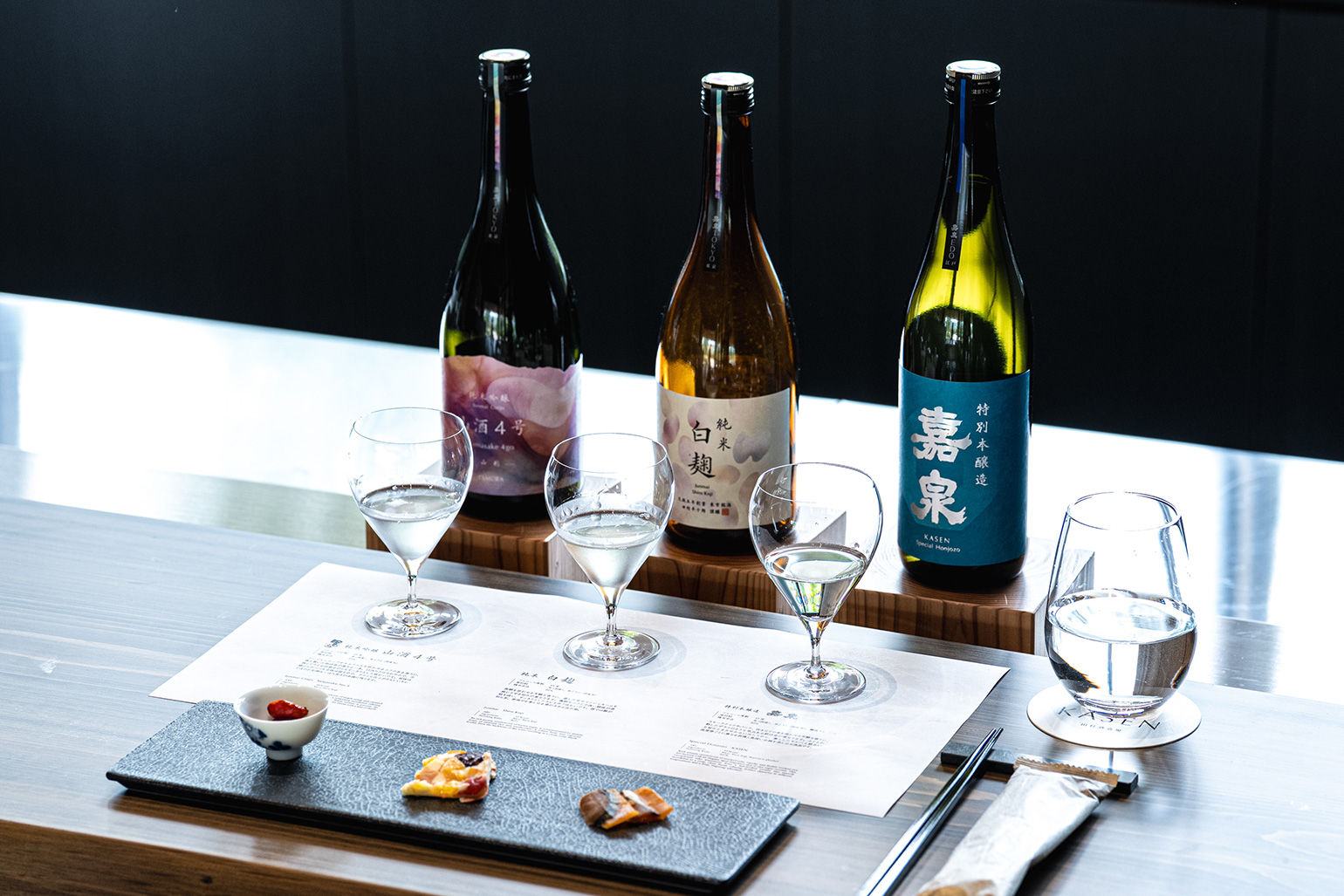
Hamamoto: Originally, they offered an in-depth tour covering everything from the Tamura family’s history to the sake brewery, which I found very appealing. So we helped refine the tour content a bit—from the order of the narrative to the creation of the pamphlet.Furthermore, with the completion of the new facility, we proposed adding a “tasting experience” as the tour’s finale. Previously, visitors could only sample a small amount, but after the renovation, the experience was designed to allow them to thoroughly compare three different types of sake and, if they found one they liked, purchase it at the on-site shop to take home.
──What kind of support did you provide for the e-commerce site?
Hamamoto: We redesigned the site. I believe e-commerce is particularly crucial for doing business with customers who live far away. After reviewing the existing e-commerce site, I felt there was room for improvement in terms of both increasing sales and enhancing brand value. I explained that it was essential to create a seamless path for customers to purchase products on the website while still immersed in the beautiful atmosphere of the facility—before the excitement of their wonderful on-site experience had faded—and they commissioned us to carry out the redesign.
──What are the key features of the new e-commerce site?
Hamamoto: This time, we built the entire website around the e-commerce functionality. While typical e-commerce sites tend to be places solely for purchasing products, this site is designed so that visitors can first experience the brand’s worldview and then seamlessly proceed to make a purchase. Previously, the homepage and the e-commerce site were separate, but by integrating them, we believe we’ve created a design that makes shopping easier while deepening customers’ understanding of the brand.
A Partnership That Advises on “What Not to Do”
──Was there anything that stood out to you as we moved forward with the project?
Hamamoto: Over the years of close collaboration with the CEO, various challenges and “things he wanted to do” emerged. I addressed each one by adding experiential value. As a result, the CEO told me, “You can do anything, and you can create anything, can’t you?” In reality, I plan like a consultant, design like a creator, and bring things to life like a production company.I think the president was surprised by just how broad a producer’s scope of work can be. I believe it was precisely because I was able to support him from this unique position that he came to trust me. He remarked, “Before I knew it, we’d come this far,” and I was particularly struck by the fact that he entrusted me with such a wide range of responsibilities.
──In what order did the project proceed?
Hamamoto: Since the initial request was for facility development, we focused on moving that forward properly first. The other aspects gradually took shape over time through our discussions, as we realized, “Maybe we should do this, too.” Rather than proposing “Let’s change everything” right from the start—which might have made the client feel defensive—we proceeded by having repeated conversations, starting with the things they were eager to try, one step at a time. As a result, the entire business underwent changes across various areas, but I feel this approach worked very well.
As a producer, what I prioritized this time was “continuing to propose what’s necessary, but not changing everything at once.” I’m the type who engages in extensive dialogue before making proposals, and the team at Tamura Sake Brewery also placed great importance on building discussions thoughtfully. I believe the fact that our approaches were so well-suited was a major reason we were able to see this five-year project through together.Although I had an ideal vision of the journey in mind, I didn’t present it all at once from the start and push forward with “Let’s do everything.” Instead, we carefully identified the necessary pieces of that journey one by one and meticulously distinguished between the parts we should handle and the parts the client would be better off handling on their own.
Depending on a company’s size and circumstances, it can be difficult to change everything at once, or there may be areas that shouldn’t be tackled right away. In such cases, we were honest and said, “We think it’s better if we don’t handle this part.”
From a cost and scale perspective, we often took the approach of selecting and proposing partner companies, evaluating them together with Tamura Sake Brewery to decide on a partner, and then having the client place the order directly with that partner. For example, with the website, we utilized the existing system, handled the design ourselves, and outsourced the actual data entry and registration tasks.Similarly, for outdoor signage, we handled the design while placing the order with a local contractor. By making these detailed decisions throughout the project, we were able to create the best possible experience within a limited budget. Ultimately, we were even able to collaborate on the overall budget allocation for the business, and I believe we built an excellent relationship as partners.
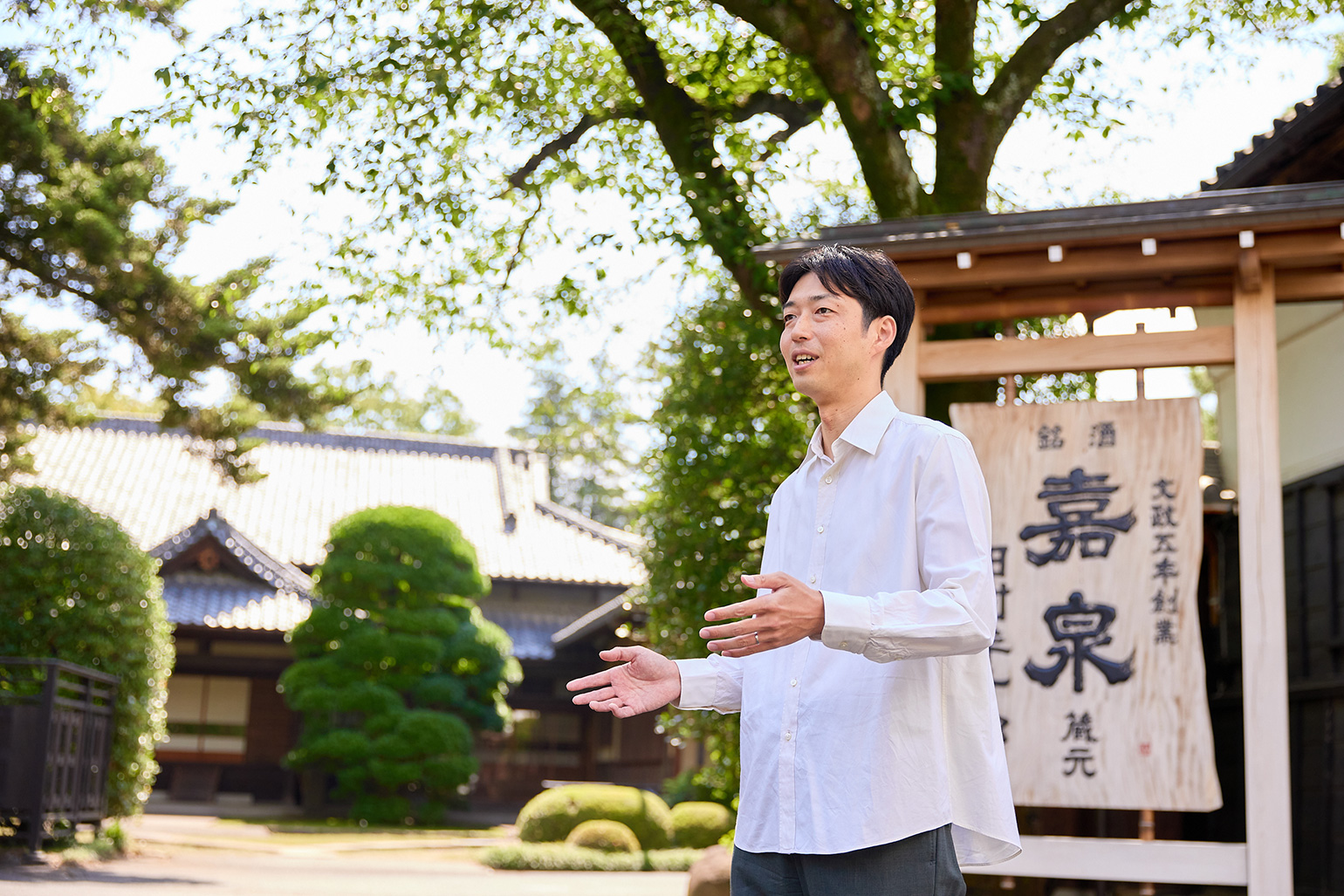
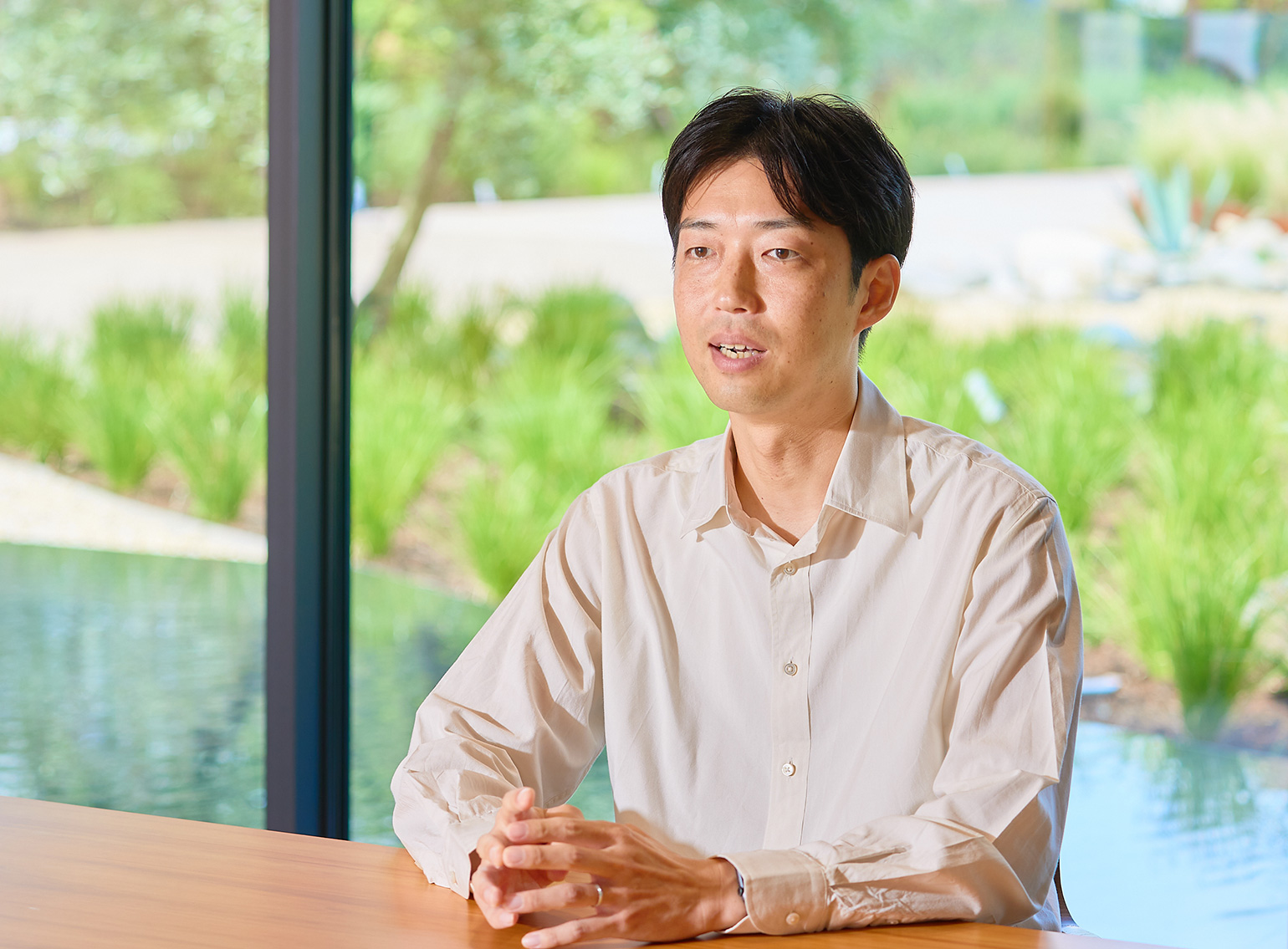
“Tamura Sake Brewery’s 200-year history is by no means something to be taken lightly. We took great care not to overshadow that history and tradition,” says Mr. Hamamoto.
Dentsu Live Inc.’s strength lies in its ability to provide comprehensive production centered on the visitor experience
—Isn’t it rare to oversee and produce such a wide range of areas, from facility development to food and beverage, retail, e-commerce, and branding?
Hamamoto: It may indeed be rare. However, when different companies or teams handle each area separately, the experience inevitably becomes fragmented. It’s common to see situations where the facility is wonderful but the website’s aesthetic doesn’t match, or where the food is excellent but the presentation of merchandise is disjointed. My role was to weave everything together to create a cohesive, unified experience.
To deliver a better experience, we had to decide where to invest money and time—and where to cut back. I believe that being able to make those decisions from a single perspective was the key to ensuring consistency throughout an experience that would otherwise tend to fall apart.
──What strengths of Dentsu Live Inc. do you think were leveraged in this project?
Hamamoto: The reason we were able to cover such a broad range of areas is that we had team members who took on responsibility for each of them together. One of Dentsu Live Inc.’s strengths is our experience in creating various types of experiences, such as events and showrooms. I believe we were able to leverage that “on-site intuition”—understanding not just how to build a facility, but how people feel and what they experience there.Our unique strength was our ability to produce a holistic experience—centered on the “experience” itself—rather than dividing tasks by function—for elements such as tours, restaurants, facilities, and retail.
From architecture to cuisine, we packed the Tamura Sake Brewery’s value into the experience without a single break. We wanted visitors to continuously feel that value throughout their time at the facility and leave with that value fully accumulated. We were conscious of that “time and density of value.” For example, if you had a wonderful experience at the facility but then found the website you saw on the train ride home unappealing, you’d be disappointed, wouldn’t you?We ensure the timeline of the experience remains unbroken all the way until the moment you think, “Maybe I’ll buy that again,” after returning home. I believe this 360-degree perspective is crucial. Since customer service is also a vital part of the experience, we collaborated with our group companies to conduct store training and create manuals, thereby ensuring the quality of a rich, immersive experience.
──How did this project differ from Dentsu Live Inc.’s previous work?
Hamamoto: In the past, we mostly received requests for specific business initiatives, but this time was significantly different in that we accompanied the president from the very beginning—the creation of a new business—and were able to participate together from the formulation of the business plan onward. We consistently approached every aspect—including areas that hadn’t previously been our core focus—from Dentsu Live Inc.’s distinctive perspective of “centering everything on the experience.” I believe that this experience-driven approach led to Tamura Sake Brewery’s business transformation and the realization of its BX.
Hamamoto: It may seem like a major change, but for the people at Tamura Sake Brewery, it feels more like they’ve gained an opportunity to carefully explain their sake alongside the food. It’s as if they’ve finally created the framework to achieve their goal of “communicating carefully.” Rather than feeling like something has been “renewed,” I think it’s more a sense that they can now express what they’ve always wanted to say.
──The new facility opened in July 2026 and is still quite new—could you tell us about your future outlook?
Hamamoto: The “&” in “&KASEN” also symbolizes our commitment to maintaining a continuous connection. The completion of the facility isn’t the goal—this is where the real journey begins. From changing the restaurant’s menu each season to creating new collaborative products based on the “&” philosophy, our initiatives centered around this facility will continue to expand.
Our involvement is no longer limited to simply “producing the facility.” Through this project, we’ve become deeply involved in Tamura Sake Brewery’s entire business—from brand identity and product presentation to how we connect with customers. The relationship that began with the facility’s development has now expanded into a partnership aimed at enhancing the Tamura Sake Brewery brand itself. The fact that we were able to build this relationship over the course of five years may be the greatest achievement of this project.
[Facility Overview] Facility Name: “&KASEN” Facility Details: Restaurant & Bar, Shop *“Tamura Sake Brewery Kura Tour” also available Address: 626 Fussa, Fussa City, Tokyo 197-0011 Site Area: Approx. 564 ㎡ Official Website: https://www.tamurashuzojo.com
As a space producer, I draw on my background in architecture and facility development to work across a wide range of fields—from food and beverage to retail, digital, and branding—and holistically produce the entire experience, including budget management, as a single integrated package.

 Events Can Contribute to BX! —Dentsu Live Inc.: Pioneering the Future with Expertise and Creativity [5/5]