Category
Theme

Note: This website was automatically translated, so some terms or nuances may not be completely accurate.

Two Essential Rules for Building Your Career

Kimié Morishita

Kimié Morishita

Hello, everyone! Last time, I shared lessons former New York City Mayor Rudolph Giuliani imparted 15 years after the September 11 attacks and the subsequent response. This time, I turn my focus to a female leader navigating the closed male-dominated world of New York City, where attention is now equally focused on daily safety alongside counterterrorism.

Can a female researcher lead at the top of a tough male-dominated world?

Do you think New York City is safe today? Or dangerous?

Once notorious for its poor public safety, New York City transformed through reforms like those of Mayor Giuliani, becoming the only major U.S. city and one of the world's top ten safest large cities by 2015*1.

Protecting this New York is the New York City Police Department (NYPD), the largest police force in the United States, with approximately 35,000 uniformed officers.

While the NYPD has achieved remarkable success in crime prevention, it has faced significant problems in recent years as a consequence: discriminatory and overly aggressive policing. It has been said that "police searches of personal belongings effectively target Black and Hispanic residents," with some estimates suggesting Black arrest rates are several times to ten times higher than those of white residents.

myNYPD
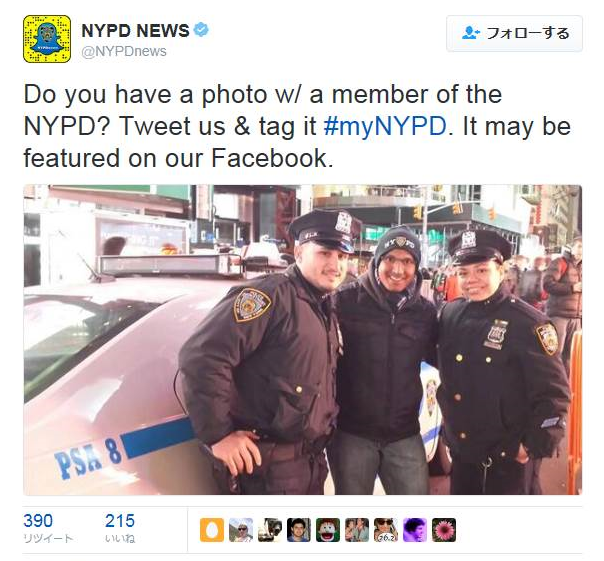
As relations between citizens and police deteriorated, the NYPD launched a desperate PR campaign called "#myNYPD" to emphasize friendly relations with the public. The call to "tweet a photo with an NYPD officer tagged with #myNYPD" backfired spectacularly. It fueled public anger, highlighting the stark contrast with the reality of officers forcibly arresting citizens or interrogating them as if they were criminals. Violent police officers worldwide were tagged with #myNYPD in posts, turning #myNYPD into a major anti-police campaign.

Amidst this, in early 2014, Bill de Blasio, known as a staunch liberal activist, was elected Mayor of New York City by a landslide. One of his campaign promises was to ban aggressive police questioning. Expectations for NYPD reform soared. A new Police Commissioner took office, and a new department was established.

That was "Collaborative Policing."

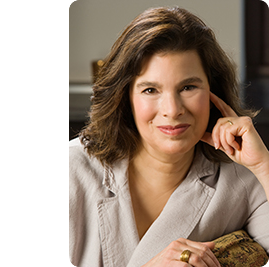
The head of this department is Susan Herman, a former associate professor at Pace University and an expert on the criminal justice system. The head of this unique department was recruited from outside the organization, was a researcher rather than a police officer, and was a woman rather than a man.

スーザン・ハーマン氏(マケイン・インスティテュート提供)
Susan Herman
(Provided by the McCain Institute)

Top leadership must not fear criticism and must appoint reform-minded personnel

Ms. Harman became head of the "Community Policing" initiative during the aforementioned #myNYPD campaign. Her areas of expertise include police reform, advocacy for crime victims, and improving the treatment of arrested citizens and minors. She is someone who views the actions of the police from the other side.

Why was she chosen?

She was nominated by Commissioner Bill Bratton*2, who laid the foundation for the current strong-arm policing decades ago and returned to the top of the NYPD at the behest of Mayor de Blasio. For this reason, the appointment was met with widespread criticism from citizens who said, "There's no way this will lead to police reform!" Amidst this turmoil, Mr. Bratton nominated Ms. Harman. Not as a typical "advisor," but as the head of a newly established department.

It is clear that both the mayor and the commissioner are taking considerable risks with their personnel decisions, rather than playing it safe.

Two important things when tackling difficult challenges

So, will things work out if they don't promote from within and leave it to outside talent?

Especially when the people who should be working together to achieve reform (police officers) are also the targets of that reform. Furthermore, what if their subordinates are tough men with considerable pride and achievements, and their boss is a female researcher who has never been involved in police work?

Ms. Harman shared two lessons she learned from her own experience.

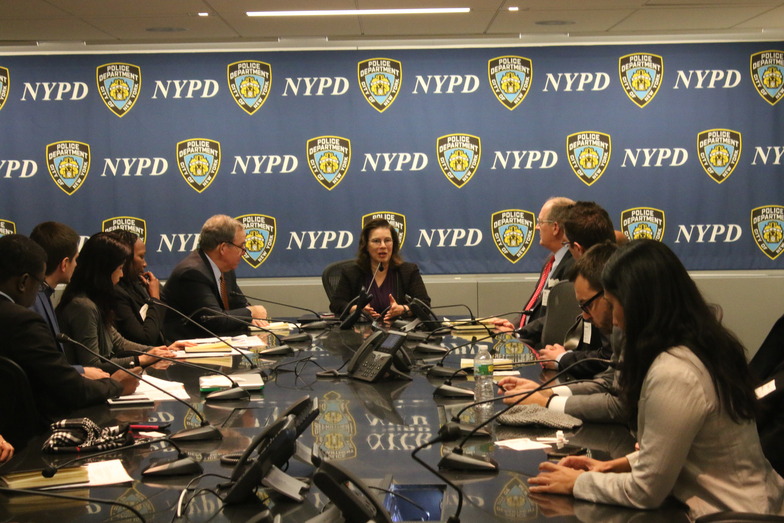
NYPD会議室でのミーティング
Meeting in the NYPD conference room *Provided by the McCain Institute


1. Possess unshakable expertise above all others

Professionals respect professionals.

If you are seen as "more trustworthy than anyone else" as an expert in your field, supporters and advocates will inevitably emerge, even if met with skepticism or resistance. Don't be distracted by noise; focus on what you must do. What matters most is executing what only you can do. Present unique ideas and solutions that could never come from within, but don't act alone. Explain why it's good to those around you, seek advice and cooperation, and work together. Before you know it, the landscape will have changed.

2. Get the necessary authority

Choose your boss.

When tackling difficult challenges, having backing is essential. Especially when breaking old customs, you're also taking away the comfort of those accustomed to them. Criticism, counterarguments, and resistance are inevitable. Without sufficient authority and environment, simply saying "do it" won't change the situation. Not only being chosen by the boss, but choosing the boss yourself – this is something I've always been conscious of. The more difficult the situation, the more crucial it is to be granted significant authority and responsibility, and to project an image of moving as one with the boss.

Results of Harman's Reforms

With her outstanding expertise and the authority she was given, she immediately assigned 1,300 police officers to be "field officers" (similar to Japanese police officers) whose main duty was to "patrol the streets," and required all of them to undergo two days of training. Not only that, she provided all 35,000 police officers with smartphones equipped with multilingual translation functions to encourage conversation with residents and to inform them about the people living in their assigned districts. These are not measures that could be implemented in a short period without significant authority.

Another achievement was "identifying potential criminals and rehabilitating them before arrest." Field officers intensified patrols to identify potential offenders. Instead of questioning them, they provided opportunities to meet with various police departments, helping them understand the consequences of crime. Then, working with community groups, they offered pathways out of their current lives. Arrest and prosecution rates plummeted, and the idea that "the police don't just arrest citizens" gradually took root among officers.

Incidentally, this approach seems to have been unheard of in the NYPD until now. I also think it's important to "seize every opportunity." The #myNYPD campaign I mentioned earlier was, perhaps a bit of a misnomer, but an interesting situation for Mr. Harman, a newcomer who was trying to fundamentally change the organization and culture. The failure of the campaign forced the forces that clung to the old ways to tone down their stance. If you are willing to seize every opportunity, then a crisis can indeed be an opportunity.

Create your own career

But what does it mean to "choose your boss"? I think it means not only doing your best in the environment you find yourself in, but also changing your environment and circumstances, including your boss, if necessary.

Mr. Harman said that the above two points are "especially important for women to get by in a male-dominated society," but I don't think it's just a matter of women or men.

"The more of a leader you are, the more you should go to the front lines" (Former New York City Mayor Giuliani)

"Become more professional than anyone else. Choose your boss." (Susan Harman)

Listening to American leaders speak, I can't help but feel, with all due respect, that the environment in Japan is a little strange. It is still difficult to find optimal placements that respect individual will, ability, and aptitude, as well as transfers between departments and organizations, and changing jobs. There are not many workplaces filled with young bosses who excel at management, seniors, and foreigners. The lack of women in management positions is staggering. And I feel that people are becoming less assertive. There seems to be a definite tendency to avoid being seen as "troublesome."

Of course, that doesn't mean America is perfect. Absolutely not. But the advice I gained in New York reminded me of two responsibilities: in the short term, the responsibility to those around you to "face your assigned mission to the utmost and make your own judgments"; and in the long term, the responsibility to yourself to "build your own career." Don't get swept along; engage proactively. This seems to demand not just being a compliant member who follows the organization's will, but also being someone unafraid to create friction when necessary. Becoming a leader might be a battle against that part of yourself (is it just me!?) that dislikes conflict with others and wants to be seen as a nice, understanding person. That's what I think.

I want to tell myself: "Stand up more." Even if your words and actions don't read the room, even if they cause friction, if they're executed correctly based on the right motives, someone will see. I'm sure of it.

So, everyone, this is actually why I'm so vocal!

※1 From The Economist magazine's "World's 50 Safest Cities Ranking"

*2 Bill Bratton, as Police Commissioner under Mayor Giuliani, created a "strong police force" based on the "broken windows theory" (the theory that cracking down on minor crimes and disorderly conduct suppresses violent crime). He strengthened police questioning of citizens, ensuring that minor crimes were not overlooked, and violent crime plummeted. When he was reappointed to head the NYPD, citizens had doubts and reservations, but he himself is promoting new reforms that rewrite past best practices through the appointment of external personnel such as Mr. Harman and changes in the operation of questioning.

Was this article helpful?

Share this article

Author

Kimié Morishita

Kimié Morishita

After joining Dentsu Inc., she worked at a strategic consulting firm before rejoining Dentsu Inc. She was responsible for business and communication strategies during major organizational restructuring, including the privatization and conversion to independent administrative agencies of public institutions. She then led the acquisition of the UK-based Aegis Group and oversaw its integration with Dentsu Inc. to create synergies. Selected as a "Woman to Watch in 2014" by Campaign Asia-Pacific and as a "Next Generation Leader (NGL) 2015" by the McCain Institute in the US. Worked in the US as an NGL. Left Dentsu Inc. in May 2021.

Also read

Two Essential Rules for Building Your Career