Society is currently in a state of "confusion." Under this "confusion," management faces unprecedented "frustration." The future is opaque, filled with uncertainty. An unidentifiable anxiety is spreading.
When gripped by anxiety, individuals, companies, and society alike tend to shut down their thinking. "The more I think, the more anxious I become. So perhaps I should just stop thinking altogether." Could this mindset be stalling and slowing down business? In this column, I aim to deepen our understanding of "how business should operate in an uncertain era" by unraveling the true nature of this "confusion" and "frustration."
What does "not understanding" even mean?
Last time, we discussed "management" and "leadership," concepts many people fail to grasp at their core. This time, I want to explore why people struggle to understand the essence of things and what it truly means to "not understand."
Most people don't truly grasp the essence of "not understanding." Why is that? Because they haven't given much thought to the reasons behind it.
There are two main reasons for "not understanding." One is complexity. The other is uncertainty. Just organizing it this way makes it clear, doesn't it? To resolve complexity, you need management. To face uncertainty, you need strong leadership.

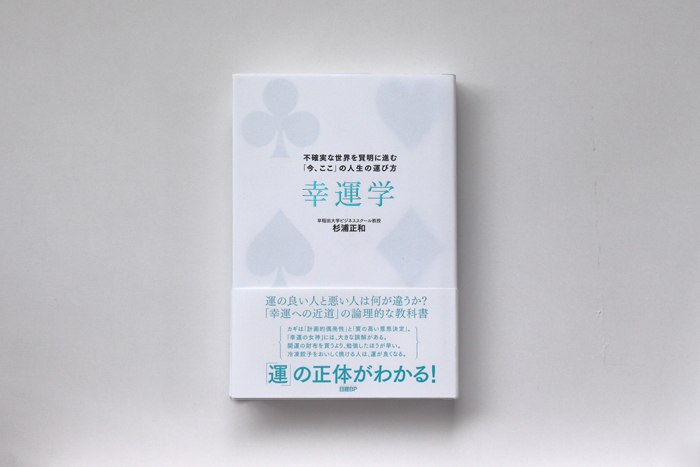
Navigating an Uncertain World Wisely: The Art of Living in the "Here and Now" - The Science of Luck by Masakazu Sugiura
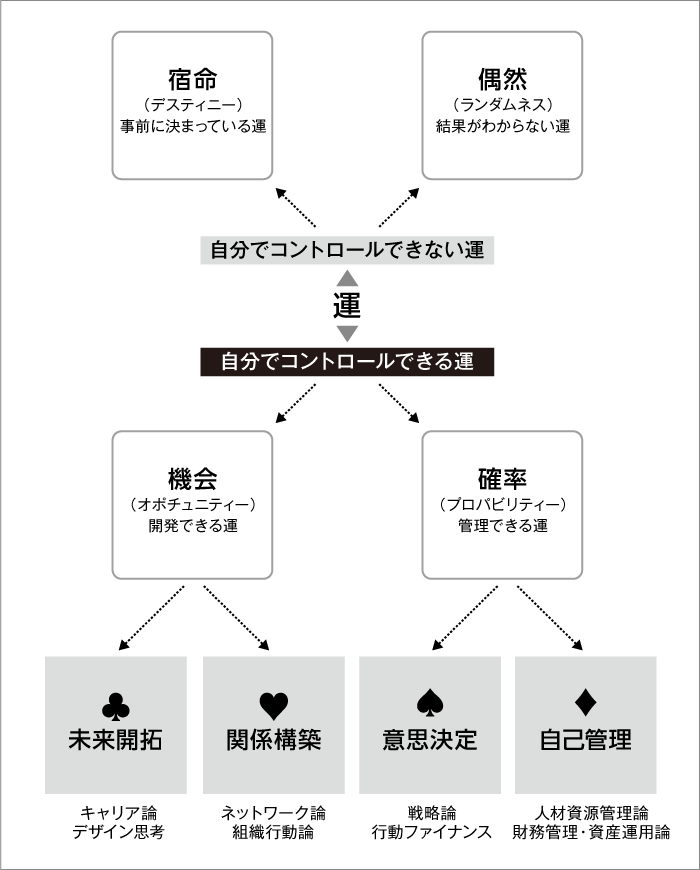
A professor at Waseda University Business School, frequented by many corporate executive candidates, unravels the true nature of "luck." What distinguishes the fortunate from the unlucky? How should we handle luck we can control versus luck beyond our control? Is mastering how to cook frozen dumplings more likely to bring good fortune than buying a lucky wallet? Strengthen your life wisely with this "textbook of luck." Nikkei BP
Management means doing things "properly." Leadership means confronting the "more." For companies and for business, this balance is crucial. Lacking either leads to "ruin" or "death."
Focusing only on "doing things properly" leads to a slow death. Focusing only on "more" creates chaos and brings about a chaotic death. I call this balance the "delicate balance." How many companies truly practice "properly" and "more" based on this sense of balance?
The English word "Life" carries three meanings: life as a journey, life as daily existence, and life as biological existence. I believe our current situation, tossed about by the novel coronavirus, reflects society as a whole wavering between "daily existence" and "biological existence." It's not about which to prioritize. Prioritizing daily existence to the point of losing biological life defeats the whole purpose. Similarly, prioritizing biological life to the point of severing lifelines is equally meaningless.
What matters is balance. Society as a whole must maintain and share a proper sense of balance. That is the only way to prevent panic. Couldn't the exact same thing be said in the business world?
To put it bluntly, Japanese people don't understand business.
Now, we're finally heading into the final stretch. For many Japanese people, "work" isn't about business; it's about industry. Industry means "industry/diligence," so they believe "working hard to boost industry" equals "doing work." In contrast, business is about "making investments and generating returns."
Don't you think that's something only startup CEOs do? It's not. It's about maximizing and efficiently utilizing your precious life time and your own abilities. In return, you receive a salary. That is business. To make that business more enjoyable and fulfilling, you build relationships. You think of better methods. You unleash creativity. I believe this applies to every profession.
In short, before you work, before you move your body, think first. What does thinking mean? It means organizing. After organizing, grasp the situation with simple arithmetic and envision a desirable future.