食ラボ調査から見えてきた「食のキザシ2023」 [5/5]
食とコミュニケーションの現在地
食のキザシを探る、本連載。今回のテーマは「食とコミュニケーションの現在地」です。食事は、人と人とのコミュニケーションの場として重要な役割を担っていると言われます。
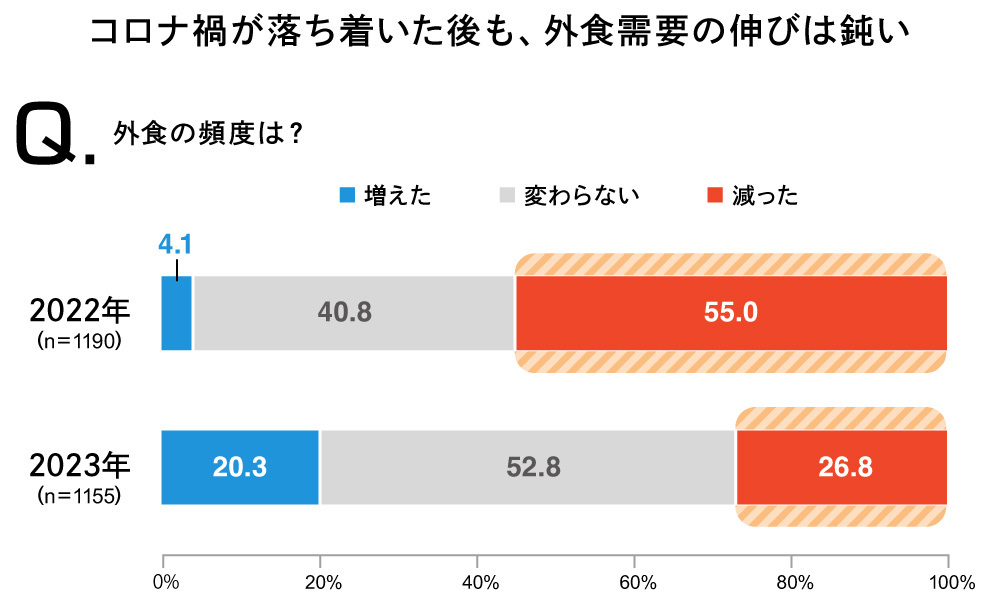
しかし、電通食生活ラボ(以下、食ラボ)の2022年調査では、新型コロナウイルスが感染拡大する前の2019年と比べて半数以上が「外食をすることが減った」と回答しました。さらに、5類感染症移行後の2023年調査でも減った割合が増えた割合を上回っています。コロナ禍の自粛の反動で外食需要が増えるのではないかと思われましたが、さらに減少傾向にありました。
折しも新年会シーズンを迎え、「コミュニケーションの場としての食の機会」が多く訪れるこの時期に、「食とコミュニケーションの現在地」をひもときたいと思います。
<目次>
▼コロナ禍で生まれた価値観の定着
▼「食」を通したコミュニケーションの変化
▼新しい食のコミュニケーションのキザシ
▼「料理」を使った新しい食コミュニケーション
コロナ禍で生まれた価値観の定着
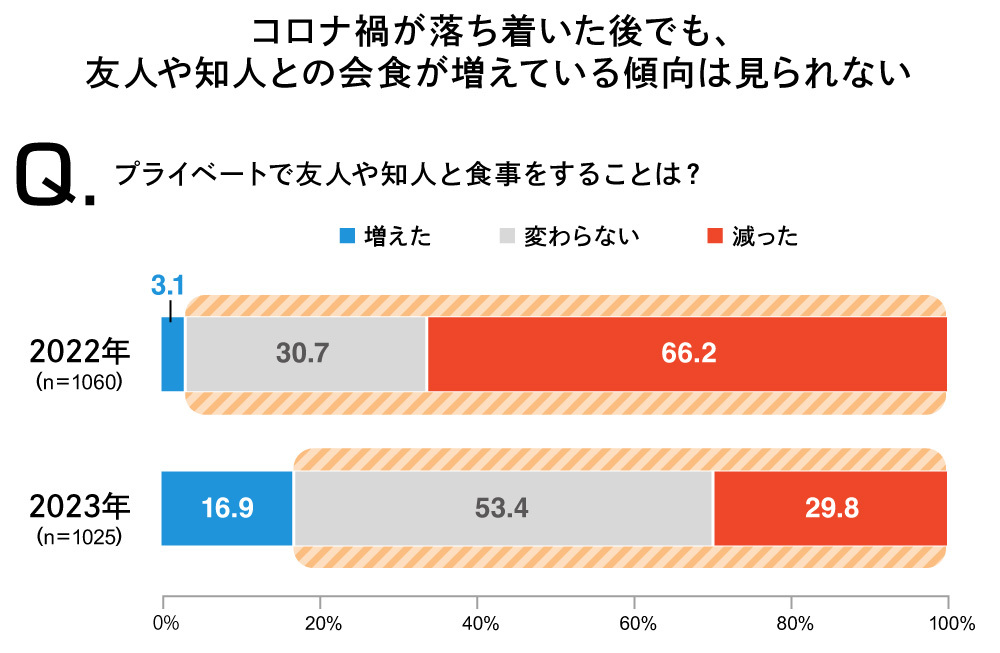
食ラボの2022年調査では、コロナ禍を経て、友人や知人、もしくは会社関係者や同僚と食事をすることが減ったと答えた人が7割近くになりました。コロナ5類感染症移行後の2023年調査でもこれらの会食が増えているという傾向は見られませんでした。
「プライベートで友人や知人と食事をすること」については2022年と比較して約30%が減ったと回答し、増加の割合を上回っています。調査結果から、コロナ禍の影響により減った“家の外で誰かと食事を共にする機会”が戻ることなく、ライフスタイルとして定着しつつあるということが考えられます。
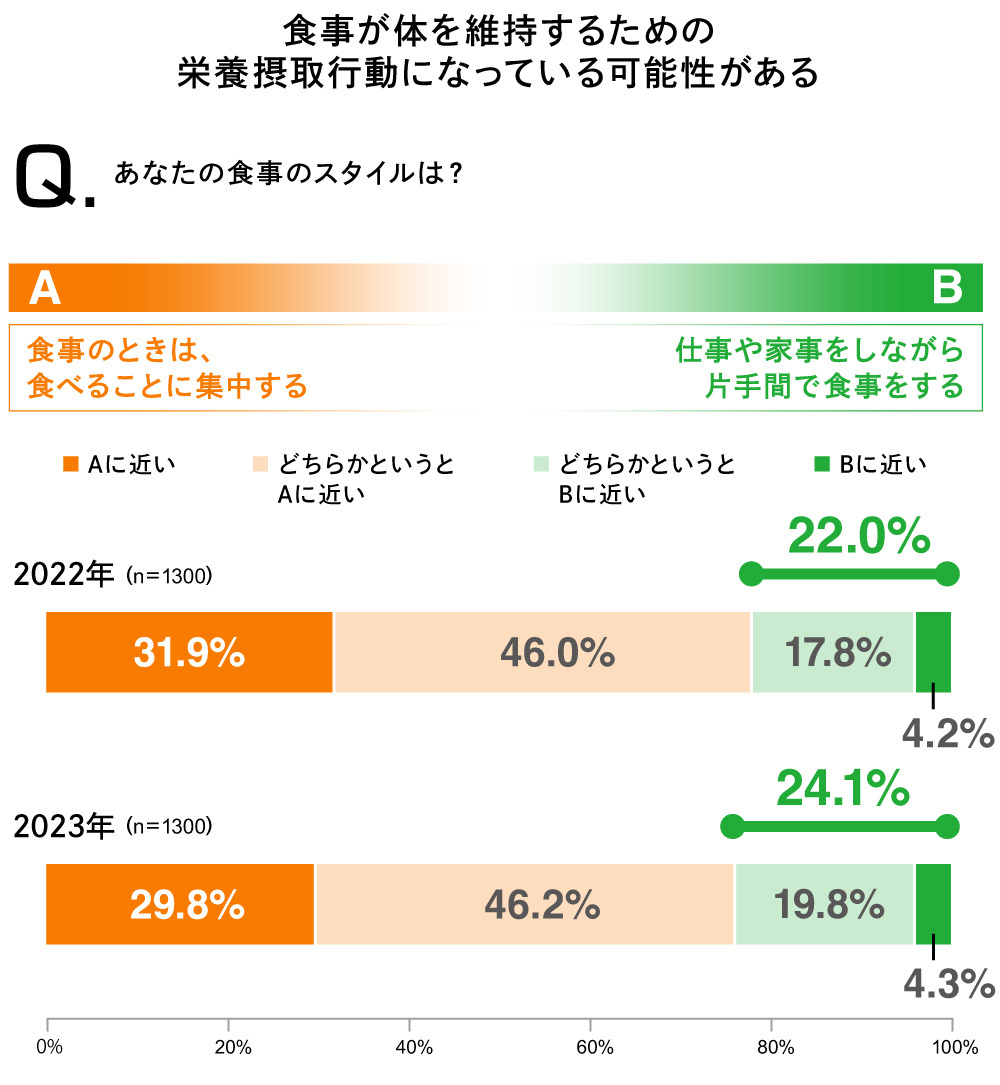
また、連載2回目の「0.5食」の記事(詳しくは、こちら)でも触れましたが、一日3食きちんと食べることにこだわらない人が増えています。仕事や家事をしながら片手間で食事をとる割合は、2022年調査では22%、2023年調査では約24%と増加しています。この結果を見ると、食事がコミュニケーションの場として機能する機会が減少し、自分だけで楽しむものや、体を維持するための栄養摂取行動となっているのではないかと考えられます。
また、家の外で誰かと食事を共にする機会の減少が定着したことが影響しているのか、みんなと同じものを一緒に食べたい意識よりも、自分の好みのものを選んで食べたい意識に近いという回答が86.1%と圧倒的多数になっており、2022年調査よりも1.3%増、2016年調査と比較すると30.1%増となっています。コロナ禍を経て、食に対する意識が「自分中心」に大きく変化してきていることが見受けられます。
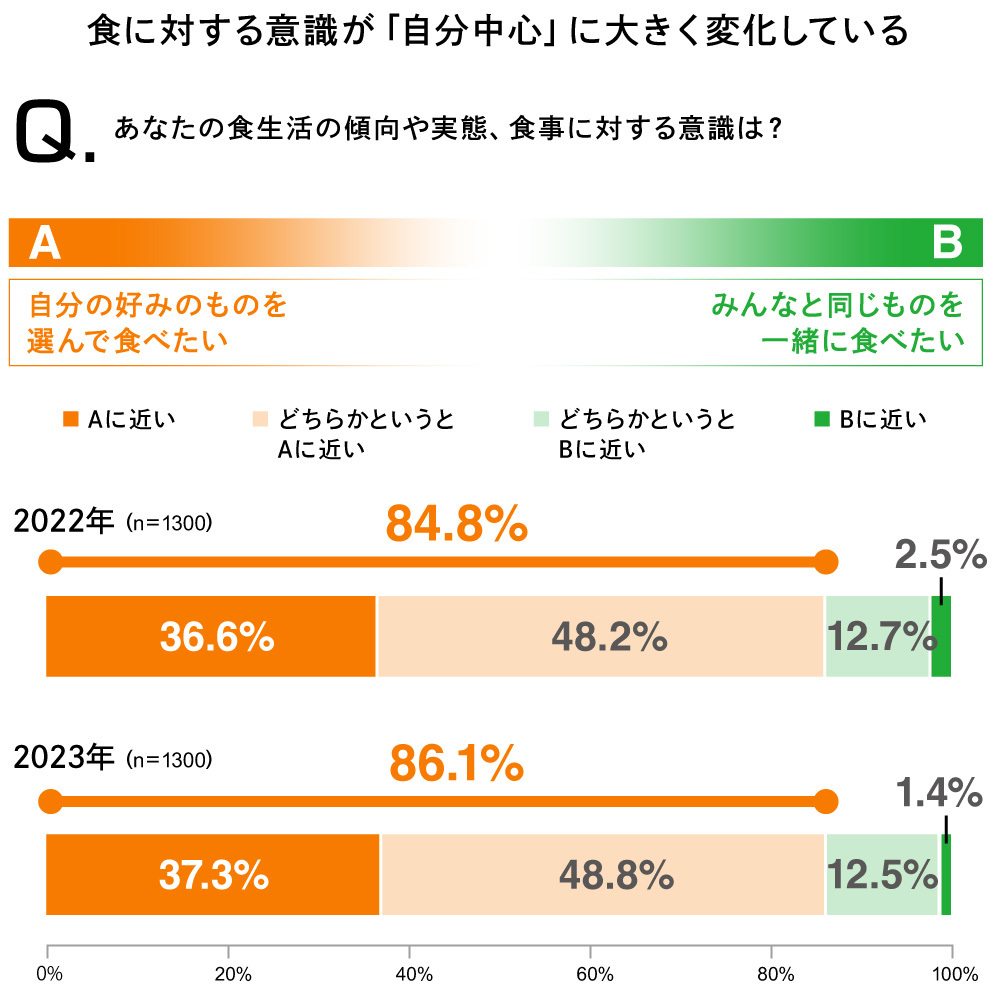
私自身の生活を振り返ってみても、コロナ禍を経て、プライベートにおいては特に「あの人に会いたいから食事の機会を作ろう」というよりも、「あれが食べてみたい、あそこに行ってみたい」という気持ちが先行し、「誰と行くか」の優先順位は下がっていると感じます。SNSを見ていても、「ここに行きたいから、行きたい人がいたら連絡待ってます!」といった友人からの投稿を目にする機会も増えました。食に対する意識の変化が、実際の生活の中でもこのように表れているのだなと思います。
「食」を通したコミュニケーションの変化
しかし、食がコミュニケーションとして機能しなくなった、ということではなさそうです。
「食はコミュニケーションツールのひとつだと思う」という問いに対して、そう思うという回答は24.5%と2022年調査と比べ0.1%増という横ばいなのに対し、「料理はコミュニケーションツールのひとつだと思う」に対しての回答は、2022年調査の11.9%に対し14.2%と増加しています。
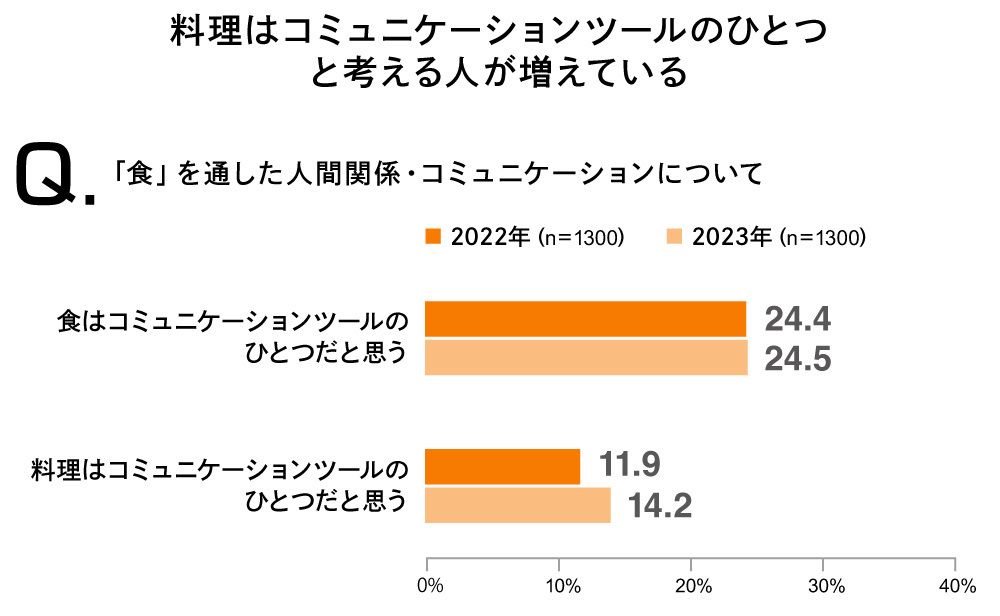
さらに、家で食事をすることが増えたという回答は17.5%と、減ったの3.8%を大きく上回り、「家で料理を作り、食べる」という状況がコロナ禍を経た今もおおむね定着し続けていくのではないかと考えられます。
また、他社の調査になりますが、どのようなシーンでの食コミュニケーションを最も楽しいと思うかという問いを見てみると、「普段の夕食」が最も高くなり、次いで「飲み会・家飲み」「家族の誕生日祝い」でした。特に40代男性では、「普段の夕食」が29.4%で2位以下を大きく引き離し、家族と過ごす団らんや、仕事が終わった後のひと時に幸せを感じている様子がうかがえる結果となっています。
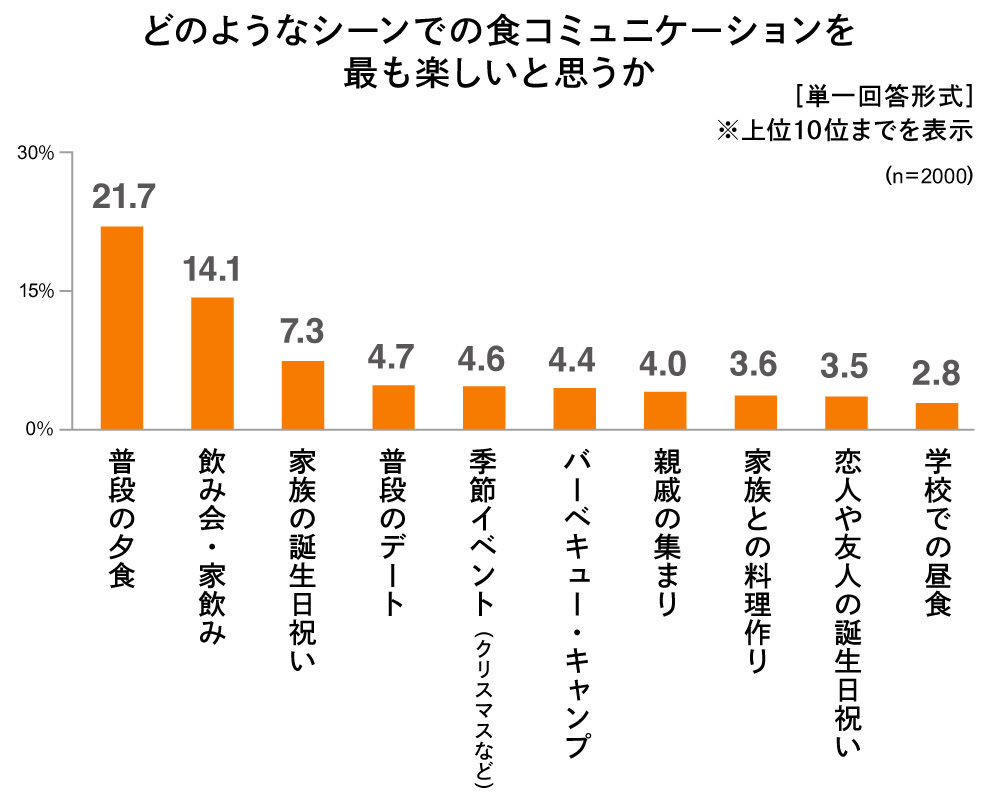
このような結果から、食のコミュニケーションは、毎日必ず訪れる食の機会を通してお互いの絆を深めるものとしてより身近に、そして当たり前に生活の中に溶け込むものとなっていくのかもしれません。
新しい食のコミュニケーションのキザシ
より身近なものへと変わりゆく食のコミュニケーションのキザシが感じられる事例も生まれてきています。
毎日必ず訪れる食の機会を、親子のコミュニケーションツールとして、さらには学びの場として“体験”を作り出すサービスや商品が複数登場しています。
例えば、「食育×プログラミング的思考」をテーマにして開発された、体験型デジタルコンテンツが新たに登場しました。食材と調理工程から、どんな料理が出来上がるかを想像しながら組み合わせていくというものです。これは親子で効率良い段取りを考えながら、料理を作るというプログラミング的思考を養うきっかけになるツールです。
「オンラインコンテンツ」と「リアルコンテンツ」を組み合わせたサービスも生まれています。動画やクイズ、ミニゲームといったコンテンツをオンラインで楽しみながら、それにまつわる食材が自宅に配送され、実際に触れる体験ができるというものです。
このように食のコミュニケーションは、コロナ禍を経て、一緒に食べることでおいしさを共有したり、その時間を楽しむことにとどまらず、食を通じて学びを得ることにつながったり、今までにない新たな体験を提供することができる、そんなツールとなっていくのかもしれません。
「料理」を使った新しい食コミュニケーション
先に述べた「料理はコミュニケーションツールのひとつだと思う」という回答が増加していることを象徴するような事例もあります。参加者同士が「声」を出さずに意思疎通を図りながら互いに協力して一つの料理を作り上げる「音のない料理教室」です。これは聞こえる聞こえないにかかわらず参加できる企画で、「それぞれで埋められているところが違う、未完成のレシピ」が配布され、自分自身の持っている情報と足りない情報を「声を出さずに」交換し合いながら料理を完成させるというものです。
「会話がなくても人は互いに心を通わせることができる」ということに気がつくきっかけ作りになる、そんな新しいコミュニケーションの試みです。
多様化していく生活の中で食とコミュニケーションの形も変わり続け、今後も新たな体験ができるツールが生まれることでしょう。私自身もまだない体験を創造してみたいなと思います。
【調査概要】
食生活に関する生活者調査 2022年(電通食生活ラボ調べ)
・対象エリア:全国
・対象者条件:15~79歳の男女
・サンプル数:1300
・調査手法:インターネット調査
・調査期間:2022年9月29日~10月1日
・調査機関:電通マクロミルインサイト
食生活に関する生活者調査 2023年(電通食生活ラボ調べ)
・対象エリア:全国
・対象者条件:15〜79歳の男女
・サンプル数:1300
・調査手法:インターネット調査
・調査期間:2023年10月20日〜10月23日
・調査機関:電通マクロミルインサイト
※構成比(%)は小数点以下第2位で四捨五入しているため、合計しても必ずしも100%にならない場合があります。

この記事は参考になりましたか?
この記事を共有


バックナンバー
著者

梅枝 真衣
株式会社 電通ライブ
ナレッジシェアエリア
プランナー