
Note: This website was automatically translated, so some terms or nuances may not be completely accurate.
 Mi-Life Innovation 2025 [2/6]
Technology is transforming the living environment of young people in the future.

Mika Kifuse
Last time, we introduced Life Innovation brought about by technological evolution.
This time, we will introduce future lifestyle scenes surrounding teens and twenties, drawn from those created by Dentsu Inc.'s 'Mi-Life Innovation 2025' project.
Career Paths (Transcending Time)
Various issues surround young people's career paths. While new graduate recruitment activities have begun again this year, problems persist with the mass hiring system and declining career awareness among students.
How will technological advancements transform the environment surrounding young people's career paths?
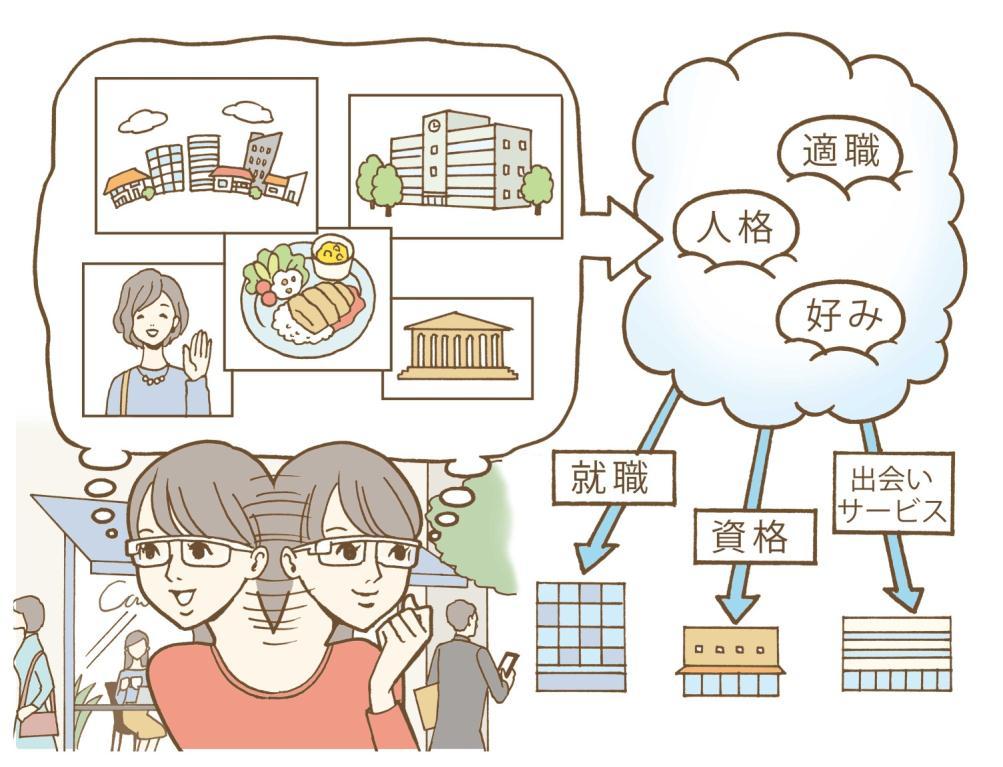
We envisioned a future where a matching service could analyze a person's preferences, personality, and suitable occupations based on visual information obtained from smart glasses and register this data in the cloud. By leveraging real, detailed data linked to actual behavior, this service could help individuals find their ideal career or partner.
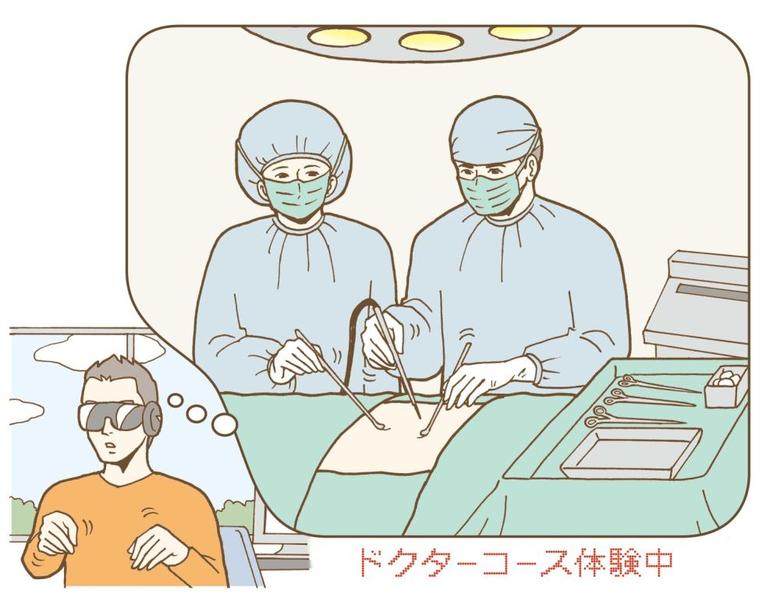
Furthermore, by wearing a "VR head-mounted display," individuals could simulate experiencing various occupations and roles within a virtual space. This would allow them to undergo aptitude assessments for specialized professions before employment, visualizing a future where they pursue careers they want to try or aspire to. Utilizing this as training material could also bring a day when opportunities to acquire and improve specialized skills become available at home.
Fashion (Increasing Time)
Young women have always loved fashion. Recently, fashion curation apps and flea market apps have seen surging downloads. As technology advances, the fashion landscape is expected to transform.
If a "3D Body Database" were created, where CT scan machines measure your body size during health checkups and register it in the cloud, linking this with online shopping or apparel store customer databases would allow size confirmation without needing to try clothes on. Services that already coordinate and recommend clothes suited to an individual are emerging, but linking with this database would further eliminate the hassle and time spent checking sizes, increasing the time available to enjoy shopping.

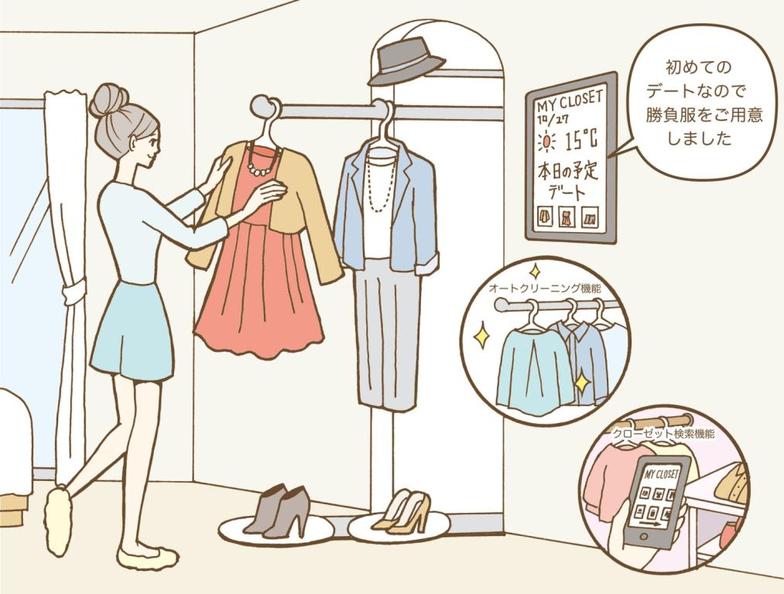
Home environments will also transform. Consider the "smart closet." The closet itself will coordinate and suggest outfits based on the day's weather and schedule. When shopping for clothes, users can efficiently search the closet's database via smartphone. Furthermore, an auto-cleaning function will automatically send clothes to the cleaners simply by hanging them in the closet, reducing time spent managing garments and increasing time to enjoy fashion.
The spread of "Touch&Buy Magazine" will also transform the shopping experience. While browsing a magazine on a tablet, encountering something you want might only require a touch on the screen. This could instantly connect with the 3D body database and smart closet to determine your size and recommend colors. This would make shopping significantly smoother and save a considerable amount of time.
Travel (Reducing Time)
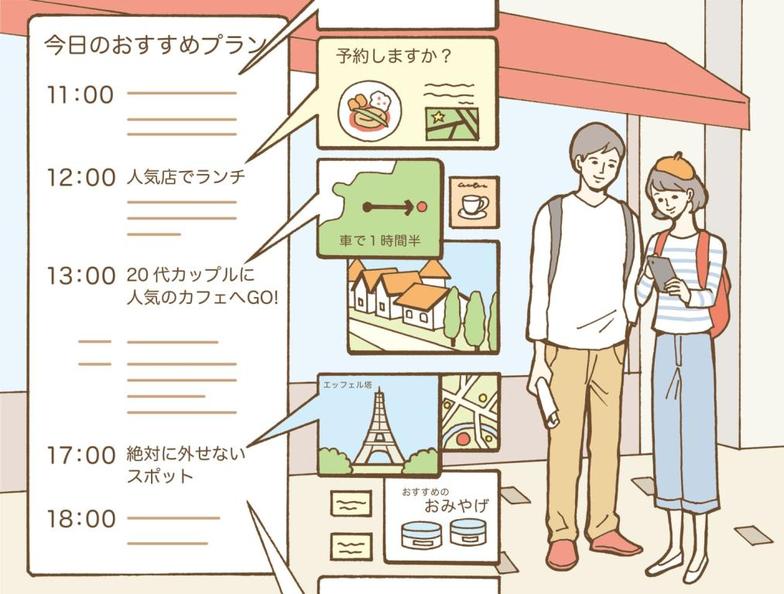
Many young people travel during long breaks like summer or winter vacations. As technology advances, the nature of travel may also change. The proliferation of social networking has enabled the aggregation of diverse information from around the world onto the cloud. "Social Trip Services" utilizing such information may become widespread in the future. No matter where you are in the world, you could obtain the optimal local information for that specific place and time.
Furthermore, services might design and recommend personalized travel plans based on your activity logs and location data. If such services automatically curate travel plans tailored to your preferences and even provide navigation, it would reduce the time spent gathering information and planning trips, allowing for more efficient use of time.
Food (Eliminating Time)
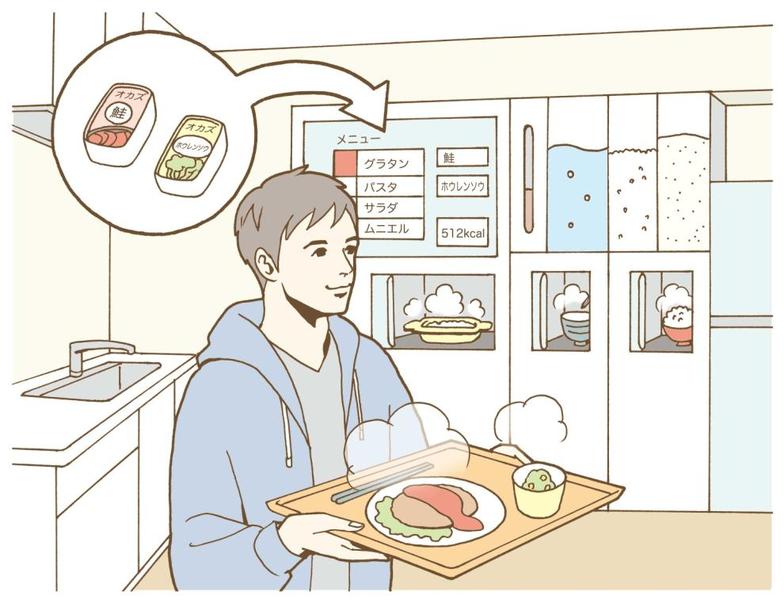
Young people's eating habits are changing daily. We believe technology's evolution will accelerate this transformation. In the future, "cooking robotics" will likely advance significantly.
For example, integrating refrigerators with cooking appliances could mean hot side dishes and rice are ready at the touch of a button. With numerous meal kits automatically delivered, this could eliminate not only the effort and time of cooking but also most of the time spent shopping.
What do you think?
Young people in their teens and twenties continuously adopt new things, transforming their lives. As the information environment changes, their lives will become increasingly efficient, and the distance between people and between people and places will likely shrink even further.
It's exciting to imagine how our living environment will change with technological evolution like this, isn't it?
This time, we introduced the lives of teens and twentysomethings. Next time, we'll explore how the lifestyles of those in their thirties are changing.Was this article helpful?
Share this article


Newsletter registration is here
We select and publish important news every day
For inquiries about this article
Back Numbers
Author