Note: This website was automatically translated, so some terms or nuances may not be completely accurate.
 Mi-Life Innovation 2025 [3/6]
How technology's evolution will transform the lives of future parenting generations.
Last time, we introduced how the lives of teens and twentysomethings will change due to technological evolution, based on future lifestyle scenes created for Dentsu Inc.'s "Mi-Life Innovation 2025" project. This time, we present lifestyle scenes for the child-rearing generation in their thirties and forties.
Enriching Family Time
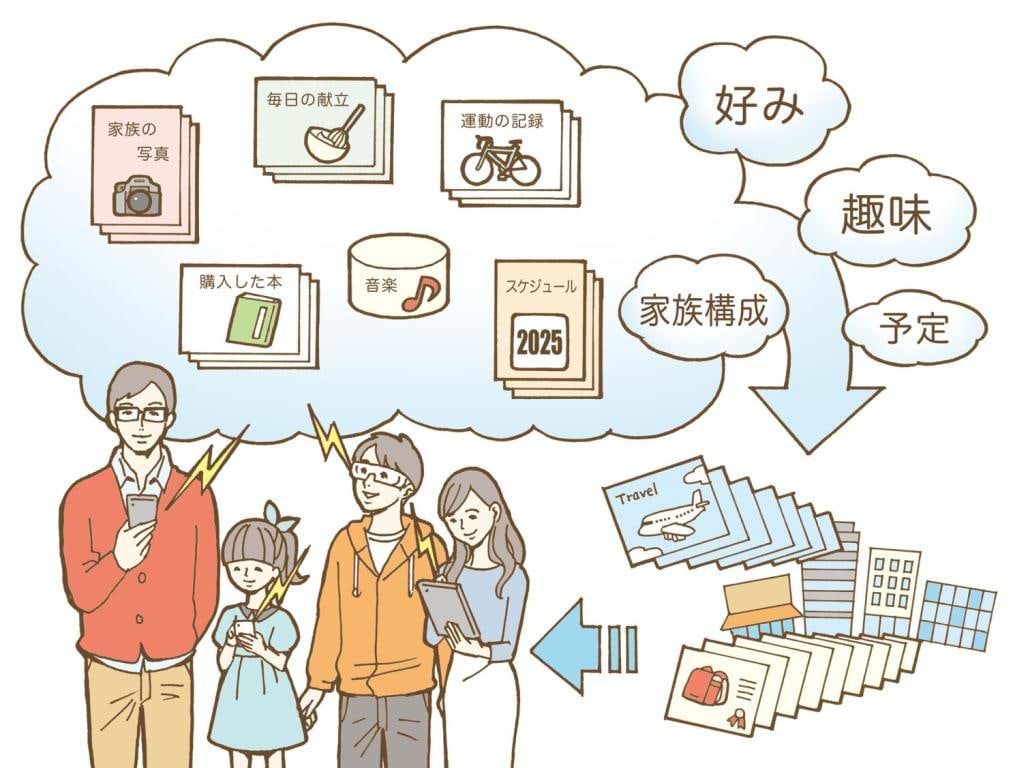
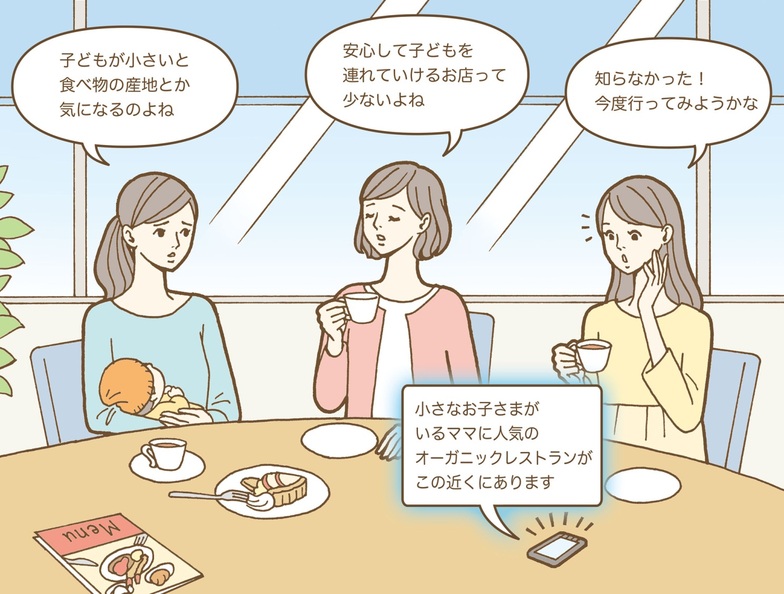
The spread of FMC (Fixed Mobile Convergence) services, which integrate mobile and landline communications, will lead to smartphones and home internet lines being managed as a set. This consolidation means family photos, schedules, meal plans, music, and other data previously managed separately on children's smartphones, mothers' tablets, and fathers' computers will be aggregated in the cloud. It will be stored not as individual data, but as household information. This will make it easy to grasp all family memories and records. Furthermore, household marketing optimized by location and household composition is expected to become more active.
Travel plans and restaurants tailored to the preferences and schedules of the entire family will be suggested from the cloud, increasing opportunities for family outings. FMC may not only connect communication lines but also strengthen family bonds.
Supporting Information Exchange Among Moms
For moms in the child-rearing generation, communication with mom friends is extremely important.
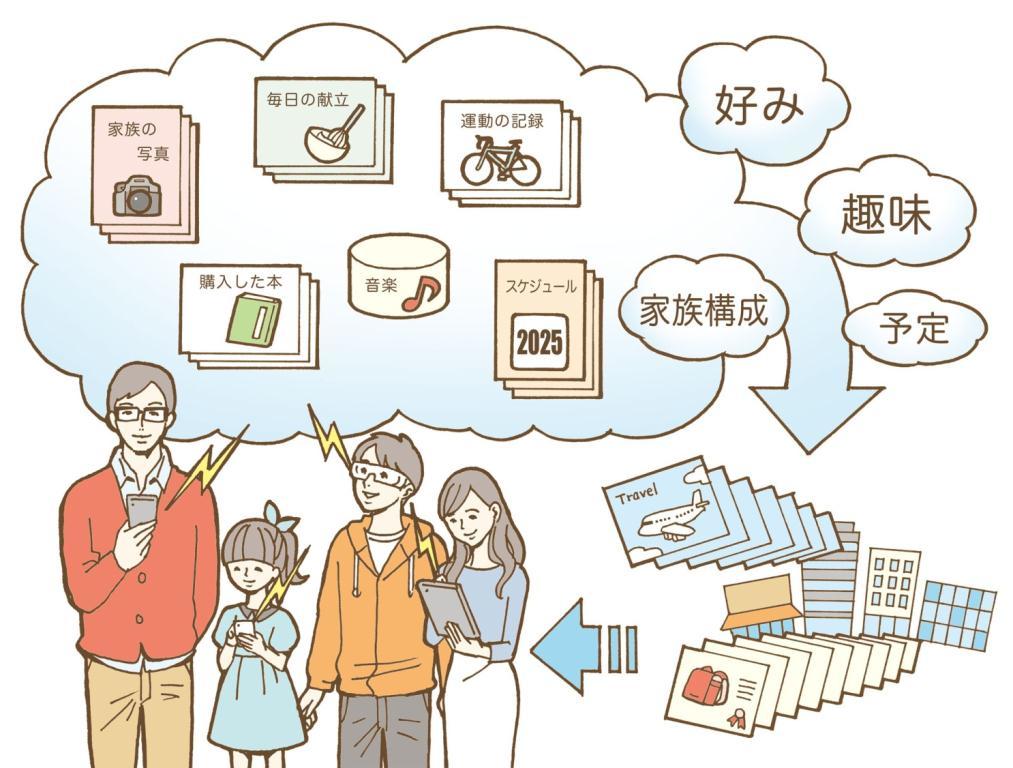
Close mom friends exchange all kinds of information, from childcare tips to complaints about their husbands (lol). The day may come when smartphones join these mom friend conversations.
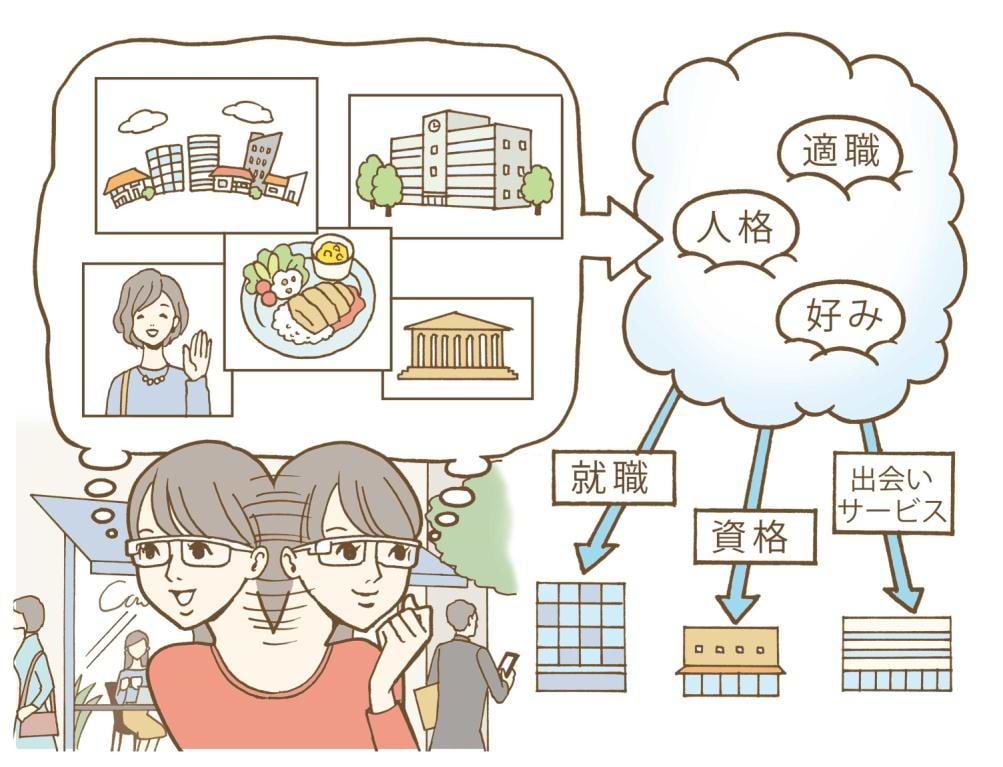
Technological advancements could minimize battery drain while enabling constant microphone capture of real-time audio. This would allow smartphones to continuously collect conversations and even mutterings, analyzing real-time dialogue to present relevant information. Recommendations wouldn't just be text-based pushes; they could integrate into conversations themselves, delivering perfectly timed suggestions.
Unlike existing recommendation methods, smartphones would provide new information as if they were another friend.
Urban Parent-Child Farming Experiences
With a high reliance on food imports and a shrinking agricultural workforce, farming is a major future challenge for Japan. While a recent boom in agricultural employment has been seen, particularly among younger generations, the overall number of agricultural workers continues to decline. Living in urban areas, children rarely have opportunities to engage with farming, which is thought to contribute to young people's disengagement from agriculture.
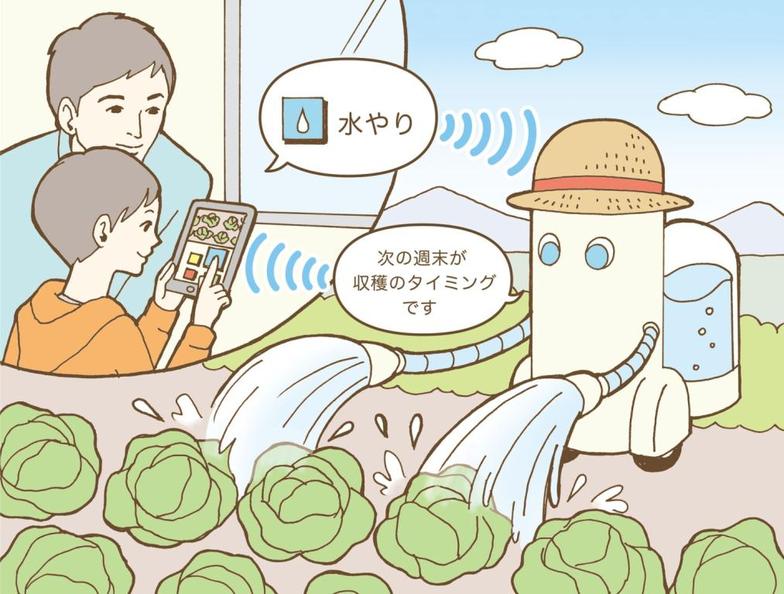
For example, if "remote farmers" could use smartphones or tablets to remotely check farm conditions and instruct watering or fertilizing, urban residents could engage in farming, increasing the number of city-based farmers. Morning watering could become a daily routine for parents and children, with actual harvesting on weekends, enabling children to experience farming.
Increasing Family Communication Time
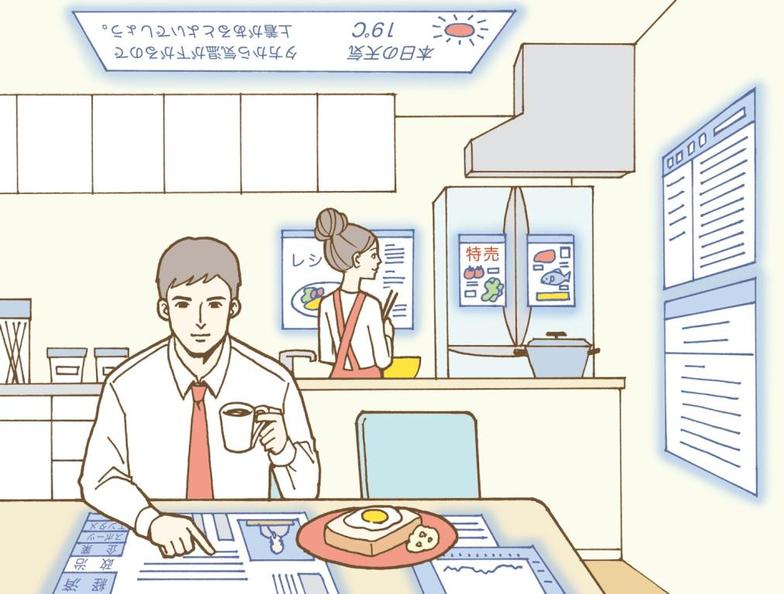
Parents want to spend as much time communicating with their children as possible. However, work and household chores are demanding. For the child-rearing generation, the strong desire to save time wherever possible is likely very real. For gathering information, many people already use smartphone information curation apps. Furthermore, in the future, the falling prices of high-performance projectors and the spread of projection mapping and holographic images will make it possible to project all kinds of information onto any wall in a room. There will be no need to go out of your way to check information on smartphones or computers as before. For example, on busy mornings, waking up in bed to see the weather forecast on the ceiling, news at the dining table, and recipes for lunches using leftover ingredients displayed on the refrigerator would save time. And that extra time translates into more conversation time with family.
What do you think? The proliferation of computers and smartphones not only transformed people's lives but also profoundly influenced the mindset and behavior of the digital native generation born and raised in that era.
Further technological advancements will enrich the time of the 2025 parenting generation. This, in turn, will enrich the future time of their children.
This time, we focused on the parenting generation in their 30s and 40s. Next time, we'll explore how the lifestyles of the slightly older generation—those in their 40s and 50s—will change. Stay tuned.
Was this article helpful?
Share this article


Newsletter registration is here
We select and publish important news every day
For inquiries about this article
Back Numbers
Author

Shunsuke Tanizuka
Dentsu Inc.
Second Integrated Solutions Bureau
Chief Planner