Note: This website was automatically translated, so some terms or nuances may not be completely accurate.
 Mi-Life Innovation 2025 [4/6]
How technology evolution is transforming future workstyles.
Continuing from last time, we introduce our project "Mi-Life Innovation 2025," exploring how technological evolution will shape our future lives and workstyles. This time, focusing primarily on the middle generation (40s-50s), we outline the impact on business environments and workstyles.
Personal Assistant
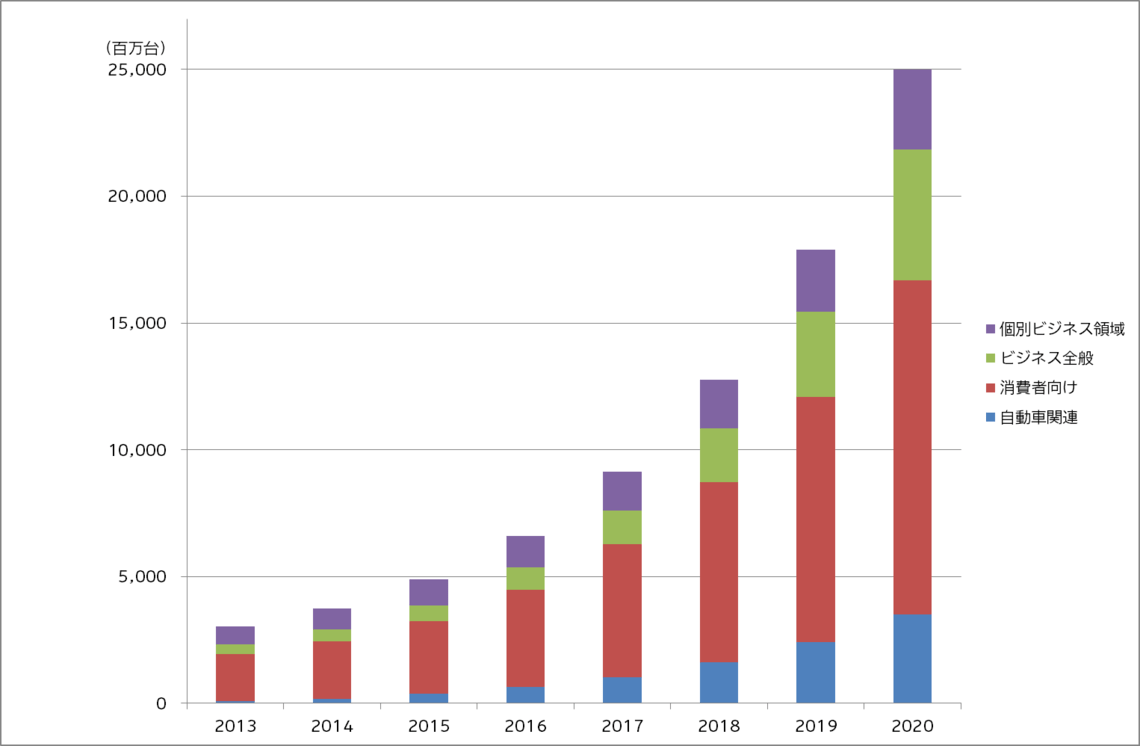
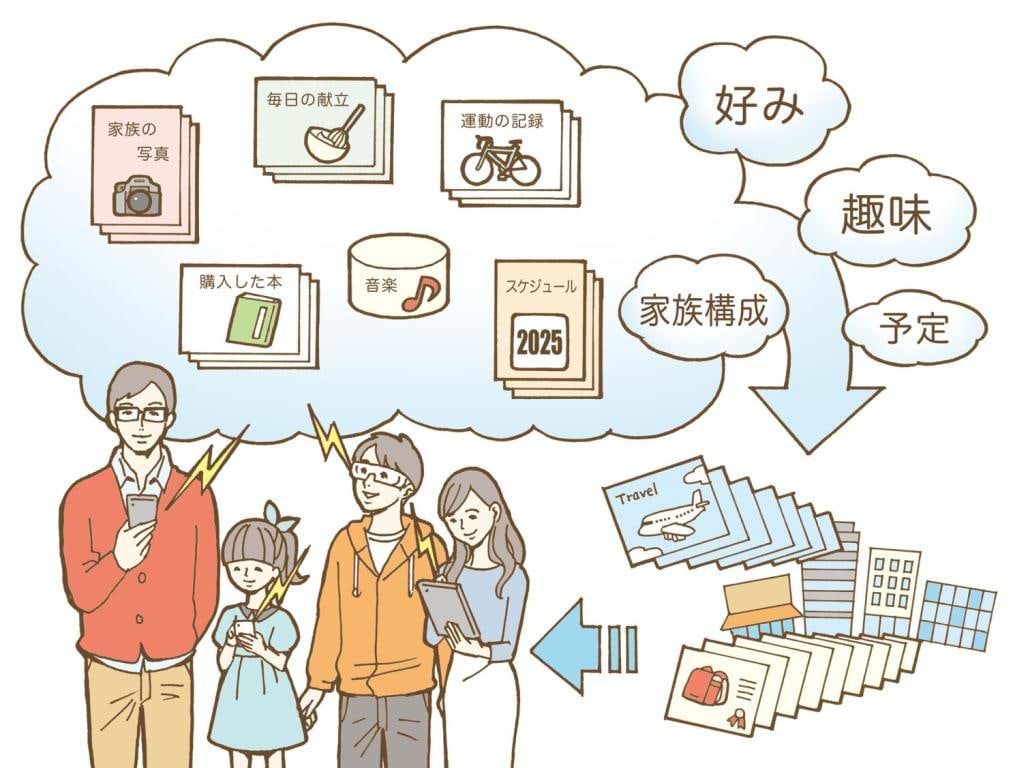
Since 2015, the market for wearable information terminals like smartwatches has taken off in earnest, emerging as a new technological trend. As these wearable devices become capable of integrating all kinds of information—from cloud network connectivity to sensor data—they will provide increasingly detailed and nuanced support for decision-making.
For example, current schedule management merely informs users of pre-entered dates, times, and locations, such as "Your next meeting is at 4:00 PM in Conference Room A, 24th Floor, Shinjuku ● Building."
In the future, however, it might inform you, "If you leave your seat within the next 60 seconds, you'll make it to your next meeting. Today, taking the bus would be faster than the subway." It could provide the optimal route at the optimal time. By integrating all kinds of information—real-time traffic data, public transit schedules, and even the user's walking speed—it will be possible to deliver highly detailed, attentive information.
Beyond just schedule management, it will extend to customer management, family schedule coordination, and more. Your daily to-do list will be automatically organized, suggesting what you should do right now to align with it, and helping you choose the best course of action. It will be like having an excellent personal assistant for each individual.

Face Recognition Glasses
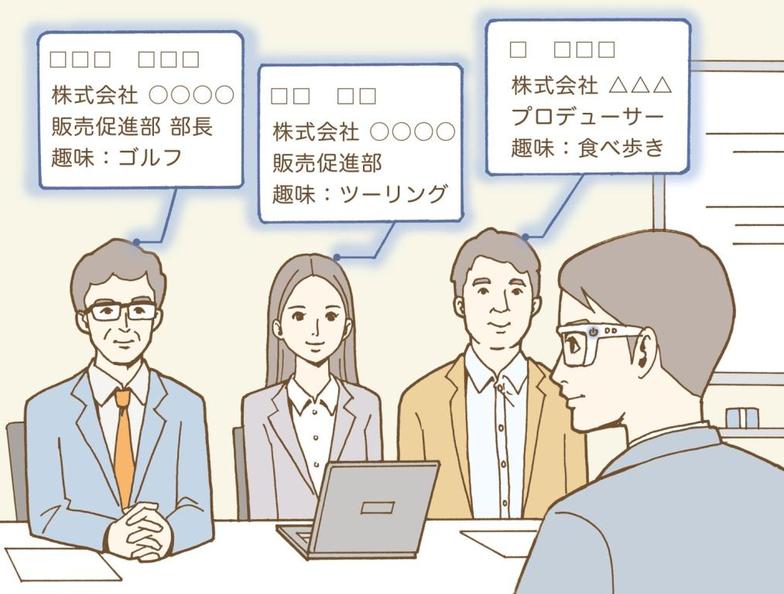
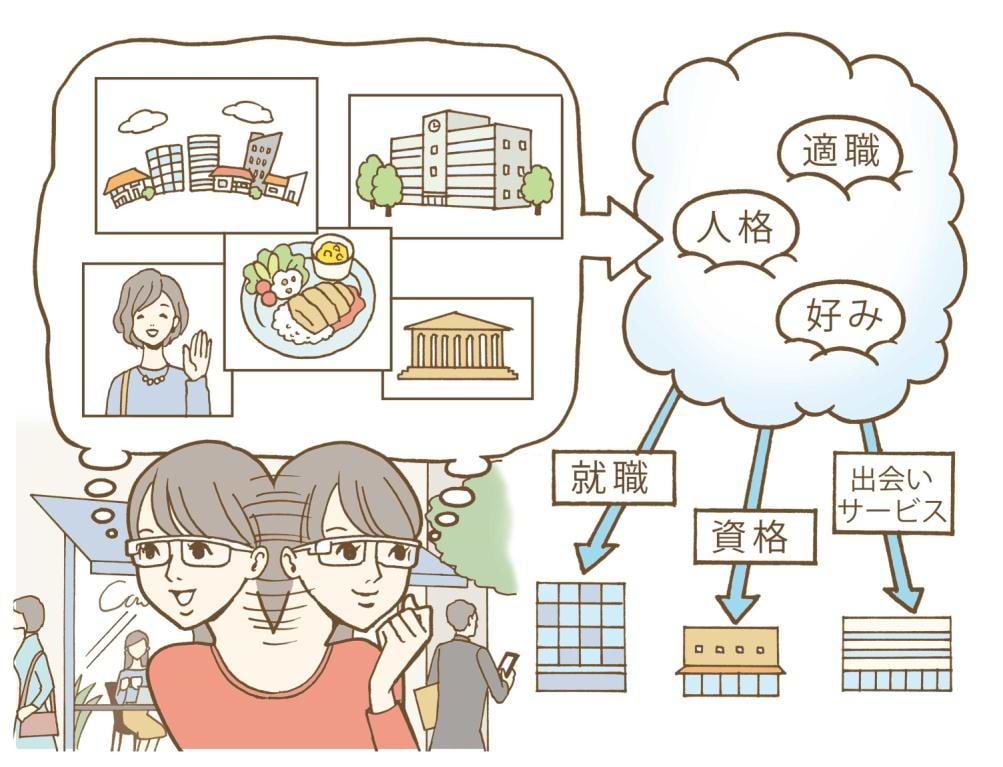
Smart glasses, a technology that overlays AR (augmented reality) information obtained via networks onto people, objects, and scenery visible in front of the wearer, are also gaining attention. Combining this technology with facial recognition could potentially enable the instant display of information like social media profiles for people standing right in front of you. This would allow, for example, efficient communication with detailed knowledge of someone you're meeting for the first time in a business setting, shortening the time needed to build rapport and offering significant added value in business contexts.
Translation Earbuds
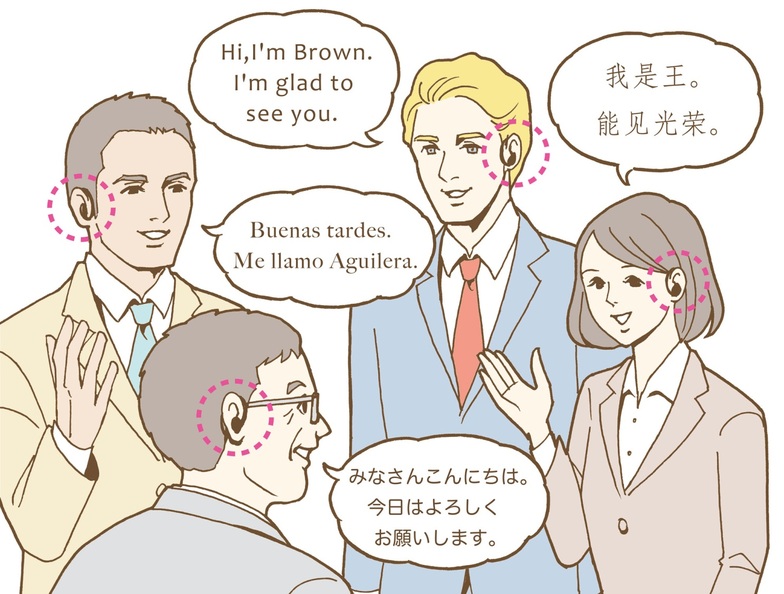
With the 2020 Tokyo Olympics as a key milestone, interest in developing multilingual automatic translation is intensifying. Recent rapid progress has been driven by an approach called statistical machine translation, which leverages big data. We've already experienced the high accuracy of modern speech recognition technology through smartphone features.
On the other hand, translation accuracy remains immature and often awkward when dealing with languages with different syntactic structures or pronunciation issues, presenting ongoing challenges for technological development.
Nevertheless, we look forward to further advancements in this field to better serve customers from around the world. This would reduce the time needed to learn other languages, freeing up time for enriching communication with others or pursuing other learning opportunities.
Smart Payment
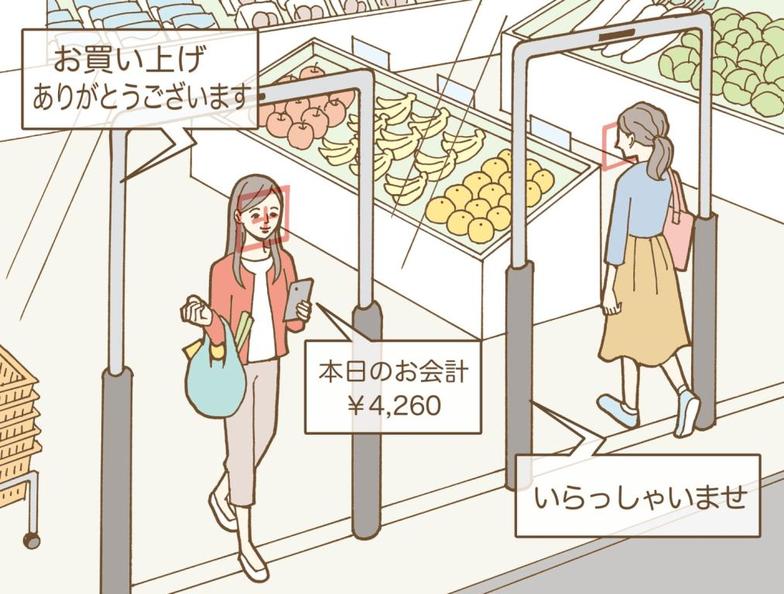
Combining facial recognition technology with payment services could enable stores to identify individuals upon entry, immediately awarding them visit points alongside a personalized welcome message.
Simply place desired items in a basket and pass through a checkout gate to complete the purchase. This eliminates waiting in line at the register or the time spent retrieving and presenting loyalty cards from wallets.
For increasingly busy working people, they'll want to minimize time spent on tasks like shopping payments. Instead, they'll want to use that time to carefully select products, spend more time with family, or dedicate it to themselves.
The world depicted here mirrors the future envisioned in classic sci-fi films like "Ghost in the Shell" and "Minority Report." We are entering an era where the "future we've always hoped for" is steadily becoming reality through the combination of technology and innovative ideas.
Next time, I'd like to introduce how the daily lives of the slightly older generation—seniors in their 60s and 70s—will change. Stay tuned!
Was this article helpful?
Share this article


Newsletter registration is here
We select and publish important news every day
For inquiries about this article
Back Numbers
Author

Tadayasu Inoue
Dentsu Inc.
Data & Technology Center