Note: This website was automatically translated, so some terms or nuances may not be completely accurate.
 What Are Startups? ~ The New Economic Growth Ecosystem ~ [9/9]
Eight Trends Shaping the Startup Ecosystem
Since last year, we've been running a series titled "What Are Startups? The New Economic Ecosystem." It has covered the rapidly forming ecosystem's overview and featured interviews with its leading players.
Specifically, after outlining the startup landscape, we believe we were able to introduce emerging movements and cutting-edge trends—such as the creation of new industries, talent, and capital liquidity—through sessions withleading venture capitalists (VCs), internet service entrepreneurs, angel investors, and connected hardware entrepreneurs.
This time, we aim to summarize several topics, including future developments that respond to the previous series.
Eight Trends Shaping the Startup Ecosystem
1.Entrepreneurship and Exits
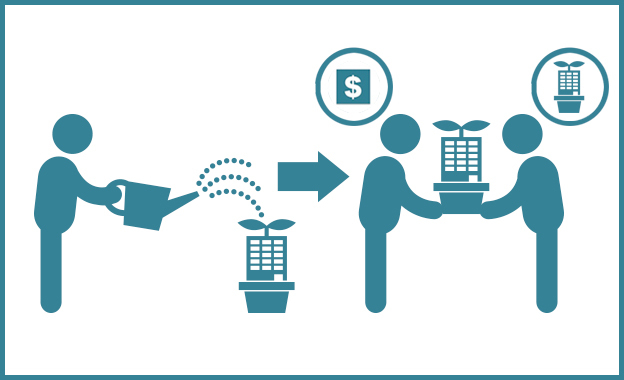
The number of IPOs (initial public offerings) in 2014 reached 77 companies, an increase of approximately 43% compared to the previous year. Furthermore, although the figure is from 2013, the number of M&A deals as non-IPO exits also saw significant growth, reaching 278 cases, an increase of approximately 81% year-on-year (according to releases from the Venture Enterprise Center, a general incorporated foundation, among others). While some reports caution against the overheated IPO trend, IPOs are expected to increase through 2015, and exit diversification will likely continue.
2. Increased Media Exposure and Enhanced Recognition

Ben Horowitz's "HARD THINGS" was a May bestseller, and Peter Thiel's "Zero to One" won this year's Business Book Award. Business books by top American VCs and serial entrepreneurs/investors are selling well. This is clear evidence that the startup ecosystem is attracting widespread attention.
In mass media, the buzz around this field is becoming visible: Asahi Broadcasting Corporation aired a hackathon program with sponsorship and cooperation from numerous large corporations and startups; Nippon TV aired "Sensors," a program covering art and technology, connected hardware; Weekly Morning serialized "Haru Rock," a hardware tinkering manga featuring a female college student; the investment manga "Investor Z"; and the hardware hub "DMM.make AKIBA" emerged. As our touchpoints with IoT and hardware increase, beyond just the internet and app services, our awareness will likely shift.
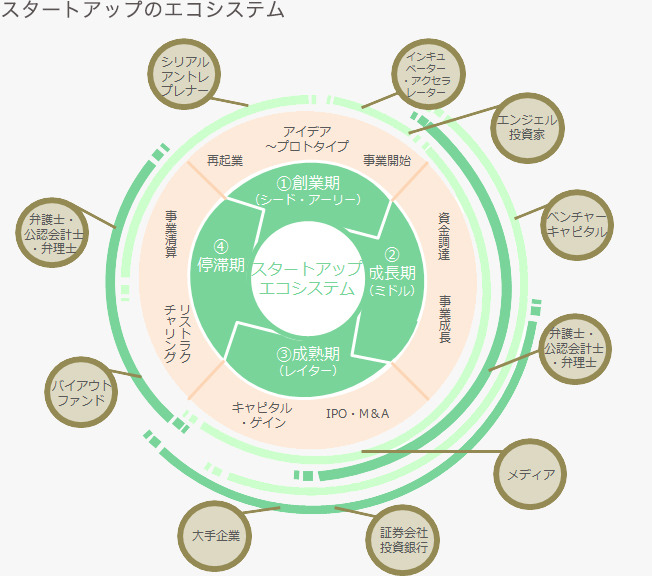
While still in its early stages, these developments strongly suggest a growing momentum: not only startups, but also major corporations, government, and mainstream media are becoming more involved. This signals rising awareness, attention, engagement, and a shift in mindset toward startups across Japan. Below is a reprint of the ecosystem diagram from the first installment of this series.
3.The Emergence of Serial Entrepreneurs
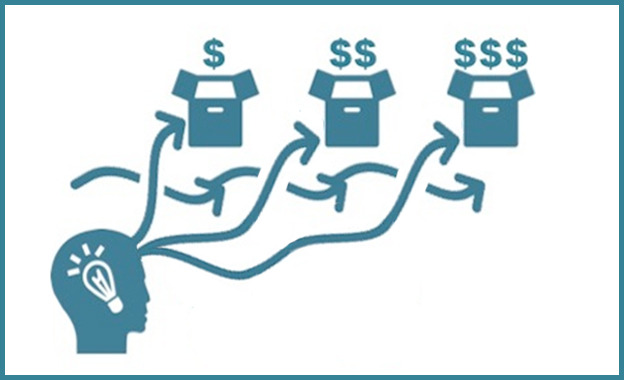
Serial entrepreneurs—individuals who rapidly create new businesses, sell them, and continuously generate value—are emerging. Entrepreneurs like Mr. Yo Shibata of O2O solutions company Spotlight, Mr. Kensuke Furukawa who runs media company nanapi, Ms. Mari Murata of lifestyle media company iemo, and Mr. Shintaro Yamada who operates the smartphone auction app "Mercari" are gaining attention as role models for successive business development and expansion. More such entrepreneurs are likely to emerge in the future. Furthermore, while entrepreneurship remains male-dominated, the increasing participation of female entrepreneurs at various pitch events signals a notable expansion of female entrepreneurship.
4.Acquiring promising teams through acquisition

Related to the earlier mention of serial entrepreneurs, acqui-hires (a portmanteau of acquisition and hire) are increasing, primarily among major internet companies acquiring promising teams from strong startups. Examples include Mixi's March acquisition of the ticket trading service "Ticket Camp," and "Basket," which operates a home delivery dry cleaning service, becoming a subsidiary of Cross Company, known for brands like "earth music&ecology." Start Today, which operates the fashion e-commerce site "ZOZOTOWN," is also building e-commerce sites. Cross Company, known for brands like "earth music&ecology," made "Basket" a subsidiary, and Start Today, operator of the fashion e-commerce site "ZOZOTOWN," made "Arata Na," which handles e-commerce site construction, a subsidiary. Acqui-hires, enabling faster growth and business development, will likely increase. Of course, the fit between the businesses and cultures of both parties is crucial.
5.Open Innovation Between Large Corporations and Startups
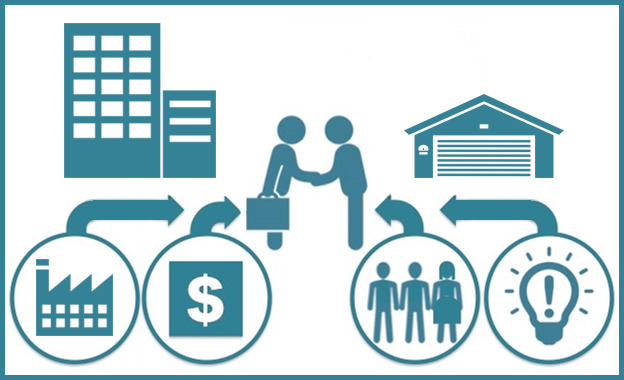
Initiatives where large corporations' challenges—"new business development and seeking rapid innovation"—and startups' challenges—"lack of experience and business credibility"—mutually complement each other will likely surge. Examples of capital and business alliances include JTB forming a capital and business partnership with the leisure and experience booking site "asoview!", and Nikkei Inc. partnering with the social recruiting service "Wantedly". These moves rapidly aim for mutually complementary business expansion. Combining the resources of large corporations—such as networks, capital, and talent—with the ideas, speed, and agility of startups enables the creation of businesses that achieve both scale and rapid growth. Additionally, programs connecting large corporations and startups for business development are increasing, such as Tokyu Corporation's acceleration program and Mitsubishi UFJ Financial Group's finance × venture events. Noteworthy developments extending beyond the digital realm have also emerged, such as the establishment of Japan's first "Real Tech Incubation Program" fund by Euglena, SMBC Nikko Securities, and LIVANES. Furthermore, as products like IoT and connected hardware—which differ from the development structures and speeds of large corporations—become more prominent, various hardware-focused initiatives are likely to emerge.
6.Increased Activity by Government and Local Authorities

The government is strengthening startup support under its "Japan Revitalization Strategy (Growth Strategy)", setting a target to double the startup rate from 5% to 10%. Specifically, these include Prime Minister Abe's earlier statement during his visit to the U.S. to "send Japanese SMEs and talent to Silicon Valley to promote business partnerships and investment between Japan and the U.S.," the Osaka Innovation Hub initiative, Fukuoka City's "Global Startup and Job Creation Special Zone," the Ministry of Economy, Trade and Industry's new robot strategy, regional startup support initiatives, matching events, and numerous other subsidies and legal reforms. Furthermore, efforts to transform public awareness have begun, such as strengthening entrepreneur education and establishing the Venture Grand Prize (Prime Minister's Award).
7.Revitalizing University Startups
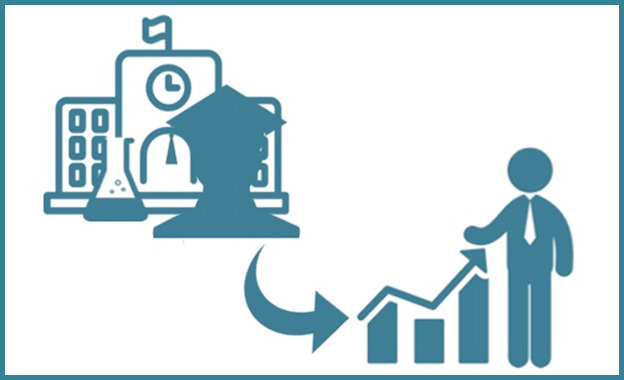
There are said to be approximately 1,800 venture companies based on university-originated research and development. Among these, technology-based ventures like the bio-venture "Euglena" (based on euglena algae, originating from the University of Tokyo) and the robotics venture "Cyberdyne" (originated from the University of Tsukuba) have achieved growth and gone public. Numerous startups, such as AgIC, a conductive ink startup originating from the University of Tokyo, are leveraging technology to rapidly expand globally, making their future developments highly anticipated. Furthermore, the establishment of university-affiliated venture capital firms and entrepreneurial support programs is increasing, suggesting a rise in collaborative cases with major corporations.
8.Global Entrepreneurship

Japan is one of the world's leading advanced markets, boasting a population of 130 million. However, entrepreneurship is also emerging in other regions: North America, a global hub for cutting-edge internet services; China, a massive market and production base; and rapidly growing Southeast Asia. Businesses are also beginning to bypass the Japanese market entirely for global expansion.
As touched upon in the first installment of this series, behind this global expansion lie so-called global megatrends: the evolution of internet technology, the advancement of devices, low-cost cloud services, international capital flows, the mobility of talent and labor, social networks, heightened environmental awareness, and increased health consciousness. These trends are creating business cycles, giving rise to challenges, successes, and renewed attempts.
Within this, the number of people actively participating in this flow will increase, giving rise to a new economic ecosystem—the startup ecosystem.
To conclude this summary, let's examine Dentsu Inc.'s engagement with startups. Even just looking at the past six months of coverage, numerous relationships have formed with leading startups both domestically and internationally.
For example, relationships as investors, clients, or joint venture partners have formed between startups and Dentsu Inc. Through trial and error, close ties have been forged, and business collaborations have begun.
We anticipate that Dentsu Inc.'s traditionally cultivated strengths in business production and business arrangement will be further leveraged, contributing to the startup ecosystem and advancing collaborative business with startups.
Was this article helpful?
Share this article


Newsletter registration is here
We select and publish important news every day
For inquiries about this article
Back Numbers
Author

Nakajima Fumihiko
Dentsu Inc.
CDC
Future Business Tech Team Director, Business Development