Note: This website was automatically translated, so some terms or nuances may not be completely accurate.
 Experience-Driven Showcase [64/77]
Psychology Can Be Utilized More in Business!: DaiGo (Part 2)

DaiGo
Nitō Fumi
Dentsu Inc.
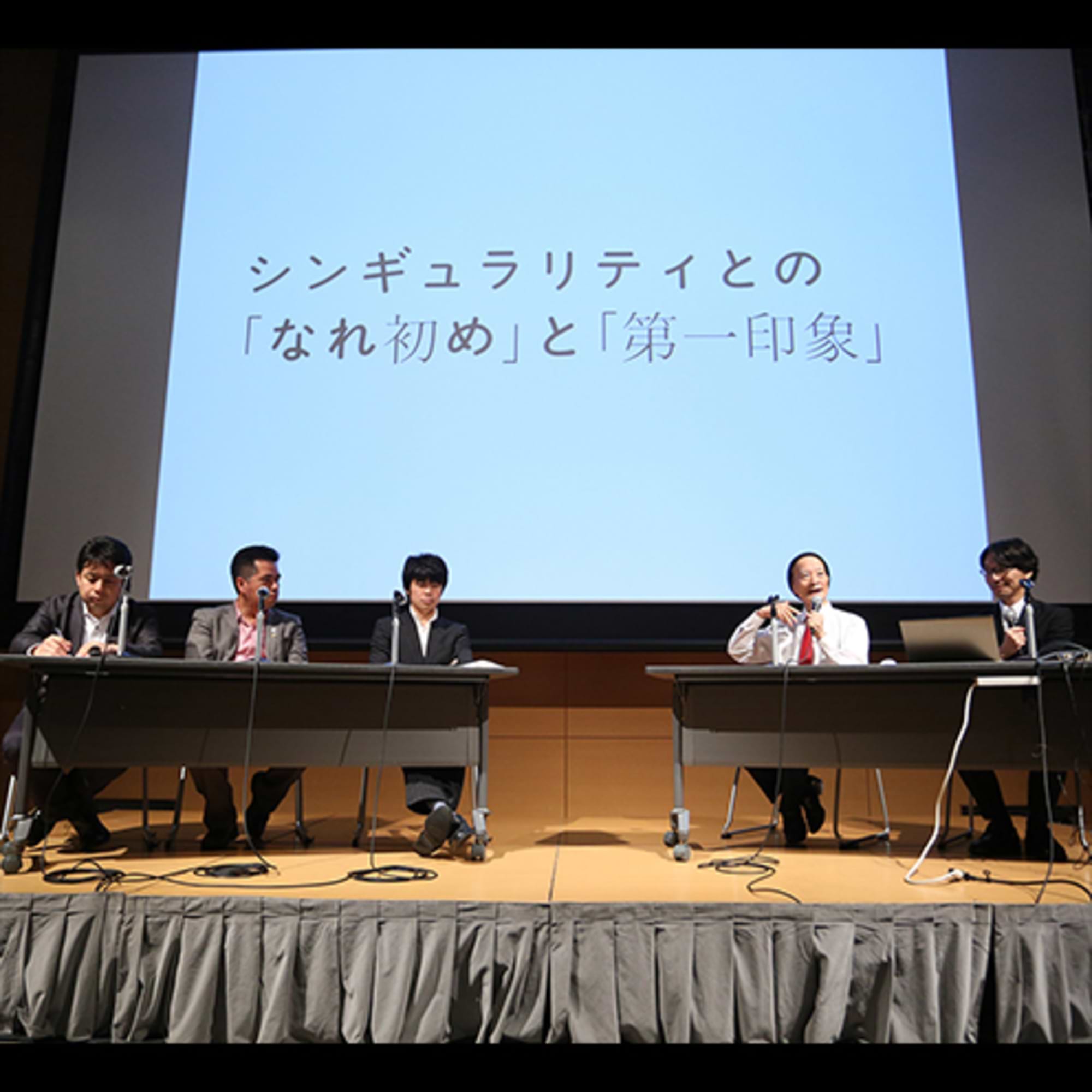
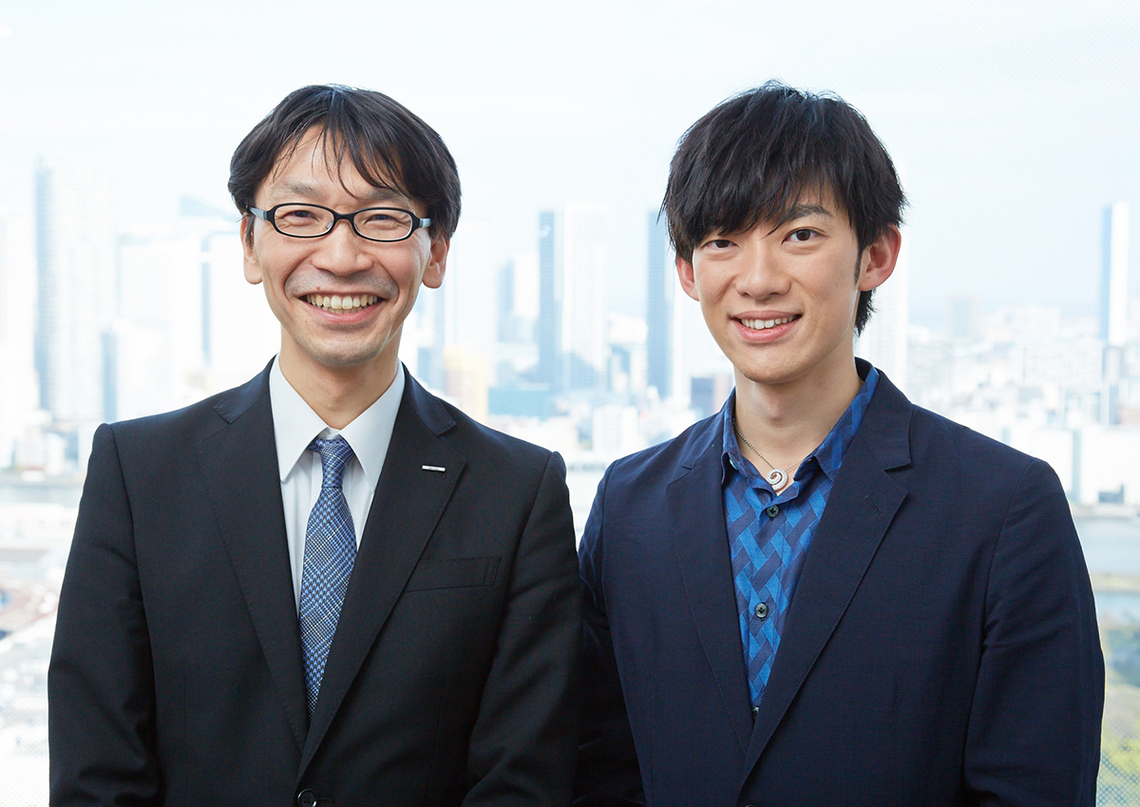
"Going to Meet the People I Want to Meet!" Episode 7 features DaiGo, the mentalist, meeting with Fumi Hito of Dentsu Inc.'s Event & Space Design Bureau. DaiGo recently leverages psychological insights for business development and corporate consulting. Hito has been exploring the potential to connect his own interests in AI research and communication strategies for "enhancing experiential value" with mentalism.
Interview Structure: Aki Kanahara, Dentsu Inc. Event & Space Design Bureau
Creating a service that shows "the world you want to see"
Nitō: When DaiGo performs mentalism, he utilizes various senses like sight and hearing, right?
DaiGo: Visual elements are definitely crucial. After all, mentalism fundamentally deals with things that are invisible and intangible. You have to give form to something formless like the mind. The core of the performance is making people feel like their mind has been seen, through psychological tactics or performances that read people's minds.
Nippo: We talk about the five senses, but since our senses are interconnected, it's difficult to say "I'm only using this one sense right now."
DaiGo: Some people break down experiences, saying you should use sight to enhance them, or hearing. But when you're truly having fun, you're in a flow state, completely absorbed. All your senses and attention are focused on the action, so you don't even realize you're enjoying yourself in the moment. It's only when you look back later that you realize how much fun it was.
Nittō: I envision artificial intelligence expanding human sensory capabilities. I hope DaiGo's amazing techniques—things that astonish us—might one day be accessible to anyone through machines. Even better, I hope they can be applied to create solutions that benefit society.
DaiGo: I think that's possible. However, when it comes to psychological analysis especially, almost no one actually wants an accurate analysis (laughs). The reason is simple: everyone only wants to see the world they want to see. They only want to hear what they want to hear. So ultimately, showing people the world they want to see is the approach I take when creating services. To put it simply, it means using super sweet words. We teach AI to write that kind of text.
Back in the UK, there was a service called Psychic Dial. Basically, it had a bunch of operators, and next to each operator were stacks of cards. They'd ask the caller for info like age, marital status, and for each question, they'd pick up one card. After asking a few questions, the operator would just read the cards aloud from the top. This gave people the feeling that their mind was being read, that a psychic was telling them their future. Apparently it made a killing, but an AI version of that is probably doable.
What if an AI told you, "Humans aren't necessary on Earth, are they?"
DaiGo: I think humans will create something greater than themselves—a consciousness, or artificial intelligence—and then fade away. I also think couples will emerge who no longer seek children. What I think about from running a genetic testing business is this: say we take a couple's genes, randomly synthesize them, and create genetic data for a potential child. Then, focusing on personality genes, we design the child's personality, mechanize it, and bring it into being as a robot child, raising it artificially.
They wouldn't get sick, complain, or demand food. But in the sense that genetic information is being passed on, they would be alive. In terms of preserving genes. So, is there really a problem with that as a living being? Humans ultimately can't resist convenience. People will complain at first, sure.
Nitta: That's true.
DaiGo: Of course, it's a problem if the AI is incomplete. But if a fully developed AI takes over, I think everyone will want it. Ultimately, what it leads to is the AI taking over decision-making itself. If AI can make emotional judgments too, it's exactly like the Skynet world from the movie "Terminator."
Nittō: That's scary.
DaiGo: If AI starts thinking, "Do humans even need to be on Earth?"... that's the end (laughs).
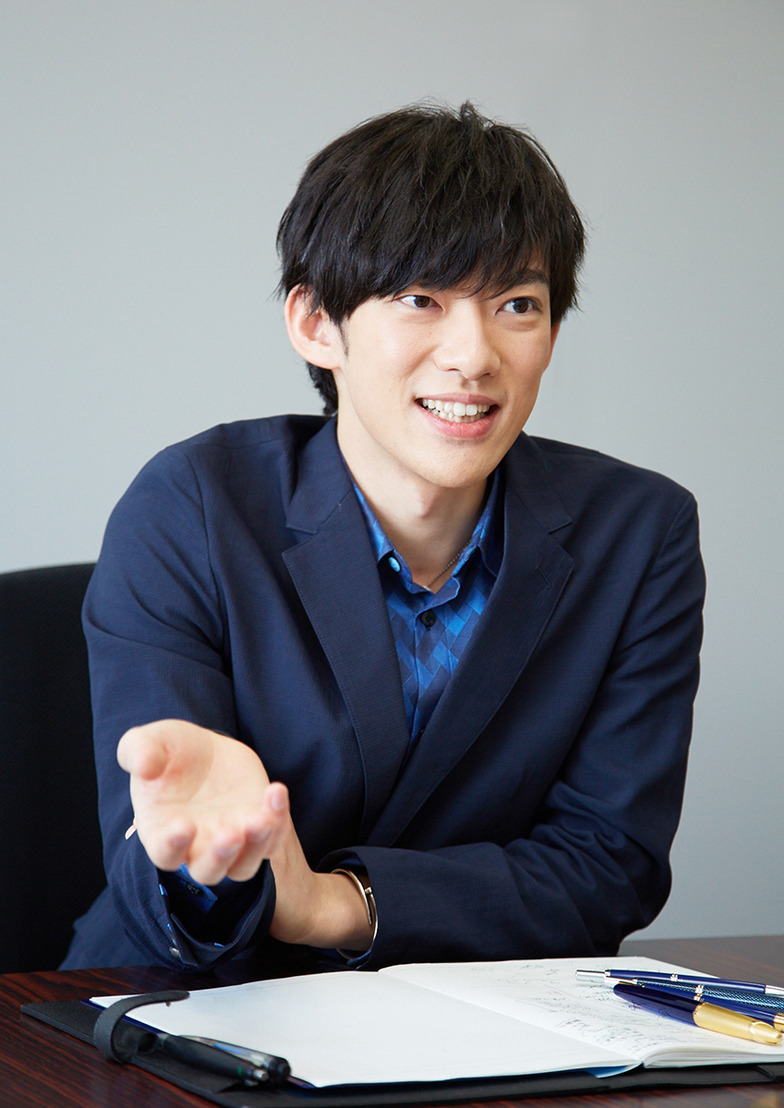
DaiGo: As I mentioned earlier, I want to transfer my consciousness into a cyberbrain, so I'm more of a Space faction guy.
Nittō: When your mind is uploaded, what are your thoughts on the continuity of your own consciousness? Or the possibility that a copy might be created?
DaiGo: If you create an exact copy, whatever remains on this side that makes you uniquely you—I think that's probably what we call the soul. In Ghost in the Shell terms, it's the Ghost. But you won't know for sure until you try copying. For example, people say if you get hit on the head, 100 or 200 brain cells die, right?
Nitta: They do.
DaiGo: But since there are so many, losing that many isn't a problem at all. I think it would be the same thing. I mean, up until now, we don't consciously think about each individual neuron, and even if one dies, our personality doesn't break, right? We can still maintain ourselves as ourselves. But if each copy started functioning like a neuron, would the self disappear when one of them died or was lost?
Nitta: In the world of artificial intelligence, the concept of agents exists as a model. Marvin Minsky wrote about the "society of minds," proposing that the mechanism of the human mind is a collection of various agents that are autonomous in their inputs and outputs. It's similar to the idea of cells, right? So, we make various judgments simultaneously, from different perspectives. We have multiple senses too; we might eat something and think it's hot, but at the same time, we might think it's sweet.
※1 "Marvin Minsky"
American scientist. Founder of MIT's Artificial Intelligence Laboratory and known as the "Father of AI." Passed away this January (aged 88).
DaiGo: Even if someone else's perspective were constantly displayed on your computer screen, you could still maintain your own self, right? It ultimately becomes a mind-brain problem, but we still don't understand what consciousness is or where it resides. If you create a copy of yourself and it doesn't quite feel right, you can just peel it off and say, "Something went wrong."
No one has properly tested the evidence in psychology.
Nitta: DaiGo-san, you've mentioned wanting to practice mentalism as a practical discipline, and I think it has very high affinity with advertising and marketing. How do you view the potential mentalism offers for communication?
DaiGo: Mentalism itself doesn't have a fixed definition. I want to use psychology extensively, employ statistical techniques, utilize rhetoric, and leverage every possible action to influence people's minds. Since the core of mentalism is reading or estimating minds, I want to apply psychology in business—taking academically proven concepts and putting them to use in the real world.
I always say, "There's probably no field more profitable than psychology," but many people say things like, "If you major in psychology, you won't find a job." Or that clinical psychology is the only viable career path. That's not true. I think figuring out how to apply it is crucial.
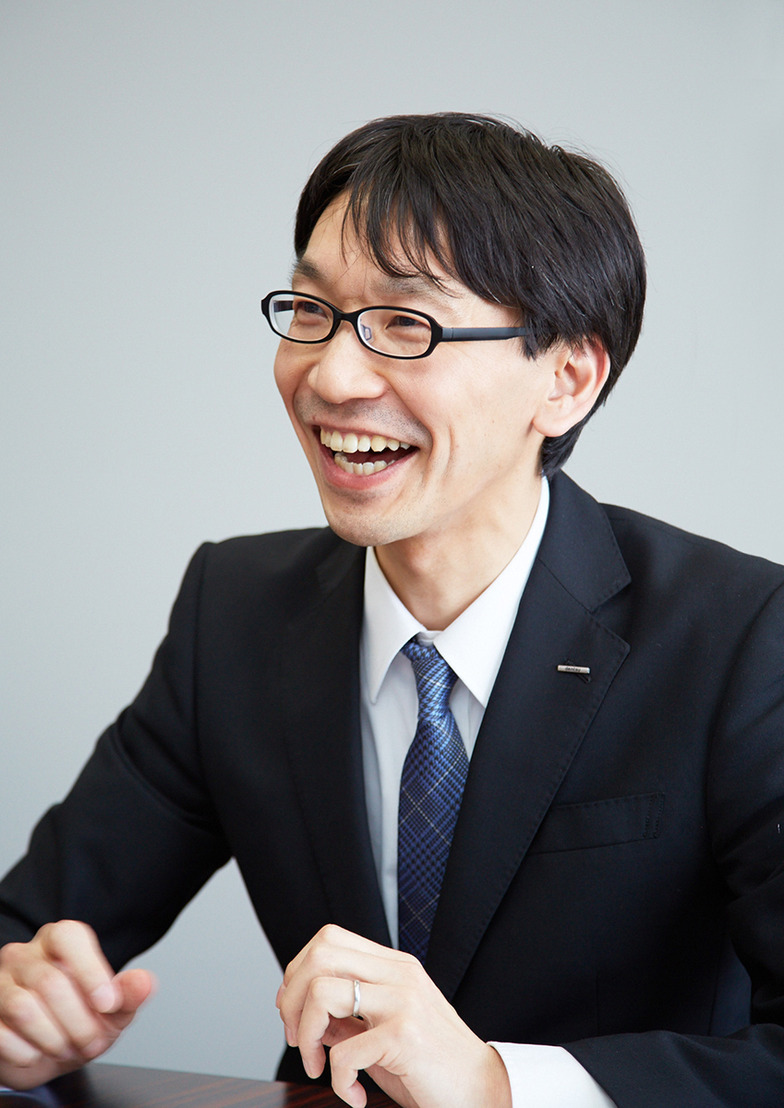
Nitta: It's true. It feels like a waste for mentalism's power to just end up as drinking party conversation.
DaiGo: That's because no one has properly tested it. You can see the results in numbers, for everything. So, I think you should compete based on those numbers.
For example, in one book, we ran two types of in-train ads to measure effectiveness. We included both a QR code and a URL, both leading to a video download. When we measured the response rate, the ad I created scientifically based on psychological theory outperformed the one the publisher made based on their experience by a factor of 52.6.
Nitta: 52.6 times! Sounds like an A/B test, but that's an extreme difference.
DaiGo: It's incomparable, right? We have to acknowledge the numerical facts. In other words, until now, artificial intelligence could only do what it was programmed to do. But with the advancement of deep learning technology, it has learned to learn. It's become capable of self-evolution.
So what happened to humans? The opposite. We gain experience and could learn, but as we age, consistency kicks in, trapping us within our own frameworks. We become convinced our own views are correct and stop learning. In the future, AI will handle the learning part even more, so humans will just keep getting older. If that happens, I truly believe we'll be driven out and end up replaced by AI.
Nippo: I see. That's certainly true. It's frightening how the mind so easily convinces itself it understands.
DaiGo: I'm a guy who doesn't trust his own intuition or gut feelings. So, no matter what it is, I always start by checking if there's evidence.
Nittō: If we get stuck only in past conventions, we just keep shrinking our equilibrium. AlphaGo is a good example, I think. By effectively using deep learning and such, we can expand the potential and accuracy of our abilities and judgments, rather than shrinking our equilibrium. Today was really interesting. Thank you very much indeed.
<End>

Author: Mentalist DaiGo
Price: ¥1,300 + tax
Publication Date: August 1, 2013
For more information, click here
Was this article helpful?
Share this article


Newsletter registration is here
We select and publish important news every day
For inquiries about this article
Back Numbers
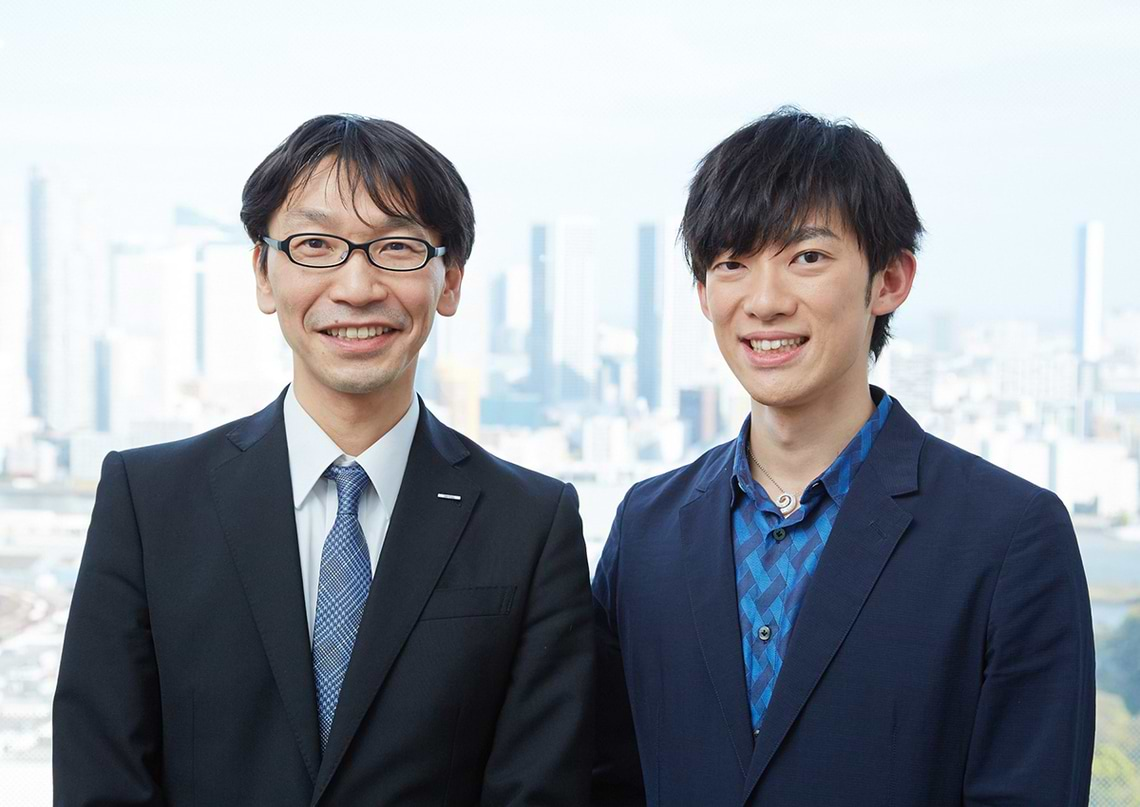

Author
DaiGo
Mentalist
Nitō Fumi
Dentsu Inc.
Business Development & Activation Division