Note: This website was automatically translated, so some terms or nuances may not be completely accurate.
 【Continued】Local Gurgle [91/208]
Local Competitive Advantage
The joy of traveling on business across Japan lies in savoring the local fish and drinking the local sake. Sitting in a corner of a local izakaya beloved by the locals and spending time there leisurely is pure bliss.
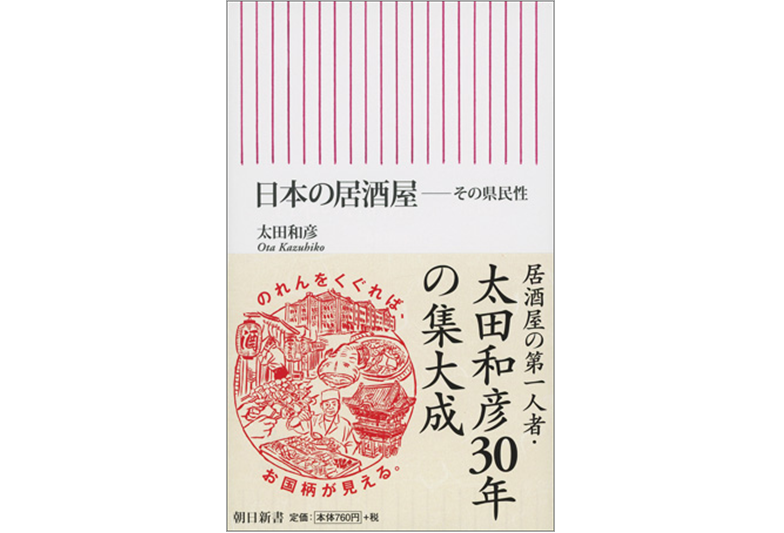
That said, deciding which izakaya to enter while traveling is a major dilemma. That's when Kazuhiko Ota, a leading authority on izakaya research, becomes indispensable. His recent book, 'Japanese Izakaya: Their Regional Character' (Asahi Shimbun Publications), covers all 47 prefectures and introduces recommended establishments.
For instance, reading a page like "Akita is the kingdom of 'small pot cooking,' where dishes like salted whale and eggplant or water shield and whitebait are simmered in large scallop shells that release their broth. The moment it starts bubbling, you dig in. The seasoning, of course, is shotturu" makes you want to rush out and buy a ticket to Akita.
What makes this book even more fascinating is that it goes beyond just listing famous restaurants. It delves into the cultural background and regional character that shaped each area's izakaya scene. For instance, Akita's drinking style is described as "dragging on and on." In Nagano, "the accompaniments to sake are nozawana pickles and debate. People spout nonsense arguments back and forth, endlessly expounding their own views." Meanwhile, in Fukuoka, "strangers instantly hit it off saying 'We're friends, right?' but by the next morning, they've completely forgotten and ask 'Who are you?'" It highlights not just differences in seasoning or ingredients, but the unique character of each region.
Incidentally, many local companies I encounter through work focus on major consumer markets like Tokyo or Osaka, or aspire to expand nationwide through online sales. While this isn't inherently bad, I sometimes feel they should pay more attention to their local market.
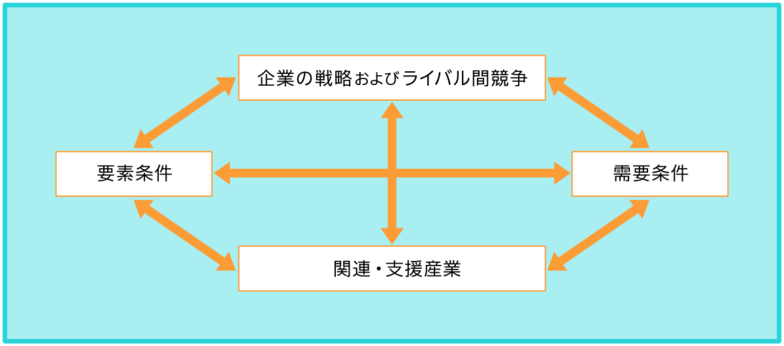
Come to think of it, back in my student days, I was forced to read Michael Porter's thick tome (so thick it could serve as a pillow, which made it a real struggle; I ended up speed-reading it, but anyway). That's where I learned about the mechanism by which a specific country's industries win in international competition.
According to Professor Porter, four characteristics generate such competitive advantage: ① Factor conditions (a country's technological capabilities and infrastructure), ② Demand conditions (how sophisticated the domestic market is), ③ Related and supporting industries (whether necessary related industries exist), and ④ Firm strategy and rivalry among competitors.
Back then, we applied this framework to debate: "Can Japan's fashion industry (which was struggling at the time) achieve competitive advantage?" The class split into YES and NO camps. What struck me was the perspective: "Japan has tons of fashion-conscious people = the market is sophisticated, so Japan's fashion industry could become much stronger." It stuck with me because I'd vaguely assumed competing globally meant your domestic market didn't matter.
Following this logic, local companies should now re-examine how sophisticated their local market truly is. This means delving beyond mere spending volume to the "quality of consumption" – encompassing cultural background and even regional character. Porter particularly emphasized the importance of "demanding customers." So, are there such customers locally? If not, shouldn't we invest in cultivating them? That's the kind of consideration needed. The idea that regional industries and companies grow alongside their local markets is a fascinating perspective.
Thanks to your support, our "Heavenly Pudding," likely the world's richest pudding, has been featured on TV shows and sometimes has waiting lists for online orders. During its development, we debated the local market extensively. We developed the product with Gunma's curious residents in mind – people who, upon hearing rumors like "it's supposed to be delicious," would drive quite a distance to buy it.
 |
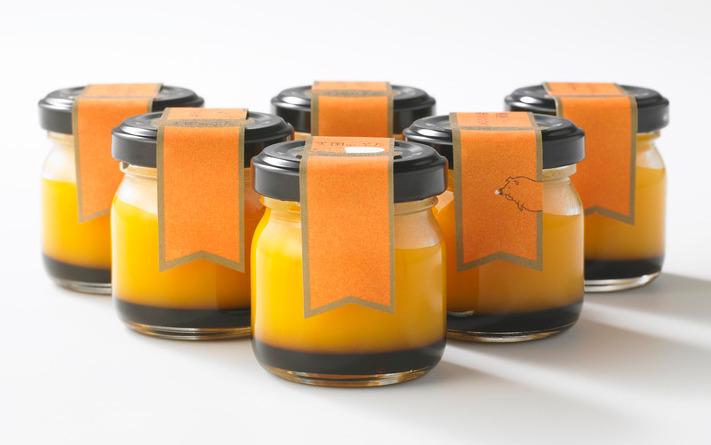 Heaven's Pig |
|
Oh yes. Getting back to the story, I learned about it from Kazuhiko Ota's book and instantly fell in love with Kotobukiya Liquor Store in Yaizu, Shizuoka Prefecture. Unfortunately, I hear it recently closed down. The old-fashioned refrigerator cooled with ice. The brazier for grilling fish. The old building and the glass, always polished to a brilliant shine whenever I visited. Vinegared horse mackerel fattened on Suruga Bay's sakura shrimp. The jet-black oden unique to Shizuoka. In winter, the finest wild yam dug straight from the mountains. Every single thing is a wonderful memory.
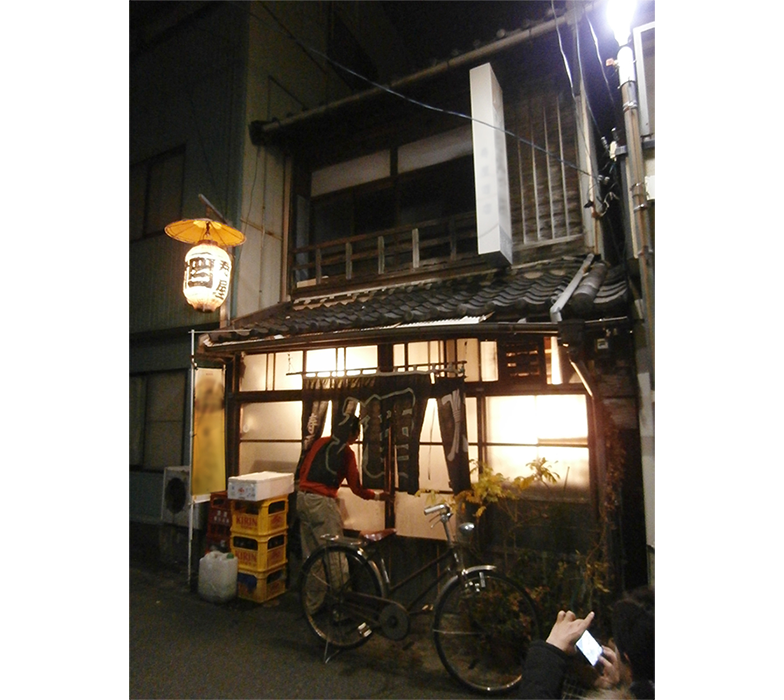
It's a bit lonely, but I'll have to find another cozy izakaya somewhere in Japan. If you have any recommendations, please let me know.
Please, enjoy your meal!

Was this article helpful?
Share this article


Newsletter registration is here
We select and publish important news every day
For inquiries about this article
Back Numbers

Author

Sōo Yamada
Dentsu Inc.
First CR Planning Bureau
Creative Director