Note: This website was automatically translated, so some terms or nuances may not be completely accurate.
 How Business Designers Create Breakthroughs [4/5]
The rules have changed. Opportunities have expanded. So, where should we go from here?
Dentsu Inc. has launched 'Dentsu Business Design Square,' an organization within the company dedicated to creating innovation for client companies. In this series, members will explain "What Dentsu Inc. Considers Business Design to Be." In Part 4, Director Shingo Yamahara discusses responding to emerging game-changing shifts in the market.
【Table of Contents】
▼Game-changing shifts emerging in the market. How management should read the future
▼Four Perspectives for Creating New Businesses from Within the Company
▼Is Your Value Chain Truly a "Chain"?
▼In an Era of High Uncertainty, That's Precisely Why Management Needs Ideas
Game-Changing Shifts Emerging in the Marketplace: How Management Should Anticipate the Future
Hello, I'm Yamahara from Dentsu Business Design Square. The management challenges facing companies today are undergoing dramatic change. The evolution of digital technology is giving birth to new forms of services, accelerating shifts in consumer experiences and values. Competitors from other industries and startups are entering the fray, intensifying the competitive landscape. Management must now read the future and respond swiftly to the game-changing shifts emerging across various markets.
Indeed,
"From products to experiences"
"Not just one-off products, but platforms"
"Not just incremental improvements, but discontinuous actions"
I sense that more companies are adopting this sense of urgency and these guiding principles.
However, when it comes to actually implementing these changes, they encounter various barriers.
How should they create new outputs? How should they take that first step into uncharted territory without prior success stories? What subsequent actions should they take? How can they generate synergy with existing businesses?
Many executives are grappling with this holistic design.
What we can offer is a tangible solution to these challenges and the support to see it through to realization.
Here, we introduce our approach and perspective as part of this process.
↑Back to Table of Contents
Four Perspectives for Creating New Businesses Within an Organization
To generate tangible solutions, we adopt various approaches depending on the challenge. This time, we introduce one such approach: creating new businesses from within an organization.

Refine the Corporate Vision/Business Vision
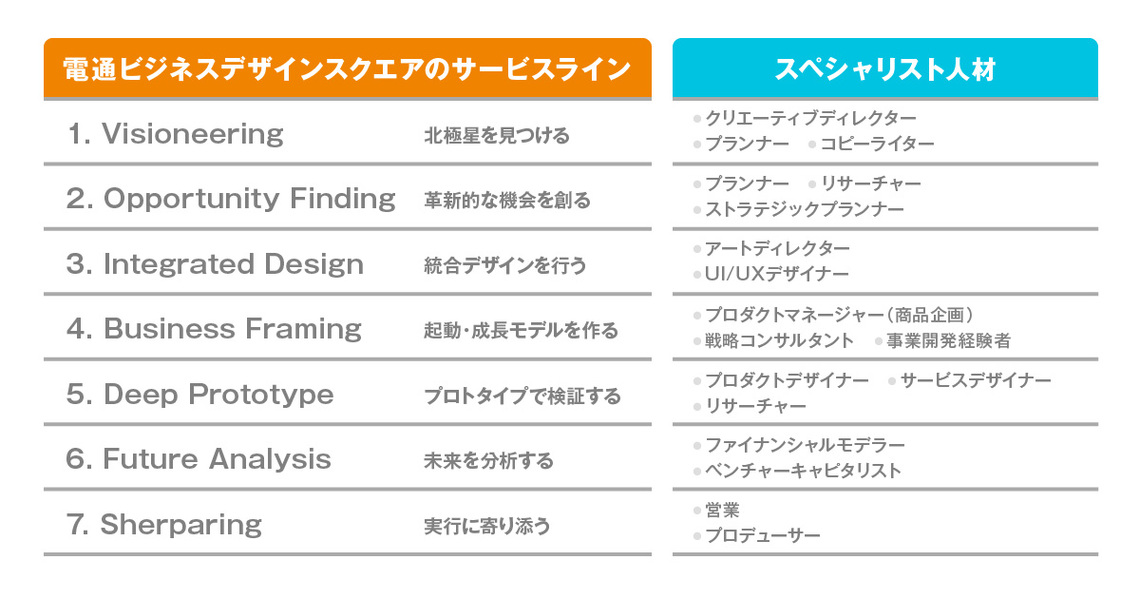
We define the "North Star"—the ideal company we aspire to become beyond new, discontinuous growth. For example, envisioning an evolution from an "automobile manufacturer" to a "comprehensive mobility services provider," and consequently "launching a ridesharing (carpool matching) business" to achieve that. Establishing this core direction is critically important. We meticulously design this vision using the " VISIONEERING " methodology introduced by Akihito Kunimi in the first installment of this series, " Business Design for Creating a Future You Can Love."
Uncovering Consumers' Latent Needs
When entering a new service business, existing players are often already present. They've achieved scale, and price competition is fierce. Concerns arise: is there really any room left to enter? However, in many cases, users unconsciously lower their expectations somewhere or give up on something from the start. How do we discover these "hidden needs"? It's an approach that thoroughly examines consumer insights to uncover possibilities.
Generating Ideas from Corporate Assets
We generate new business ideas from a company's tangible and intangible assets. Among the various technologies held by R&D sections, some can be transformed significantly by drastically changing how they are delivered or by combining them with other companies' assets. In fact, through collaborations between clients our group assists, new products and services are being born.
Tackling the company's core challenges
What core challenges can this new venture solve for the company? Fundamentally transforming a company's diverse challenges is no easy feat. Therefore, through this new venture, we experiment with slightly altering business processes or organizational structures. We try initiatives here that weren't possible within existing businesses. It becomes a prototype for corporate transformation.
We generate new value proposition ideas at the center by simultaneously moving back and forth between these four perspectives.
It's not a simple process, but one of persistent, repeated thinking and discussion without giving up. Crucially, however, is "designing sessions where the entire team can think with enjoyment and high energy." If we ourselves can't enjoy the process of thinking, we won't create new value that consumers will want to try.
↑Back to Table of Contents
Is your value chain truly a "chain"?
We don't just design products or services. To achieve growth, we also design the underlying organizational and HR structures.
When identifying current business processes and their challenges, we often see approaches based on the value chain.
Processes that have undergone repeated improvements are mapped out, and challenges are identified for each department. Criticisms of other departments, requests, and issues like "lack of interdepartmental collaboration" often surface.
However, as sessions progress, deeper underlying "breaks in the chain" become apparent. These often involve psychological barriers between departments, interpersonal dynamics, or issues with the organizational design itself.
"Cross-departmental meetings are common, but since the departments don't get along well to begin with, the atmosphere isn't collaborative; discussions remain superficial."
"Sales staff can sell the functional appeal of our products, but they don't feel genuine pride in our products or company."
"While efficiency drives steady profits, the 'play' needed to create new things is disappearing."
In other words, while the organization functions as a "chain" operationally, the psychological "chain" has broken.
To reconnect these links and generate stronger value, improving systems or redesigning workflows alone is insufficient. We need to design numerous actions: organizational structure, HR systems, office design, communication strategies for leadership, and the format of cross-functional sessions on the ground.
In fact, this very design of organization and HR is precisely what we, having specialized in communication, can uniquely accomplish. Communication design involves designing the optimal relationships between people and the optimal flow of information. This expertise can be applied to validate truly effective organizational structures, HR systems, and business process designs.
↑Back to Table of Contents
In this era of high uncertainty, that's precisely why we need ideas for management.
Amidst an explosion of information, companies are competing fiercely for consumers' attention and time. The moment any service or product is perceived as even slightly "boring," "confusing," or "unreliable," users abandon it instantly. Furthermore, the rise of C2C sharing/reuse platforms has diminished the inherent value of ownership itself. We are now in an unprecedented era of consumer dominance, where consumers hold the power—a true "buyer's market" for information, products, and services alike.
This is precisely why management now demands more innovative ideas than ever before.
In an era where consumers' environments and common sense are rapidly changing, how can we create new and universal value? How can we seamlessly design all areas—business strategy, marketing, organizational HR, and customer engagement—toward this goal?
It requires high creativity: thoroughly adopting the consumer's perspective, thinking through everything from grand concepts to minute UX/UI details, and executing while balancing the entire organization.
We produce outputs that surprise both consumers and internal stakeholders, going beyond mere analysis and simulation. This is precisely why we champion business design, not consulting.
Yet, finding solutions in business design is never easy. Many projects are extremely challenging, tackling problems where executives and frontline teams have already exhausted their thinking and efforts, yet still feel no solution is in sight. What worked for another company rarely fits another's case. Sometimes, it's hard to even see the faintest glimmer of a potential solution.
We, too, will continue to fully leverage our expertise and talent, engaging in repeated dialogue with our corporate partners and persistently exploring every possible angle. We firmly believe that the insights into consumers' lives cultivated by Dentsu Inc. in the fields of marketing and communication, along with our creativity capable of making a significant impact on society, can be effectively harnessed to drive business growth.
Precisely because we live in an era of high uncertainty, we want to create new and unexpected value together with companies, aiming for a "future worth loving."
↑Back to Table of Contents
Was this article helpful?
Share this article


Newsletter registration is here
We select and publish important news every day
For inquiries about this article
Back Numbers
Author
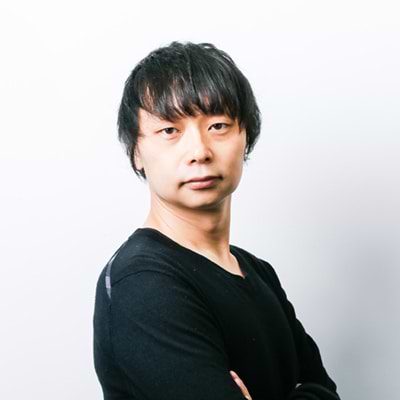
Shingo Yamahara
Dentsu Inc.
Director of Business Transformation Division 2