Note: This website was automatically translated, so some terms or nuances may not be completely accurate.
 SXSW 2019: Technology × Creativity Changing the Future [4/5]
Bridging the gap between technology and people. Using advertising power to drive the adoption of cutting-edge technology.
Every spring, the "South by Southwest" (SXSW) festival takes place in the United States. This event draws numerous companies and creators from around the world, showcasing forward-thinking works in music, film, and interactive media. The Interactive section, where new technologies and business ideas converge, is particularly renowned for unveiling services like Twitter and Airbnb that later became global hits, capturing significant attention. This year, too, various "seeds" of business were announced.
As mentioned in the first installment of this series, Dentsu Inc. also exhibited four works under the concept "Pointless Brings Progress." This series focuses on the creators responsible for the works and their production, delving into each individual's story.
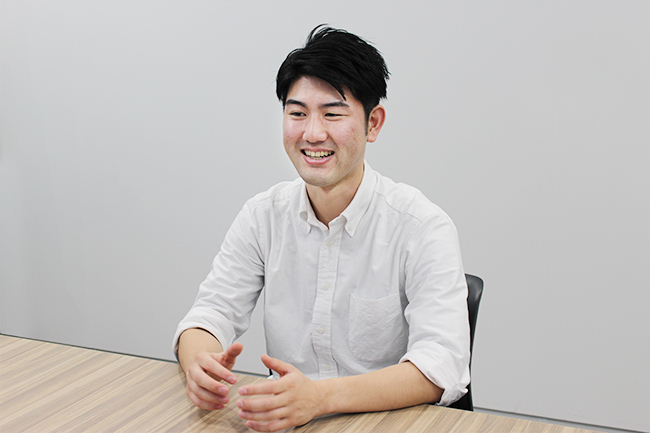
This installment features Dentsu Inc.'s Koji Hirohata (Technology Planner, Dentsu CDC Dentsu Lab Tokyo), who worked on the "RETHINKING TOBACCO" exhibit. We explore his thoughts while learning about the exhibition's design, particularly for this project dealing with "biotechnology" – a rare theme at SXSW.
Can Tobacco Save Us from the Food Crisis? The New Value of Tobacco as a Crop
—What kind of exhibition was "RETHINKING TOBACCO"?
This time, we presented the "heterocarpic grafting" technology developed by the biotechnology startup GRA&GREEN, and we produced the exhibition.
I met the GRA&GREEN members through the Todai To Texas project, where I served as director during my student days.
Grafting is a traditional technique that involves cutting a branch from one plant and joining it to another plant to improve the quality or durability of that plant. For example, when cultivating vegetables, grafting a vigorous trunk with strong roots to a trunk that produces high-quality fruit aims to create a better variety.
Traditionally, grafting combinations were limited to closely related varieties. GRA&GREEN's technology, however, enables grafting between any varieties. Interestingly, this technology utilizes tobacco stems. Not the tobacco consumed as a luxury item, but tobacco as the raw plant material.
By inserting a tobacco stem as an intermediary between the plants to be joined, grafting between different plant families becomes possible. Applying this technique could potentially create trees bearing a wide variety of fruits. Furthermore, grafting onto plants with strong resistance to barren land could enable the growth of vegetables that previously couldn't thrive in deserts, for example. This holds promise for addressing future food shortages.
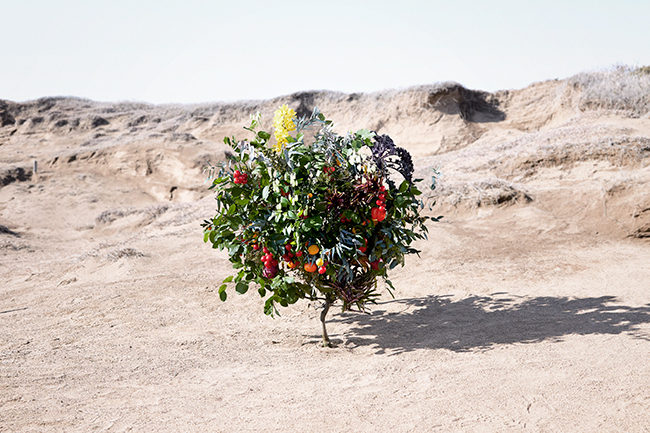
We developed a method to communicate this grafting technique to SXSW attendees from the ground up. For example, the title "RETHINKING TOBACCO." We used the naming "reinterpreting tobacco" to spark interest in this project by highlighting an unexpected aspect of the well-known tobacco plant.
While planning the exhibition content, we focused on the distance between technology and people. Rather than simply introducing it as "unique technology," we aimed to help people connect this seemingly unrelated technology to their own lives. Achieving this would draw attention to the technology and research, potentially leading to support opportunities. We advanced the planning with this point as a priority.
Communicate the vision first, aiming to make the technology personally relevant
—Specifically, what approaches did you take?
First, our team produced a promotional video. Rather than focusing solely on introducing the technology, we strongly emphasized the vision driving this project. By 2050, the world population is projected to approach 10 billion, raising serious concerns about food security. GRA&GREEN's technology could be a key solution to this challenge.
Simply talking about grafting technology might not resonate well. We thought that by addressing the real problems our future faces and showing how this technology can tackle them, we could bridge the gap between this technology and people.
We spent considerable time breaking down and refining GRA&GREEN's core philosophy regarding society and technology. We worked closely together, discussing it repeatedly. We also painstakingly crafted the English copy to express complex technology concisely. It was quite a struggle (laughs).
Another challenge was that many people aren't familiar with grafting itself. So, we set up interactive content at the venue where visitors could simulate grafting and intuitively grasp the process. This was another measure to bridge the gap between technology and people.
We displayed a barren tree on a large screen. When a tobacco stem was held over it, the presentation showed various vegetables and fruits growing from a single tree. Here too, a message conveying the vision appeared at the end.
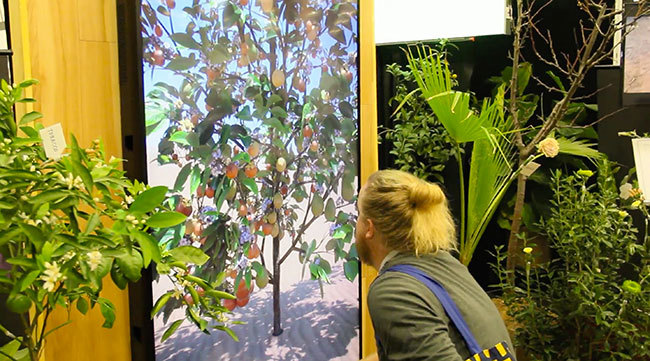
Actually, I had the chance to exhibit at SXSW back in my student days. What I felt then was that SXSW isn't just about showcasing technology; it's a place to share what you want to achieve in the near future using that technology, and what's needed to make it happen. That's precisely why I aimed to clearly present the vision first, then help people understand the technology. And ultimately, to increase the number of supporters and collaborators for the project.
I want to convey how interesting technology can benefit society
—After experiencing SXSW, what kind of career path do you envision for yourself going forward?
My ideal is planning that supports both people and technology. That's part of why I call myself a Technology Planner. Since the title on my business card serves as an initial advertisement for who I am, I hope it lets people see my strengths and interests at a glance.
Since my student days studying engineering, I've felt that the realm of manufacturing also needs the creative power that the advertising industry excels at. For example, when you broadly divide manufacturing into the phases of "planning," "production," and "distribution," creative idea-generation is useful in the planning part – "what to make" and "why to make it." It should also be applicable after making something, in how to communicate it to people and how to spread it throughout society.
This exhibition is a case in point: no matter how fascinating a technology is, it's essential to consider how it benefits society. How will people encounter this technology? How will it permeate daily life? Breaking this down and communicating it is also our job. We must thoroughly understand the thoughts and intentions of various "makers" – engineers, designers, researchers – and then convey them clearly to the "users" and the wider world. I aspire to be someone who can navigate between both the maker's and the user's perspectives.
My major in college was also in a field called "sensory engineering," which aims for design that incorporates the "sensory experience"—like the comfort felt by the user—of the things we use. It's a field that deals with very abstract and sensory concepts, but I believe that research focusing on sensory experience to consider communication between creators and users connects directly to my current work.
Also, I live in a shared house with members who are passionate about creating things in different fields—like game creators, mechanical engineers, and communication designers. When everyone's friends come over to hang out, it becomes an opportunity to notice even more diverse perspectives and sensibilities. I hope it becomes a place where we can gradually broaden each other's range of interests and concerns.
I'm actually a huge fan of content like manga and idols too—I have over 1,000 manga volumes in my room (laughs). Being a fan of this content myself, I want to work hard in this field as well. I'd like to create ideas no one has experienced yet through "Technology × Content." After gaining various experiences, I'd be thrilled to become someone who bridges the gap between technology and people.
Was this article helpful?
Share this article


Newsletter registration is here
We select and publish important news every day
For inquiries about this article
Back Numbers

Author
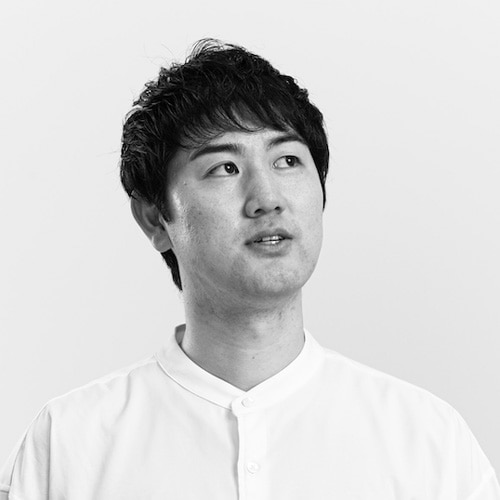
Koji Hirohata
Dentsu Inc.
First CR Planning Bureau
Communication Planner / Creative Technologist