
Note: This website was automatically translated, so some terms or nuances may not be completely accurate.
 The Present and Future of Design and Innovation by frog [20/49]
Building a Creative Organization: Paving the Way to Innovation
frog
This article presents content originally published in "Design Mind," a design journal operated by frog, under the supervision of Mr. Noriaki Okada of Dentsu Inc. Experience Design Division.
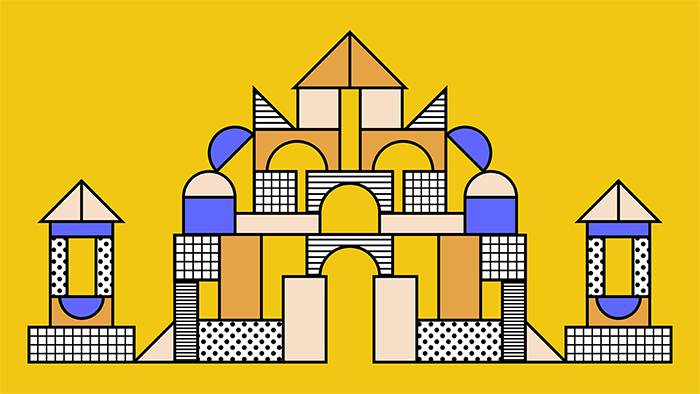
As innovation-driven approaches gain momentum, companies must first learn how to cultivate creativity throughout their entire organization, taking into account everything from employees to the work environment.
Every industry is rushing to provide innovative solutions to keep pace with rapid technological advances and the resulting customer expectations.
Companies are exploring paths forward both internally and externally—for example, by partnering with startups that can transform markets overnight or create entirely new ones, or by focusing on developing products and experiences that customers are demanding right now.
Discovering new ways of working across all industries is essential for companies to bring innovative products and services to market and maintain customer engagement.
To inject innovation into their operations, companies are adopting various approaches, such as creating roles like Chief Creative Officer or Innovation Officer, or establishing new internal teams or creative groups dedicated to innovation.
Among these, the most popular method is establishing external innovation centers. Many companies have set them up, hoping revolutionary ideas will emerge. However, most have ended in failure. For companies investing heavily to pioneer innovation, a bold shift in perspective is crucial to bring about decisive change.
Focus on Creativity Before Innovation
Multiple studies indicate that "organizational well-being" is an essential element for creating innovative businesses that respond swiftly to change. The foundation of this well-being lies in creativity within both individuals and the organization itself. This creativity is fundamental to fostering a purpose-driven culture that propels innovation.
Creativity is uniquely human and the foundation of expression. When creativity is linked to purpose, we shape our ideas, overcome business obstacles, and lead to new perspectives, methods, and outcomes.
To build a foundation for unleashing creativity, we must first focus on the four fundamental elements humans require: "Allow," "Empower," "Care," and "Connect."
- Acceptance: Allowing employees and teams to work in the way that suits them best.
- Empowerment: Granting employees the freedom to make necessary decisions to complete tasks and allowing them to work where and when needed.
- Meaning: Valuing employees' sense of purpose and happiness, fostering a deep connection to their work. This boosts motivation and increases productivity.
- Empathize: Value diversity, inclusion, and empathy. Cultivate a culture that protects employees from fear of failure, even when mistakes happen. Encourage stepping into the unknown, finding their voice, and expressing their humanity.
Concepts like empathy and empowerment are often overlooked when prioritizing productivity, yet they directly contribute to business goals by fostering creativity and cultivating a healthy, innovative culture. To deliver new products and services that resonate with people faster and more efficiently, companies must:
- Build a learning organization dedicated to continuous intellectual and emotional growth.
- Create opportunities for employees to gain relevant experiences toward their goals, placing organizational well-being at the center.
- Cultivate agile and adaptable thinking so that the organization and its employees can respond to rapidly changing situations and business demands.
- Attract and retain top talent. Organizations centered on creativity can recruit and retain top talent because they exceed new hires' expectations and support continuous employee growth.
Creativity is central to organizational revitalization
Building and nurturing a creative organization requires a systematic approach. Since companies are complex systems where various elements intertwine and depend on each other, it is essential to view the whole as a single system, not as isolated parts. For years, organizations and companies have approached innovation with narrow perspectives and disjointed, individual efforts. These resulted in inconsistent, fragmented, unsustainable outcomes—in short, "out of tune" results.
To bring about lasting change, we must understand the entire system, design the whole, and influence the entirety.
An "Innovation Center" is established as a place to test new methods, tools, and ways of working. Simultaneously, it should be designed as a place to foster employees' sense of purpose, express their creativity, and unleash organizational creativity. It aims to act as a catalyst for change, adjusting the company's course and establishing these efforts as organizational assets. However, this requires redefining structures, shifting mindsets, and focusing on people.
What's crucial for the "Innovation Center" is redefining the meaning of "center."
Defining the relationship between the Innovation Center and headquarters, and clarifying their respective positions, forms the foundation for true change. At the core of this definition lies the word "center." Viewing the Innovation Center as "the center around which everything revolves" is not ideal in terms of distance and relationship with headquarters. Organizations do not revolve around a center.
In innovation initiatives, the center should not be positioned as a "hip group with the latest toys." Conversely, positioning it as "the place that pioneers the future" is also dangerous, as it risks ignoring the collective creativity already present throughout the organization. Such positioning could short-circuit the entire circuit before the initiative even gains momentum.
Instead, it's crucial to rethink the innovation center as a "hub of aggregation" situated just outside the core organization. By establishing multiple dense pockets of energy and learning throughout the enterprise, it functions as "organizational acupuncture," injecting and activating innovation throughout the entire organization, circulating it everywhere.

To achieve this, we must build a culture within the innovation center that encourages experimentation and rapid iteration. This is essential for fusing staff and context into a single organism, while simultaneously generating a will for ideas, results, and impact that resonates throughout the entire organization. As staff and their supportive environment continue to work together, unique ways of working naturally emerge. If organizational structure is the foundation, then ideology is the electricity flowing through the building. Together, they ignite individual creativity and form the bedrock for unlocking the potential dormant within large organizations.
To maximize efficiency, teams responsible for innovation should be free to pioneer ways to advance outside the mother ship of the organization. Just as the navy has its ways and pirates have theirs. A commitment and structure for gathering creativity connects teams and their sponsors to the outside world, allowing teams to freely explore, learn, and pivot, truly unleashing creative innovation.
However, even teams separated from the main body must not be isolated. To leave a lasting impact on the organization and deliver products and services customers demand, it is essential to give the team a strategic position. This position is paramount for effectiveness and future success. Whether innovation hubs are placed at the front door or off-site, they must never be left isolated. These spaces ignite excitement and curiosity about the work and energy being generated, and that excitement sparks change within the organization. Innovation spaces have the power to transform the entire organization's mindset, permeating lessons and ideas throughout the company and driving transformation.
Directly linked to the purpose of these initiatives is organizational revitalization, which must proceed in parallel. This effort brings methodology, processes, and systematic learning to the organization, embedding a creative and innovative culture, fostering growth, and delivering lasting impact. It requires a team and leadership suited to safeguard, nurture, and lead the initiative, while a plan to inject vitality can spread the learning effects deep into the organization.
Learning Lab Design
Under an intentional, holistic design, all components come together as an interconnected system aligned with the organization's vision and commitment to innovation. This system must include space, methodology, curriculum, social practices, and digital and physical tools. It requires circulating communication and engagement throughout the broader organization to achieve lasting impact and ultimate transformation.
This does not mean investing in all components upfront, but rather creating a framework that allows tools to be added or modified according to goals, vision, changing circumstances, and stages of learning. This framework enables experimentation with ideas, methodologies, and tools, facilitating continuous adaptation and change.
To achieve this, frog provides an extensible, scalable system for design, testing, and improvement using an agile development approach. In other words, every part we design and build, including the construction of the space itself, is specifically focused on minimizing risk and maximizing learning.
Providing employees with a wide range of work options they need is paramount for them to become more invested in their work and perform at their best. Building tools and spaces to meet diverse work and personal needs is essential.
frog's architectural project, Places, is designed as an inherently agile, adaptable system that reconfigures as needed, responding to spatial demands and learning. Measurement is essential for continuous learning in any workplace. Leveraging technology allows us to assess the effectiveness of tools, furniture, and space utilization, enabling swift adjustments to maximize impact. This demands architecture and design that break from tradition. We should never settle for a final version but remain in a state of constant discovery, as Walt Disney said, "always evolving."
The mindset of growing while constantly changing is more important than ever. In continuous evolution, people cannot move freely without permission and reassurance that anything is possible. A culture that embraces failure fuels our rediscovery of creativity.
We are building a "hub" that is both a laboratory and a playground, a classroom and a stage. These spaces encourage continuous development and invention, spark curiosity and creativity, and drive transformative change within the organization.
Our case with Norwegian power company Equnior exemplifies how an organization took its first step toward realizing the future of work. According to Equnior's internal survey, employee motivation increased by 40%, delivering high-speed results across the entire community and leading to the realization and implementation of various tools and methods. Together with frog, we designed a system guiding the organization toward a future centered on human creativity.
The most effective initiatives are those where the company's commitment to its own future and trust in its employees are embodied both physically and mentally. This is incredibly demanding work, requiring a suitable framework to foster the attitudes and behaviors necessary for collective creativity to flourish. If we are to solve the global challenges that will arise in the future and elevate humanity to the next stage, there is no path other than unleashing creativity.
Was this article helpful?
Share this article


Newsletter registration is here
We select and publish important news every day
For inquiries about this article
Back Numbers

Author