Note: This website was automatically translated, so some terms or nuances may not be completely accurate.
 "People Driven Marketing® Practical Webinar 2020" Report [8/9]
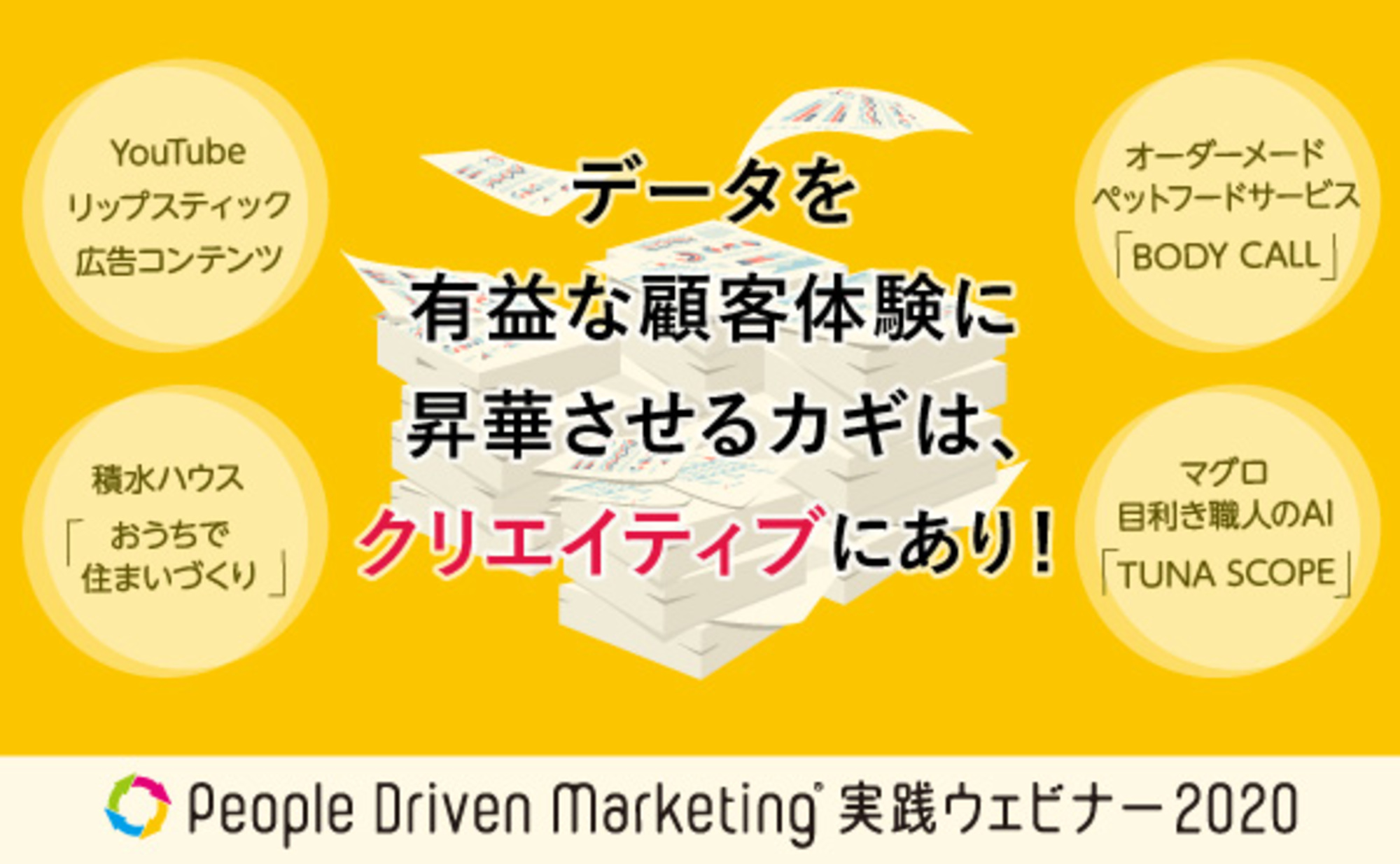
Creative Realizes "Data × Brand Experience"
Dentsu Inc.'s "People Driven Marketing®" (PDM), a human-centric marketing approach, has now entered its fourth year and has significantly evolved as "PDM 4.0".
This series provides a digest report on the three-day "People Driven Marketing® Practical Webinar 2020," where Dentsu Inc. professionals and corporate guests discussed the future of marketing and data.
This time, we report on three sessions that explored how to provide valuable brand experiences for customers based on data technology, demonstrating the importance of creativity with concrete examples.
※People Driven Marketing
https://www.dentsu.co.jp/business/pdm/
An integrated marketing framework centered on "people," proposed by Dentsu Inc., to address the data & digital era. It reframes challenges from a people-centric perspective and integrates the Dentsu Group's cutting-edge marketing methodologies to support customers' sustainable growth.
Expanding the Possibilities of "Data Technology × Creativity" with Google × PDM

This session featured presentations by Mr. Kang Cheol-ho, Data Strategy Lead at Google; Ms. Fukushima Yukari, Data Management Consultant at Dentsu Digital Inc.; and Mr. Tanizawa Masafumi, Planning Director at Dentsu Inc. They discussed the current state and future of Data Technology × Creativity from their respective company perspectives.
First, Mr. Kang introduced recent examples combining technology and creativity. In YouTube's lipstick ad content, a "TRY IT ON" button appears below the video. Clicking it displays the user's face, with the lip color changing in real time.
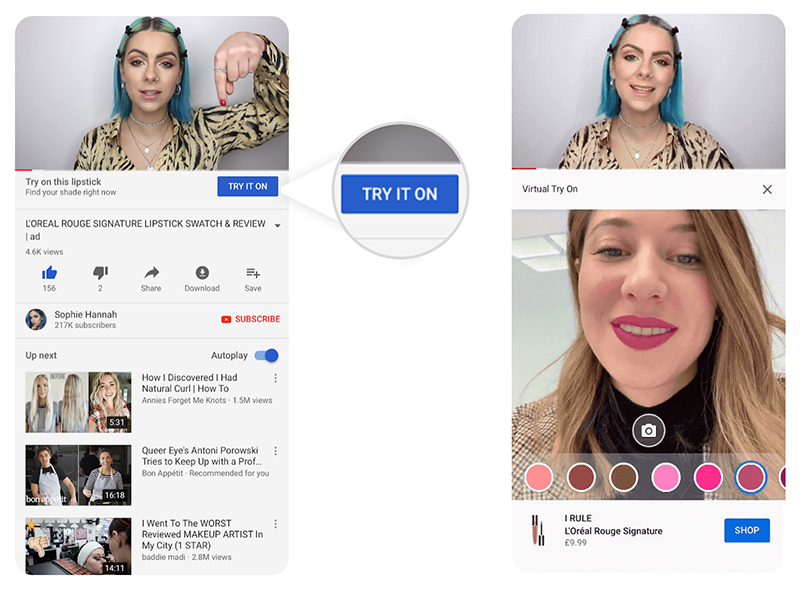
"Using facial recognition technology enables an experience that feels like you're actually applying lipstick to your own lips," explained Ms. Kang. She also introduced another creative example: holding a smartphone with Google Lens (*) over a book displays related content on the phone.
"By leveraging technologies like 3D, VR, and gyro sensors, the freedom in advertising will continue to expand," predicted Mr. Kang.
※Google Lens: A Google app. Point your smartphone camera at something you want to learn about, and it searches for and displays information.
However, no matter how advanced advertising becomes, it won't lead to purchases without effective communication with users. This is where Google employs its "Butterfly Circuit" communication planning method. By likening user behavior patterns to a butterfly's flight,
"cast a net across the entire Butterfly Circuit and capture them at the necessary moment."
"Use creative power to guide user motivation and deepen brand understanding"
"Serendipity that encourages purchase"
Mr. Kang emphasized these three points as crucial.

Next, Mr. Fukushima of Dentsu Digital Inc. outlined key points for developing and implementing a data foundation. First, integrate and analyze proprietary data (like membership and purchase data), user web behavior history, and external data using a Customer Data Platform (CDP) like Google Cloud Platform. Marketing teams then lead initiatives and operations using this data.
Mr. Fukushima categorized the considerations into four phases—"Collection/Integration/Analysis/Utilization"—and summarized them into the following six points:
■ Collection
① Determine the approach: "Build the CDP after defining data usage" or "Collect all data into the CDP and define usage later"
② Set KPIs regardless of feasibility to define "what to do."
■ Integration
③ Verify the presence of unique IDs required for data integration.
■Analysis
④ Consider the design, including the data analysis approach and whether to incorporate machine learning.
■Utilization
⑤Select tools capable of implementing strategies and operations
⑥ Consider adding external data to the built CDP
Finally, Mr. Tanizawa and Mr. Kang shared their outlook on the future of Data Technology × Creativity.
Mr. Kang emphasized the value of creativity, stating, "Our investigation of Google's advertising campaigns revealed that 70% of results depend on creative work." He introduced how Google's US headquarters involves creative specialists alongside media experts, data scientists, and analysts from the planning stage, adding, "The story begins where specialists gather. I believe this approach will become established in Japan too, making things even more interesting."
Mr. Tanizawa agreed with Mr. Kang's opinion and predicted, "The way teams are structured and the speed of decision-making will change significantly going forward."
"Not only the visible elements like website design and email newsletter content, but the invisible aspects behind them—the combination of data technology and creativity—will greatly impact results," Tanizawa stated.
Read the "Do!Solutions" article here.
How should customer experiences be enhanced in the OMO era?

The next session featured Kenichi Takehara from Sekisui House's Advertising & Promotion Department and Susumu Namikawa, Head of Dentsu Inc.'s Data-Driven Creative Center. Amid the rising trend of "OMO" (Online Merges Offline) – a marketing approach integrating online and offline – they explored the "customer experience" OMO should aim for, using Sekisui House's "Home Building at Home" campaign as a case study.
The "Home Building from Home" campaign included web consultations for home building, YouTube videos simulating showroom experiences, and gifts of VR goggles for experiencing showrooms.
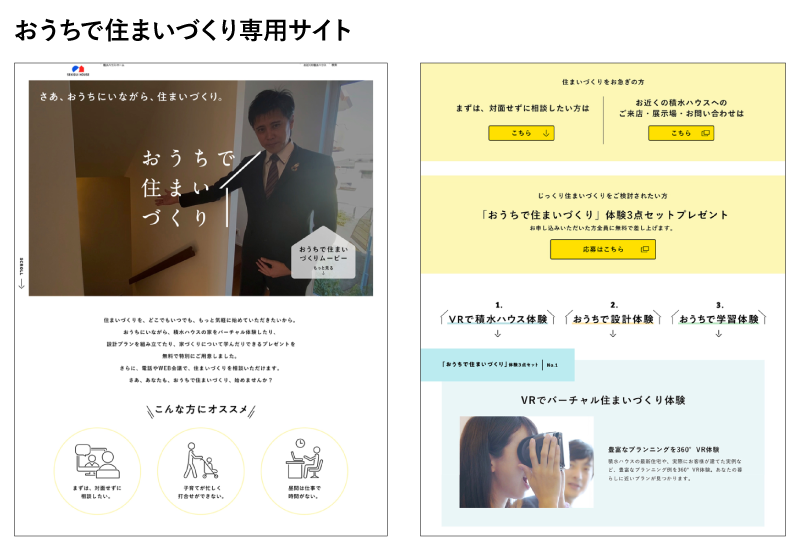
"The pandemic drastically reduced visitor numbers to our housing showrooms, halted negotiations with existing customers, and made approaching new customers difficult. We decided to launch this campaign to solve these challenges," explained Mr. Takehara, outlining the project's origins.
Since a single day's delay meant lost opportunities, Dentsu Inc. built a dedicated website within two weeks of the orientation and launched the campaign. They conducted filming with a small team and created a manual so staff could film independently, enabling rollout across showrooms nationwide.
After launch, brochure requests surged to approximately 200% of the previous year's level, prompting an early decision to produce a TV commercial. This was also executed swiftly: filmed remotely and delivered within two weeks of kickoff.
As a result, August orders grew to 116% of the previous year's level. "From our CEO down to the sales team, every employee aligned their efforts to overcome the crisis. I believe acting with this sense of urgency directly led to the results," reflected Mr. Takehara.
In response to Mr. Namikawa's follow-up question, "How do you position the online and offline customer experiences?" Mr. Takehara stated, "When customers gather information about our company, it's crucial how well we can adapt to their specific situation. Rather than separating online and offline, we want to fully commit to the customer experience across any channel and effectively convey our company's appeal holistically."
Mr. Namikawa noted the shift in customer touchpoints post-pandemic: "Previously, the decisive moment was when customers visited our housing exhibition sites. Now, the stage where customers gather information online also becomes crucial." He added, "Not just sales venues, but every place and product a company provides becomes a customer touchpoint. Shifting our thinking this way opens up tremendous possibilities."
Mr. Takehara agreed, adding, "Increasing customer touchpoints, whether real or virtual, is crucial. Our business spans office buildings, condominiums, rental housing, and overseas exports. We want to deliver premium experiences that include the discovery of 'Oh, Sekisui House is here too!'"
Finally, Mr. Takehara emphasized the importance of digitally enabling customers to vicariously experience the appeal of our sites.
"Our strengths lie in our employees' 'human appeal' and our dedication to our buildings. We want customers to experience this real appeal virtually, and then experience it in person. How we can convey our company's image seamlessly is crucial, and that is precisely the vital role creativity must play," said Mr. Takehara.
Mr. Namikawa also shared his perspective: "The world of reality and the world of image. We must construct both to create consistent creative work. I believe this is a crucial point for any company to achieve OMO success."
Read the "Do!Solutions" article here.
Data and Creative Perspectives

The final session featured Dentsu Inc. Creative Directors Kazuhiko Ikeda and Kazuhiro Shimura, along with Solutions Director Satoshi Oshima. The theme was "The Future of Data: Transforming Society and Business Through Creativity."
Opening the session, Oshima stated regarding increasingly diverse and complex data: "For business improvement, it's crucial to change how we view and approach data, identifying what truly matters." He added that creativity "isn't confined to expression alone; it is the very 'perspective' that drives societal and business transformation." The session introduced two new Dentsu Inc. initiatives as concrete examples.
One was "BODY CALL," a subscription service for customized pet food developed by Mr. Ikeda. Focusing on gut flora data—often called the "second brain" due to its links to obesity and allergies—Mr. Ikeda personalized this data to build a service providing optimal pet food for customers' dogs throughout their entire lives.
Regarding the origin of the service, Ikeda explained, "The entire pet market is based on proxy purchasing by owners. No one truly knows if the dog is satisfied with what's bought. Since we can't converse with dogs, I felt it was crucial to listen to their bodies. Among various biological data points, I focused on gut flora because it's highly influenced by diet."
Another example is Mr. Shimura's AI "TUNA SCOPE," designed for tuna connoisseurs. By analyzing vast quantities of cross-sectional images of tuna tails and learning the "tacit knowledge" of expert buyers, this service enables easy tuna quality assessment via an app. Its adoption in factories in Yaizu and Misaki, as well as a large factory in Dalian, China, has accumulated massive data. Recently, there has been progress in commercializing the highest-grade tuna inspected by TUNA SCOPE.
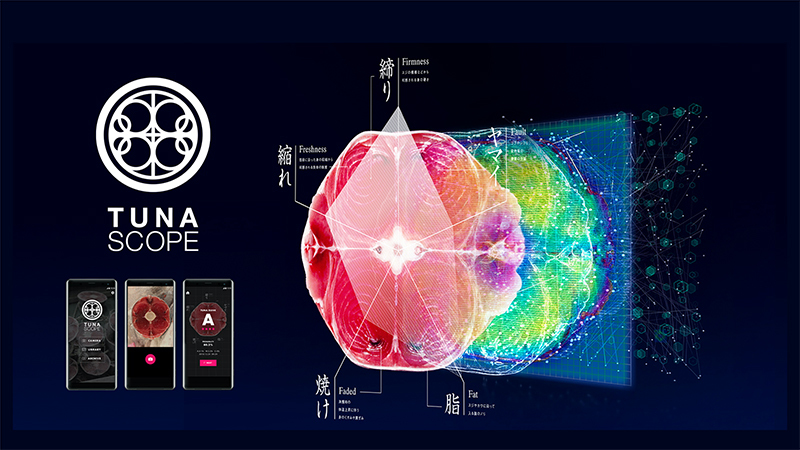
Regarding the origin of this service, Mr. Shimura stated, "It didn't start with the idea of somehow dealing with tuna cross-section data. I was thinking about how to improve the hit-or-miss quality of the tuna I usually ate, and then I happened to see a tuna wholesaler on TV, which sparked the idea. In that sense, you could say we turned something that wasn't initially data – 'tuna cross-sections' – into data."
Mr. Oshima highlighted a common point in both their discussions: "Treating data as 'one means among others.'" He explained, "The desired future or goal comes first, and the thought 'Wouldn't this kind of data be necessary?' arises as you work towards it."
Finally, Oshima listed key points to prioritize when engaging with data to advance marketing:
・Consider the purpose and significance of utilizing data
• Maintain a pioneering spirit to explore non-digitized areas
• Gain customer empathy for data utilization
・Collaboration with partner companies and data sharing
In summary, he stated that what matters is how data can be used not just for the company itself, but to solve societal challenges and realize a better society. He emphasized that a single shift in perspective can significantly scale a business.
Read the "Do!Solutions" article here.
※For a more detailed report on this webinar, please visit the feature page on "Do!Solutions"!
Was this article helpful?
Share this article


Newsletter registration is here
We select and publish important news every day
For inquiries about this article
Back Numbers
Author