Note: This website was automatically translated, so some terms or nuances may not be completely accurate.
 Web Dentsu Inc. × WASEDA NEO — Hope Lies Beyond Learning — [3/3]
Change your perspective, and you'll see your allies.
WASEDA NEO, which provides a "co-creation space" for leaders shaping the next era to drive true innovation, has partnered with Dentsu Inc.'s news site "Web Dentsu Tsūhō" to offer the "Web Dentsu Tsūhō × WASEDA NEO Collaborative Lecture Series," an online course for working professionals featuring Dentsu Inc. creators as instructors. This session's instructor is Shigeta Misawa, Senior Marketing Planner at Dentsu Inc. (This is a re-edited version of the webinar held on March 8, 2021)
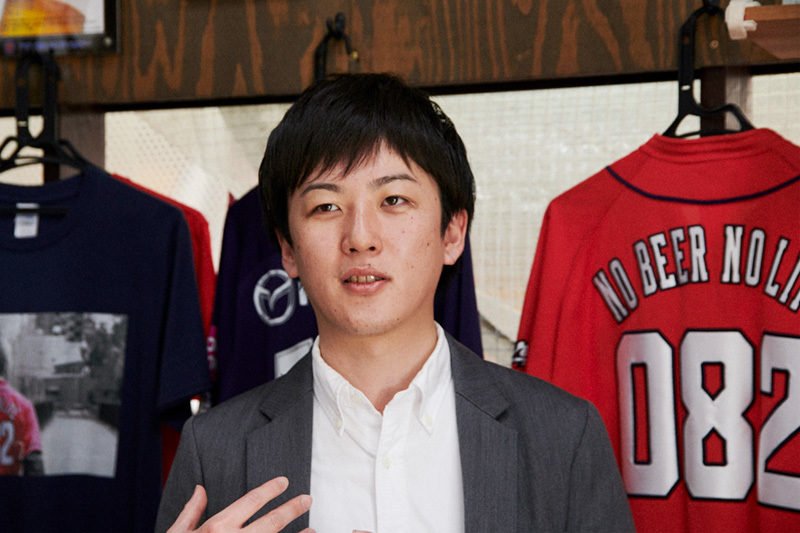
"First, let me briefly introduce my background." Mr. Misawa began his lecture with this standard seminar opening. Expectations were that he would list credentials like obtaining an MBA in his twenties, followed by consulting work for various companies, then moving into programming for system development... Instead, his opening words were surprising: "Actually, I originally made flyers."
Here was Mr. Misawa, with this background, about to speak on DX—considered a cutting-edge business model. How could one not be intrigued?
Why did a "flyer" pro become a "DX" pro?
Mr. Misawa presented a simple diagram: the vertical axis represents "Sales," the horizontal axis "Products (Number)." Overlaid on this are the terms "Mass" and "Long Tail." He explained that flyers and digital marketing fall within this "Long Tail" section.
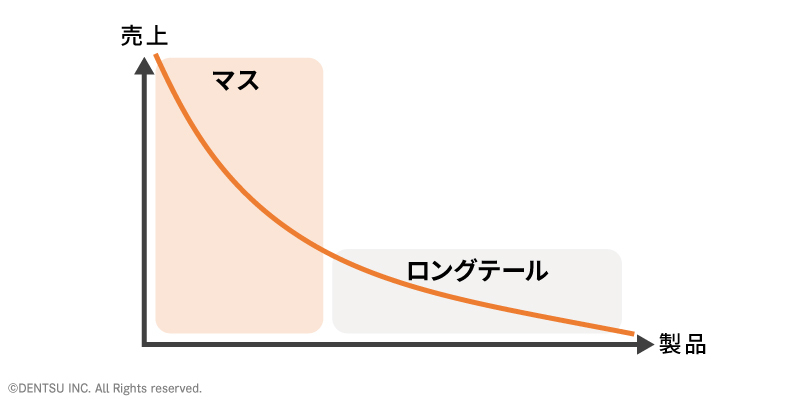
What exactly is the "long tail"? Simply put, it means "delivering multiple products or services, under multiple messages, to customers with diverse values."
The image of digital is often "smartly searching for desired information. With a tap of your finger, what you want arrives instantly." But that's solely from the perspective of the "receiver" – the consumer. In contrast, what the "sender" is doing is essentially no different from creating flyers and distributing them.
So, DX is just about replacing analog media like "paper" with "digital," is it? As if reading the participants' minds, Mr. Misawa calmly continued his presentation. "But the essence of DX isn't merely replacing existing systems with digital ones."
DX is ultimately a "means" to achieve an "end."
DX, needless to say, stands for "Digital Transformation," meaning shifting the environment surrounding the workplace to digital. To put it simply, it's about storing and sharing the massive piles of documents in the workplace as digital data. It's about enabling remote communication instead of gathering in conference rooms. That's the idea. To achieve such a smart workplace environment, every company is now rushing to transform digitally. "But that's merely about shifting the means to digital. The true purpose beyond that is to transform the business itself."
So what should companies in this era set as their "purpose"? Everyone is beginning to realize it's not "just" about money. Everything for money. If we were to deliberately define that as business up until now, what should business be like going forward? What exactly should be set as that "purpose"?
Mr. Misawa explains it this way. For example, for a car company, the goal could be "to become a concierge-like presence that curates and supports the customer's entire car life." For a manufacturer producing and selling yoga wear, the goal might be "to create a community of people who love the practice of yoga, initiated by the manufacturer." Working backwards from there reveals the form products should take, the form services should take, the form systems should take, how to handle personnel and data, and ultimately, the form the organization and its operations should take. If we consider digital to be the tool (means) for achieving that purpose, isn't it actually a remarkably simple concept?
The drama of experience unfolds at the "touchpoint." It expands from a "touchpoint" to a "touch surface."
As the era shifts from "consumption of things" to "consumption of experiences," the keyword "experience" becomes paramount. Companies rack their brains: "What if we offered customers this kind of experience?" "How about that kind of experience?" It's akin to a "100-punch drill" for experience ideas, or a "shotgun approach" hoping one hits the mark. But this is highly inefficient.
Amidst this, what Mr. Misawa constantly focuses on is the "touchpoints" that generate experiences. People and people, people and companies, people and things, people and services... Increasing these touchpoints naturally creates "drama" there. That drama, in turn, creates "valuable shared experiences with customers."
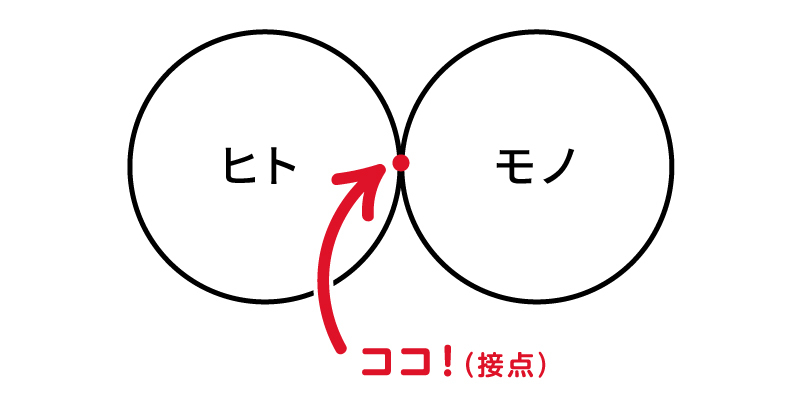
I see. Using digital technology can dramatically increase the number of these "points." Compared to hand-distributed flyers, the scale is truly orders of magnitude greater. To the author who might jump to that conclusion, Mr. Misawa continued his explanation: "But what if those points became a surface? Don't you think that would be incredible? It's not about creating points of contact, but creating surfaces of contact. That, I believe, is the true essence of digital."
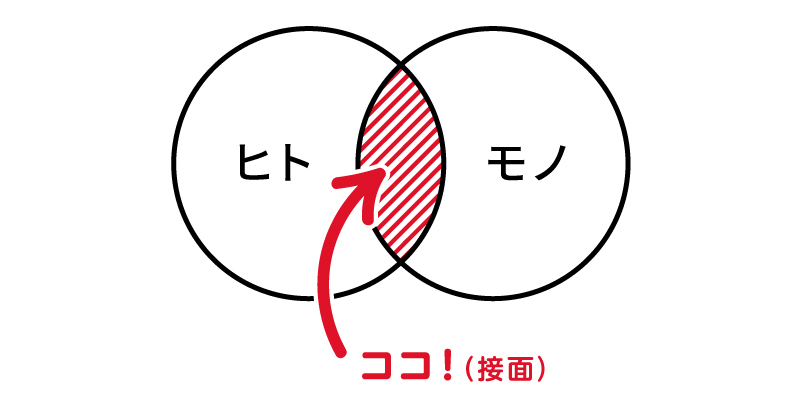
Seeing customer voices before hearing them
How does business transform when a "surface of connection" is created to generate and nurture shared experiences with customers? Mr. Misawa's lecture was now approaching its climax. "You often hear about the importance of data visualization these days. I believe what that phrase truly means is 'seeing' customer voices, or 'making them visible.'"
The traditional market-in business model fundamentally relied on listening, listening, and listening to customer voices to find breakthrough hints. In contrast, if we can "see the customer's voice (their true feelings)" or "visualize and present the customer's voice," this could truly be called a "business revolution."
"Rather than just listening to customer voices, absorbing them, and ending there, going through the process of 'visualization' after hearing many voices reveals more fundamental needs. Even if they aren't immediately apparent, communicating without over-investing digital resources gradually makes them clearer. This process (of interaction with customers) ultimately builds the relationship between customer and company, forming a foundation of trust, wouldn't you agree?"
Moving back and forth between the real and digital (virtual) spaces, we end up creating a community there. Working backwards from that goal image (purpose), we master the means of digital. Mr. Misawa's point finally became "visible" to me.
Is DX a form of corporate DIY?
If I were to summarize Mr. Misawa's lecture in one sentence, it would be: "DX is the process of embodying a company's unique identity within shared experiences with a growing number of consumers." The image that suddenly came to mind was DIY. What do you think? It's not about frantically trying to differentiate from competitors, but rather about the "likes" for that company's distinctiveness spreading as a shared worldview.
I believe "likes" are a concept extending from the consumption of physical goods. When those "likes" are elevated to "That's so them," the "value that money can't measure" inherent in a brand becomes visible. As the title of this article suggests, it's about "changing the way a company exists, its perspective (view), to gain true allies (supporters)."
Mr. Misawa concluded his lecture with this statement: "I began by discussing flyers, but I believe the essence of digital, or DX, is actually very analog." Setting aside whether my intuitive "DX = corporate DIY theory" is an apt analogy, Mr. Misawa's "digital = analog theory"—though somewhat paradoxical—may well strike at the core. In it, I sensed a kind of human warmth and familiarity toward DX.
(Related Links)
"What's the difference between companies succeeding with DX and those that don't?" is here.
"Where Does Your Company Stand on DX? What's Missing? Insights from a DX Diagnosis" is here.
The official WASEDA NEO website is here.
WASEDA NEO is a forward-looking learning community operated by Waseda University, designed for "renewing knowledge, sharing outputs, and building supportive networks." It operates the Nihonbashi Campus in Chuo Ward, Tokyo. The campus hosts various seminars and workshops while also providing networking events and other opportunities for members to connect.
(Editor's Note) Hope lies beyond learning.
As mentioned in the first Editor's Note, the keyword running through this series is "Hope lies beyond learning." This echoes a passage from a 1909 speech by Shigenobu Ōkuma, former President of Waseda University: "Human beings live by hope. Hope itself is the life of humanity."
At the beginning of his lecture, Mr. Misawa mentioned "the common ground between flyers and DX." It made sense. His point was so striking that during the Q&A session at the end, I deliberately posed this somewhat challenging question: "When people think of flyers, they often see them as labor-intensive with low profit margins. Since their primary purpose is 'sell, sell, sell,' they can't really contribute to corporate branding. I think those negative aspects are undeniable. Is there anything like a dramatic improvement in that area through the use of digital?"
I admit it was a snarky question. Yet Mr. Misawa immediately countered with this: Flyers are "a locally focused medium that reaches people right where they need it, distributed within a limited trade area." That's why they're labor-intensive. The unit cost is also low. I myself have even experienced creating 200 variations of flyers with nearly identical content at once. What does digitizing such flyers mean? I believe it means connecting that limited trade area—to put it dramatically—to the world. Moreover, it means dramatically evolving the advantage of addressing specific needs on a daily basis.
"DX is not the goal itself, but merely a means to achieve the goal," says Mr. Misawa. This much is a familiar point. But, for example, let's set the goal as "world peace." To achieve that, might there be something a small downtown factory could do? I find myself pondering this. It's like tracing the plot of a best-selling novel, but it made me realize once again: that's precisely what DX's infinite potential means.
Was this article helpful?
Share this article


Newsletter registration is here
We select and publish important news every day
For inquiries about this article
Back Numbers

Author
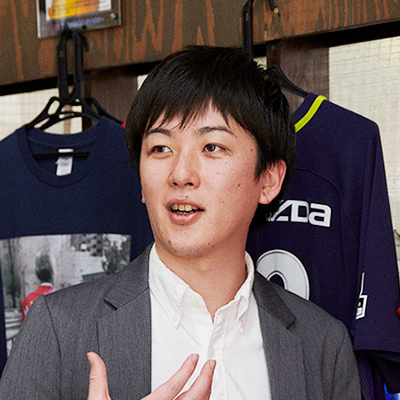
Shigeta Misawa
Dentsu Inc.
Business Transformation Division
Marketing Producer