Note: This website was automatically translated, so some terms or nuances may not be completely accurate.
 Leveraging Business and Music in Management [1/3]
JOYSOUND × Dentsu Inc.: “Instant Entertainment” that drives corporate purpose through sound logos
Katsuya Teramoto
Xing Inc.
Hiroko Fukui
Xing Inc.
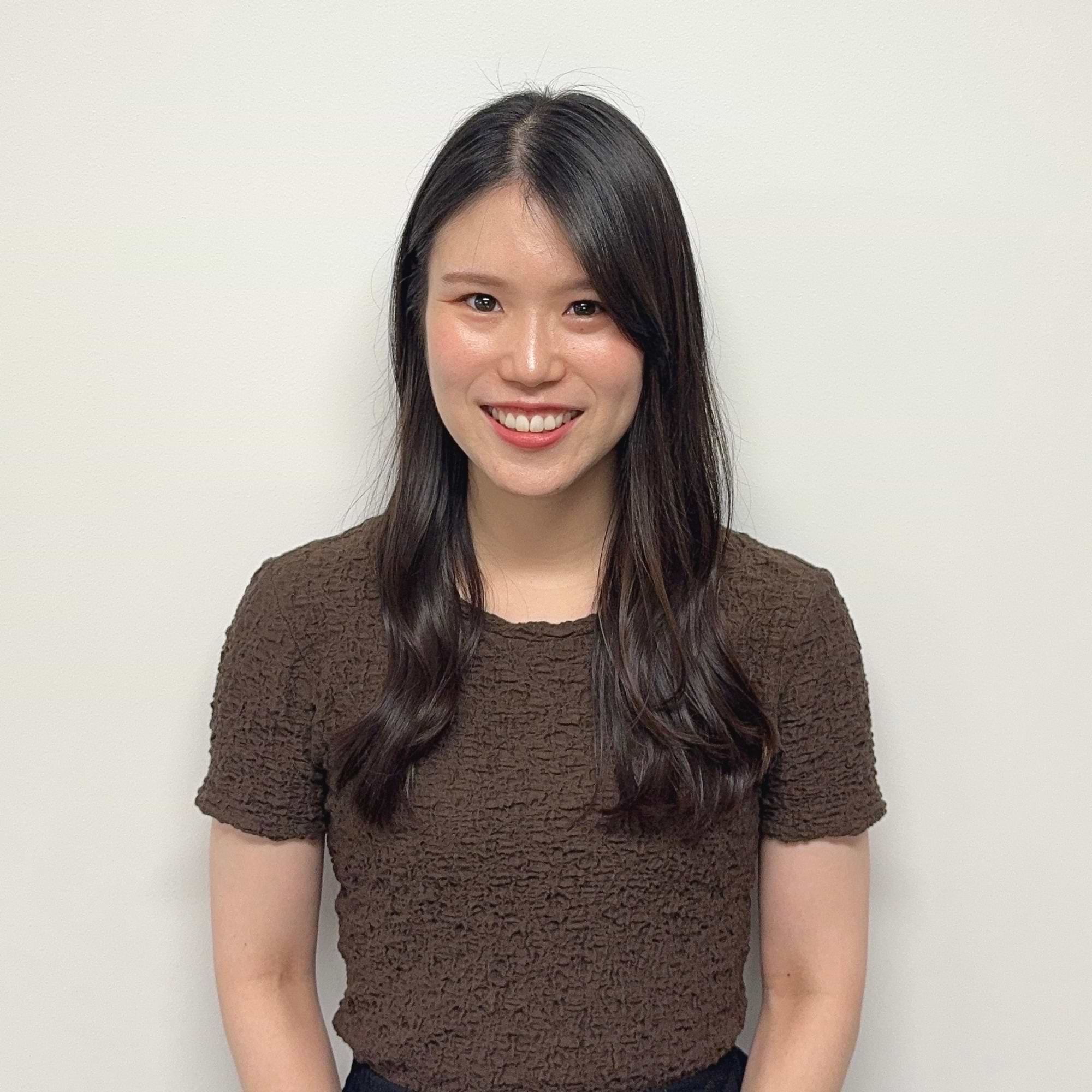
Kahō Murase
Xing Inc.
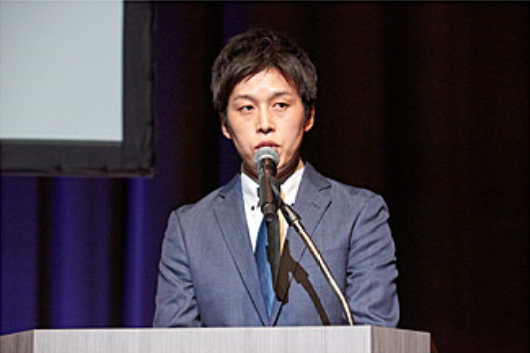
Kohei Morimoto
Dentsu Inc.
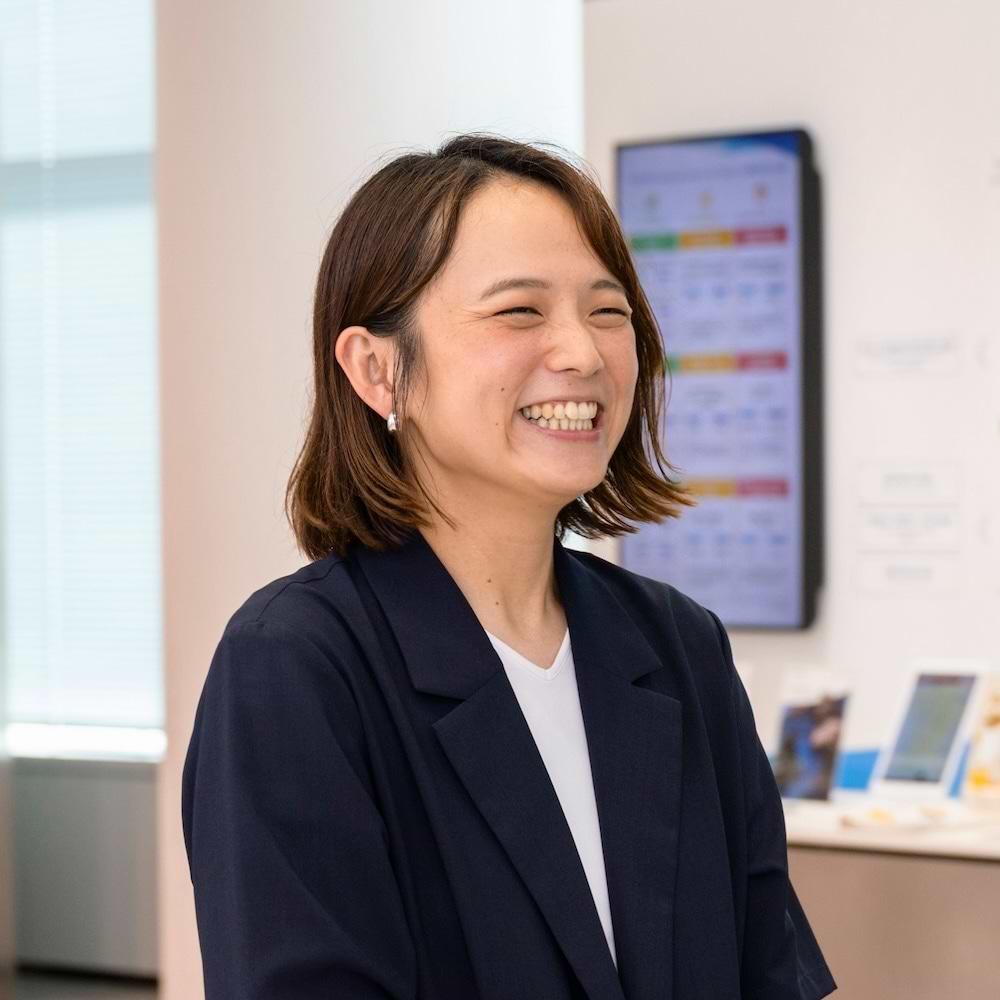
Eguchi Rumi
Dentsu Inc.
Sasagawa Makoto
Dentsu Inc.

Masuda Kento
Dentsu Inc.
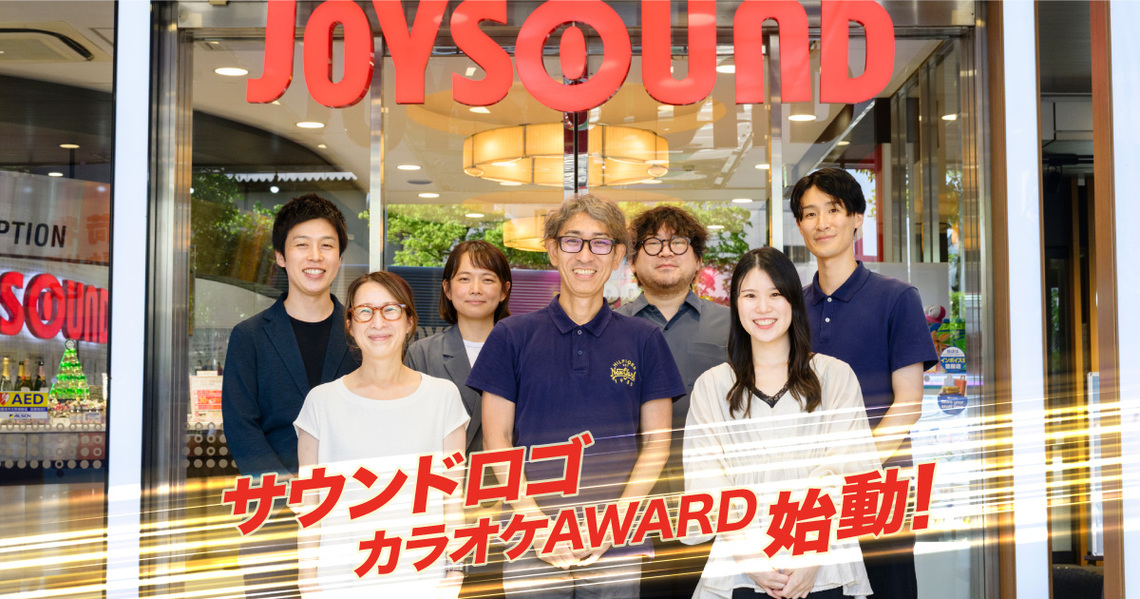
JOYSOUND (XING) and Dentsu Inc. are launching a new initiative to leverage “Sound Logo Karaoke” for corporate purpose-driven actions. Having collaborated on various content development projects—including advertising experience development, partnerships with startups, and corporate anthem initiatives—why are these two companies focusing on sound logos now? What value do sound logos hold for companies and organizations? Project members discuss these topics.
[What is the Sound Logo Karaoke AWARD?]
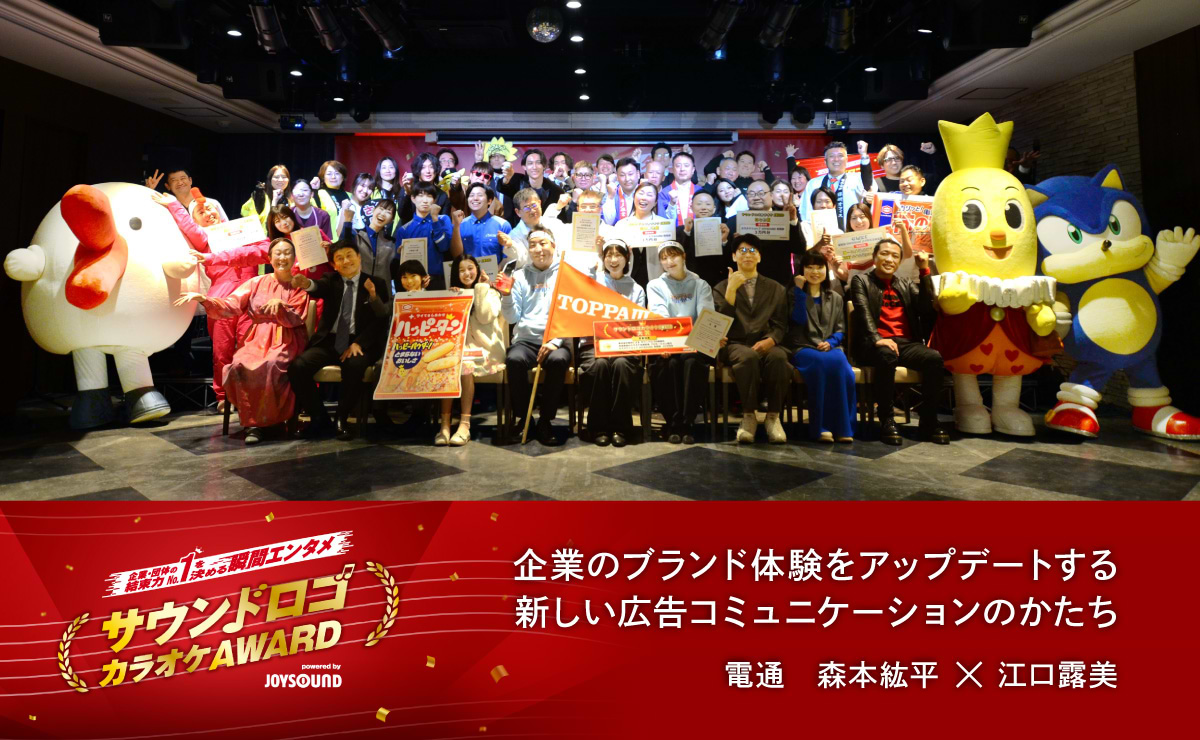
"Instant Entertainment" that determines the No. 1 team spirit among companies and organizations. A new employee-participation award hosted by JOYSOUND. Each company or organization’s original sound logo is made available for karaoke on JOYSOUND, and after preliminary rounds, a live event is held for the finals. Following performances of the sound logo karaoke and short presentations about the sentiments behind them, the No. 1 sound logo karaoke in Japan is decided.
Sound Logo Karaoke AWARD Official Website

Aiming to solve corporate management challenges through “instant entertainment”
Dentsu Inc. Morimoto: The “Sound Logo Karaoke AWARD” is a new initiative launched through a partnership between Xing and Dentsu Inc. First, could Mr. Teramoto, General Manager at Xing, please tell us about the background behind the project’s launch?
Teramoto, XING: We have been exploring ways to brand JOYSOUND from a perspective different from conventional promotions. Through a company anthem contest, we began engaging in ongoing communication with Mr. Morimoto and the team at Dentsu Inc., and we held repeated discussions on how to differentiate ourselves from competitors and explore new possibilities unique to JOYSOUND. What emerged from these discussions was an initiative that leverages JOYSOUND’s assets to contribute to corporate branding while also aligning with our own purpose-driven branding.This project began as a new challenge that goes beyond mere karaoke to incorporate business viability as well.
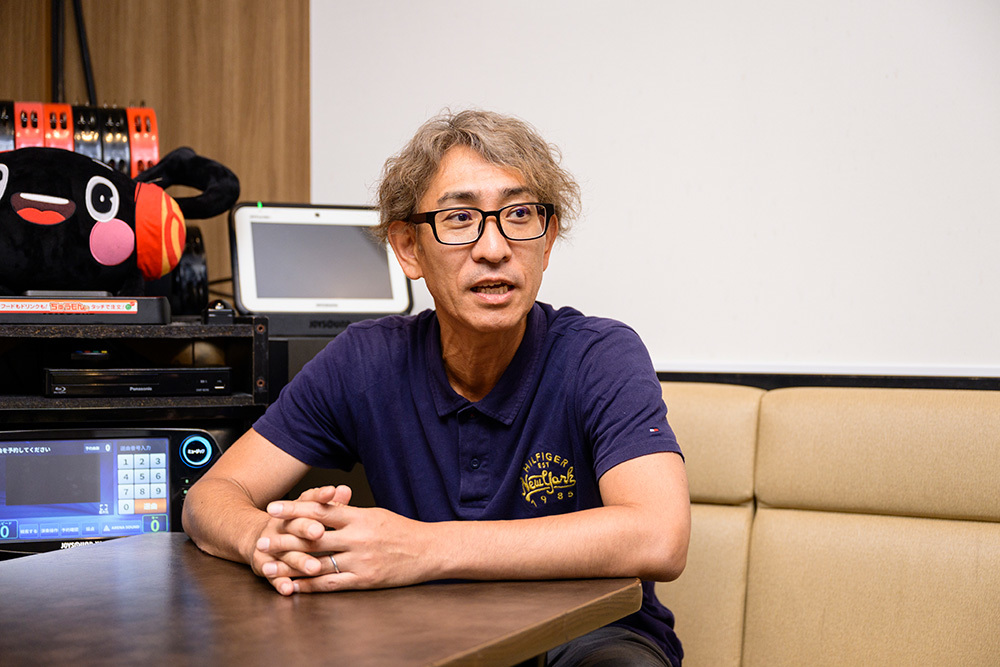
Dentsu Inc.: Mr. Fukui and Mr. Murase from Xing, who joined the project partway through, what were your initial impressions?
Xing Fukui: While I was caught up in my daily work, I had a vague feeling that “things can’t go on like this; there must be something more we can do.” When Teramoto told me about this project, I remember feeling my heart race with anticipation, thinking that if we worked with Dentsu Inc., we could create and bring to life “stories that resonate deeply and move people.”
Exing Murase: I joined shortly after transferring from the Sales Department, and I remember feeling excited when Teramoto told me it was “a project where we could take on a challenge starting from scratch.” I began working on it with a positive attitude, thinking this might be an opportunity to bring in the challenges I’d observed on the front lines during my time in sales, as well as to share my own ideas and thoughts about JOYSOUND.
Dentsu Inc. Morimoto: Mr. Eguchi, who served as the lead on various projects with Xing and helped plan this project as well, what were your impressions of this new initiative?
Dentsu Inc. Eguchi: I believe the karaoke that JOYSOUND offers to the world has the power to bring people together. Now that the pandemic is over and we’re able to gather together again, I felt the potential in the power of entertainment to create a sense of unity in real-world settings. Projects with XING always get me excited, but I thought this initiative—centered on the theme of “instant entertainment” through sound logos—would be an interesting challenge with a completely new angle.
Dentsu Inc. Morimoto: Planner Masuda, could you share your thoughts on the project as well?
Dentsu Inc.: Personally, I really enjoyed the process of co-creating ideas with Xing every single time.There was a phase where we took stock of and categorized nearly 500 ideas. Normally, I think you’d decide on a direction internally before proposing it to the client. But this time, we narrowed down the ideas while exchanging opinions with Mr. Teramoto and his team, asking, “We’re thinking about something like this—what do you think?” The sense of the plan taking shape through that co-creation process has become a valuable asset for me as well.
The Origins and Present of the Sound Logo: What Is the Value of Communicating Through Short Sounds?
Dentsu Inc. Morimoto: We launched this project because we saw potential in sound logos, but what significance do sound logos hold in this day and age? Creative Director Sasagawa, please share your thoughts.
Dentsu Inc. Sasagawa: The origins of the sound logo date back to the 1930s, when radio became a widespread advertising medium. On radio, where visuals couldn’t be used, jingles and theme songs were created as a way to leave a lasting impression of a company using only sound. These are considered the prototypes of today’s sound logos. Later, with the spread of television, they became established as short phrases played at the end of TV commercials and evolved into symbols of corporate image.And now, with the increase in audio touchpoints—such as smartphones, apps, podcasts, and social media—the value of memorable sound logos is on the rise.
Dentsu Inc. Morimoto: And on this milestone—the 100th anniversary of the Showa era and the 100th anniversary of the start of radio broadcasting—what significance does this renewed focus on sound logos hold for Xing?
Xing Teramoto: A sound logo serves as a means to effectively convey a company’s worldview and the characteristics of its services while fulfilling its function as an advertisement. Moreover, because it is “sound,” I feel it has a very high affinity with JOYSOUND. Sounds that catch your ear unexpectedly in daily life—the fact that they are such familiar elements naturally connects them to karaoke, which is a familiar form of entertainment in everyday life.
And I feel that this affinity extends beyond entertainment to our corporate culture and values as well.
Dentsu Inc. Morimoto: Mr. Fukui, what was your initial, intuitive impression of this new idea for “Sound Logo Karaoke”?
Xing Fukui: My first impression was that it was simple, easy to understand, and looked like fun. I also remember thinking, “I’d love to sing the various sound logos I hear in my daily life as karaoke!” and my imagination ran wild, picturing how singing them in such scenarios would make karaoke even more enjoyable.
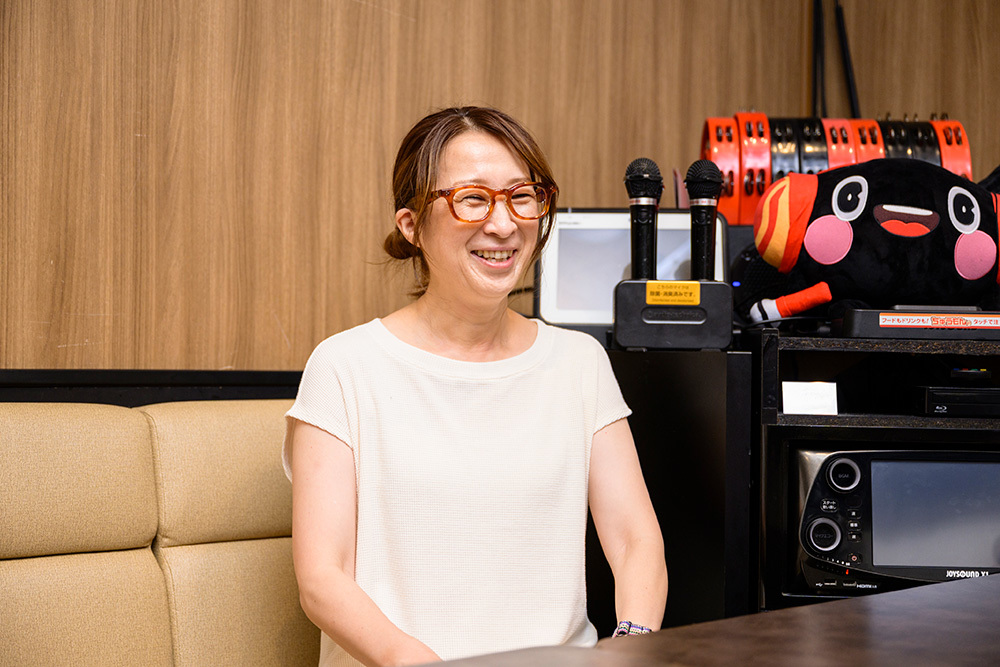
Xing Murase: Since I’ve been involved in music for a long time, from that perspective, I believe sound logos are music that anyone can hum along to and anyone can come to love. Karaoke songs tend to be a matter of personal taste, but sound logos are short and catchy, so they can easily reach a wide audience regardless of preference. I feel they’re a form of music that’s easy to remember and share.
Dentsu Inc. Morimoto: It also seems like it could naturally bring businesspeople from various companies together. From a planner’s perspective, what do you find appealing about this, Mr. Masuda?
Dentsu Inc. Masuda: The combination of sound logos and karaoke—two things that at first glance seem unrelated—creates a few seconds of “instant entertainment.” This was a major discovery for me. Entertainment usually requires a certain amount of time to enjoy, but this project condenses that essence into just a few seconds. What’s more, the fact that it’s linked to corporate branding and the dissemination of a company’s purpose makes it incredibly unique. I find that boldness—creating maximum excitement in a limited amount of time—really interesting.
Dentsu Inc. Eguchi: You often find yourself unconsciously memorizing a company’s sound logo through song, don’t you? Being able to sing it at karaoke is both novel and fun. I’m tone-deaf myself, so I’m not very good at karaoke, but since a sound logo only takes a few seconds, it’s less embarrassing. It seems like it could be used in various situations—as a casual song for employees to bond over, or to kick off or wrap up an after-party. From a consumer’s perspective, I feel it could serve as a new catalyst for communication.
Dentsu Inc. Morimoto: That’s right. I think the low barrier to entry—the fact that it’s so easy to get started—is a major appeal. Since you can use it with the same casual attitude as saying, “Let’s wrap up this meeting with a sound logo,” it might naturally take root within companies.
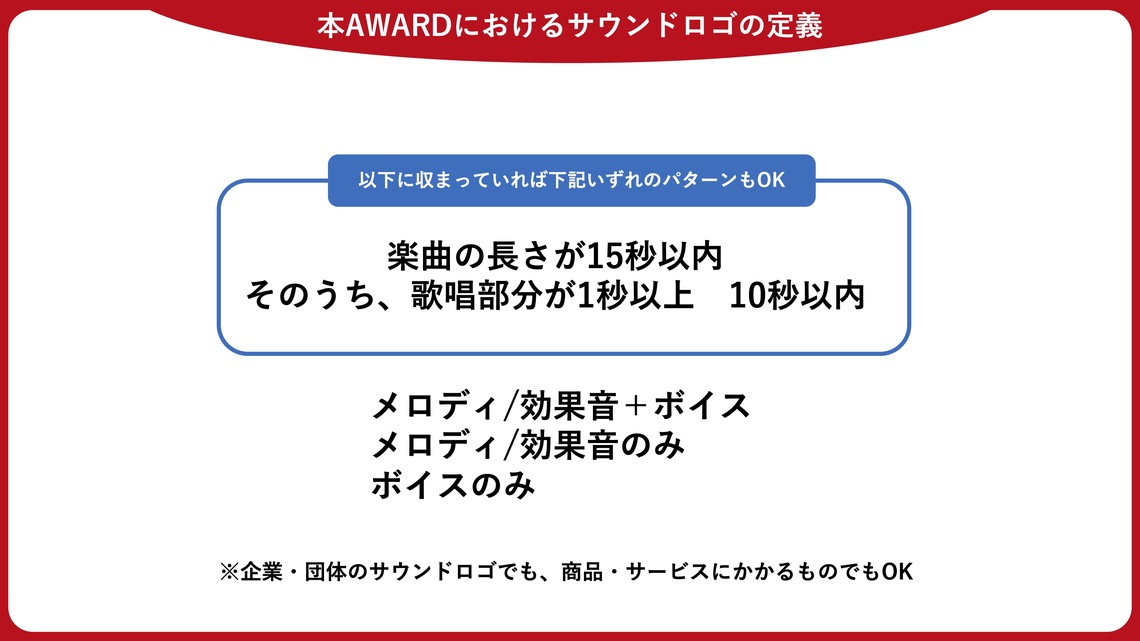
A New Way to Spread Purpose and Foster Empathy Inside and Outside the Company
Dentsu Inc. Morimoto: With this project, we’re proposing a new form of communication using sound logos to companies and organizations. Specifically, there are two main pillars: “distributing sound logo songs via karaoke” and “participating in the Sound Logo Karaoke AWARD.” Could you tell us about the objectives behind these initiatives?
Xing Teramoto: For this initiative, we’ve structured it so that companies participate with the premise of distributing sound logo tracks via karaoke. Of course, the excitement of the awards ceremony itself is one of the attractions, but beyond that, we want companies to effectively utilize the sound logo material itself for both internal and external communication.Companies can simply use sound logos they already own, or they can, for example, dig up past sound logos for discontinued products and remake them to create brand initiatives that evoke a sense of nostalgia. With the milestone of the 100th anniversary of the Showa era coinciding with this, it could also serve as an opportunity for companies to return to their roots or rediscover their heritage.Furthermore, given that younger generations, including Gen Z, are familiar with karaoke in their daily lives, I believe distributing sound logos via karaoke platforms is an effective way to connect with them.
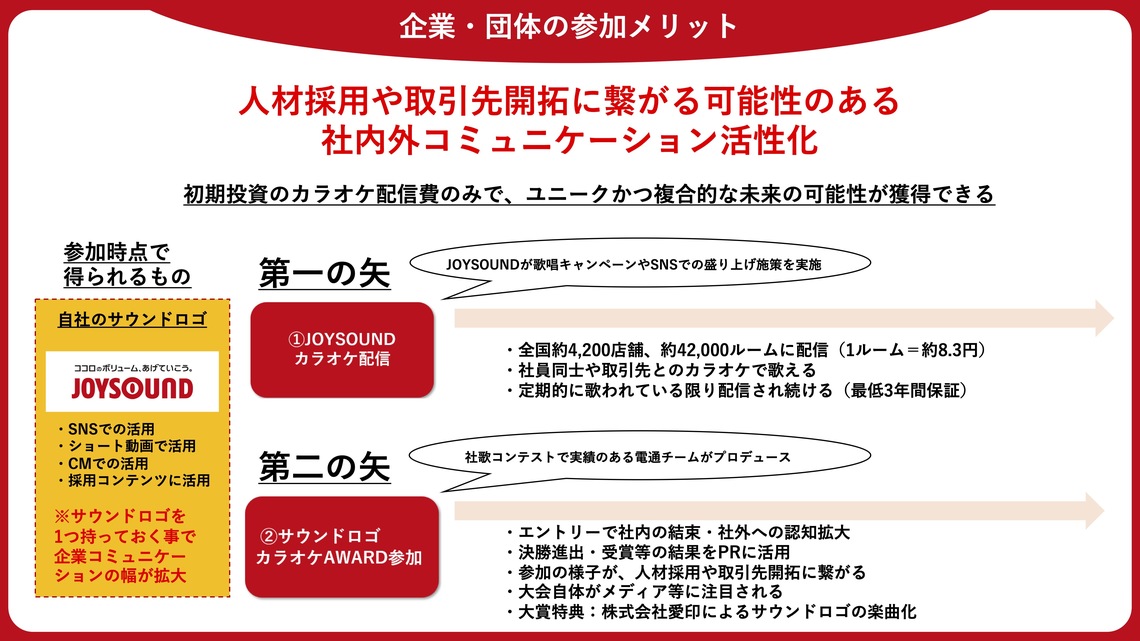
Dentsu Inc. Morimoto: That’s true—it’s interesting and somewhat unexpected that sound logos with a rich history can resonate with Gen Z. It means they can serve as a point of connection with a wide range of consumers, across generations.
Xing Teramoto: Sound logos originally serve as a “bridge” connecting companies and consumers as an advertising tool. By adding the power of co-creation and unity within the company through processes like “creating” and “singing” in this project, it becomes an initiative that covers both internal and external aspects. I see the value of this project in the fact that these two axes function simultaneously.
Dentsu Inc. Morimoto: Mr. Masuda, how do you view the effects that the processes of “creating” and “singing” a sound logo bring to a company?
Dentsu Inc. Masuda: Personally, I feel that the process of creating a sound logo is somewhat similar to a high school cultural festival. When a single goal is established, employees naturally unite. At that point, internal branding has already begun. Furthermore, singing and sharing it serves as an output that communicates the company’s stance and purpose to the outside world. I believe that within these few seconds of sound lies the communicative power to influence both the internal and external spheres, just as Mr. Teramoto mentioned.
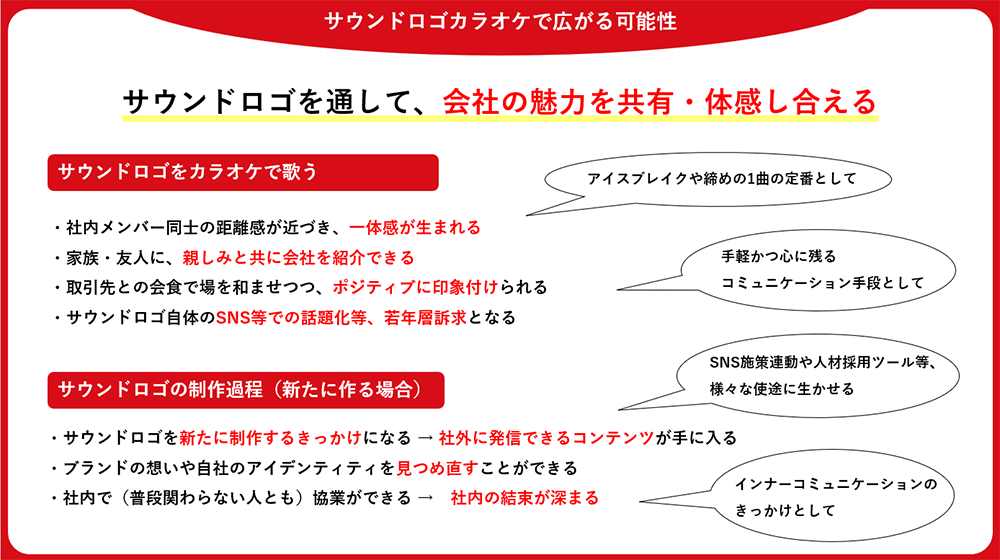
Dentsu Inc. Morimoto: Mr. Eguchi, what potential do you see in the effectiveness of “short” content like sound logos?
Dentsu Inc. Eguchi: Creating a full song requires many steps, but I see a sound logo as something that condenses all those elements into a compact form. Moreover, it can be enjoyed as “instant entertainment.” When a company wants to express something based on its purpose, I feel this could become a new form of entertainment that allows for natural sharing through just 10 seconds of sound. It fosters a sense of unity among employees while also serving as a breakthrough for new challenges. I believe it’s an initiative with that kind of scalability.
Dentsu Inc. Morimoto: The significant impact achievable with minimal effort is also a key point, isn’t it? Even though it’s short, it’s easy to apply to diverse content like social media and commercials. Furthermore, by being continuously streamed on JOYSOUND, it can become a new point of contact with consumers. I feel it’s an attractive project in terms of return on investment.
Connecting organizations and people through a few seconds of song. The potential of instant entertainment
Dentsu Inc. Morimoto: The Sound Logo Karaoke AWARD is a unique competition where companies and organizations take the stage representing their brands and pour their hearts into a song lasting just a few seconds. What do you think will be the main highlights for viewers?
Xing Teramoto: How the participating companies choose to express their sound logos. Just watching that alone conveys the passion and ingenuity packed into such a short time. While some may simply sing the song as is, others will likely take on the challenge of “leaving their mark” with their own unique arrangements. I feel that this collection of diverse expressions itself will make for compelling entertainment.
Xing Murase: Attention will likely focus not only on sound logos from familiar companies but also on newly created ones. Why was that particular melody chosen? What was the intention behind it? I think one of the unique appeals of this award is getting a glimpse of the “story behind their creation” through the presentations before the performances.
Dentsu Inc. Morimoto: There’s a wide range of “types” of sound logos, isn’t there? From musical ones to those that sound like dialogue or sound effects. What kind of expansion can we expect?
Xing Fukui: For example, sound logos that resemble sound effects—like “Dadaaan” or “Kaaaan”—become instantly more fun when set to music and lyrics. There’s a sense of surprise—like, “Is that how you pronounce it?” or “Was the pitch like that?”—and I feel that generates laughter and a sense of unity.
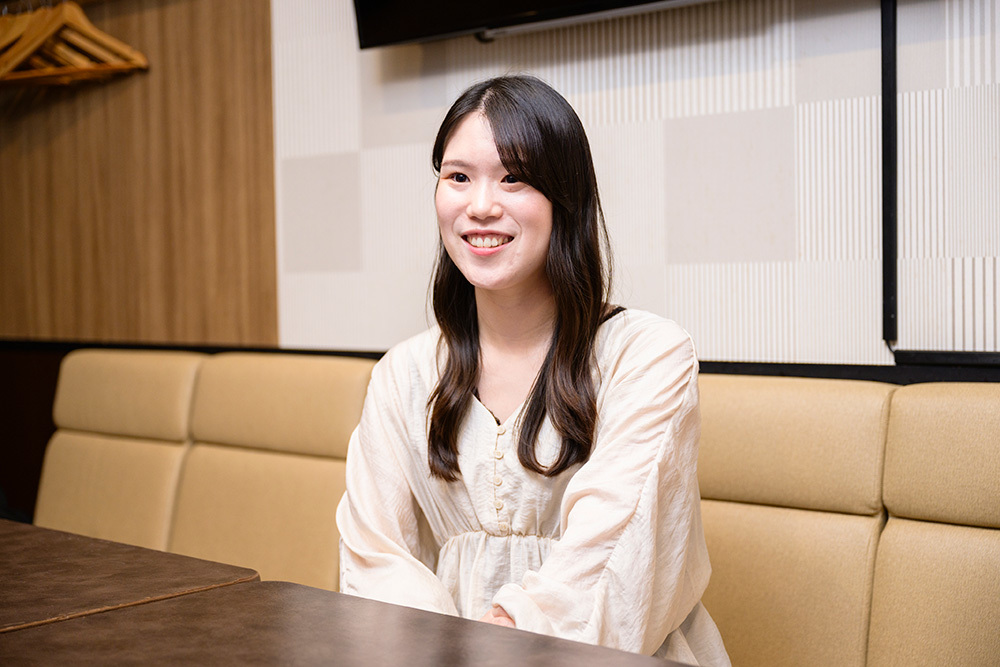
Xing Murase: On the other hand, there are also sound logos that consist solely of dialogue. I’m looking forward to seeing how those are brought to life.
Dentsu Inc. Eguchi: We’d love for companies that already have sound logos to take this opportunity to apply, and for those that don’t yet have one, I hope this award will serve as a catalyst for creating a sound logo.
Dentsu Morimoto: Masuda-san is part of Dentsu Inc.’s recruitment branding team—do you think this initiative is effective from a talent acquisition perspective?
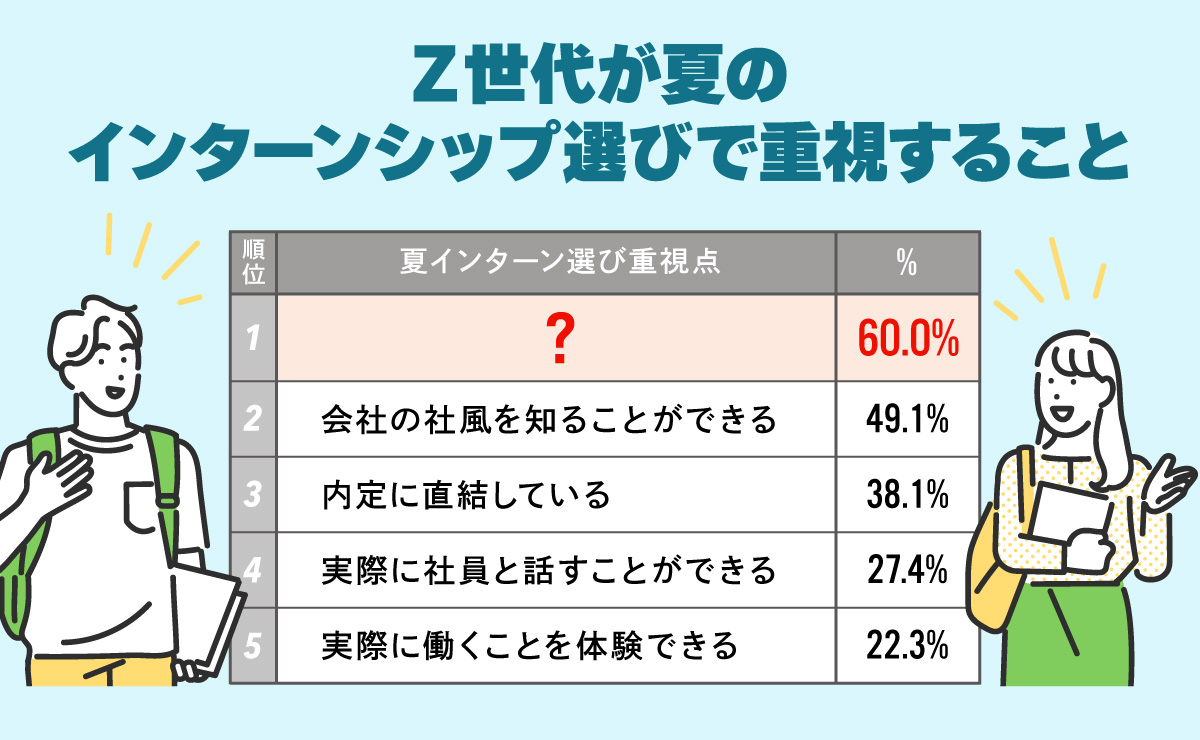
Dentsu Inc. Masuda: I think so. Since the essence of the company is condensed into such a short format, it’s easy to convey the atmosphere and corporate culture. Even just seeing the performers and feeling the vibe on the day of the awards ceremony conveys a lot. Today’s students and young professionals tend to prioritize “what kind of people they’ll be working with.” In that sense, I believe this initiative is highly effective for recruitment as well.
Dentsu Inc. Eguchi: It’s often more memorable for people to get a sense of the company from a few seconds of performance than to read through a company brochure carefully. The entire process—from creating the sound logo to sharing it with the world—should become a story that conveys the company’s appeal.
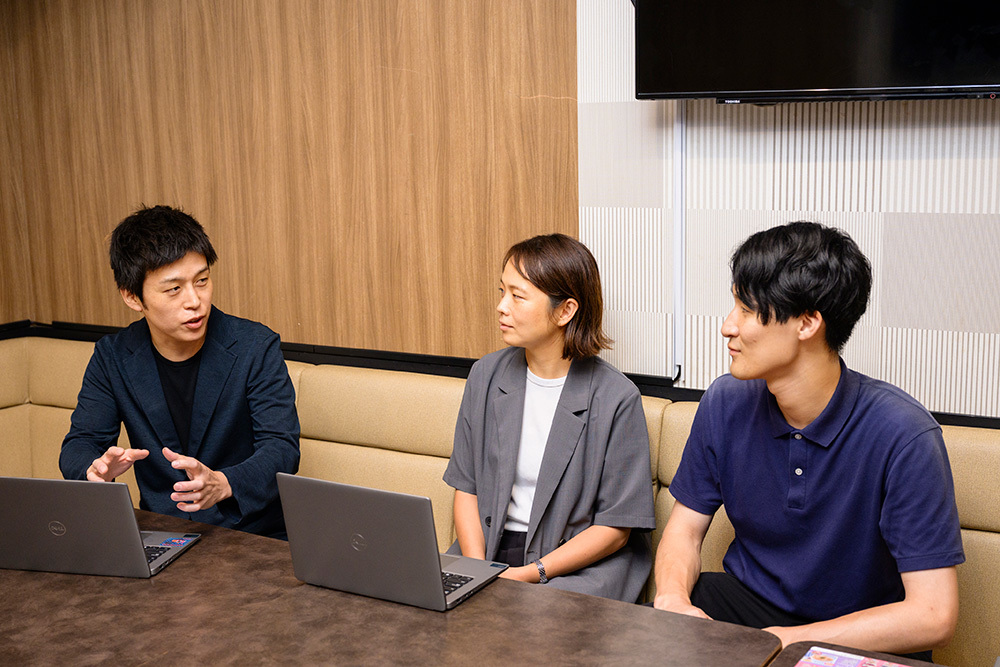
Dentsu Inc.: Of course, the competition itself is appealing, but it’s also attractive that its use will expand afterward through karaoke streaming.
Dentsu Inc. Eguchi: Yes. It’s not just about singing at the awards ceremony and calling it a day; there’s a sense of continuity because people can sing them anytime on JOYSOUND afterward. I think one of the strengths of this project is that it creates an environment where a wide range of people—including employees, external stakeholders, and the general public—can engage with it repeatedly.
Dentsu Inc. Sasagawa: The official website featuring sound logos from various companies sounds interesting in and of itself. It’s fun just to compare them, and you might even catch a glimpse of the companies’ thoughts and stories behind those familiar phrases. I can’t wait for it to go live.
Dentsu Inc. Morimoto: By the way, for this project, we also had the team at Xing actually sing the sound logos themselves for a video demonstrating the sound logo karaoke experience.
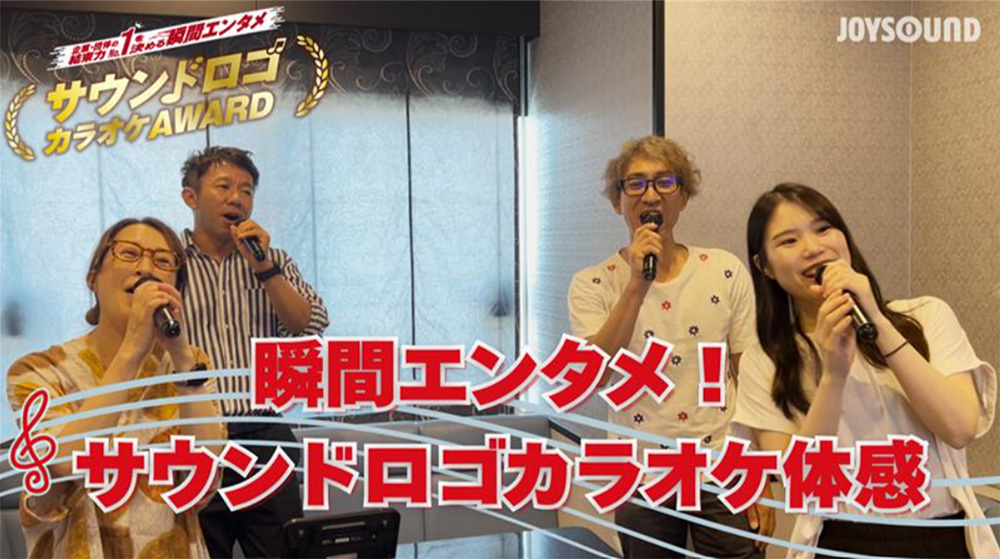
Dentsu Inc. Morimoto: How did it feel to actually sing them?
Xing Murase: It was great that we could all enjoy singing together and get hyped up at the same energy level. Plus, since it’s short, I thought it was appealing that even people who aren’t great at singing could easily join in.
Xing Fukui: You don’t actually get many chances to shout out a company or brand name at the top of your lungs, do you? That’s exactly why singing it felt strangely refreshing. Especially since we sang so much during the shoot (laughs).
Dentsu Inc. Morimoto: The combination of sound logos and karaoke really made for a fun shoot, didn’t it? Great job, everyone!
Xing Teramoto: We’d be thrilled if many companies and organizations would join us. Entries for the Sound Logo Karaoke AWARD are open until Tuesday, September 30, 2025. We look forward to your submissions!
Click here to apply for the Sound Logo Karaoke AWARD

Was this article helpful?
Share this article


Newsletter registration is here
We select and publish important news every day
For inquiries about this article
Author
Katsuya Teramoto
Xing Inc.
Communication Strategy Department
Department Manager
Hiroko Fukui
Xing Inc.
Communication Strategy Department, Public Relations Group
Kahō Murase
Xing Inc.
Communication Strategy Department Communication Design Group
Kohei Morimoto
Dentsu Inc.
Marketing Division 8
Content Producer
Eguchi Rumi
Dentsu Inc.
Marketing Division 8
Content Planner

Sasagawa Makoto
Dentsu Inc.
Marketing Division 8
Creative Director

Masuda Kento
Dentsu Inc.
Data Marketing Division, Growth Consulting Division 2
Associate Planner