Note: This website was automatically translated, so some terms or nuances may not be completely accurate.
 【Continued】Local Gurgle [85/208]
Information, knowledge, and wisdom
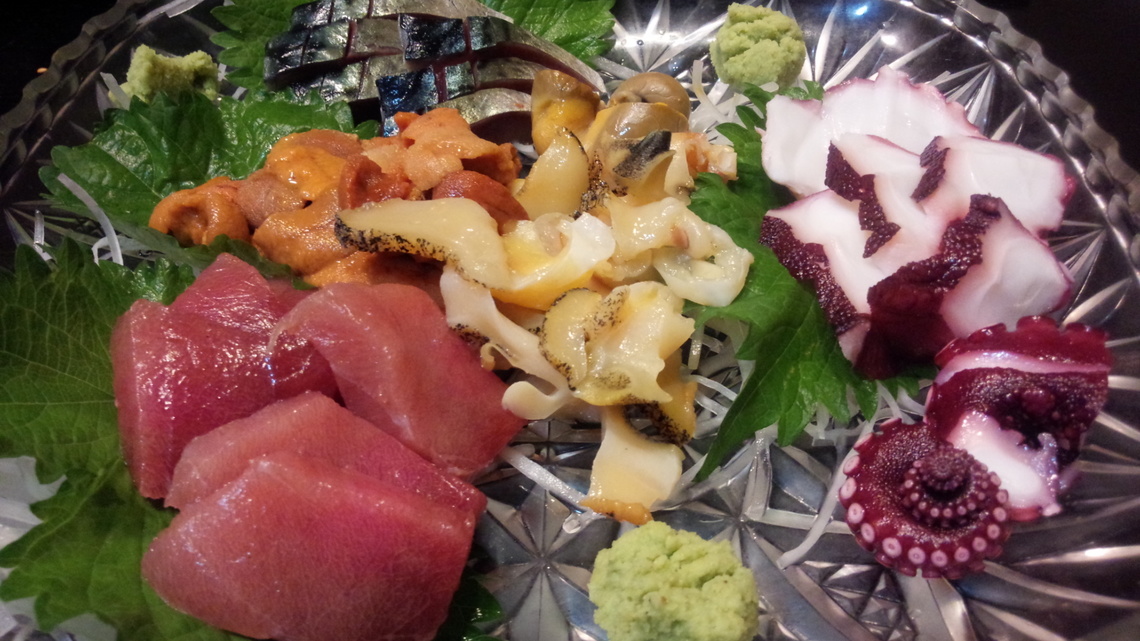
Sean is a student at the University of Pennsylvania. I met him while he was studying abroad in Japan, and since he came to visit again this month, we decided to meet up. When I emailed him, "What do you want to eat?", he replied, "I like fatty tuna." How cheeky! I got annoyed and thought about dragging him around Shinbashi to show him "the reality of Japanese salarymen." But then I remembered his friendly smile... maybe I'm just soft. So, aiming for some delicious sashimi, I took him to an izakaya in Tsukiji.
Turns out Sean is graduating this June. Starting next month, he'll be working for a global entertainment company. Other people's kids really grow up fast. He'd become completely intelligent and robust.
Is it because I'm getting older that I feel dazzled by him without a hint of jealousy?
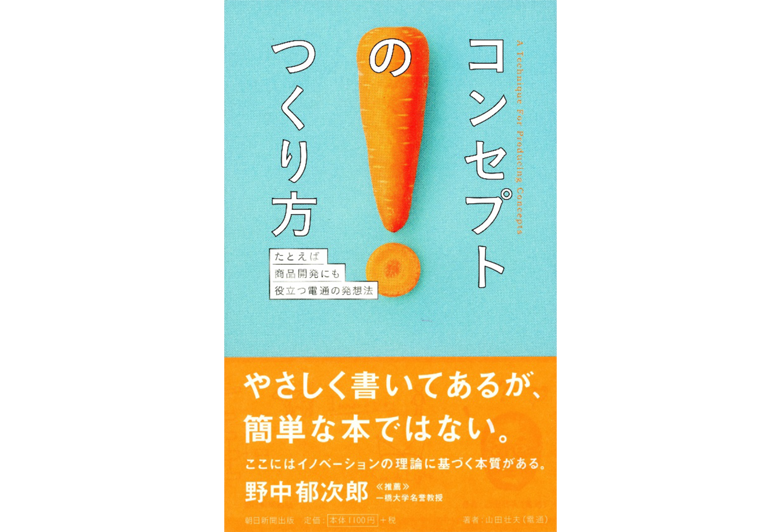
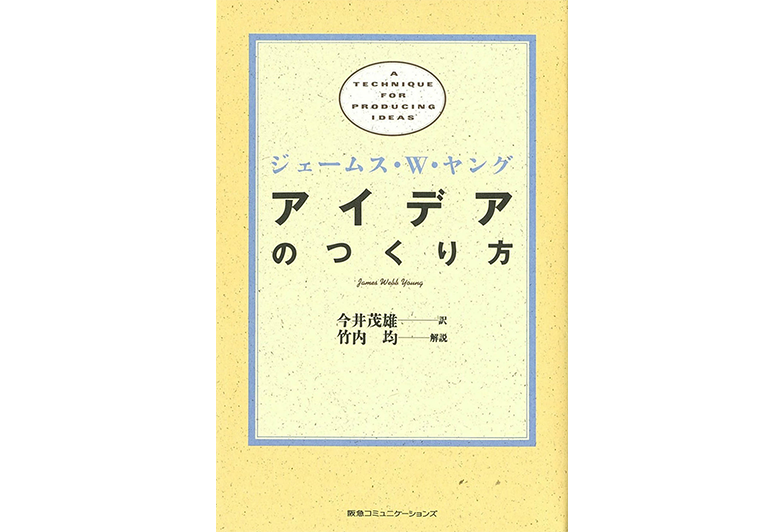
Now then. When creating concepts, the materials you must acquire were described as " generalknowledge and specialized knowledge" in my previous book, The Idea Handbook. However, in this book, How to Create Concepts, I've changed it to "general materials and specialized materials." This is simply reverting to the phrasing used in J. W. Young's bestseller How to Think Up Ideas, which also uses "general materials and special materials." Whether what we should acquire is "materials (≈ information)" or "knowledge" is a very subtle point, but one of the joys of writing a book is agonizing over such details.
Opening my Kojien dictionary (5th edition), "information" is defined as: ① notification about a matter; ② knowledge conveyed through various media, necessary for making judgments or taking action. Meanwhile, "knowledge" is defined as: knowing about a matter; or the content of that knowledge. So, aren't they basically the same thing?! However, at least in management studies discourse, the two seem to be clearly distinguished.
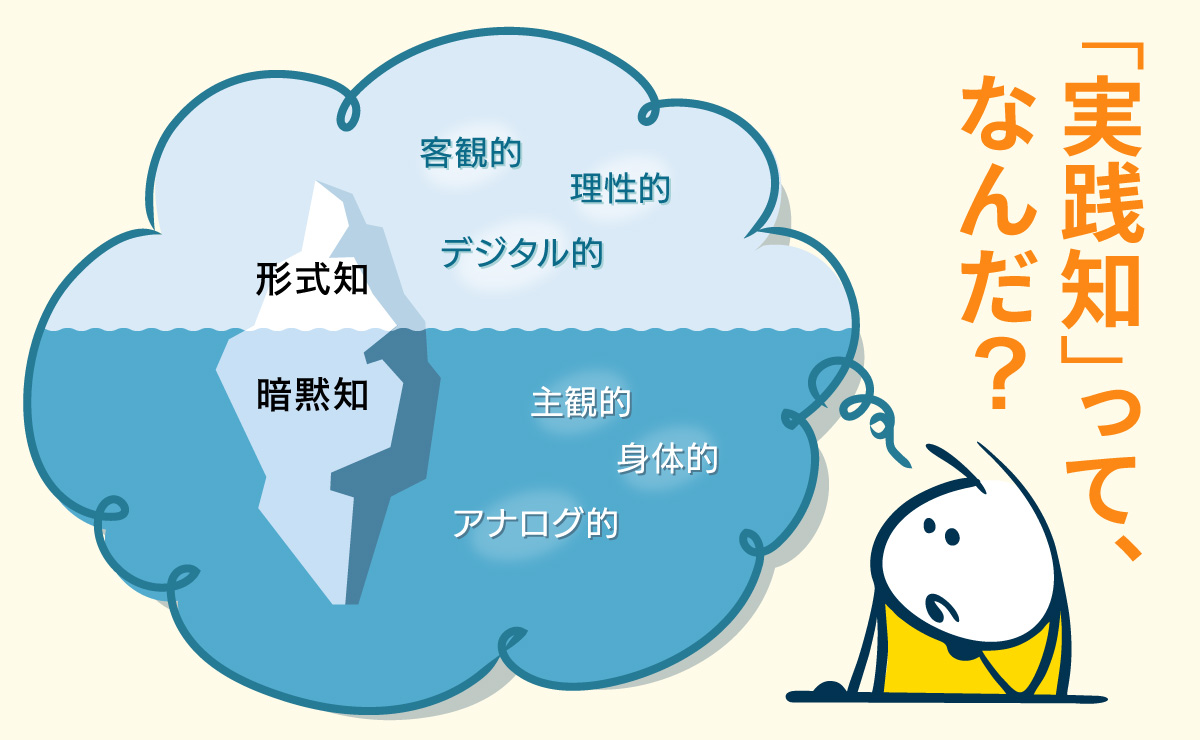
According to Professor Ikujiro Nonaka, a world-renowned authority in innovation studies, knowledge refers to "meaningful information." He argues that interpreting this "meaning" is a human subjective process, and it is precisely because this subjectivity varies from person to person that new "knowledge" is created. In other words, according to Nonaka's theory, what is essential for concept creation is "knowledge." Information that hasn't been interpreted for meaning is useless. That's why I used to write things like "let's gather general knowledge and specialized knowledge as raw material."
However, a student pointed out: Isn't the material itself just "information"? Doesn't it only become "knowledge" once we acquire it and discover its meaning? Fair point. Indeed, the phrase "gather knowledge" involves a slight leap. In my recent work, I revised this to "general materials and specialized materials," a description closer to "information."
Personally, I'm observing the recent "big data" boom from a slight distance. While it can certainly be highly useful as material for thought, it remains merely "information." It isn't meaningful "knowledge." If only humans can convert "information" into "knowledge," no matter how much technology advances, then the idea that computers can automatically determine the best course of action is also a kind of myth. Alongside its beneficial aspects, I fear the risk of "mental laziness."
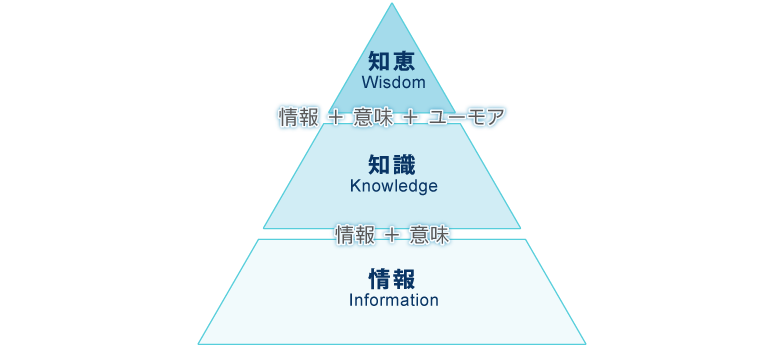
If "knowledge" is "information" with added "meaning," then "wisdom" is that with an extra dimension. According to the Kojien dictionary, it refers to "philosophical knowledge deeply connected to one's character, serving as a guiding principle for life."
Writer Hiroyuki Agawa suggests the key difference between "knowledge" and "wisdom" lies in the presence of "humor." This "humor" is itself a complex theme the more you ponder it, but we'll explore that another time.
Please, enjoy!
Was this article helpful?
Share this article


Newsletter registration is here
We select and publish important news every day
For inquiries about this article
Back Numbers
Author

Sōo Yamada
Dentsu Inc.
First CR Planning Bureau
Creative Director