
Note: This website was automatically translated, so some terms or nuances may not be completely accurate.
 Evolving E-Commerce: What Does the New Era Look Like? [2/4]
The Future of the Rakuten Brand: Pursuing What's Best for Customers and Stores

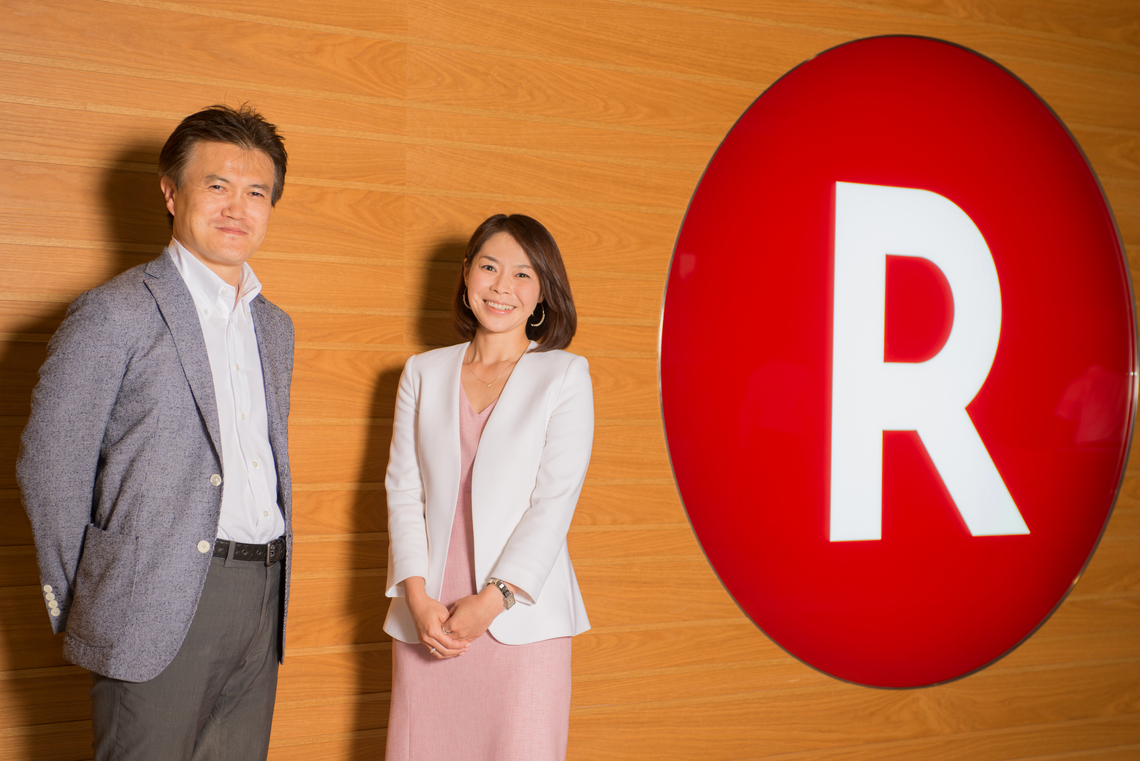
Kono Naho
Rakuten, Inc.
Junichi Kanno
Japan's online retail market has now grown to exceed 13 trillion yen. With the spread of internet access and smartphones making it easy for many people to use, e-commerce is now changing our lives and values. In this series, Junichi Kamino from Dentsu Inc.'s Promotion & Design Bureau visits key figures in Japan's market to explore the near future of e-commerce. Following the previous consumer survey analysis, this installment features Senior Executive Officer Nao Kono, who oversees Rakuten's e-commerce companies including Rakuten Ichiba. We asked her about her thoughts on consumers and store operators.
Part 3:Amazon: Embodiment of "The Company That Values Customers Most on Earth"
Part 4:Opening Purchase Data, Product Design... The Future of E-Commerce Created Through Co-Creation Between LOHACO and Manufacturers
The true measure of e-commerce's quality lies beyond comparison charts
Kanno: Mr. Kono, you've been involved in e-commerce since your student days, right?
Kono: That's right. It was just as the internet was starting to take off, and a few of us launched an "online shopping" site. We believed it would be an industry centered around our generation that would grow significantly. It was fascinating to receive orders from countries and regions we'd never even heard of. At the same time, I learned the harsh realities of holding inventory.
Kanno: I think e-commerce has unique strengths for each company, including differences in business models like holding inventory versus not. Yet, the current reality is that companies are often compared based on price and product count. On the other hand, competition based on price and product variety seems to have reached its limits, and the industry feels like it's at a plateau. How do you view the current situation?
Kawano: Lately, I've been wondering how much longer the term "EC" will be used. I also feel it's a shame that Rakuten gets lumped into a "comparison chart" with competitors in the e-commerce category, judged solely on specs.
For example, Rakuten aims to be a "town bazaar" where customers, products, and store managers interact, enjoying shopping through communication – not just an efficiency-focused display shelf. So, we don't fundamentally pursue a shopping style driven solely by efficiency. But such enjoyment is hard to factor into comparison charts. Just as physical stores aren't evaluated solely on price or product range, I believe each service should focus on developing its unique strengths and win in its own way.

Rakuten's "Empowerment" and Four Key Focus Areas
Kanno: Indeed, considering the growth of online supermarkets and the development of omnichannel, the definition of e-commerce itself becomes ambiguous. Furthermore, in marketing, the trend is shifting towards One to One, the "era of the individual." Moving forward, it would be ideal if users chose services based on their values and worldview, rather than uniform evaluation criteria. As Rakuten approaches its 20th anniversary, how is it progressing now?
Kono: Since its founding, the Rakuten Group has held the mission of "Empowerment" – energizing people and society through the internet. Furthermore, Rakuten Ichiba, our e-commerce business, has operated under the concept "Shopping is Entertainment!" since its inception. We are now re-examining these foundational principles to consider what we can achieve in the next era.
Our current strengths, which we will further focus on, are four areas: "Empowerment involving our store partners," "Mobile," "Safety and Security," and "Ecosystem through Group Services."
Kanno: What specific initiatives are you undertaking?
Kono: First, aligning with our mission of "empowerment," we've always valued not just providing space to store owners, but working together to energize people and society—a principle since our founding. Our store operators are all unique—not just in their products, but in their philosophies and personalities. As mentioned earlier, this means we might not always achieve perfect efficiency or speed. But to truly empower people and society, especially on Rakuten Ichiba, our store operators are fundamental. It frustrates me that the storytelling and passion on each store's page aren't easily captured in comparison charts. Yet, we must steadfastly maintain this as Rakuten's core asset.
Regarding the second point, "Mobile": We've intensively strengthened our mobile capabilities alongside smartphone adoption, so service usage via mobile remains extremely high. We will continue to focus on mobile going forward.
I've been observing mobile commerce since the peak of feature phones. At Rakuten Ichiba, about 60% of transactions now occur via mobile devices, and I firmly believe this trend will accelerate.
Kanno: Does the third pillar, "Safety and Security," refer to cracking down on illegal products?
Kono: That is part of it. More broadly, considering UI and UX perspectives, it's about making Rakuten Ichiba an absolutely safe and secure shopping destination. Today's e-commerce is deeply rooted in consumers' lives, and precisely because its user base is expanding, we prioritize cultivating repeat customers who shop with Rakuten again, not just once. Against this backdrop, we meticulously review user feedback and collaborate with store owners to improve the shopping experience, leveraging insights for service enhancements.
Long-Term KPI Setting Builds the "Rakuten Ecosystem"
Kanno: During the Q1 2016 earnings briefing, you emphasized becoming the "No. 1 Membership Company." Does this relate to the fourth pillar, "Group Services Ecosystem"?
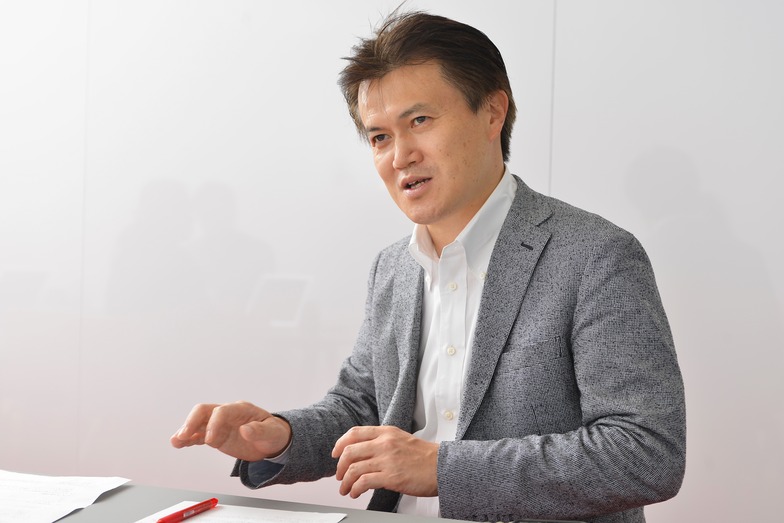
Kono: Absolutely. We are deepening integration with the over 70 services currently offered by the Rakuten Group to build an economic sphere where users gain more benefits the more services they utilize.
I believe it's been nearly a decade since we started referring to Rakuten's services as "membership services," but "No.1 Membership Company" is where we've formally crystallized that concept. Since it's a membership service, we believe the core isn't any single business, but rather the user ID and the points assigned to it. We envision an economic ecosystem centered around the user, comprising multiple services, where common points are redeemed. For example, currently over 60% of members use two or more services, and Rakuten Super Points play a significant role in that.
Kanno: So, is the vision for Rakuten to become more prominent to users than ever before?
Kono: Yes, it's similar to a single-brand strategy. However, since our growth has involved acquiring various services, further integration between them is a key challenge. We'll improve not just shared IDs and points, but also the UI/UX across all services to maximize member benefits as a unified service group. Once you become a Rakuten member, every service—cards, travel, banking—should feel convenient because you're a Rakuten member.
Kanno: Regarding point accrual mechanisms, we're seeing more permanent point-boosting programs instead of the previous limited-time campaign-based ones. This shift reflects a focus on marketing that prioritizes lifetime value (LTV) over immediate sales.
Kono: Exactly. This shift toward long-term business perspective is huge. Though it's not a recent change—we started measuring user LTV in one-year and three-year increments as marketing ROI about five years ago.
Striving for a Balance Between Technology and Human Touch
Kanno: Was there a specific trigger for prioritizing long-term LTV?
Kono: One-off point campaigns inevitably lead to price wars and become a test of endurance. Points are certainly effective when used properly, and Rakuten has played a leading role in fostering what you might call a "point culture" in Japan. But the longer we continued this approach, the more it felt like both our company and our users became constrained by it.
Kanno: While some might view changes to the point campaign program as merely reactive to competitors, hearing your perspective makes it clear this was a multi-year evolution focused on building lasting customer relationships. These transitions, along with numerous human-centered CSR activities—like operating the vehicle-based "Rakuten Mobile Library" or conducting "Rakuten IT School" outreach classes at high schools in collaboration with local merchants—give me an impression that differs slightly from the typical image of an "e-commerce company = efficiency-focused."
Kono: That's right. Of course, our Rakuten Technology Institute lab is actively developing various projects and testing new services using AI and image recognition technology. However, relying too heavily on technology risks losing that human touch. We intend to maintain the lively, bustling charm of a "town bazaar" – where people work hand-in-hand with merchants, creating a vibrant atmosphere – while continuously improving the underlying systems through technology.
Kanno: I see. Additionally, during the May earnings briefing, the "threefold increase in advertising revenue from national clients compared to the same period last year" stood out. Are you also strengthening initiatives with manufacturers, not just store owners?
Kono: Yes. Engaging with manufacturers has reaffirmed the immense value of Rakuten's proprietary purchase data. The ROI in this area is high—from data analysis and interpretation to its application in subsequent promotions. We're also actively connecting manufacturers with retailers by recruiting stores to carry their products.
It's precisely because it's a "never-ending goal" that we can be so disciplined.
Kanno: At the same time, it was striking how strongly the recent announcement emphasized improving the quality of the shopping experience. This seems connected to your safety and security initiatives. Is this also a slogan that will take several years to fully realize, rather than something immediate?
Kono: That's correct. Quality improvement (quality) is a particularly important keyword we're promoting externally this year. However, we established the Quality Improvement Committee back in 2014. With the cooperation of our store partners, we've been revising guidelines for site labeling and working to eradicate counterfeit brand products.
Kanno: What aspects of quality are you particularly focused on?
Kono: Improving UI and UX is essential, of course, but what truly matters to users is the quality of the products and services provided by our store partners. While this might suddenly seem like raising the bar for our store partners, the groundwork laid by the committee mentioned earlier means they tend to see it as a reflection of our company's commitment. We demand quality from each store, but simultaneously, as the Rakuten Group, we are thoroughly committed to maintaining and improving quality ourselves. This means we will protect our store partners when necessary.

Kanno: Educating and collaborating with stores is surely more challenging than employee training, but it will remain crucial going forward. Incidentally, internally, seamless coordination will be vital for advancing collaboration between groups and multiple services. Have you seen any changes?
Kono: Yes, the company culture has changed quite a bit. Communication between group companies has increased, and the distance between us has definitely shrunk.
Also, during the Kumamoto earthquake this past April, a proposal for a donation drive came directly from first-year employees to Mr. Mikitani and me, and we implemented it immediately. The proposal, based on the principle that "as Rakuten advocates regional revitalization (empowerment), we should provide support that doesn't slow the economy," suggested the company donate 10 yen per user purchase. While Rakuten is a company where top-down direction is strong, it's interesting to see how this bottom-up initiative also drives change within the company.
Kanno: I see. Still, empowerment, entertainment, and quality—all are essentially endless goals, aren't they? I suppose championing such words is very Rakuten-like.
Kawano: Exactly. Our goals are defined by words that can be interpreted in countless ways, so they truly have no end (laughs). But I quite like the phrase we often use internally: "evolving while fluctuating." I find it enjoyable to think of this process—trying things out, reverting when needed, yet still progressing. Rather than focusing on individual services as isolated points, we want to pursue the value we can deliver as the Rakuten brand. For now, we aim to evolve to the point where we can confidently declare quality as our fifth core strength.
Was this article helpful?
Share this article


Newsletter registration is here
We select and publish important news every day
For inquiries about this article
Author
Kono Naho
Rakuten, Inc.
EC Company Senior Vice President
Senior Executive Officer