
Note: This website was automatically translated, so some terms or nuances may not be completely accurate.
 The Present and Future of Design and Innovation by frog [22/49]
Finding the "New Normal" in an Era of Creative Destruction

frog
This article presents content originally published in "Design Mind," a design journal operated by frog, under the supervision of Mr. Noriaki Okada of Dentsu Inc. Experience Design Division.

Adaptation Strategies for the COVID Crisis Hold the Key to Long-Term Market Transformation
The spread of the novel coronavirus has delivered an extraordinary shock to economies worldwide, ushering in an unprecedented era of "disruption." From new ways of working and communication methods to the transformation of entire business models, this pandemic has profoundly impacted every community across the globe.
The business environment we once took for granted will inevitably transform over the coming years due to the pandemic's impact. In this era demanding a shift in mindset from everyone, without exception, what can existing companies do not just to survive, but to thrive going forward?
In our recently published insight report, " The Disruptor Playbook," we introduced five "disruptor strategies" that companies can leverage to respond to changing consumer demands.
This article explores several business trends emerging in these unprecedented times. It also delves into how companies can pivot, make an impact on society, and ultimately deliver genuine value to consumers.
Amid social distancing, consumers are seeking ways to connect with each other through video and interactive platforms
When Microsoft Teams added a new feature allowing users to set virtual backgrounds, frog staff were thrilled. So why does this user experience have such a significant impact on brand awareness and loyalty? Because consumers value features that give them control. As video communication usage explodes and remote education and telework become essential to suppress infection rates, competition in the video communication market is intensifying.
Zoom, one of the major platforms, built a strategic sales model offering screen sharing, recording, and audio recording features free for video calls with up to 100 participants and lasting up to 40 minutes. Moreover, the Zoom platform can be used without an account or paid subscription.
By lowering the entry barrier, it allows users to experience Zoom in various ways, expanding opportunities for them to sign up for paid subscriptions offering additional services like unlimited meeting time, cloud storage, and reporting features.
However, while many users chose Zoom as their platform, competitors are catching up amid reports of security concerns surrounding video software. As privacy and security concerns grow, users may start prioritizing services that emphasize security over ease of use.
The Streaming Wars Reach Unprecedented Frenzy
As people worldwide are forced into stay-at-home lifestyles and social distancing, streaming services are becoming indispensable not only in our personal lives but also in our virtual social lives. According to research by UK tech market research firm Omdia, the online streaming service industry is expected to see annual growth exceeding 12% this year.
Even before social distancing spread globally, the streaming content market was highly competitive, forcing companies to find ways to differentiate themselves. Some new entrants, like the mobile video service Quibi, attempted to revolutionize how videos are watched.
However, major players like Netflix and Hulu continue to dominate the competition, relying solely on the breadth and quality of their content. Beyond content and affordability, the next competitive points in the streaming arena are likely to be ease of use and the overall experience. New features like social watching that enhance the enjoyment of social media, curated selections of high-concept content, and user profile and viewing experience customization settings will likely be the factors that determine the next generation of winners.
Online medical consultations and digital diagnostics are becoming indispensable services
As social distancing becomes the new normal, many people increasingly rely on digital medical tools to seek care for reasons beyond COVID-19. Disruptive companies like Forward, SnapMD, and Nutriremedy, which leverage data emphasizing preventive healthcare, are developing services for remote patient treatment and monitoring, along with innovative customer experience models.
These telemedicine service providers offer comprehensive services including virtual consultations, accessible prescriptions, medical records, and patient registration. While such services are essential during the current social distancing era, they may also prove key to long-term business success.
In fact, a recent survey on the impact of COVID-19 on the digital healthcare industry found respondents are confident this pandemic will accelerate the development and widespread adoption of digital healthcare solutions. Startups and new entrants may quickly adopt and refine emerging technologies, potentially outpacing traditional healthcare companies.
However, established companies can also prepare for the future by providing appropriate customer service tailored to each individual patient's needs. A strategic approach for healthcare service providers involves not only focusing on the latest technologies, but also identifying gaps in current services and the market, and finding ways to fill those gaps with the right products and services that deliver genuine added value to patients' overall health and well-being.
Success for companies in an era of creative destruction
In an era of creative destruction, companies that make proactive decisions to create unique customer experiences delivering genuine value will achieve long-term success. Those capable of transforming their business strategies with innovative approaches based on economic conditions and consumer needs will continue to drive significant change within their own industries—and perhaps even adjacent ones.
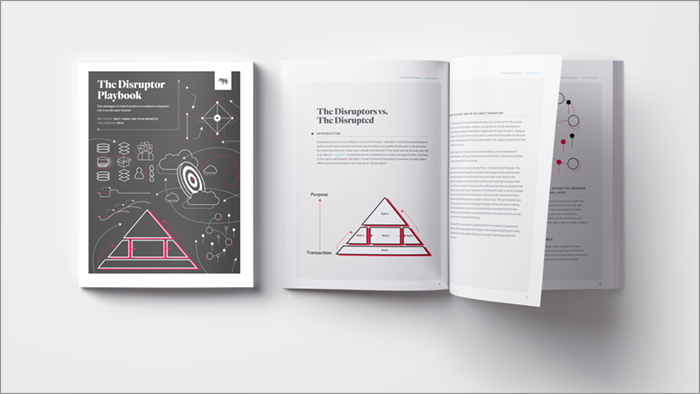
Download the "Disruptor Playbook" here
Discover the complete strategy for transforming existing companies into true disruptors. Download the full text here.
This article is also featured in the web magazine " AXIS ".
Was this article helpful?
Share this article


Newsletter registration is here
We select and publish important news every day
For inquiries about this article
Back Numbers


Author