
Note: This website was automatically translated, so some terms or nuances may not be completely accurate.
 Through competitive programming, let's make Japan a powerhouse of highly skilled IT professionals! [8/9]
What is Toyota's digital transformation utilizing "algorithms"?

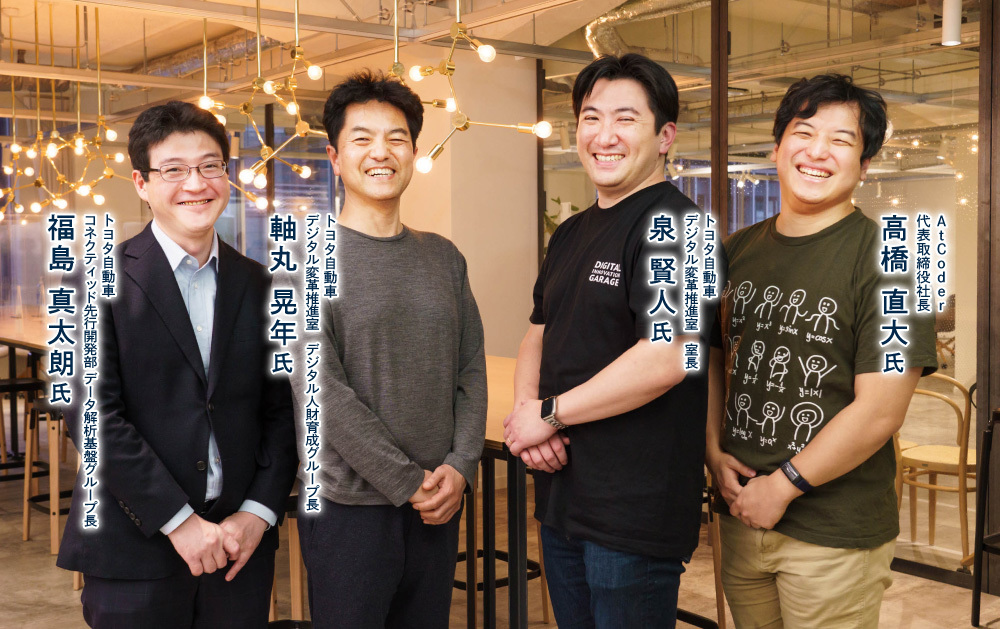
Izumi Kento
Toyota Motor Corporation

Akinori Jikumaru
Toyota Motor Corporation
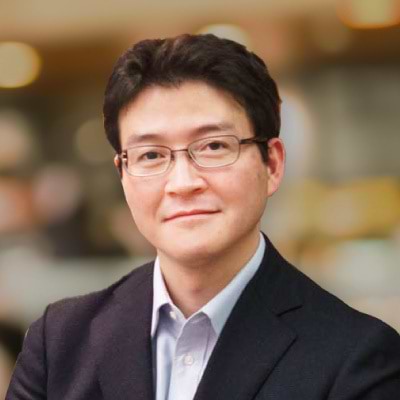
Shintaro Fukushima
Toyota Motor Corporation

Naohiro Takahashi
AtCoder Inc.
Toyota Motor Corporation (hereafter Toyota) is focusing on leveraging "algorithms" to advance its own digital transformation (DX).
In June 2022, Toyota partnered with AtCoder, a provider of competitive programming contests, to establish a new organization: the "Digital Transformation Promotion Office Algorithm Group." Naohiro Takahashi, President of AtCoder and a familiar face in this series, joined Toyota as the head of this group and serves as the project leader.
In this installment, Mr. Takahashi interviews three individuals driving Toyota's digital transformation: Kento Izumi, Shintaro Fukushima, and Akinori Jikumaru. They discuss solving business challenges through algorithm development and the significance of Toyota engineers learning algorithms.
Digital Technology Strengthens Toyota's Mission: "Mass-Producing Happiness"
Takahashi: Even before starting the collaboration with AtCoder, Toyota was already engaged in various digital transformation initiatives, right? With the advancement of digital technology, what changes are currently happening in the automotive industry?
Izumi: In recent years, the automotive industry has seen increasing in-house development of digital domains like control systems, cockpits, and multimedia. We also recognize this necessity. Currently, Toyota applies digital technology in three key areas. First, digital technology integrated into vehicles. Second, digitizing internal operations. Finally, and most crucially, digitizing the customer experience. Digital technology is indispensable for the experiences and services we provide to customers through applications, websites, and other channels.
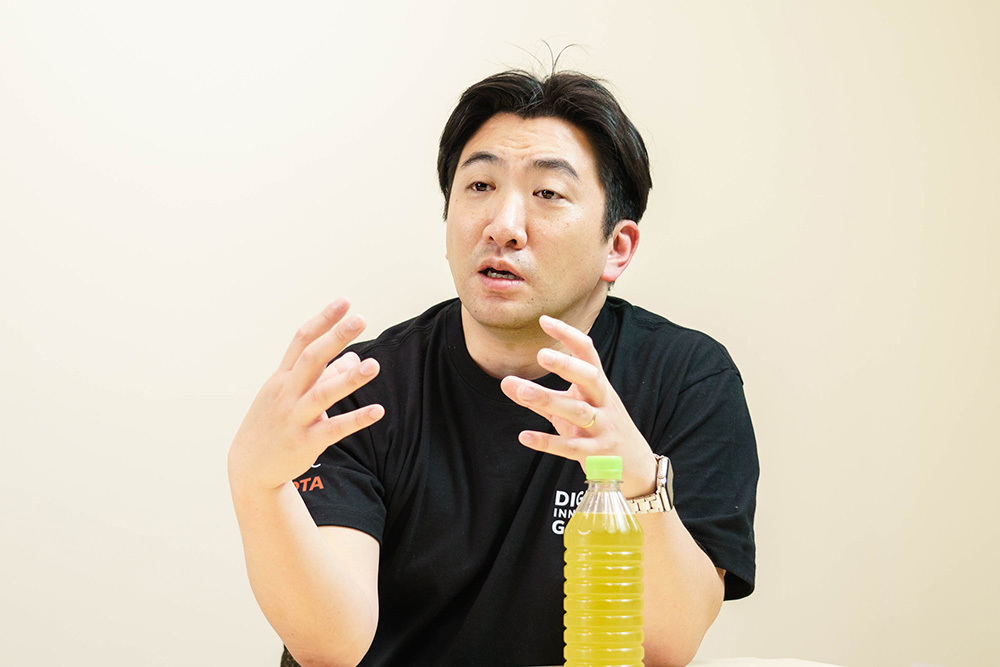
After joining Toyota Motor Corporation, he spent approximately 18 years in the corporate information systems department. Starting with the maintenance and management of legacy systems, he gained experience in large-scale projects worth tens of billions of yen, cloud service development, and digital transformation. With extensive overseas assignments, he has formed teams with members from different cultures and executed projects. Currently, as the Head of the Digital Transformation Strategy Planning Office, he is dedicated to transforming the mindset and reskilling the 70,000 employees of Toyota Motor Corporation.
Takahashi: What is Toyota aiming for with its digital transformation?
Izumi: At Toyota, we want to provide customers with an experience value that is "every single time, every single time, every single thing." That means providing each customer, at the perfect timing for them, with something that exceeds their expectations. We are striving to achieve this through digital means.
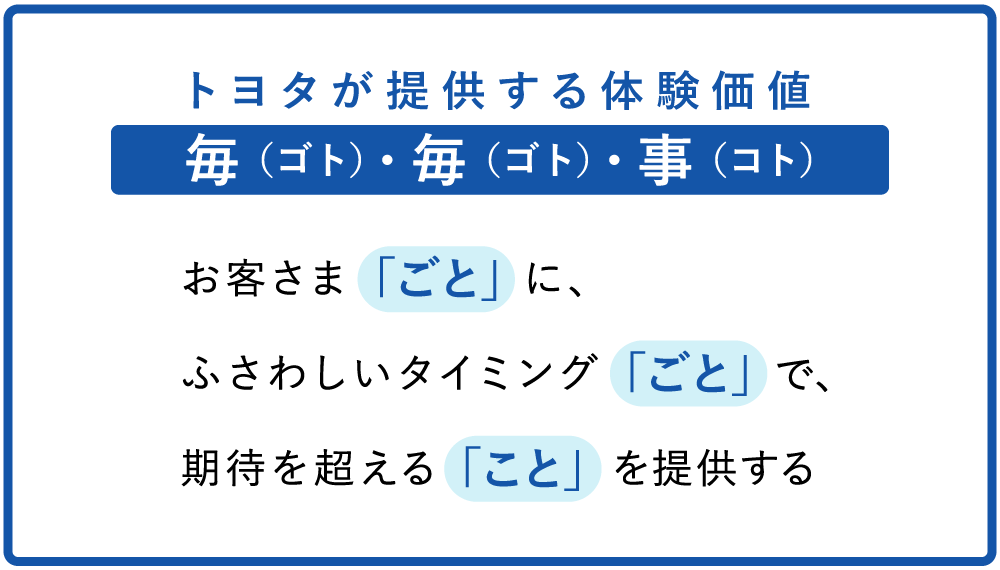
Izumi: Simply put, it's super-personalization. For example, inviting Mr. Takahashi to "go to a ramen shop" might make him happy, but some people might prefer "a wine bar over a ramen shop." Also, just because he was happy yesterday doesn't mean taking Mr. Takahashi to a ramen shop two days in a row will make him happy, right? The key is providing each customer with the experience they want, at the timing they want.
Jikumaru: There are limits to enhancing customer experience value through personalization using analog methods. We need to use digital technology and data to identify each individual customer and provide personalized service at the optimal time for them.
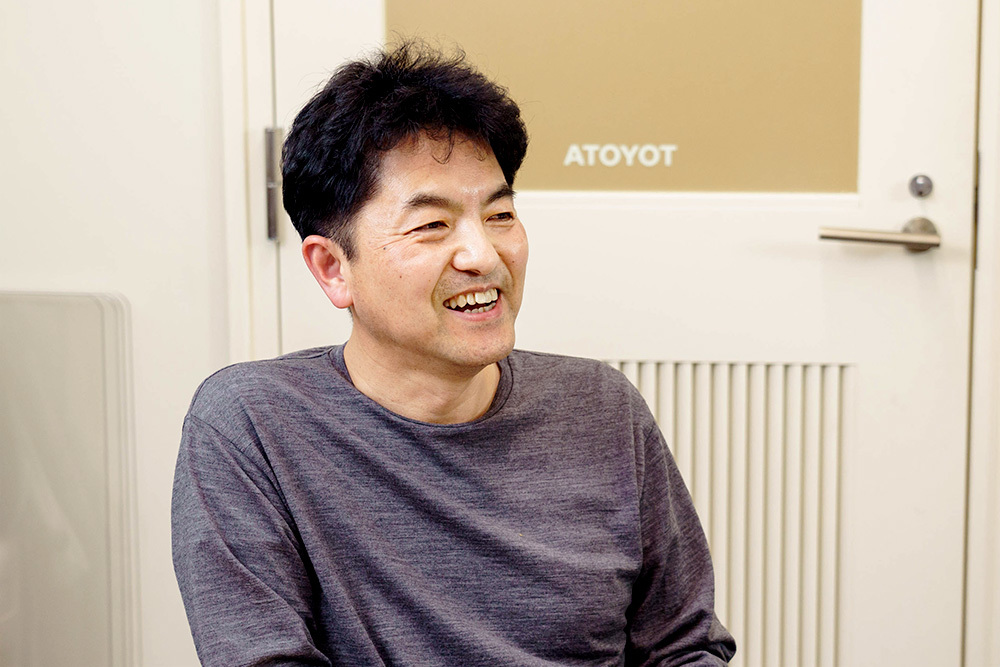
After joining Toyota Motor Corporation, he worked in the Quality Assurance department on early detection and resolution of market technical issues. He then moved to the Corporate Planning department, where he was responsible for company-wide planning (Toyota Global Vision, Business Continuity Management, Connected Strategy, Vehicle Data Utilization, etc.). In January 2021, he established the Digital Transformation Promotion Office and is currently executing the transformation of "employee mindset/values and organizational culture" and "company-wide digital talent development" to become a mobility company.
Izumi: People often say consumption patterns have shifted "from things to experiences," but I disagree. I believe we're moving "from things to 'things + experiences'." This means continuing to value tangible goods while increasingly leveraging our strengths through experiences. Digital transformation is integral to this shift.
Jikumaru: The value of experience is crucial. Experience = "Things" is the sum of three elements: tangible goods, intangible services, and intangible impressions.
Toyota is a company strong in manufacturing. Customers hold a favorable impression that Toyota products are durable and easy to repair. Building on the solid "product" and positive "impression" we've cultivated, we must now also strengthen our intangible services to further enhance customer experience value. Digital transformation is necessary to elevate customer experience value.
Takahashi: It's not about thinking "Let's go digital." There is a goal we must achieve first, and digital technology is needed as a means to that end. That's why we are advancing digital transformation.
Izumi: Exactly. Toyota's mission is "Mass-producing happiness." We aim to leverage digital technology as a means to increase happier experiences while building on Toyota's traditional strengths.
AI-powered "Failure Prediction" for Production Machinery Supports Toyota's Manufacturing!
Takahashi: Moving forward, we'll hear specific examples of how digital technology is utilized in Toyota's operations. Mr. Fukushima, you're involved in the R&D and production of connected cars (vehicles constantly connected to the internet to enable various functions and services). What digital technologies do you use in your daily work?
Fukushima: Our vehicle production plants are areas where AI and data utilization are advancing significantly. Specifically, we use it for predicting failures in production machinery. When factory machinery breaks down, repairs take time and incur costs. Furthermore, during repairs, other processes also stop, leading to various losses. Therefore, preventing failures before they occur is crucial. We use AI to detect "early signs" of abnormalities and perform maintenance before breakdowns happen.
We also use AI that detects scratches via images in the "exterior inspection" process, where workers visually check for damage on vehicles.
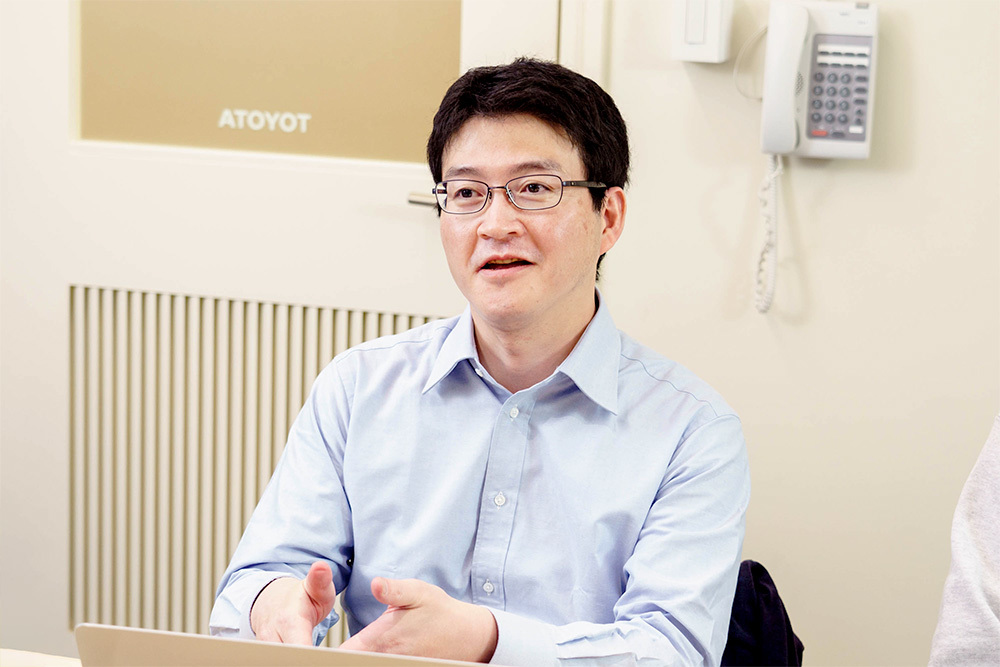
With experience at an electronics manufacturer and its think tank, he engaged in R&D and consulting on machine learning, data mining, and financial engineering across numerous industries and operations including manufacturing, finance, healthcare, logistics, and web services. He also worked on designing and building large-scale data collection, storage, and analysis platforms. After joining Toyota Motor Corporation, he has been involved in R&D for machine learning and data mining across diverse fields including connected vehicles, factories, production technology, powertrains, and materials. Currently, as Group Leader, he promotes R&D related to the analysis and utilization of driving operation/vehicle behavior data, image data, and other information collected from connected cars. His major publications include "Python Machine Learning Programming: Pytorch & scikit-learn Edition" (Impress, Supervising Translator) and "Data Analysis Process" (Kyoritsu Publishing).
Takahashi: So digital technology is being utilized within your work. On the other hand, I imagine actual products also incorporate a lot of digital technology. What kind of technology is used in the connected cars Mr. Fukushima is involved in developing?
Fukushima: Connected cars are vehicles equipped with communication functions. They can collect various data—such as driving operation history, vehicle speed, acceleration, location information, and fuel consumption—and send it to a cloud data center. This enables services like collaborating with external insurance companies to recommend insurance based on driving operation data. The center can also analyze the data and send it back to the vehicle.
Izumi: There are also services using navigation systems. If you say, "Tell me about ramen shops in this area," an operator at the data center can remotely set up the navigation for you.
Takahashi: Nowadays, there are apps on smartphones that can navigate for you when you speak to them. What can a connected car do that a smartphone can't?
Fukushima: Connected cars can integrate more deeply with the vehicle itself. For example, say an electric vehicle has 50% battery remaining. Whether that range will get you to your destination depends on factors like the car's battery consumption and road gradients. I believe smartphones can't perform these kinds of calculations.
Jikumaru: Services unique to connected cars are rapidly increasing. For instance, if a warning light comes on in the dashboard while driving, the driver might panic, thinking, "Is this a major malfunction? Do I need to stop immediately? Can I even reach my destination?" In such cases, an operator can remotely check the car's status and advise, "It's okay to keep driving a little further," or guide the driver to the nearest Toyota/Lexus dealership. We want to expand these unique connected car services that provide peace of mind and convenience.
Fukushima: Data collected from connected cars has various applications. For instance, as electric vehicles become more widespread, charging stations will likely become insufficient. By gathering information from connected car data indicating "this area lacks charging stations," we can collaborate with infrastructure providers to help plan charging station installations.
Takahashi: I see. So the accumulation of information linked to the car will also impact future service offerings.
"Factory logistics," "shelf allocation," "vehicle route planning." Algorithms play a vital role across diverse domains.
Takahashi: This series has repeatedly touched on the importance of "algorithms." We call the approach to achieving a specific goal through programming an algorithm. Factories also utilize algorithms, right? For optimizing logistics and shelf allocation to determine where parts are placed?
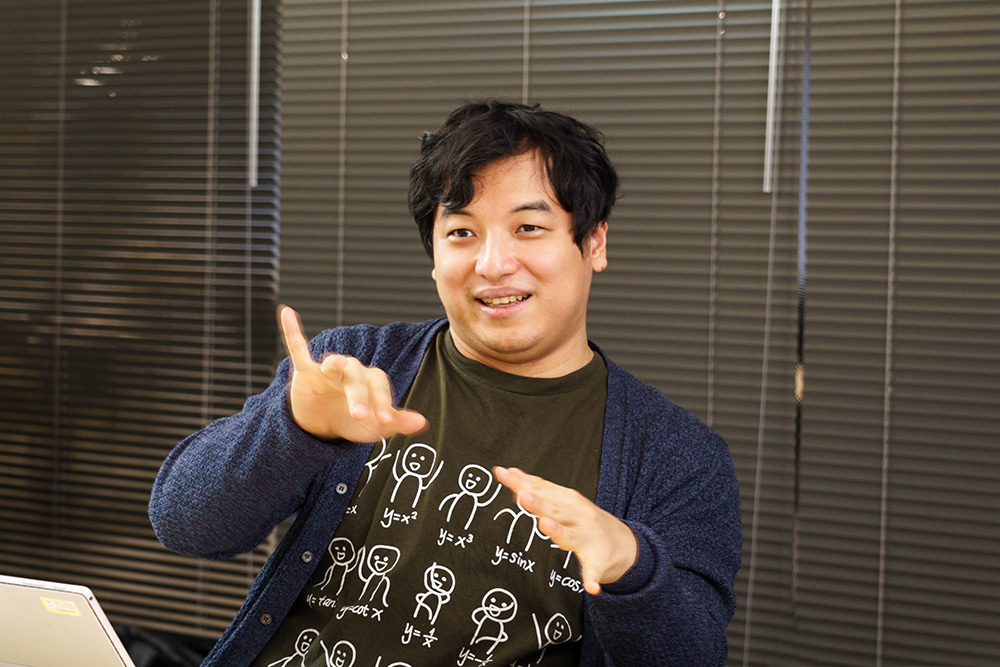
Placed 3rd globally in Microsoft's "Imagine Cup" programming contest. Subsequently achieved numerous top results in programming contests, including four wins at the ICFP Contest and two runner-up finishes at TopCoder Open. Founded AtCoder in 2012, a service hosting programming contests in Japan. It has since grown into a contest attracting over 7,000 participants weekly.
Izumi: Regarding "digitizing internal operations," your collaboration with AtCoder is progressing well. We believe algorithms hold significant potential for optimizing logistics and similar areas. Component shipping is another example. When exporting parts from factories overseas, what's the most efficient way to load pallets or racks? We're applying algorithms to solve these kinds of problems.
Takahashi: Algorithms are also heavily utilized in the connected car features Mr. Fukushima is developing, right?
Fukushima: Yes, the "route planning" feature for electric vehicles is a prime example. Based on data collected from connected cars, we can calculate things like: "The section from this intersection to that intersection is uphill, so battery consumption will be high. Considering the EV's remaining battery charge, it can reach this point." Based on these calculations, we can guide the driver to the optimal route.
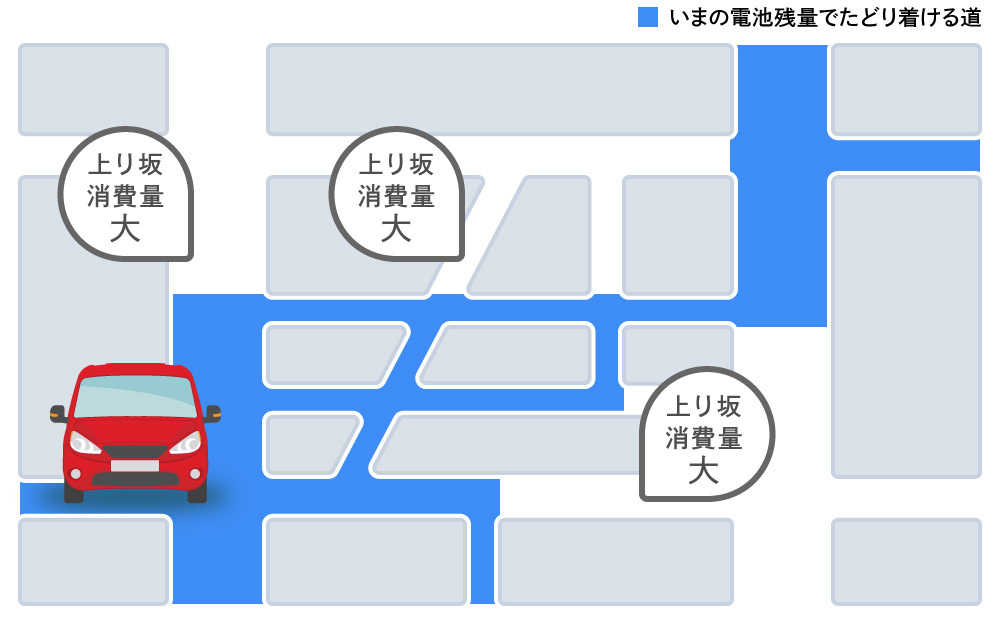
Takahashi: I was involved in that project too. It was fascinating how machine learning and algorithms were so effectively integrated.
Fukushima: I think it's a great example of successful collaboration between algorithm programmers like Takahashi and us data scientists. We worked closely with the department calculating EV energy consumption, incorporating data like road gradients and vehicle speed.
Takahashi: Algorithms are being utilized across a wide range of scenarios. It makes sense why Toyota is seeking digital talent.
*Continued in Part 2

Was this article helpful?
Share this article


Newsletter registration is here
We select and publish important news every day
For inquiries about this article
Back Numbers
Author
Izumi Kento
Toyota Motor Corporation
Digital Transformation Promotion Office
Section Chief
Akinori Jikumaru
Toyota Motor Corporation
Digital Transformation Promotion Office
Head of Digital Talent Development Group
Shintaro Fukushima
Toyota Motor Corporation
Connected Vehicle Advanced Development Department
Head of Data Analytics Infrastructure Group
Naohiro Takahashi
AtCoder Inc.
President and CEO