
Note: This website was automatically translated, so some terms or nuances may not be completely accurate.
 App Reference Book [4/7]
The 7 Principles of Good Apps ④: It Has Mechanisms That Make You Want to Use It Again

Masashi Yamasaki
Fuller Co., Ltd.
As many companies engage in DX initiatives, the shift toward seeking customer touchpoints on smartphones is accelerating. This series features an interview with Fuller Inc., which collaborates with Dentsu Inc. on app development. Fuller's President Yamasaki, who has been tracking apps since the dawn of the iPhone era, shares his "Seven Principles for Good Apps" (see the previous article here ). This installment explains "Principle 4: It has mechanisms that make you want to use it again."
(Planning: Dentsu Inc. 8MK Bureau, Makoto Sasagawa, Yosuke Otsubo, Yuki Sugiyama)
Fuller Inc.
Supports corporate business in the digital domain, with app design and development as one of its core services. Meticulously analyzes apps and their markets, handling everything from strategy building to product development and growth. The company's creative teams—comprising engineers, designers, data scientists, and directors—create outstanding apps for various businesses.

Leveraging the psychological urge to fill in gaps
"We got users to install the app, but they aren't using it" is a common frustration for many companies in app development. Especially if there's no mechanism to encourage repeated use immediately after installation, the likelihood of the app being completely abandoned increases significantly. When operating an app, whether we can get installers to keep using it for several days and potentially form a habit is a key metric we prioritize.
Apps for restaurants and retail often incentivize first-time users with monetary incentives like coupons. Another method to encourage repeat use is implementing point systems or membership tiers. However, such approaches significantly impact physical store operations—requiring changes to service manuals, staff training, and tailored customer interactions based on membership levels. Implementation is challenging, requiring careful consideration of the scope.
When considering ways to make users want to use the app again, it's easier to implement strategies that are self-contained within the app itself.
For example, the movie and TV social network app "Must" allows users to search for titles they want to watch and register films they've finished. When users start using the app, the top screen displays prompts like "Try registering three movies." By showing tasks that are easy for users to complete on the top screen, the aim is to encourage them to think "Let's clear this task" and foster habitual app usage.
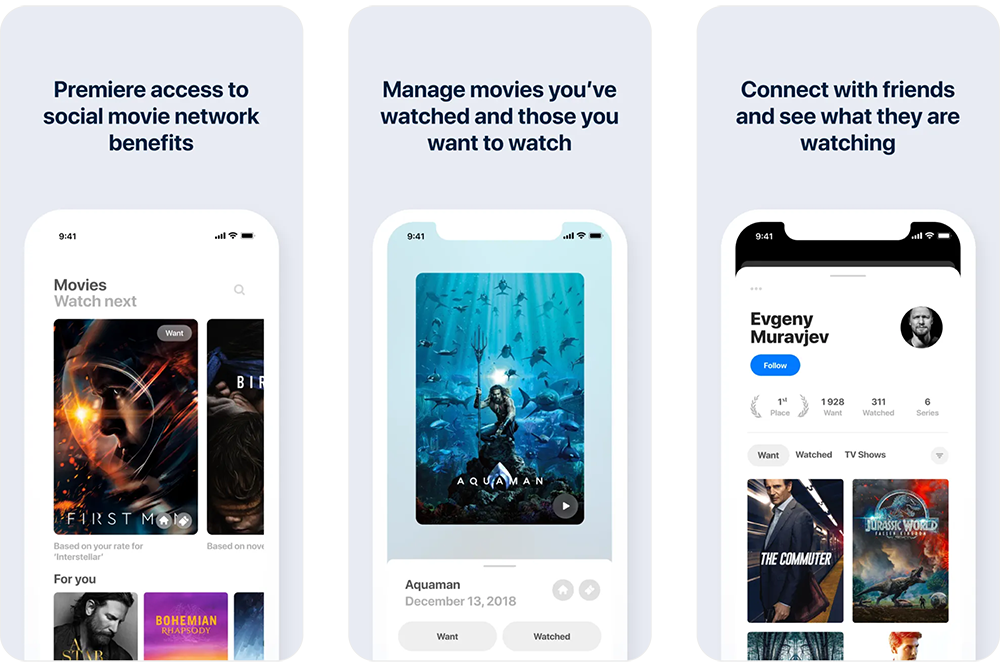
https://apps.apple.com/jp/app/must-%E6%98%A0%E7%94%BB%E3%81%A8tv/id1071382493
Clearly showing users their accumulated in-app actions is also important. The math and physics learning app "Brilliant" uses a stamp rally-like format where the days of the week you used it fill in. Displaying the number of consecutive days used on the top screen encourages continued use. It celebrates the user's persistence and promotes habit formation.
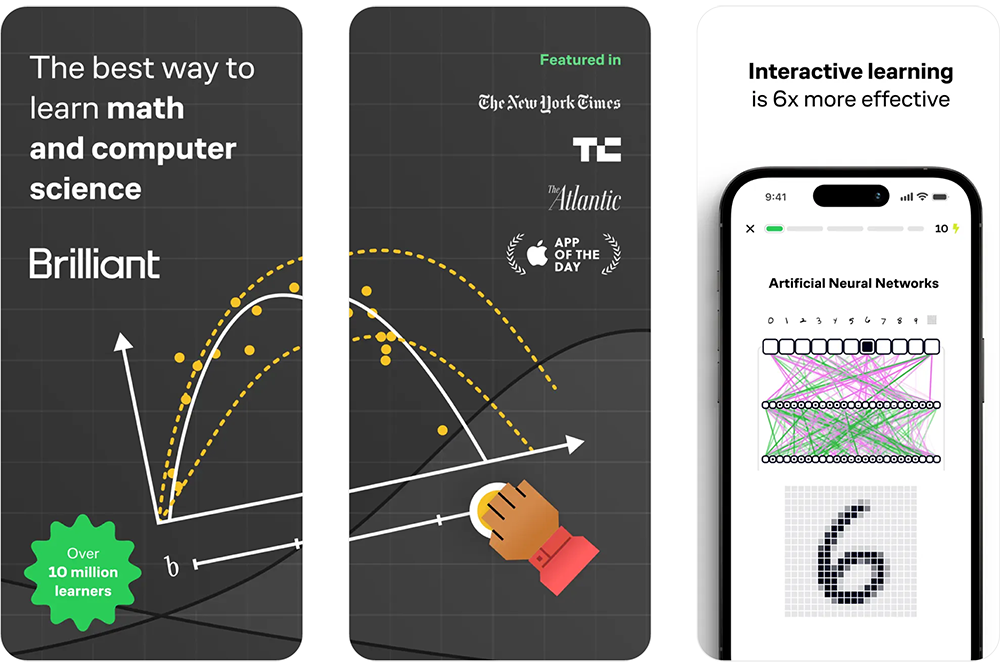
https://apps.apple.com/jp/app/brilliant-learn-by-doing/id913335252
Both apps employ the strategy of "leveraging the psychological urge to fill in the blanks" to encourage users to return.
Learn from great game apps: Various techniques that make you want to use them again
The chess coaching app "Learn Chess with Dr. Wolf" lets you play chess against the computer and teaches you the correct moves. While this is standard for chess apps, its standout feature is that it "repeatedly teaches you the moves you made incorrectly in past games, spaced out over time."
It doesn't just show you the mistake in real-time; the next time you open the app, it presents the exact board position where you made the wrong move, starting right where you left off. Content that might be forgotten after a single try becomes ingrained through repeated exposure over time. Starting from the position you played makes it easy to understand, and this feature naturally encourages repeated use to try it out again.
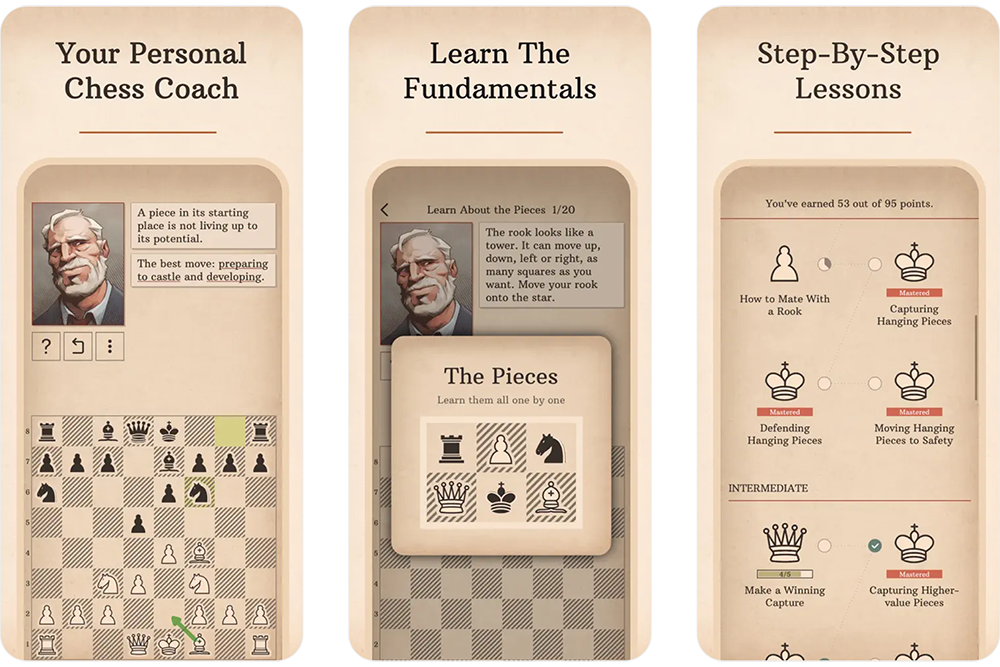
https://apps.apple.com/jp/app/learn-chess-with-dr-wolf/id1353041020
Let's look at another example. The New York Times operates a gaming business, and its game app "NYT Games" is a major revenue pillar for the company. The popular game Wordle, famously acquired for hundreds of millions of yen, can also be played within this app.
A notable feature of this app is that each game can only be played once per day. To try new games like Wordle, users must wait until the next day. By imposing this moderate restriction, the app encourages users to return repeatedly.
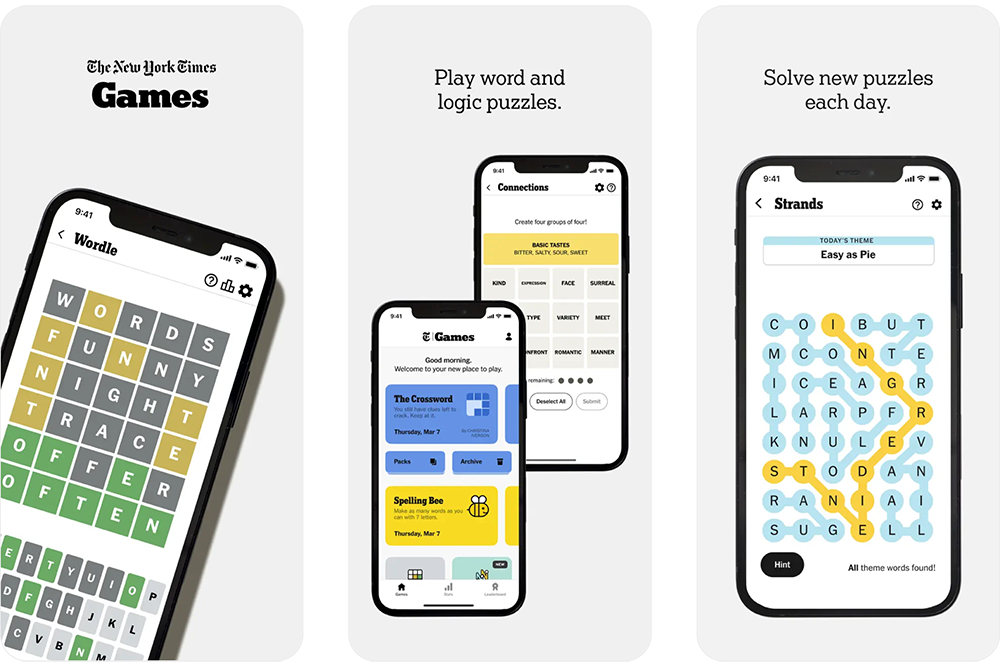
https://apps.apple.com/jp/app/nyt-games-word-games-sudoku/id307569751
This approach—encouraging users to play in moderate amounts rather than for long stretches at once, thereby promoting sustainable engagement—is also used in Brilliant, which we introduced earlier. Even challenging math and physics problems, which could be taxing for users, are delivered in small doses to boost the app's retention rate.
As described above, game apps incorporate various ingenious features designed to make users want to return. When considering features to boost app retention rates, trying out game apps might offer some useful insights.
Responding to the feeling that makes users want to come back
Alongside mechanisms that make users want to return, it's essential to prepare a state that maximally responds to the user's feelings when they do come back. Even if a user opens the app with high expectations, failing to meet those expectations can instantly dampen their enthusiasm for the app.
To prevent this, it's crucial to imagine the user's experience as if it were your own. Consider how users discover the service, when they download it, how they register, and when they start using it. Then, think about when they might open it again and what their feelings or state of mind would be. Look at other apps around you.
For example, if a retail app prompts registration while users are waiting in line at the register, they'll be conscious of other customers behind them. Registration must be completed as quickly as possible, ideally with a temporary account. They'll likely reopen the app once freed from the line, no longer rushed, to check their accumulated points. If points don't reflect until the next day or later, users will be disappointed. You must either clearly communicate the timing for point reflection or ensure points appear as quickly as possible.
For transit or ticket apps, after reserving a seat, the next time users open the app is likely when they're out and about checking their seat number. They might be in a hurry while traveling, so reducing the number of taps needed to view seat information by even one tap increases the frequency of app usage. If the information is buried deep within the app, you've probably had the experience of taking a screenshot of that screen and checking it in your photo app.
In this way, not only do you get users to open the app again while their enthusiasm is high, but by reliably meeting their expectations at that moment, users become satisfied with their initial experience and this significantly contributes to retention rates. Articulating the usage scenarios and establishing a shared understanding among all project members leads to creating a good app.
Next time, we'll explain "The 7 Principles of a Good App ⑤: Pleasant Feedback for Actions."
F or more on "The 7 Principles of a Good App," check out these recommended articles!
①: The purpose can be stated in one sentence
②: Maximizes the unique features of the device and OS
③: Is continuously improved
④: Has mechanisms that make you want to use it again (this article)
⑤: Provides pleasant feedback for actions
⑥: Can be used without instruction (coming soon)
⑦: Visually communicates its intended worldview (coming soon)

Was this article helpful?
Share this article


Newsletter registration is here
We select and publish important news every day
For inquiries about this article
Back Numbers


Author
Masashi Yamasaki
Fuller Co., Ltd.
President and CEO