
Note: This website was automatically translated, so some terms or nuances may not be completely accurate.
 App Reference Book [3/7]
The 7 Principles of Good Apps ③: Continuously Improved
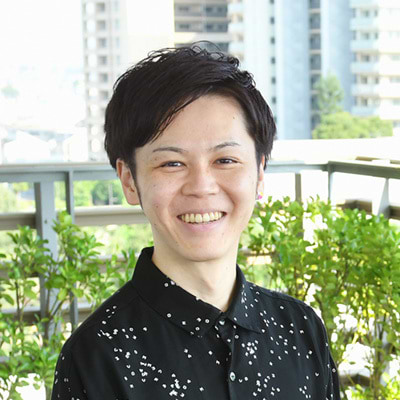
Masashi Yamasaki
Fuller Co., Ltd.
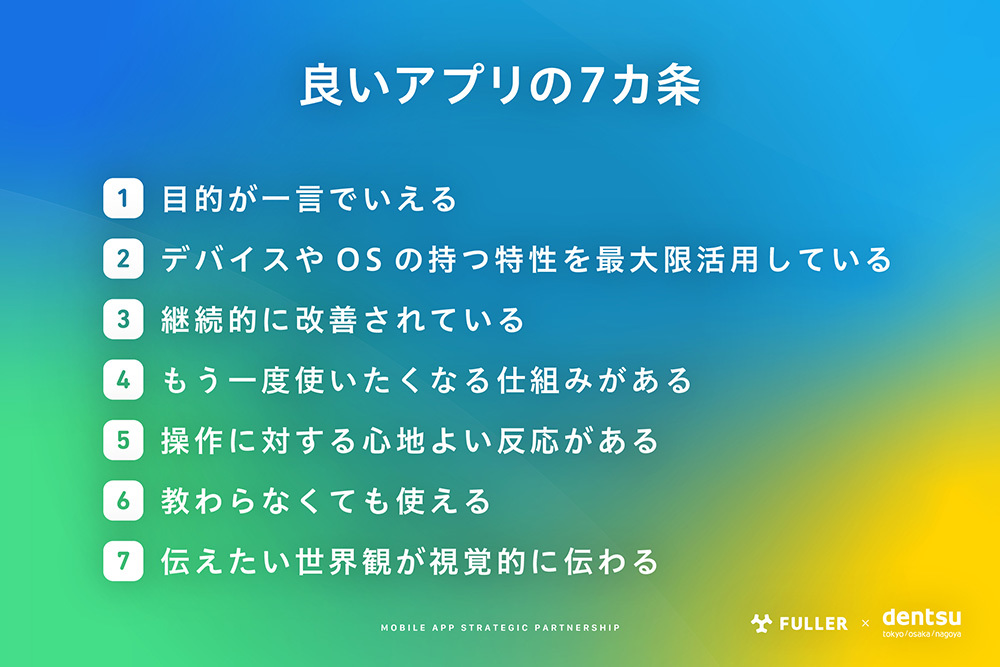
As many companies pursue DX initiatives, the shift toward mobile as the primary customer touchpoint is accelerating. For this series, we interviewed Fuller Inc., which collaborates with Dentsu Inc. on app development. We asked Fuller's President Yamasaki, who has been tracking apps since the dawn of the iPhone era, to discuss the "7 Principles of Good Apps" (see the previous article here ). This time, we explain "7 Principles of Good Apps ③: Continuously Improved."
(Planning: Dentsu Inc. 8MK Bureau, Makoto Sasagawa, Yosuke Otsubo, Yuki Sugiyama)
Fuller Inc.
Supports corporate business in the digital domain, with app design and development as one of its core services. Meticulously analyzes apps and their markets, handling everything from strategy building to product development and growth. The company's creative teams—comprising engineers, designers, data scientists, and directors—create outstanding apps for various businesses.
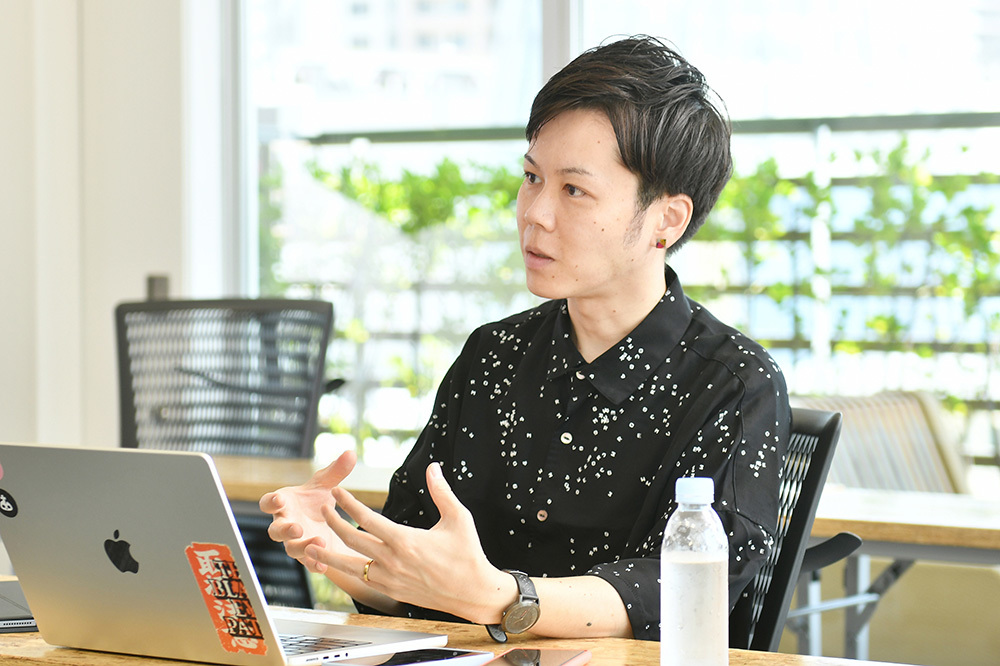
App development: Release is not the goal, but the start
The condition for a good app we're discussing this time—"it is continuously improved"—is extremely important, yet we often see cases where it isn't achieved. There are two reasons why apps should be continuously improved.
First, to keep pace with the rapid and significant updates to operating systems and devices. Unlike websites, apps are heavily influenced by smartphone OSes and hardware. You must always adapt to OS updates; failure to do so can lead to your app being removed by Apple or Google for reasons like "not supporting the latest OS" or "security concerns."
Regarding devices, new specifications emerge constantly—foldable models, rear displays, and even non-renderable areas like notch cutouts or safe areas appearing on screens. To enhance user experience, we app developers must leverage these new specifications.
Another reason is to encourage repeated app usage. Continuously improving the app by focusing on user and societal needs leads to broader adoption.
However, many Japanese apps focus heavily on development before release but then receive almost no updates afterward. Several reasons exist for this, one being budget constraints. It's not uncommon for clients to view app development like website creation, thinking "release is the goal," and failing to properly secure ongoing operational funds.
As mentioned earlier, two types of operational costs are essential: "costs to support updates for operating systems and devices" and "costs to make improvements based on user feedback and changes in the market." To secure the necessary budget, it's crucial to get clients to recognize the need for operational costs during the app planning stage. Furthermore, it's vital to view release as the starting line and adopt an attitude of building the app together with the client over the long term.
Good apps never become obsolete
App improvements differ in approach from websites. For websites, CTAs (Call To Action) are crucial. The typical approach is to improve site navigation to prompt visitors to take specific actions (like purchasing products or registering for membership). For apps, the goal is repeat usage, so understanding what features and information users seek is vital. User feedback is key for improvements.
To do this, analyze user behavior data to see which features are frequently used and which are underutilized. Apps have a close relationship with users, making it easier to gather reviews. You can also reference reviews on the App Store or Google Play Store and reactions on social media.
When improving apps, "determining priorities" is essential. For example, with AI booming now, many companies want to add chatbot features to their apps. However, you must analyze whether that feature is actually used by many users.
Singapore's Changi Airport app previously featured a chatbot in its main menu. However, at some point, this feature disappeared from the main menu and was placed deep within the hierarchy. This means the chatbot is no longer a core feature of the app. Even if something is popular in the market, you need the courage to avoid incorporating features that won't delight your own app's users.
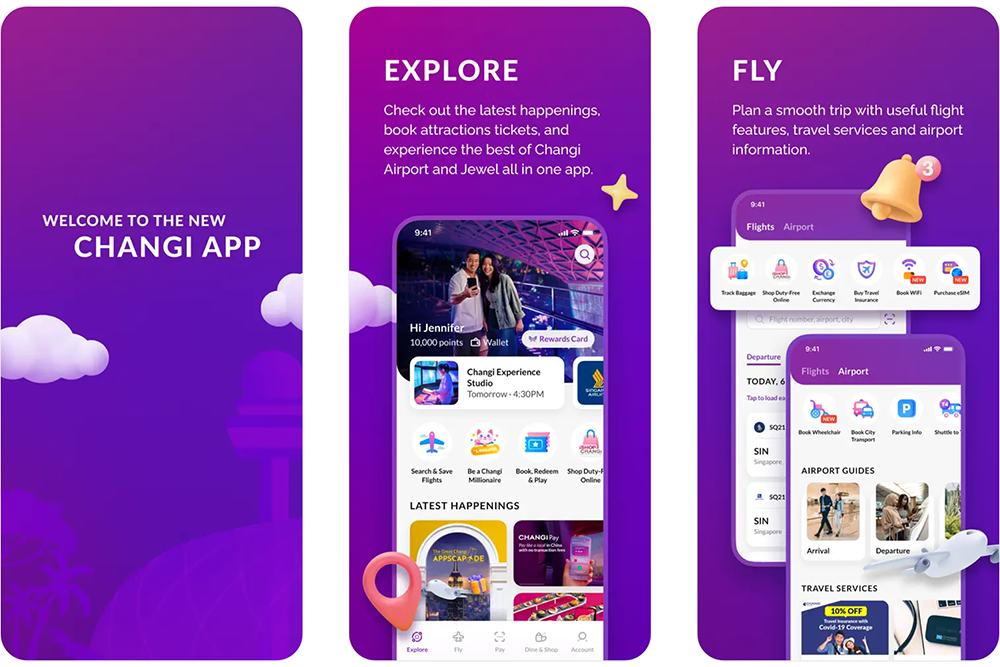
https://apps.apple.com/jp/app/changi-app/id391730848
Beyond functionality, a "visual refresh" is also necessary. Apps, in particular, are subject to trends in appearance, and an outdated look can drive users away. For example, gradient effects were once popular for tab bars, navigation bars, and icons, but now they appear dated.
Maintaining freshness in both functionality and appearance is key to gaining and retaining a large user base. Great apps never feel outdated.
The Nagaoka Fireworks Official App, which won the Good Design Award in its seventh year after release
As an example of continuous app improvement, we'd like to introduce the "Nagaoka Fireworks Official App," developed and operated by our company at the request of the Nagaoka Fireworks Foundation, a general incorporated foundation in Niigata Prefecture.
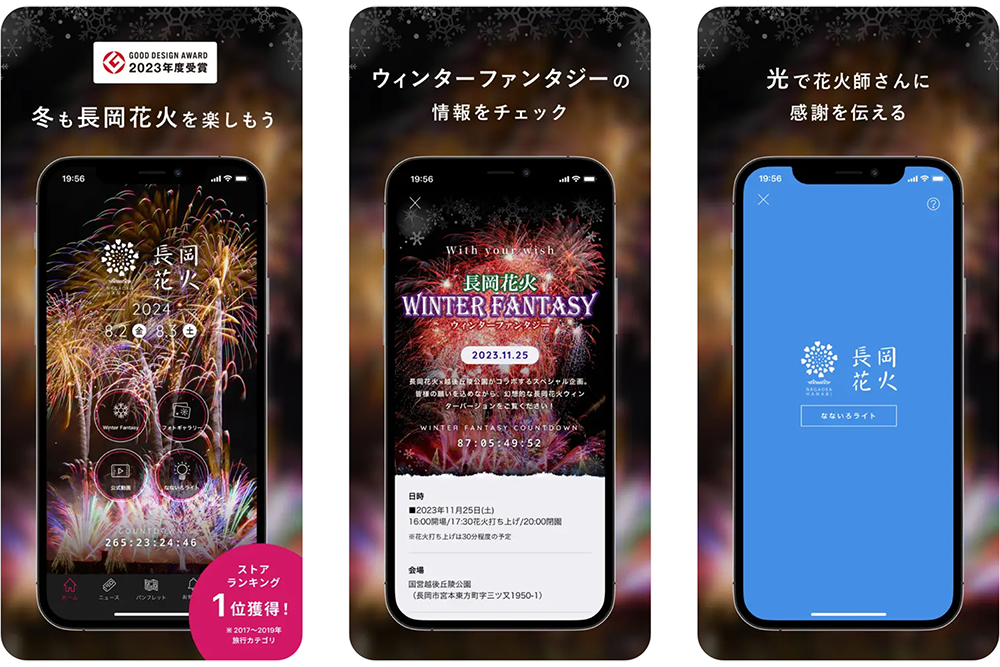
This app promotes the Nagaoka Festival Grand Fireworks Display, featuring ticket sales, viewing area information, fireworks program introductions, and user image posting.
Although released in 2017, the app failed to function at the venue due to unstable connections caused by large crowds, leading to harsh reviews stating "This app is unusable." Responding to user feedback, the 2018 version was modified to allow offline access to the event day program and nearby restaurant information. In 2019, to alleviate traffic congestion around the venue, the app was updated to display the previous year's road congestion data, parking lot locations, and occupancy status. For the 2022 event, held after a three-year hiatus due to COVID-19, a tutorial feature was added to prevent confusion among attendees returning after a long break. In 2023, a feature guiding users to the entrance gates was added.
Beyond these updates, we've made various improvements: switching to a dark background to prevent the app's brightness from distracting others at night, creating content showcasing Nagaoka's attractions beyond fireworks, and more. A key feature is switching functions between summer and winter to prevent user confusion.
Each year, through experiencing the festival ourselves, we identify user needs and incorporate them into the app. While staying true to our original goal of creating "an app useful for viewing fireworks," we've also strengthened features that "communicate Nagaoka's appeal centered around fireworks." As a result of continuous improvements since its release, this app won the Good Design Award in 2023. While apps typically win this award shortly after release, winning in its seventh year highlights the importance of ongoing improvement.
Withings: A Healthcare App Evolving Devices and Business Models
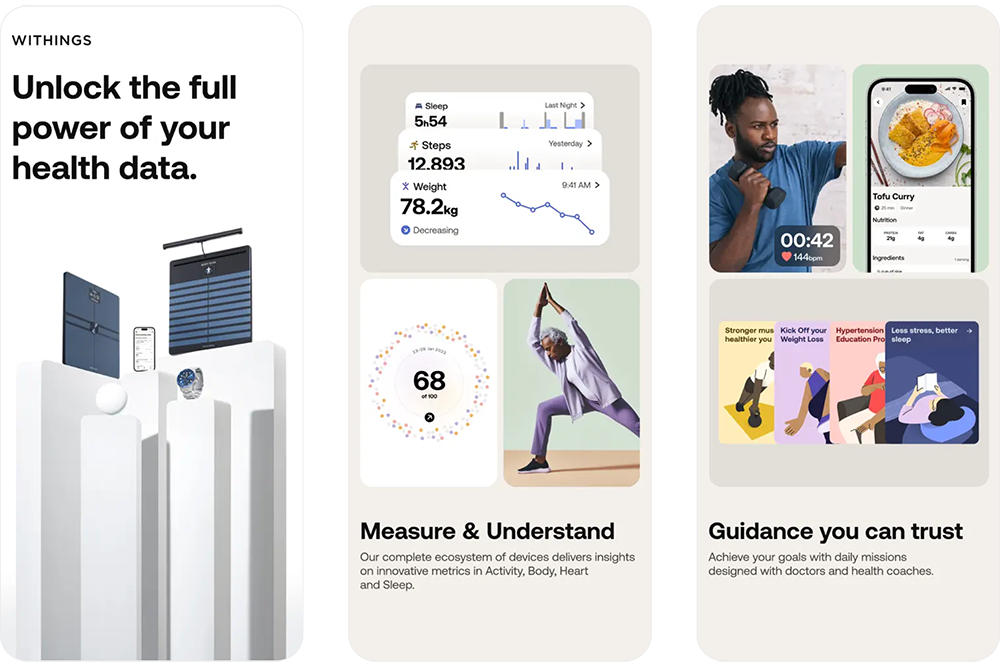
Let me introduce another app that has undergone continuous improvement. It's the healthcare app "Withings," developed by a French company, which I've been using for about ten years. What's particularly noteworthy about "Withings" is that alongside its smartphone app, it has developed devices like watches, scales, and sleep tracking pads that connect with the app, continuously enhancing their performance. You can check various data collected by each device—such as heart rate, sleep depth measurements, and activity levels from running, cycling, swimming, and more—all within one app to aid in health management.
https://play.google.com/store/apps/details?id=com.withings.wiscale2&hl=en_US
In common scenarios, data from a watch might be viewed in the watch app, while data from a scale is seen in the scale app. However, for true health management, all data should ideally be accessible within one app. Withings positions its app as the core platform. It displays your health status based on data collected from all your devices.
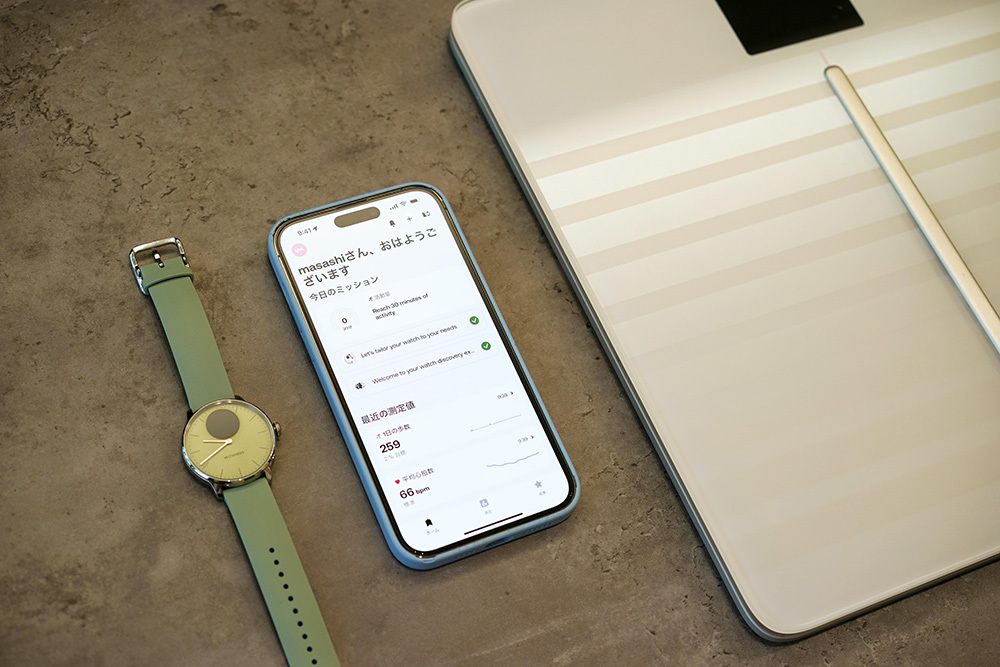
Furthermore, a recent update added a service (available with a paid subscription) that suggests how to improve lifestyle habits to achieve personally set goals. This move indicates an intent to diversify revenue streams beyond device sales by adding app subscription services. Additionally, there are reports that new devices are currently in development. This exemplifies a strong approach to multifaceted improvement centered around the app, all under the overarching goal of supporting user health.
This time, we explained "continuous improvement" as a key condition for a good app. While the direction of improvement varies by app, considering "what goal do users want to achieve through the app?" and "how can we encourage repeated use?" forms the foundation of improvement for any app. Therefore, it's crucial not to cram in 100% of features from the start, but rather to prioritize and select features based on the purpose. In practice, actual usage often reveals necessary features that weren't apparent during initial planning. In an era where user and societal needs change rapidly, continuous app improvement will only grow more crucial going forward.
Next time, we'll explain "The 7 Principles of a Good App ④: Mechanisms That Make Users Want to Return."
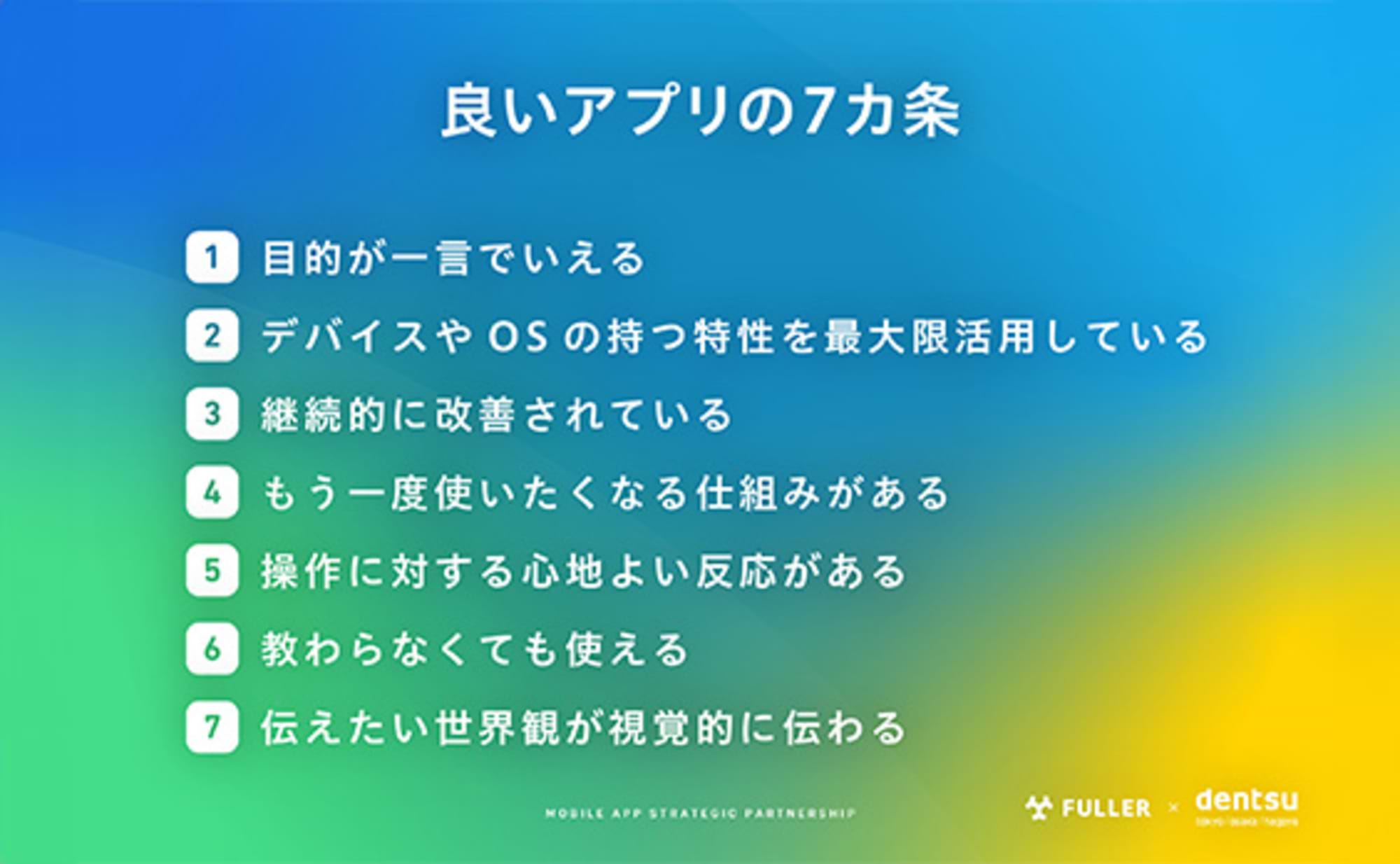
F or more on "The 7 Principles of Good Apps," check out these articles!
①: The purpose can be stated in one sentence
②: Maximizes the unique features of the device and OS
③: Is continuously improved (this article)
④: Has a mechanism that makes you want to use it again
⑤: Provides pleasant feedback for actions
⑥: Can be used without instruction (coming soon)
⑦: Visually conveys the desired worldview (coming soon)

Was this article helpful?
Share this article


Newsletter registration is here
We select and publish important news every day
For inquiries about this article
Back Numbers
Author
Masashi Yamasaki
Fuller Co., Ltd.
President and CEO