Note: This website was automatically translated, so some terms or nuances may not be completely accurate.
 Active Learning: How About This? Research Institute ~ 10th Anniversary Relay Column [6/9]
If Everyone in the World Were Named “Taro Yamada”
Combining education and creativity to make Japan’s unique educational system more engaging.
The "Active Learning: What About This? Research Institute" was established within Dentsu Inc. by a group of copywriters, art directors, creative directors, marketers, and others. To commemorate its 10th anniversary, we present a series of columns in which each member shares their discoveries and the changes they have observed through their involvement in education.

<Table of Contents>
▼The “Taro Yamada” Workshop I Created for My Own Child
▼Applying the "Yamada Taro" Concept Led to This Program
▼Creating a Workshop Where Anyone Can Participate and No One Is Rejected
▼An Approach to Developing Creativity and Critical Thinking in Children with Developmental Disabilities
The “Taro Yamada” Workshop I Created for My Own Children
My name is Akihiro Honda, and I’m an art director. While working in advertising design, I also develop and conduct workshops at a research institute. The impetus for developing these workshops came about 11 years ago, when my eldest son was in fifth grade and my eldest daughter was in first grade. I began developing them with the desire to stimulate my two children’s thinking, even if only a little, and have continued refining them ever since.
The joy of generating ideas, the expansion of creativity through shifting perspectives, refining concepts through group discussion, and presenting them in front of others—I believe these skills, essential for creating advertisements, are also indispensable for a child’s growth, and I’ve wanted to instill them from an early age.
In our daily parenting, one of the questions I’ve posed to the children as a game is, “What if everyone in the world were named Taro Yamada?”
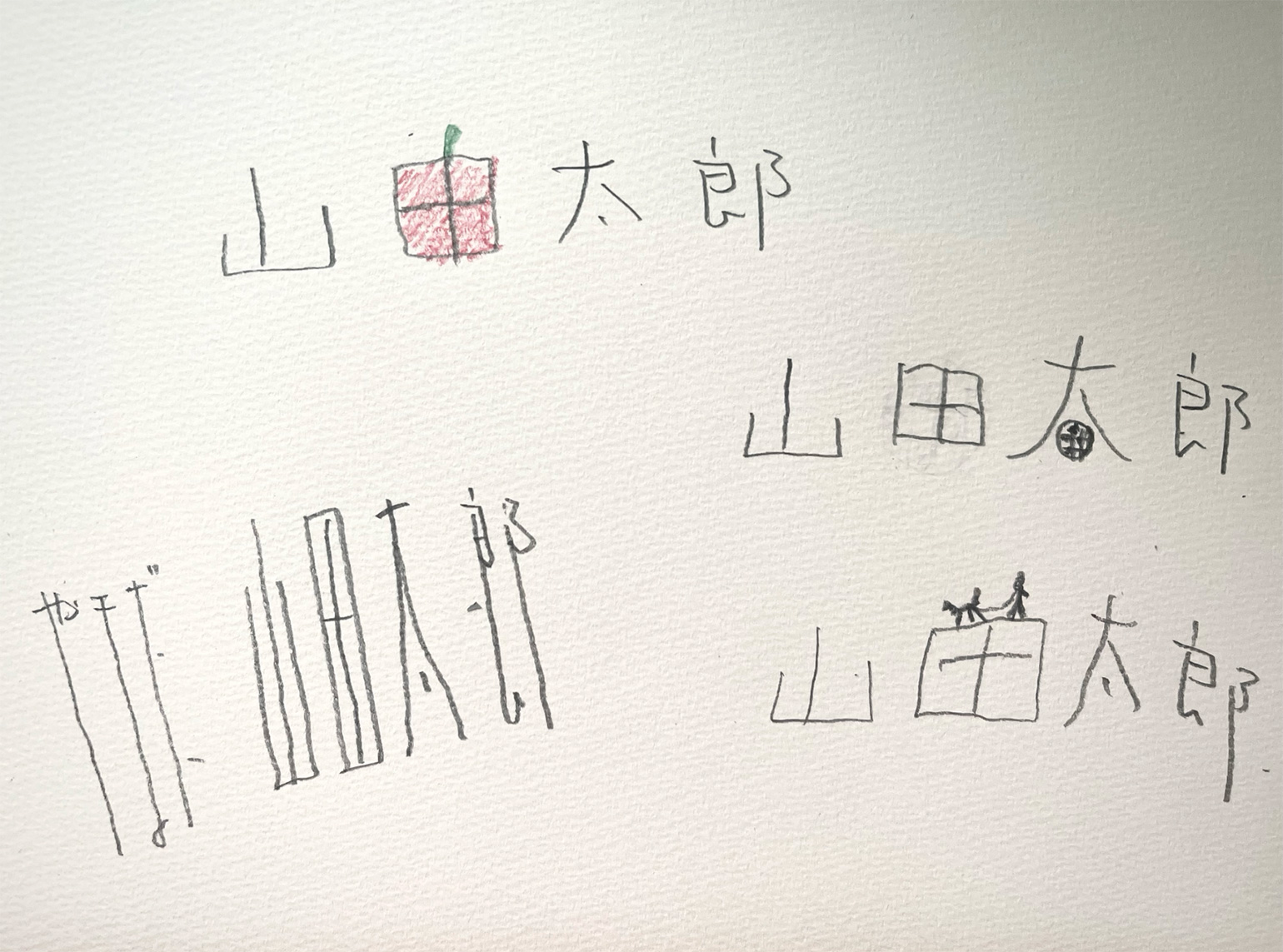
If everyone’s name were Taro Yamada, calling out “Mr. Taro Yamada” would make everyone turn around. How could you make just one person turn around? Well, how about adding a distinguishing feature?
"Taro Yamada who likes apples," "Taro Yamada who likes soccer," "Tall Taro Yamada"—by adding just a little detail, each "Taro Yamada" becomes unique and original.
Applying the "Taro Yamada" concept led to this program
When the “Active Learning: How About This?” Research Institute was first established, I wasn’t a member. One weekend, while I was relaxing at home, my wife found a press release. Around that time, I had just become interested in the term “active learning.”
The news that Dentsu Inc. was establishing a research institute on active learning came as a complete surprise to me. I immediately sent an internal email to the then-director, Kurashige—whom I had never met—and before I knew it, I had joined the institute.
Shortly after joining, I was tasked with developing a program for high school students from a designer’s perspective. So, I adapted the concept of “Taro Yamada” and created a workshop titled “A Class Where Anyone Can Become a Designer: Name Design to Sell Yourself.”
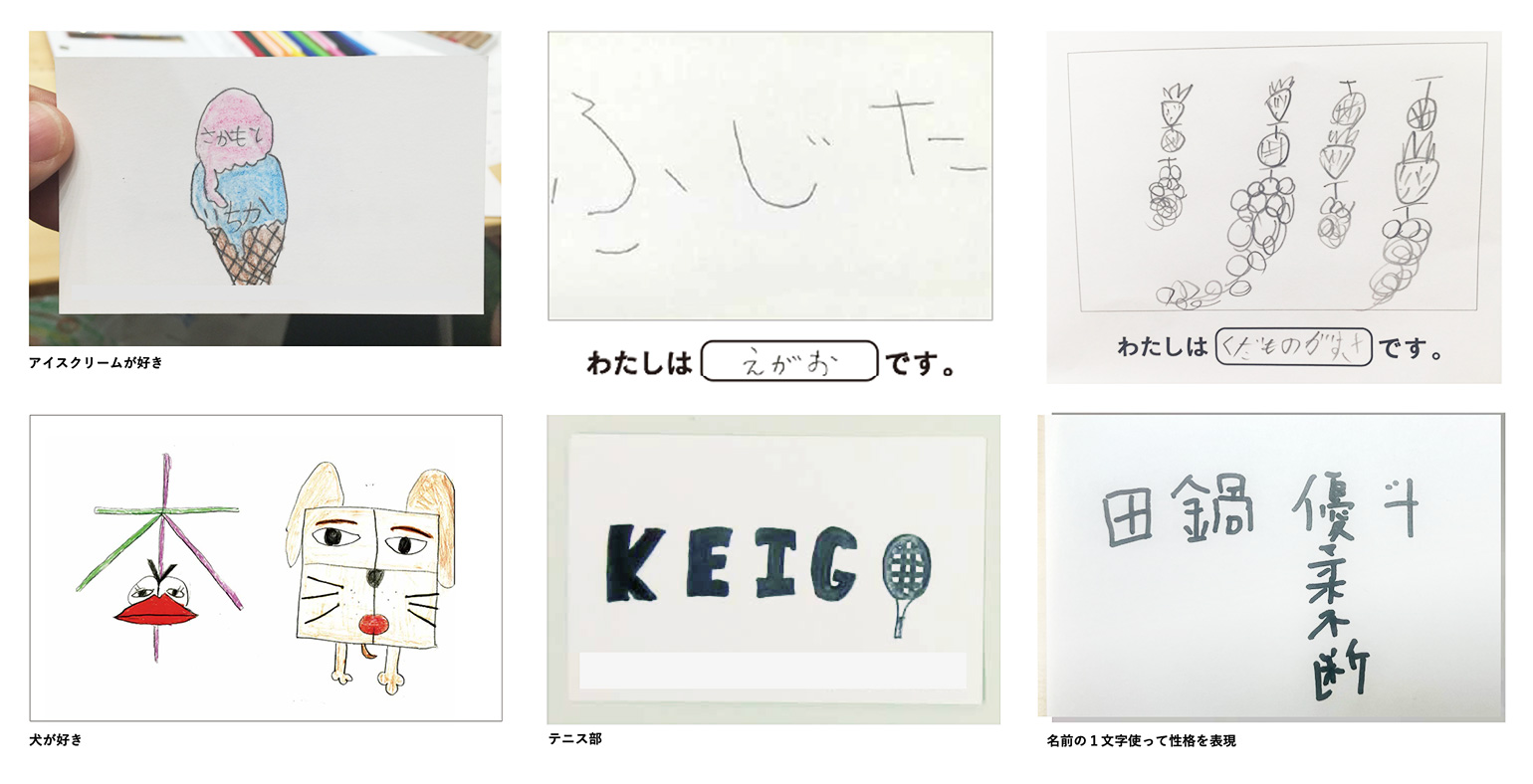
The workshop involved adding unique characteristics to the characters of one’s own name to design a business card that is one-of-a-kind. These characteristics could be anything—such as “favorite things,” “appearance,” “special skills,” “future dreams,” or “things I dislike.”
By exchanging the finished business cards at the end of the session, the goal is to foster mutual understanding and social skills. I was deeply moved to be able to adapt the “Taro Yamada” problem—originally created for children—into a program suitable for high school students. Currently, this program is used not only for elementary, junior high, high school, and university students but also for corporate training.
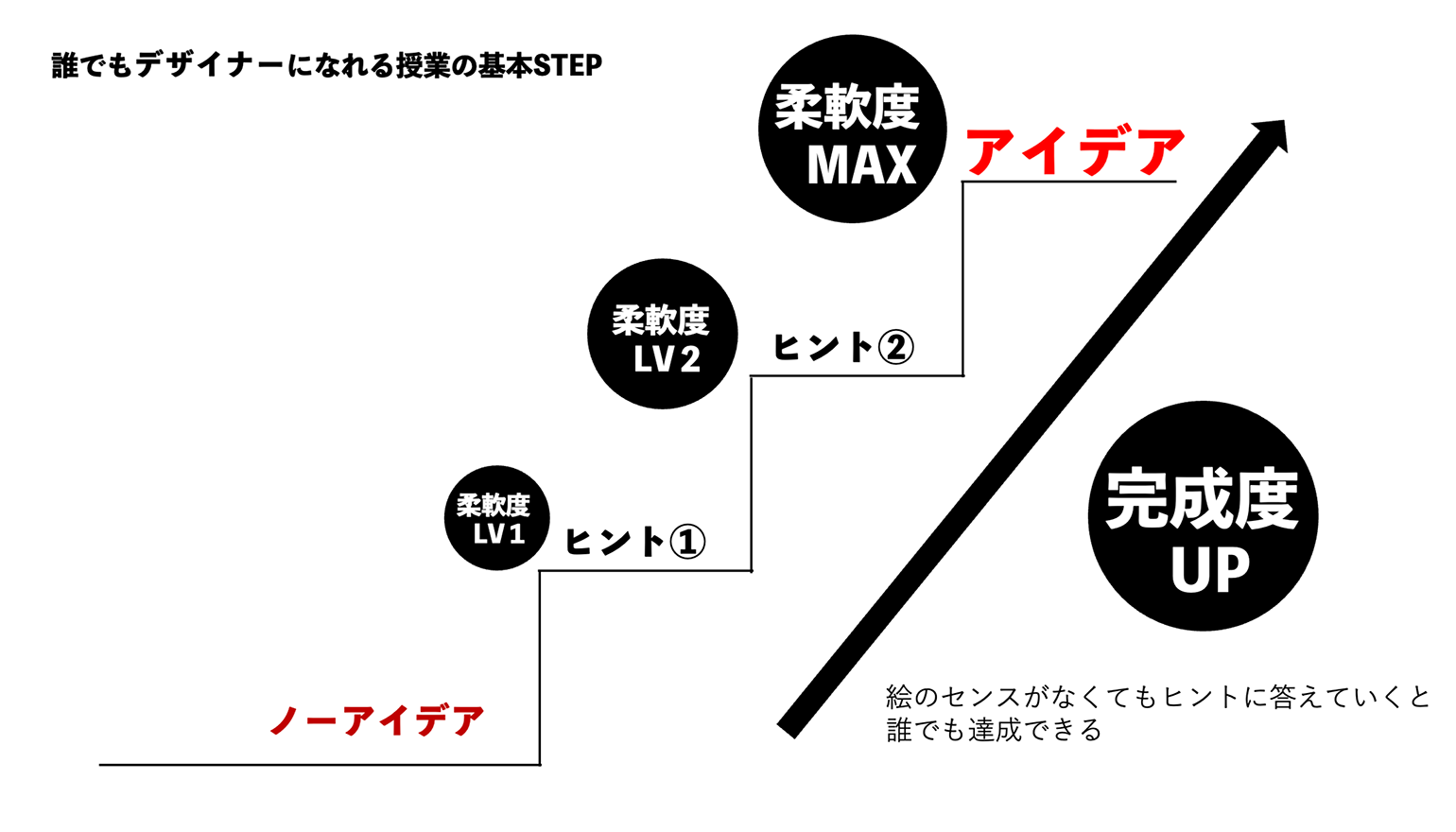
What I value most in designing programs is making the thought process visible in stages. Just as you climb a staircase one step at a time, building your thinking step by step leads to highly refined ideas.
I believe visualizing thought processes is highly effective for helping kindergarteners and early elementary school students expand their ideas, so I make sure to include it in every workshop. I’ve also come to realize that it’s actually very effective for adults as well.
I made a discovery while conducting training sessions for adults. It seems that the process of generating and refining ideas is something rarely encountered in daily life, and I learned that many people are seeking the experience of visualizing this process.
Recently, when I talk about the thinking process to parents who have attended workshops for their children, I’m often asked, “Why don’t schools teach this?” I suspect that because teachers themselves never learned this approach, they find it difficult to teach it to children in a concrete way.
I have become even more determined to provide a space where not only children but also adults can learn “the process of thinking.”

Workshops where anyone can participate and no one is judged
Having conducted workshops for nearly 10 years, I’ve received requests from various sources and have held sessions for the general public at places like shopping district events and corporate creative spaces.
I received some interesting feedback from parents at these events. They said, “In school, during integrated studies classes and the like, children are asked to come up with answers to questions that have no single correct answer, so they struggle with how to think through the problem and arrive at a solution. We are grateful for this workshop, which teaches them how to think.” My program is designed to help participants understand the thinking process while being mindful of the order in which they approach problems.
Additionally, when I conducted workshops at a peer support center in Tokyo (a facility run by individuals with ASD or ADHD for young people with those conditions) and at a residential care facility in Tokyo (for elementary school girls), I received feedback such as: “While design might seem like a high hurdle for participants preparing for employment, lowering the barrier by framing it as a ‘class where anyone can become a designer’ allowed children who wouldn’t normally participate to join.”
Since whatever they draw is never criticized, it seems to have become a “class anyone can join.” Because we create original works with no single correct answer, there is absolutely no criticism. Every answer is correct. That is what I believe.
An Approach to Fostering Creativity and Critical Thinking in Children with Developmental Disabilities
My wife is a pediatrician specializing in pediatric neurology, and many children with developmental differences visit her clinic. At the clinic, children with and without developmental differences wait together at the reception desk and in the waiting room.
We regularly hold several workshops at the clinic, and children with and without developmental differences participate together. Some of these workshops also help develop social skills, and we’ve been receiving more requests from other medical institutions to give lectures on our approach and its results.
I’ve come to realize that the program offers not only the benefits I initially anticipated but also new benefits that participants, parents, and staff have experienced, and I’ve become eager to share the program’s potential with a wider audience.
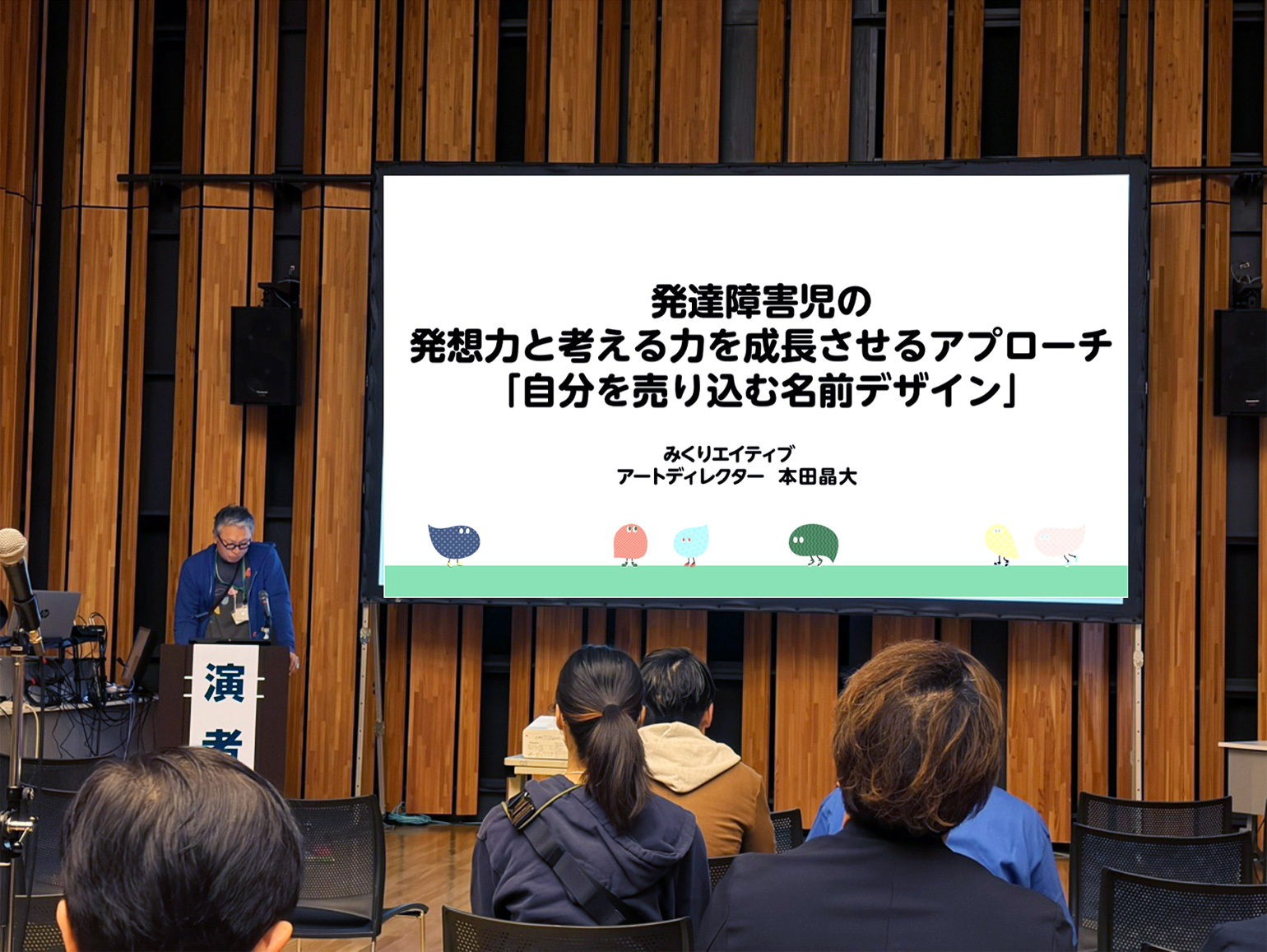
At the 12th Japan Multidisciplinary Society for Pediatric Care (*) held in Yamagata on February 7–8, 2026, I presented on the theme “An Approach to Fostering Creativity and Critical Thinking in Children with Developmental Disorders: Name Design to Promote Oneself,” sharing the workshop’s effects and potential with professionals in healthcare, welfare, and education.
*Japan Society for Multidisciplinary Pediatric Care =
An academic conference held with the aim of fostering collaboration and mutual understanding among diverse professionals, including those in healthcare, welfare, and education
Additionally, we set up a booth at the conference to showcase our teaching materials and real-world case studies, with the primary goal of raising awareness nationwide. We also solicited requests to host our workshops. We are currently preparing to hold workshops while consulting with organizations that expressed interest after hearing our presentation. If the opportunity arises, we are willing to travel anywhere to conduct workshops (subject to consultation), so please contact us via the institute’s inquiry form if you are interested.
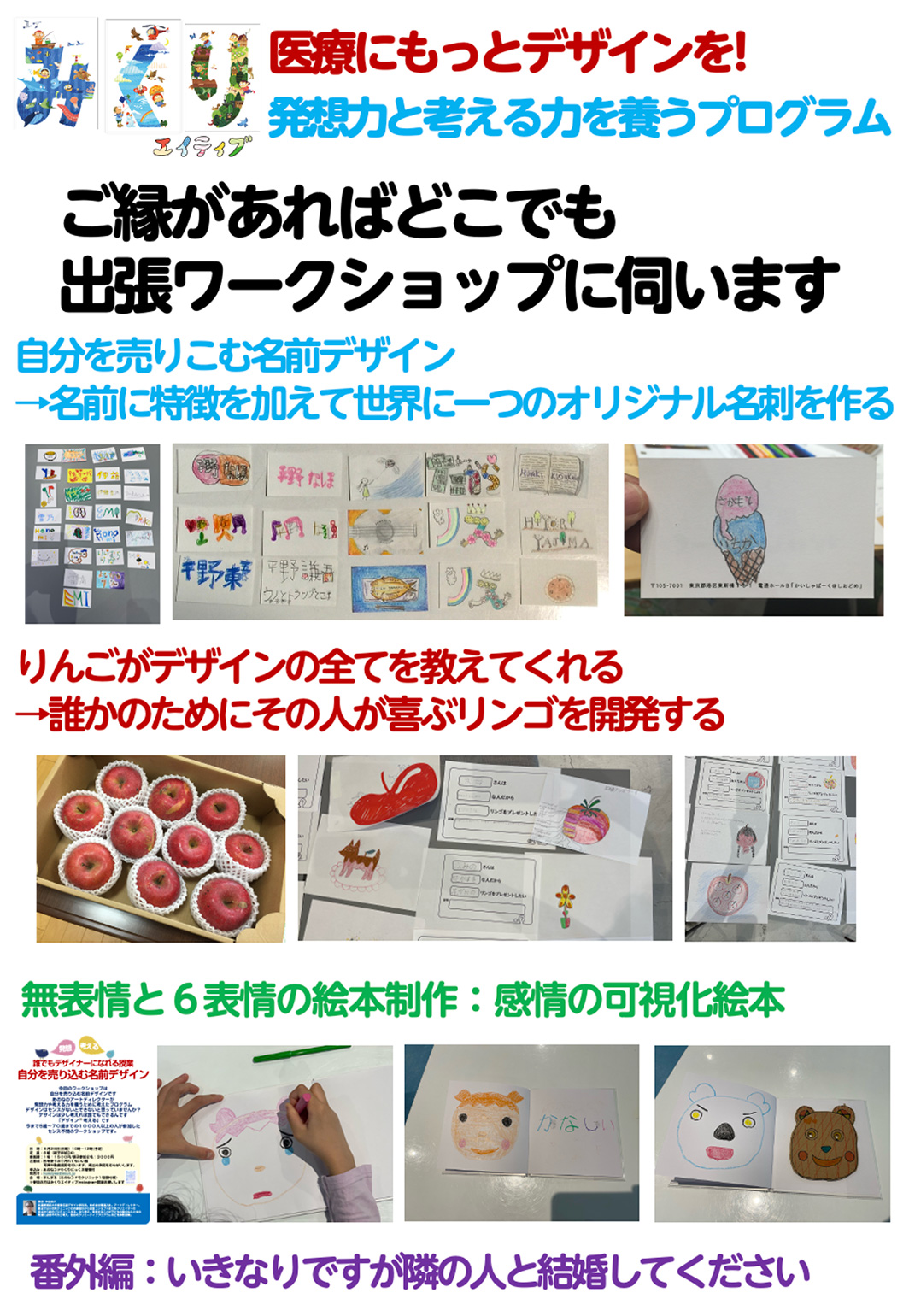
*The following three programs are available:
■ Name Design Workshop: Promote Yourself → Create a one-of-a-kind business card by adding unique features to your name
■ "Apples Teach You Everything About Design" Workshop → Develop an apple that will delight someone
■ Picture Book Creation Workshop: From a Blank Face to Six Expressions → A picture book that visualizes emotions
Active Learning: "How About This?" Research Institute Website
https://www.konnano-dodaro.jp/
Related Series:Active Learning "How About This?" Report
Was this article helpful?
Share this article


Newsletter registration is here
We select and publish important news every day
For inquiries about this article
Back Numbers


Author
Honda Masahiro
Dentsu Inc.
2CRプランニング局
Art Director