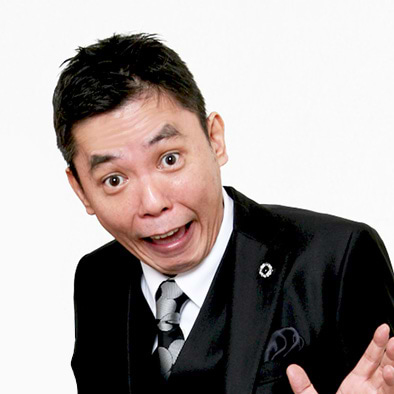
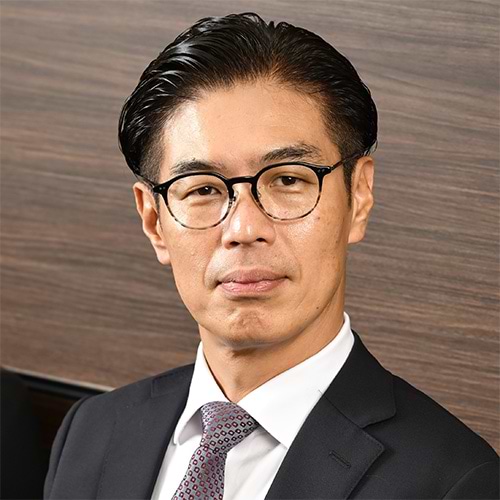
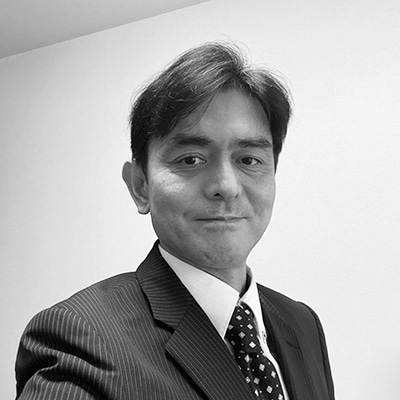
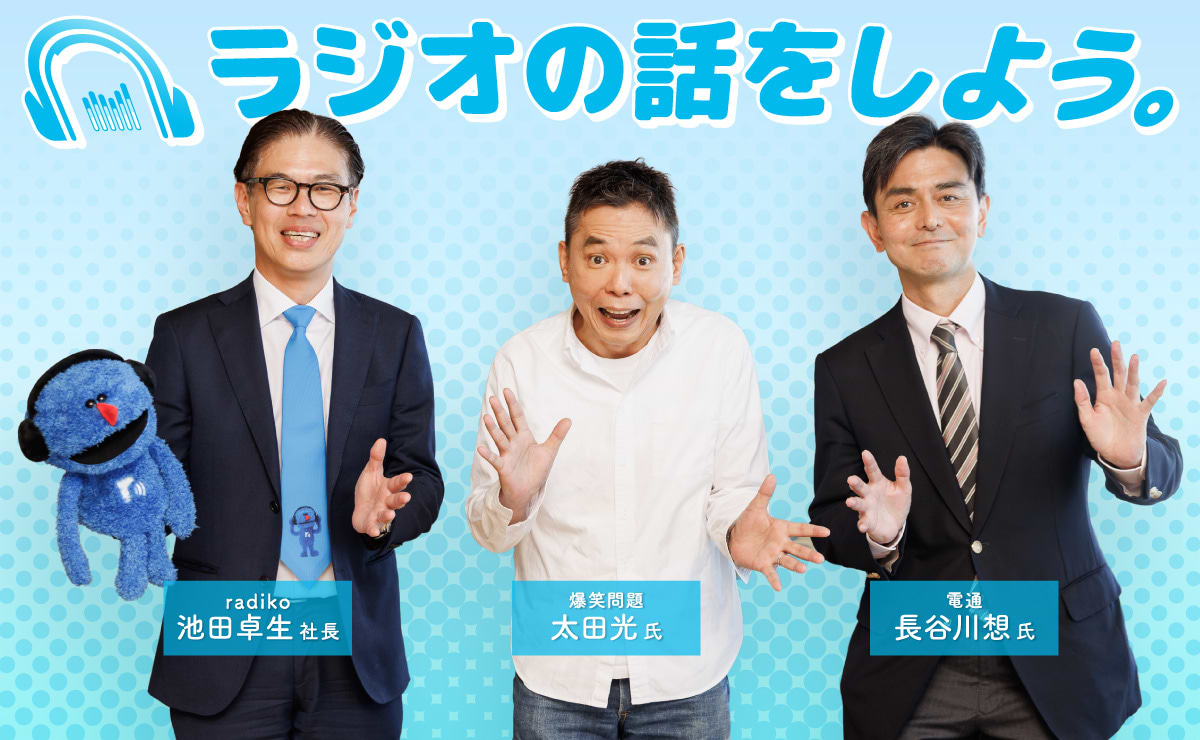
(From left) Takuo Ikeda, President of radiko; Hikaru Ota; and So Hasegawa of Dentsu Inc.
“Japan’s Advertising Expenditures in 2025” Special Roundtable. This year, we’re shining the spotlight on radio. Amid a flood of diverse media and content, how will radio carve out a path forward?
Our guests this time are Takuo Ikeda, President of radiko, and Hikaru Ota of Bakusho Mondai, who serves as the PR Ambassador for radiko’s 15th anniversary. So Hasegawa of Dentsu Inc. Media Innovation Lab moderated the discussion.
How radiko and podcasts have changed the way radio programs reach listeners
Hikaru Ota
Hasegawa: In 2025, Japan’s total advertising spending set a new record high for the fourth consecutive year, exceeding 8 trillion yen. Notably, internet advertising spending surpassed 50% of the total for the first time. Meanwhile, while radio and television media remained largely flat, advertising spending across the four major mass media outlets declined. What are your thoughts on this situation, Mr. Ota?
Ota: Since I’m involved in television, it’s a bit sad, but it’s just the way things are these days. Even if we try to create interesting programs while production budgets are being cut, it’s often difficult to do so. It’s frustrating to hear so-called “old media” being called “over,” and I do hope they can make a comeback.
At the same time, I have mixed feelings—I’m glad to see that services like radiko (which, as a digital medium, is classified as internet advertising in Japan’s advertising expenditure categories) are gaining attention.
Hasegawa: Digital radio advertising spending—including radiko and podcasts—is on a steady upward trend, rising from 1.4 billion yen in 2021 to 3.8 billion yen in 2025. What are your thoughts on this, Mr. Ikeda?
Ikeda: Even though it’s growing, the scale is still small. Looking at advertising spending, radio has now surpassed print magazines (113.5 billion yen) and terrestrial radio (115.3 billion yen). However, digital magazine advertising spending stands at 61.5 billion yen, far outpacing digital radio. I feel that radio, like magazines, needs to shift more toward digital.
Hasegawa: radiko, which launched in 2010, celebrated its 15th anniversary in 2025. Could you briefly review radiko’s evolution in recent years?
Ikeda: Area-free listening began in 2014, and time-free listening in 2016. Last year, we added support for Apple CarPlay and Android Auto, making it possible to control radiko right from the car’s dashboard. I believe the launch of radiko was hugely significant in expanding the options for listening to radio through area-free and time-free features.
Ota: Area-Free was particularly exciting. Back when I was a student in Tokyo, I wanted to listen to “Yantan” (MBS Young Town), which was broadcast in the Kansai region, but I couldn’t get a signal. I’d take my transistor radio to the window, and whenever the signal came in, I’d hear the voices of Master (Shōfukutei) Tsurubei and Shinji Tanimura.
Being able to listen to regional station programs with crystal-clear sound thanks to “Area-Free” felt like a dream from those days had come true, so I listened to everything I could get my hands on. I was so happy and thought, “What a great era we’re living in.”
Hasegawa: On the contrary, I was living in the Kansai region back then and had a hard time trying to listen to (Beat) Takeshi’s show. Mr. Ota, you’re serving as the PR Ambassador for radiko’s 15th anniversary—what were your thoughts when you accepted the role?
Ota: Mr. Ikeda used to be the producer of the TBS Radio program “JUNK,” and since we’ve worked together in the past, I was really happy when he asked me to do it.
I’m currently hosting a special interview series called “radiko 15th Anniversary Podcast: Hikaru Ota and 15 Radio Hosts,” where I talk extensively about radio with 15 popular personalities, and I’m really enjoying this project too. It was the first time I’d ever had such a long, one-on-one conversation with Takashi Okamura of Nainai (Ninety-Nine), someone I don’t usually get to talk to much.
Ikeda: As for the PR Ambassador, I thought, “There’s no one better than Mr. Ota, who listens to a wide variety of radio shows and makes full use of radiko.”
Hasegawa: I think the number of radiko users has grown over the past 15 years—how has radio changed during that time?
Ota: Before radiko, there were podcasts, right? “JUNK,” the show I host, started podcasting in 2006, but before that, there was a time when it felt like nobody was listening to the radio at all.
Hasegawa: To begin with, the number of people who actually owned a radio was starting to decline.
Ota: Exactly. And when we started the podcast, we realized it could be listened to all over the world, right? So we started getting a lot of emails from listeners living overseas. That really made me happy. I started listening to podcasts myself, too, and even had Michael and Mami from the English conversation podcast “Bilingual News” come on as guests.
After that, we moved to radiko, which allowed for area-free listening. That’s how the reach of radio programs has expanded in various ways. As audio media has grown, even though what we’re doing hasn’t changed, I really feel that the way our show reaches the world has changed.
Back then, the radio and TV industries were terrified of new media like social media and YouTube, but I feel like radio was the first to realize we could coexist with them—even before TV did.
Hasegawa: When I listen to your radio show, Mr. Ota, I really love how you aim for jokes that walk the line right from the opening greeting, or how you tease actors in unexpected ways (laughs). Has your personal approach to the show changed at all?
Ota: I don’t think what we’re doing has changed much from the past. What I’m most proud of about our show is the high quality of the material listeners send in. It’s like having hundreds or even thousands of radio writers on staff.
Ikeda: On “Tuesday JUNK: Bakushō Mondai Cowboy,” there’s a year-end segment called the “Email No. 1 Grand Prix,” where listeners compete by submitting jokes—and we get an incredible volume of emails. The writers check them all, and Mr. Ota gives the final approval, but the high quality of those submissions hasn’t changed at all over the years.
Hasegawa: It’s often said that audio media creates a close psychological connection with listeners, and some even call it a pioneer of interactive media through exchanges via postcards. Mr. Ikeda, how do you view the evolution of audio media?
Ikeda: Speaking of evolution, radio shifted from postcards to email, and at first, the hosts were really bad at reading emails aloud. They’d stumble when saying the “at” symbol, the slash, or the hyphen in email addresses.
Later, social media emerged, and at first, there were people in the industry who opposed its use. These days, everyone reads comments from X aloud, but I think radio has adapted to all these shifts in society.
And then, when it comes to features like radiko’s “Time Free,” from a broadcaster’s perspective, there’s definitely some resistance—or rather, there are definitely times when you think, “Please don’t leave that comment up.”
Ota: Like when a clip gets taken out of context, posted on a news site, and causes a backlash. That happens all the time, but we’re living in an era where there’s no way to avoid it.
Ikeda: I think radio is the medium that’s been embracing new things, including those challenges. Of course, the workload for staff has increased significantly to handle emails and social media. But I still see it as a reliable medium with great adaptability and agility.
Hasegawa: Exactly—I think that adaptability and agility are major appeals of radio. And another appeal of radio is the power of the human “voice,” isn’t it?
Ota: I’ve been listening to rakugo since I was a child, and sometimes the only thing left of the old masters’ performances is the audio. With rakugo, listening to it with your ears—rather than watching it on video—lets you feel the rakugo performer’s breathing, and the story really sinks in. I feel like audio media offers more of that joy of visualizing scenes than video does. Since there’s less information, it actually lets your imagination run wild.
Hasegawa: I see. There’s a unique way of conveying things that’s possible precisely because it’s just audio. With media—including radio—becoming increasingly diverse, there’s a vast amount of content, both good and bad, and we’re seeing fewer things that “everyone enjoys together.” As a performer and content creator yourself, Mr. Ota, are you enjoying this situation, or do you feel a certain sense of suffocation? What are your honest thoughts?
Ota: Ever since we started out, enjoyment and a sense of constraint have always coexisted for us. People often say that TV compliance standards have become stricter, but a group like Bakusho Mondai has been doing material that was pretty much off-limits for a long time. We’d be told, “You guys can’t do that on TV,” so we’d tweak it a bit. We’ve long since accepted that. So, while people often say, “Compliance standards are strict these days,” from our perspective, the reality is that it’s always been that way.
Hasegawa: How do you feel about that, Mr. Ikeda?
Ikeda: We’ve had our share of incidents (laughs). From my perspective, it seems like Ota-san actually enjoys that whole dynamic. It’s almost like we’ve established a pattern where we “stir things up” on TV and then “calm things down” on the radio.
Hasegawa: Radio listeners might enjoy hearing the true meaning behind “that comment” from back then.
We want to expand the “radio experience”—where listeners let their imaginations run wild through audio—via radiko
Takuo Ikeda, President of radiko
Hasegawa: Mr. Ota, you’re active in a wide range of fields—TV, radio, magazine columns, book writing, and YouTube. How do you perceive the differences between these various media?
Ota: For example, I write all my books myself, and for manzai, Yuji Tanaka and I work with a writer to create a rough draft, then refine it as we perform. For radio, during the free-talk segments, I’m the only one thinking about what to say, while TV is a collaborative effort involving many people. The approach is different for each one.
Hasegawa: What about you, Mr. Ikeda?
Ikeda: May I talk about the difference between radio and podcasts? The other day, I was invited to appear on a podcast hosted by TaiTan, a rapper whom Mr. Ota knows well. TaiTan, who has produced numerous podcasts, and I got to talking about whether the way you speak on a podcast is different from how you speak on the radio. TaiTan said, “Radio doesn’t have to be that entertaining.” In other words, “Isn’t radio more forgiving of parts that aren’t entertaining?”As someone who’s spent many years pursuing what makes radio programs entertaining, I thought, “No, no—radio has to be entertaining, right?” (laughs).
But I could also understand TaiTan’s point. He explained that, in order to grab people’s attention, there’s been an “entertainment inflation” across all forms of content, and conversely, the value of more laid-back, relaxed content is rising. He believes radio is the medium best suited to fulfill that role.
Ota: While podcasts attract people who are intent on listening closely to the content, I often hear that people leave the radio on all day while doing farm work or running a shop. So perhaps that implies there’s no particular need for elaborate, entertaining production techniques.
Ikeda: It might depend on the type of show—whether it’s a daytime talk show or a late-night program. I feel like people are splitting into two camps these days: those who find great joy in doing radio shows, and those who think podcasts are the way to go. What do you think, Ota, about the fact that more and more people are emerging who don’t consider media like radio or TV to be important to them?
Ota: I suppose it depends on what kind of media people were exposed to growing up. The same might be true for TV. For us, TV was the king of entertainment, but it’s perhaps becoming a medium that people just “watch in the background” or leave on because it feels lonely without the sound. Still, I’d like to see us return to the mindset of, “I’m going to watch this show at this time.”
Hasegawa: That includes the shared experience of everyone getting excited while watching the same show together, right? With so much content flooding the market, what role should radio and radiko play?
Ikeda: I’d like to use radiko to further expand the radio experience—where audio sparks the imagination. Amid this flood of content, I think radiko can serve as a tool to help people discover the appeal of radio. For example, we could effectively promote interesting shows after they air and create opportunities for listeners to catch up using radiko’s time-shift feature. While there’s a lot of competition from other media, I think it’s a very exciting environment.
Radio features deep engagement between hosts and listeners!
So Hasegawa, Dentsu Inc.
Hasegawa: People often say we’re living in an age of intolerance, or that young people in Japan, in particular, are filled with anxiety. Mr. Ota, how do you perceive the prevailing mood in society?
Ota: But even back in Ryunosuke Akutagawa’s day, there were terms like “vague anxiety”—I feel like people have always talked about anxiety, no matter the era. Young people are always anxious, no matter the era. In our day, we were saved by the radio shows of (Beat) Takeshi and Miyuki Nakajima. Even now, I’m sure there are plenty of people who are being saved by Hikaru Ijuin.
I think there are many young people who find solace in radio because they learn that even if they make all kinds of mistakes, they can turn them into a laughing matter, so I’m happy that young people struggling with anxiety are listening.
Hasegawa: Getting back to the topic of advertising, Mr. Ikeda, how do you view advertisers in today’s climate?
Ikeda: When it comes to radio, the environment is gradually being established to meet advertisers’ various expectations, so I feel it’s necessary to make an effort to let them know that. In addition to radio having traditionally been a reach-based medium, radiko also functions as a targeted medium. Since radiko can capture location data, it’s possible, for example, to deliver ads exclusively to people commuting on the Yamanote Line. There’s advertising value being created by these new technologies and environments.
Furthermore, one of radio’s inherent characteristics is the deep engagement between hosts and listeners. As a result, the environment where hosts can introduce products and drive sales remains strong. As proof of this deep engagement, when radio programs host events, they attract large crowds of listeners.When I talk to people at local stations, I often hear them say, “Even when we held paid events, a huge number of people showed up.” I feel this is precisely because the hosts are effectively conveying their messages to the local community. It really drives home the point that these traditional values of radio are still very much alive today.
Hasegawa: Even in recent years, large-scale radio events at venues like the Tokyo Dome and the Budokan have been making headlines, haven’t they?
Ikeda: This is actually about podcasts, but on Jane Su’s show, there have even been instances where listeners convinced their own companies to secure a budget and become sponsors of the program. Also, at event venues, there have been times when applause broke out when a sponsor’s name was announced. I think that, from an advertiser’s perspective, the close connection between audio media and its listeners is a major appeal.
Hasegawa: Participants share the understanding that the event is made possible thanks to the sponsors. That’s the ideal way for a show to operate, isn’t it?
Ota: Speaking of sponsors, I think there’s no better situation than being able to watch luxurious content—produced by commercial TV stations with massive investments and top-tier technical talent—for free every day, all thanks to sponsors.
TV is often called “old media” these days, but it’s unique to TV that it can connect live feeds from network stations across the country—something individual YouTubers simply can’t do—and go live immediately when something happens.
We need to ensure advertisers don’t come to believe that advertising on TV today is ineffective, and I believe we should preserve the benefits of TV—namely, the ability to watch for free thanks to sponsors. While Netflix certainly has the production budget and is creating amazing content, I do hope that TV will be reevaluated a bit more.
To ensure that the general public continues to recognize radio as the leading source of disaster information
Hasegawa: Last March, radio celebrated its 100th anniversary. Could you tell us what kind of value radio and radiko will deliver going forward?
Ikeda: One thing I can mention beyond what we’ve discussed today is disaster response. The public recognizes that radio provides the most up-to-date disaster information, and when an earthquake strikes, the listener numbers for local radio stations in that area spike dramatically. During the Great East Japan Earthquake, various personalities—including Bakusho Mondai—sent messages from the studio, and I felt that the power of the “voice” truly came through. I believe that this value of radio is something we must not lose, even with the advent of radiko.
Ota: For example, when heavy rain or an earthquake strikes, if you’re listening to a local station’s program, your “usual host” conveys the information in their own voice. Since listeners tune in regularly, they know the host’s personality—even if the host tries to calm everyone down by joking around, listeners can tell when their tone is different from usual or when their voice is trembling. Thanks to “area-free” streaming, even when we’re far away, the way we connect emotionally has changed from what it used to be.
Since I know the staff members’ names and the pen names of regular listeners, I find myself wondering, “I hope everyone’s okay.” It’s not just something happening somewhere else—listeners take it personally. It’s precisely because of that value that when I hear local stations are struggling right now, I truly hope people will support them from the bottom of my heart.
After the Interview (Hasegawa)
This interview really conveyed the long-standing relationship between Mr. Ikeda, who has been on the front lines adapting to changes in the media landscape, and Mr. Ota, who has been delivering the values he doesn’t want to see change—a relationship built on overcoming both the good and the bad together over many years. While radio and radiko aren’t enjoyed by as many people as television, I strongly felt that I hope they continue to be a presence with a passionate community that welcomes newcomers without turning them away.
Born in Saitama Prefecture in 1965. Formed the comedy duo Bakushō Mondai in 1988 with his college classmate Yuji Tanaka. Their manzai comedy, which takes a sharp look at various social phenomena ranging from politics to the entertainment industry, is popular not only among young people but also across a wide range of age groups.Currently, in addition to appearing on regular TV and radio programs, he is also active as an author, with many of his publications becoming bestsellers. In particular, *Bakusho Mondai’s Theory of Japan* (Takarajimasha), published in January 1997, became a bestseller with over 500,000 copies sold. He also appears at every “Titan Live” event, which has been held every two months since 1996.
Takao Ikeda
radiko, Inc.
President and CEO
Born in 1969 in Osaka Prefecture. After graduating from Meiji University’s School of Political Science and Economics, he worked at a radio program production company before joining TBS Radio & Communications in 2001. He worked on late-night programs such as “JUNK.” He has served as an Executive Officer at TBS Radio since 2022. On June 19, 2025, he assumed the position of President and CEO of radiko, Inc.
Hasegawa So
Dentsu Inc.
Dentsu Inc. Media Innovation Lab
Director of Media Innovation Research
After working in the development and operation of information media services at a domestic telecommunications carrier, he joined Dentsu Inc. Following roles primarily in media planning and digital marketing, he assumed his current position. His interests include information behavior, media business, advertising medium development, and local media. He holds a Master’s degree in Interdisciplinary Information Studies and is a Marketing Meister certified by the Japan Marketing Association.
Launched in October 2017, leveraging Dentsu Inc.'s longstanding media and audience research expertise. Conducts research and disseminates insights to capture shifts in people's diverse information behaviors and understand the broader media landscape. Provides proposals and consulting on the communication approaches companies need within this context.

 Special Discussion: "Japan's Advertising Expenditures" [11/11]