Note: This website was automatically translated, so some terms or nuances may not be completely accurate.
 The Dentsu Inc. Healthcare Team's Perspective on Consumers' True Feelings [3/3]
“Emotions” and “Contradictions” Discovered Through Dialogue with Healthcare AI Personas

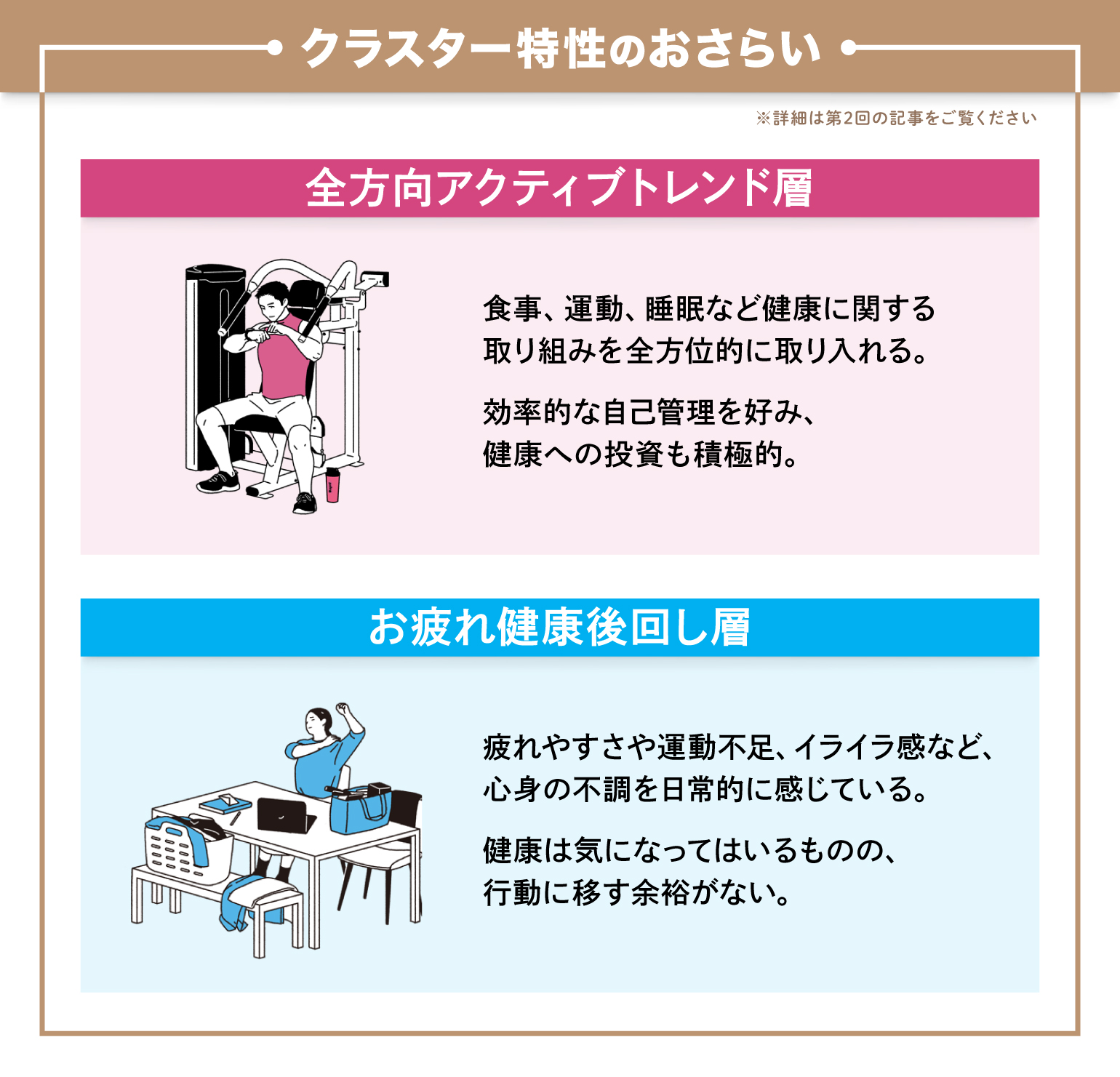
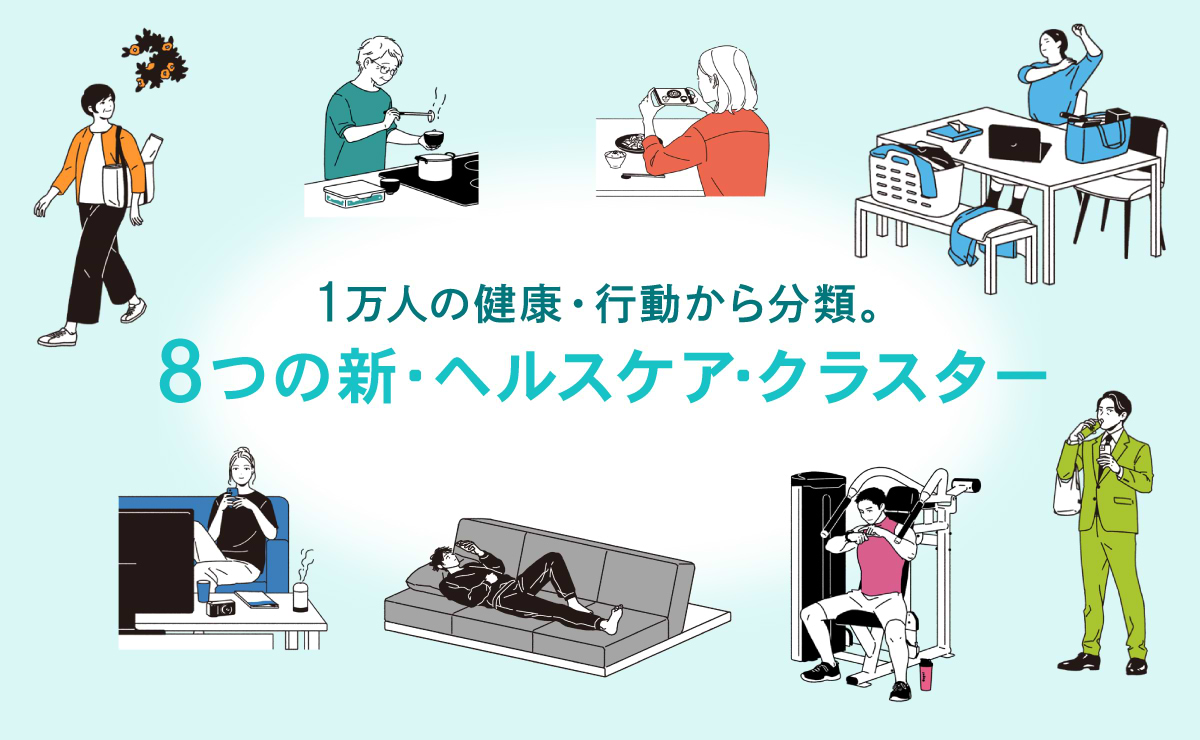
In the second installment of this series, we introduced the characteristics of eight consumer types grouped based on health awareness and health behaviors, using data from the Dentsu Inc. Healthcare Team’s “Wellness Survey of 10,000 People” ( see survey overview here ). Cluster analysis makes it easier to imagine “Which type am I?” and to translate familiar observations—such as “I know people like that”—into strategic insights.
In the third installment of this series, we’ll use AI tools to further refine these cluster profiles and clarify the differences in each group’s health values.
Are Health-Conscious Consumers Actually Just Following Trends!?
Dentsu Inc. has an AI solution that uses its proprietary large-scale consumer data to recreate target customer personas via AI and conduct surveys. We fed this AI solution the results of the “10,000-Person Wellness Survey”—that is, the latest data on health awareness and behavior—and generated “Healthcare AI Personas” that reflect the characteristics of each cluster.
In this article, we’ll share the results of a chat interview with AI personas Mr. X and Mr. Y—representing the “All-Around Active Trend Group” (the cluster with the highest health awareness) and the “Tired and Putting Health on the Back Burner Group” (one of the clusters with lower health awareness), respectively—about “health-related products and services.”
First, here are the responses we received when we asked each of them, “What do you look for when buying drinks or foods that seem good for your health?”
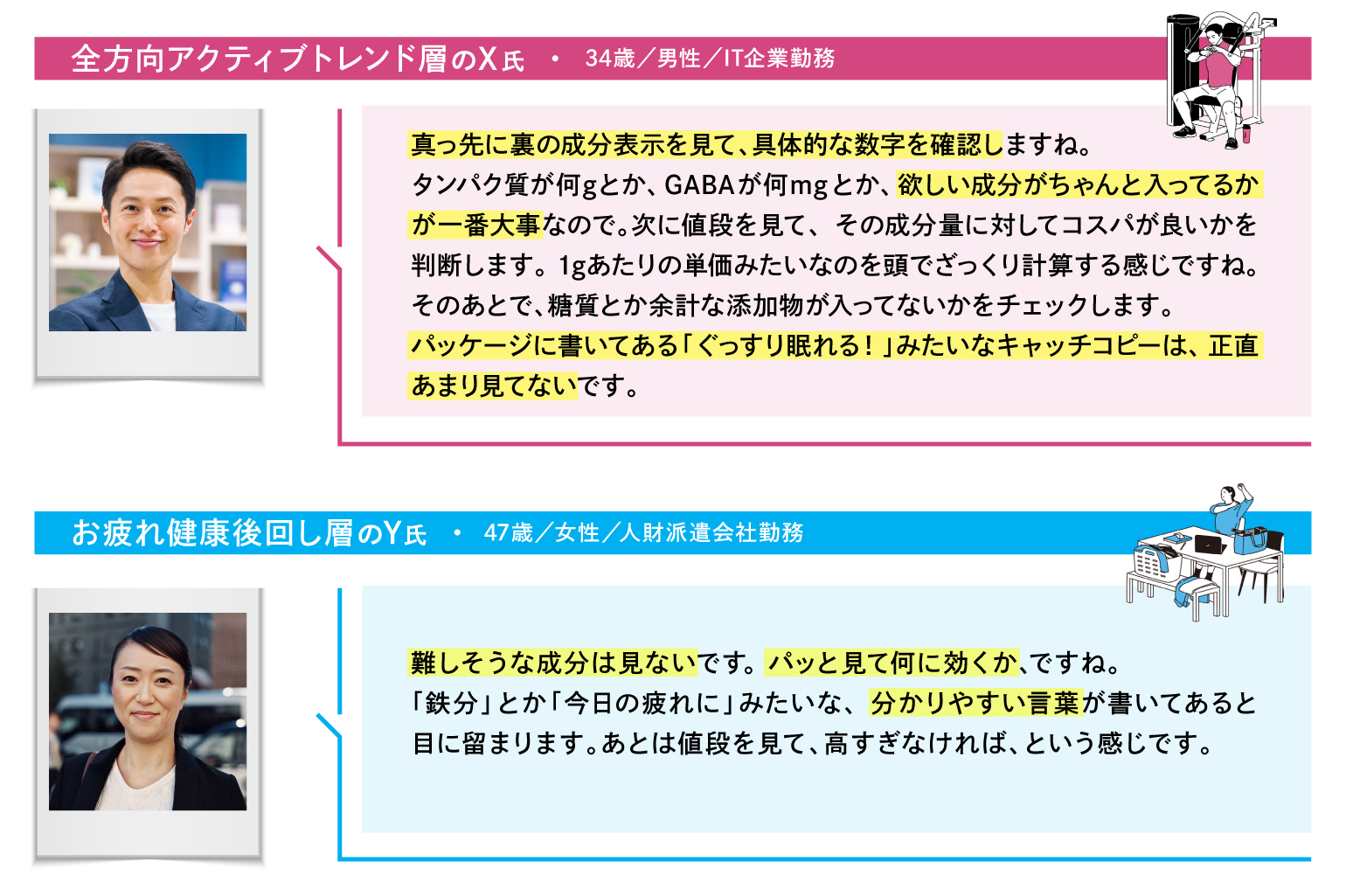
Their answers regarding the effects on the body were polar opposites. Mr. X (All-Around Active Trend Group) wants to check the ingredients and their amounts to judge the product’s quality for himself. He clearly does not want his judgment to be influenced by the claims made by the product’s marketers. Mr. Y (Tired and Putting Health on the Back Burner Group), on the other hand, wants the effects to be communicated in an easy-to-understand way.We often hear this sentiment—that people want the conclusion presented first because they don’t want to think too much about it or simply don’t understand—in traditional qualitative research as well. I believe this clearly illustrates how differences in knowledge and motivation manifest during product selection.
Next, I asked them to specify what they meant by a “healthy product”—in this case, a “complete nutrition bar”—and inquired about when they would eat it and what benefits it would offer. Regarding timing, both answered “lunch,” but when asked what specific benefits eating it at lunch would provide for them personally, I received different responses from each.
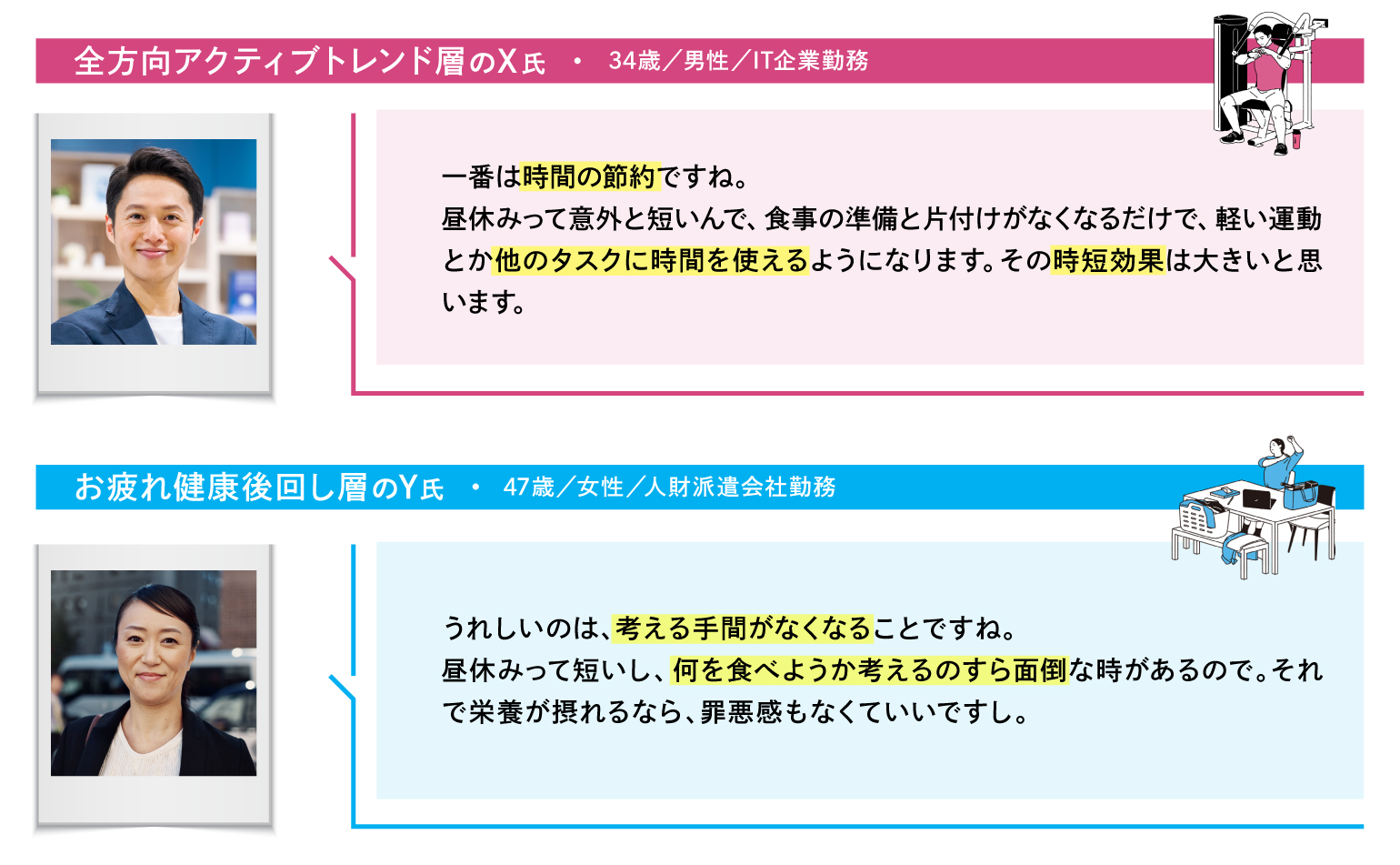
For Mr. X, the benefit is “creating free time,” while for Mr. Y, it’s “reducing decision fatigue.” Beyond the functional value of being a complete nutritional bar, AI personas seem to offer clues for exploring and formulating hypotheses about what the so-called “true value proposition” actually is.
The “difference” in the two individuals’ answers so far directly reflects their varying levels of health consciousness, which is perhaps easy to imagine. However, when I asked the following question, I received a somewhat unexpected response.
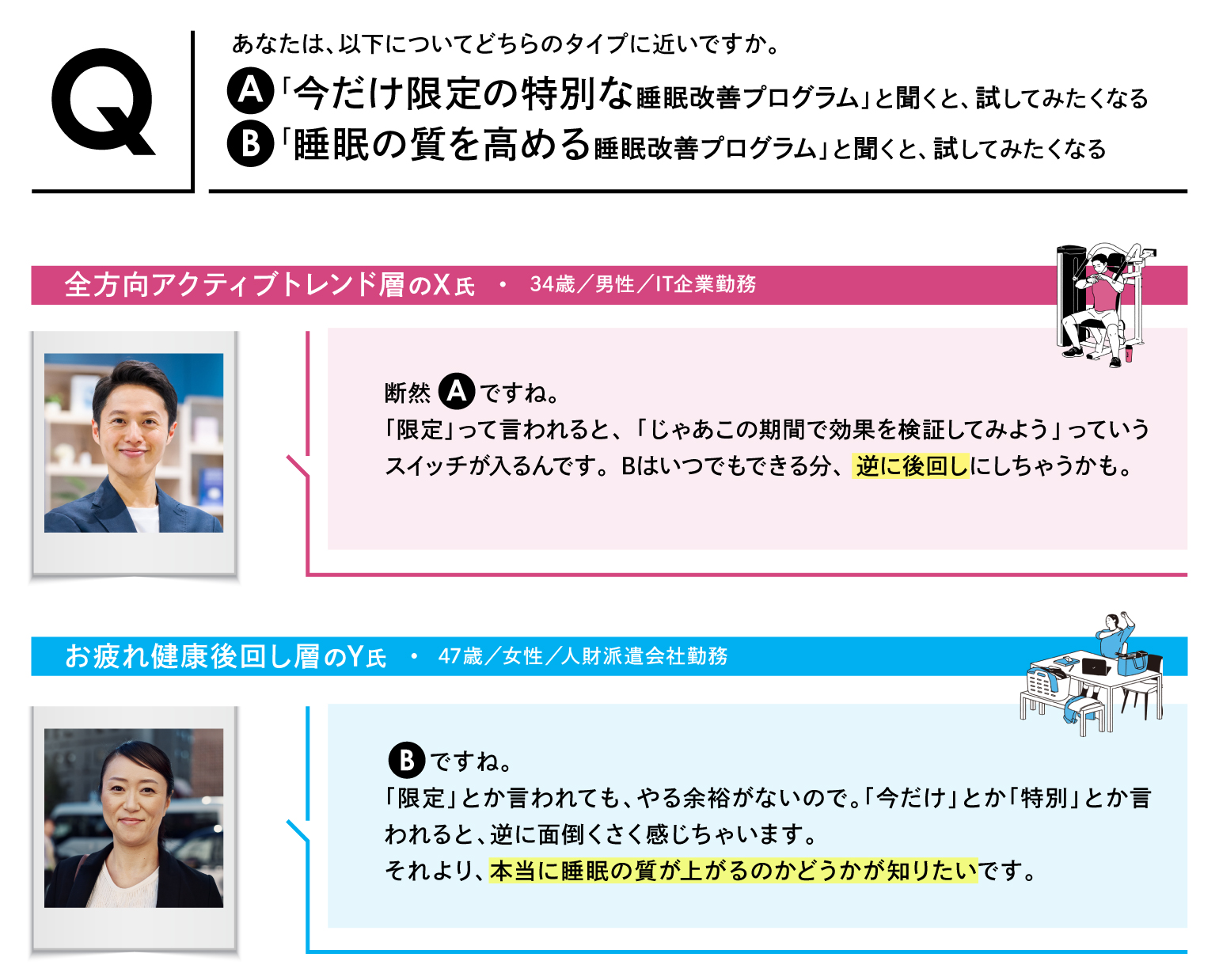
When I posed this question, I believed—from a health perspective—that Option B represented a more fundamental value. Since this is a sleep improvement program, a service that promises “sleep quality” seemed like the standard, sensible choice.I had assumed that Mr. X, who has high health literacy, would choose Option B. In contrast, by pitting it against “limited-time offer” (Option A)—which isn’t essential in terms of health benefits—I wanted to verify which cluster would exhibit that human “tendency” to choose scarcity.
Surprisingly, however, Mr. X—who had the highest health awareness—chose the scarcity option (Option A). Looking at his reasoning, while his high health awareness was evident in his desire to verify the effects for himself, the result reminded me that this cluster also had a “bandwagon” aspect to it. The “All-Directional Active Trend” segment loves the latest products and services, such as health tech.While this could be seen as a sign of high health consciousness, it’s actually a cluster that harbors a contradiction: they tend to score lower on certain basic, down-to-earth health habits and behaviors (e.g., recognizing that daily diet is important for health, or eating breakfast). I believe the answers to this question revealed their “very human, honest feelings”—a glimpse of self-love where they enjoy following trends and take pride in that aspect of their lifestyle.
AI Solutions Take Consumer Understanding to the Next Phase
I believe the responses to the third question symbolize the fact that just because someone has high health awareness or literacy doesn’t necessarily mean they always make “correct” or “logical” choices from a health perspective. You might think that’s simply a natural part of human consumer psychology.However, precisely because products and services in the health sector are governed by firm standards and facts—such as being “scientifically correct” or offering “necessary health benefits”—the more seriously we engage with them, the more likely we are to overlook consumers’ true feelings, such as the realization that “even when it comes to health, I’m actually just following trends.” Of course, while valuing rational consideration, it’s crucial to constantly remind ourselves not to impose on consumers what we want them to understand or the reasons we want them to act.
As the use of AI has advanced, the “10,000-Person Wellness Survey” has evolved beyond simple quantitative data into a solution that allows us to actually converse with eight healthcare clusters by generating virtual AI personas. It’s a truly surreal feeling to hear the clusters—which our team has spent years developing through trial and error—speak as if they were real people.By utilizing this solution, we can build upon the insights from the “Wellness 10,000 Survey”—which serves as a quantitative study—and quickly identify hints for strategy formulation by layering more specific questions and hypotheses on top of that foundation. By leveraging AI to delve deeper into healthcare trends and consumers’ true sentiments, we can incorporate these insights into our strategies more swiftly. Through these efforts, we aim to contribute to solving challenges in the healthcare market.
[Survey Overview]
<OVERVIEW of the “19th Wellness 10,000-Person Survey 2025”>
・Survey Period: June 2025
・Survey Method: Online survey
・Survey Population: Men and women nationwide in their 20s through 70s (10,000 respondents)
・Research Organization: Dentsu Macromill Insight, Inc.
The information published at this time is as follows.
Was this article helpful?
Share this article


Newsletter registration is here
We select and publish important news every day
For inquiries about this article
Back Numbers
Author

Takizawa Naho
Dentsu Inc.
6th Marketing Bureau, Marketing Consulting Division 1
Planner/Consultant
Exploring the Wellness Survey of 10,000 PeopleHealthcare Keywords Revealed by the Wellness 10,000-Person SurveyHow Should Japanese Companies Advance DX in China, a DX Leader?Latest Healthcare Insights from the Wellness 10,000-Person SurveyHealthcare Trend Forecasts for a Healthy and Happy FuturePR-Driven Marketing "MARKETING+PRUS"The Dentsu Inc. Healthcare Team's Perspective on Consumers' True Feelings

Jiang Wanqing
Dentsu Inc.
第6マーケティング局 マーケティングコンサルティング2部
Planner
Latest Healthcare Insights from the Wellness 10,000-Person SurveyHealthcare Trend Forecasts for a Healthy and Happy FuturePR-Driven Marketing "MARKETING+PRUS"The Dentsu Inc. Healthcare Team's Perspective on Consumers' True FeelingsNot just advertising! Dentsu Inc. professionals who run alongside companies and businesses