Note: This website was automatically translated, so some terms or nuances may not be completely accurate.
 Insight Memo [15/65]
BS Restructuring and the Multi-Channelization of Viewing Environments
〈 Publication Date: February 21, 2012 〉
This time, we explain the major reorganization and multi-channel expansion of BS digital broadcasting.
This BS digital broadcasting reorganization has two main backgrounds:
① Similar to terrestrial TV broadcasting, the frequency bands (channels 5, 7, and 11) previously used for analog BS broadcasting became available after July 24, 2011.
② The commencement of shared use of the new BS band (channels 17 and above) allocated to Japan at the 2000 WRC (World Radiocommunication Conference).
This reorganization is expected to increase the number of BS digital broadcast channels (programs), bringing the total (including existing channels) to 28 channels (see figure below).
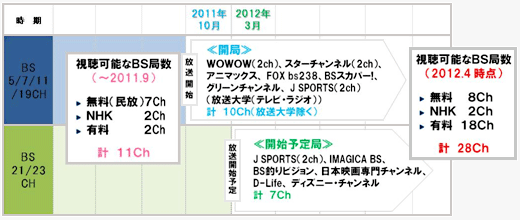
The first phase of the BS reorganization began in October 2011. Ten channels, primarily pay channels, launched, bringing the total number of channels to 21 (see blue section).
*Excludes the Open University of Japan (TV and radio)
Channels like WOWOW and Star Channel can now split the bandwidth previously used for analog broadcasts across multiple channels. This allows a single operator to simultaneously operate multiple channels, enabling more efficient program distribution.
Then, in the second phase in March 2012, six more pay channels and one free channel were added (see green section), bringing the total number of BS channels to 28.
*Some pay channels are currently offering free broadcasts as "trial periods" for promotional purposes.
With the multi-channel expansion of BS broadcasting, the following changes in viewing environments are anticipated:
① Enhanced free BS broadcasting will further increase viewing time, particularly among middle-aged and older viewers.
② Emergence of a "multi-channel environment" consisting solely of free broadcasts, combining terrestrial and BS broadcasts
③ The potential increase in single-channel subscriptions due to the rise of specialized premium pay channels, distinct from multi-channel package subscriptions.
BS digital broadcasting is facing unprecedented change.
This BS reorganization serves as a catalyst, bringing renewed attention to the "changes in viewers' viewing environments" driven by multi-channelization, encompassing terrestrial TV and cable TV as well.
Was this article helpful?
Share this article


Newsletter registration is here
We select and publish important news every day
For inquiries about this article
Back Numbers
Author

dentsu Media Innovation Lab
Dentsu Inc.
Insight MemoSpecial Discussion: "Japan's Advertising Expenditures"Explore the Amazing World of YouTube Creators with UUUMInformation Media White Paper 2024: The Rapidly Changing Media Environment and Consumers100 years since its birth. Radio, today...College Students and the Future of Media, Communication, and Advertising in Ten YearsInformation Media White Paper 2025: New Horizons in Communication Shaping the FutureInformation Media White Paper Special Report 2026: “The Current State of Evolving Information Trends”