Note: This website was automatically translated, so some terms or nuances may not be completely accurate.
 Civic Tech: Solving Local Issues with Technology [4/4]
What are bridge personnel, the key connecting "regional challenges" and "tech"?
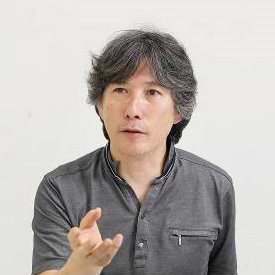
Hideki Koizumi
The University of Tokyo

Takuya Kagata
Dentsu Inc.
This series has introduced examples of "broadly defined civic tech" – where residents utilize existing IT/ICT services like SNS and smartphone apps to revitalize their communities.
For this final installment, Takuya Kagata of Dentsu Digital Inc., who has been involved in these initiatives, engages in a dialogue with Professor Hideki Koizumi ( , The University of Tokyo), who researches urban development and communities (Center for Advanced Science and Technology, The University of Tokyo, Collaborative Urban Development Division).
Both parties, who undertake various initiatives at the "Co-creation Innovation Lab" ( *1 ), will explore the potential of broad civic tech and the challenges for this approach to become widespread.
<Table of Contents>
▼Using SNS and smartphones alone can create new developments for local issues
▼A great example of civic tech! "FixMyStreet" lets residents participate easily
▼Coordinators needed to bridge communities and businesses
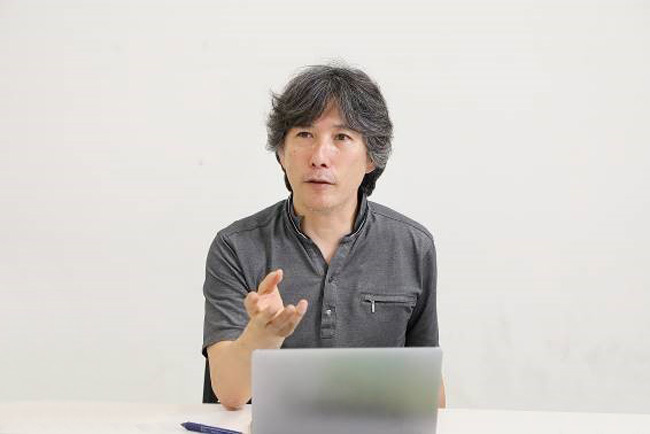
Using SNS and smartphones alone can create new developments for regional challenges
Kagata: When solving regional issues with technology, I believe using existing "proven technologies" is effective. Especially in rural areas, many elderly residents aren't accustomed to using digital tools daily, so just effectively utilizing proven technologies can spark new developments. Though getting them to learn how to use it can be tough (laughs).
Koizumi: I agree. First, the current mainstream approach to town development in rural areas is "open town development," where the community opens its doors and collaborates with external partners. This means increasing the "related population" ( ※2 ), creating connections between local residents and outsiders, and using that as the foundation to transform the region.
In this context, SNS and various digital tools are essential for connecting the region with people physically distant. Whether local residents can effectively use digital tools directly impacts the strength of collaboration with the region and the speed at which things progress.
Kagata: So, communication between the outside world and the region becomes both faster and more robust.
Koizumi: Exactly. This goes back to the late 1990s, when the internet was just starting to spread. My lab at the University of Tokyo was tasked with supporting a certain region. The very first thing we tackled was helping local residents purchase computers and set up internet contracts. We provided steady support, starting with the basics of how to use a computer.
Before that, connecting with key figures in the community meant meeting in person or calling them. Being able to communicate easily via email was truly revolutionary.
Kagata:The example from Kamiichi Town in Toyama Prefecture featured in the series follows the same pattern. We started by helping people in their 70s and 80s install LINE on their smartphones, and now they communicate with us daily as a matter of course.
Koizumi: I saw that too. Now, with smartphones and SNS widespread, we can collaborate even more closely with residents far away. When citizens master digital tools, various aspects of town development advance. Focusing first on this "broadly defined civic tech" is effective for open-style town development.
Kagata: When residents master technology, it has the secondary benefit of improving their personal lives too. A woman in her 70s from Uchishiro Town learned LINE, enabling her to easily communicate anytime with her beloved grandchild living far away.
A great example of civic tech! "FixMyStreet," where residents can easily participate
Kagata: Professor Koizumi, with your long experience in community development, could you share examples that might serve as references for civic tech in Japan?
Koizumi: There's a digital service called "FixMyStreet" started by the UK non-profit mySociety. It allows citizens who notice local issues like "road damage," "dangerous spots," or "littering" to report them within a smartphone app, attaching photos and location data. It operates like an internet bulletin board system where all interactions are public. Its key feature is accessibility—anyone can participate, with other citizens offering advice on posts. Government officials also view these posts, taking action based on them and reporting the results back to citizens on the board.
Kagata: Whether it's the online bulletin board or the location data, the technology used isn't particularly novel, and since it's a smartphone app, it's familiar to citizens. This seems like it would lower the barrier to participation.
Koizumi: Actually, the prototype for this service originated in the late 1990s to early 2000s, so it has quite a history. It's become increasingly convenient alongside smartphone evolution. In Japan, besides "FixMyStreet Japan Machimon," there's also a similar system called "Chiba Repo/My City Report" operated by Chiba City.
FixMyStreet Japan Machimon
https://www.fixmystreet.jp/
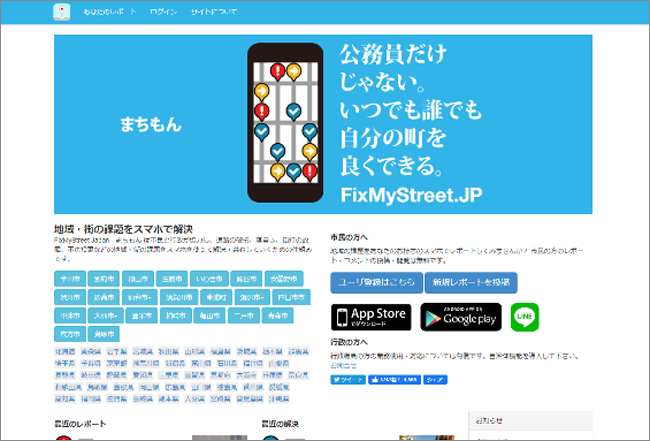
Kagata: For the government, being able to review past issues posted on the bulletin board also builds a knowledge base. It helps them decide, "This is an area where we should leverage citizen input," or "We should handle this by referencing past examples."
Koizumi: Additionally, region-specific SNS platforms have recently gained popularity. A key feature of these is the presence of a "community organizer" who acts as a cheerleader for the community, fostering an atmosphere that encourages posting. Organizers actively respond to members' comments and plan community events.
A prime example of a region-specific SNS is "PIAZZA" (Piazza)
https://www.lp.piazza-life.com/
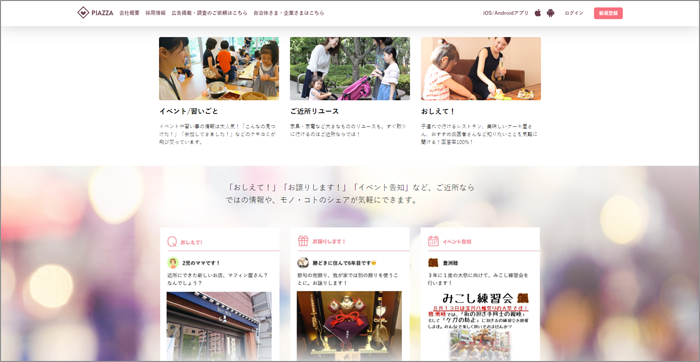
Kagata:In the case of Gujo City, Gifu Prefecture, we created a local Facebook community and asked local housewives to serve as the community organizers. This also aims to make it easier for new members to join the community.
Coordinators who bridge communities and businesses are needed
Koizumi: As shown here, even if the power of each individual citizen is small, when a wide range of people get involved and it's operated collectively, it becomes a force for significant change. The key to civic tech success may lie in how widely and by how many citizens individual tech initiatives or systems can be used.
Kagata: The more people involved in civic tech, the greater the potential for significant change, right?
Koizumi: Yes. That's why we need many citizens and external supporters to engage and foster co-creation. In that sense, to truly make a new system "civic" (belonging to the citizens), we need arrangements that allow local people to use it easily.
Kagata: You also run the "Co-creation Innovation Lab," a research organization focused on co-creation. I participate as a member, and it really underscores how "co-creation" is key in civic tech.
Koizumi: This might apply not just to civic tech, but to local initiatives as a whole. What's crucial for co-creation is having someone who connects citizens and external supporters, expanding the circle of participants—a kind of "bridge-builder."
Kagata: The organizer role for the local SNS we discussed earlier might be an example of that.
Koizumi: Exactly. Furthermore, coordinators facilitating collaboration between companies and communities are also crucial. While examples of corporate-community partnerships are increasing, they often involve applying "the resources and services the company already possesses" to the community. As a result, initiatives sometimes lack deep roots in the community's or citizens' needs and daily lives. This is a major current challenge. We need coordinators who deeply understand citizens' needs and local realities and can consider how to effectively combine corporate technology with them.
Kagata: The sequence is: first, accurately grasp the community's needs, then coordinate corporate technologies that match those needs. The coordinators you mentioned are the ones who can think about this first step – matching "community needs × corporate technology." And the resulting initiatives or systems should be designed to be as accessible as possible for citizens to participate.
Koizumi: Yes. Beyond civic tech lies the future vision of "smart cities" formed through IoT and similar technologies. To make that future tangible, we need more bridge-building talent who can coordinate between the local community and external entities, and between the community and companies. That is precisely what we must do now.
※1 Co-Creation Innovation Lab
A research organization focused on realizing open innovation. It is a joint research initiative between Professor Koizumi's Center for Advanced Science and Technology at the University of Tokyo and Dentsu Digital Inc. It brings together diverse talent from corporations, government, and university research institutions to share information on themes like smart cities, each from their unique perspective. Beyond aiming to generate new ideas by exchanging challenges and know-how, it also focuses on talent development. It will provide training programs to cultivate individuals who possess various viewpoints—corporate, regional, etc.—and can effectively connect and coordinate their respective insights.
※2 Related Population
This refers to cases where people outside the region maintain ongoing, sustainable connections with the area—neither as permanent residents who have relocated ("settled population") nor as temporary visitors for tourism ("exchange population"). They are expected to increase touchpoints between the region and the outside world and become key contributors to regional development.
Was this article helpful?
Share this article


Newsletter registration is here
We select and publish important news every day
For inquiries about this article
Back Numbers
Author
Hideki Koizumi
The University of Tokyo
Center for Advanced Science and Technology Research, Urban Development Laboratory
Professor
Takuya Kagata
Dentsu Inc.
Global Business Center
Chief Business Design Director
Final Experience Guide: 4 Keywords to Avoid Missing OutCivic Tech: Solving Local Issues with TechnologyThinking with the Right Brain and Left Brain: The Future of Advertising Agencies and Consulting FirmsLocal "quirks" hold the key! How to build sustainable regional economiesDentsu Group's 72 Visions of the Future: "Future Mandala"The Case for “Freelance” Careers