Note: This website was automatically translated, so some terms or nuances may not be completely accurate.
 Special Discussion: "Japan's Advertising Expenditures" [2/11]
With the widespread expansion of the internet, all media are being forced to adapt for the next generation.

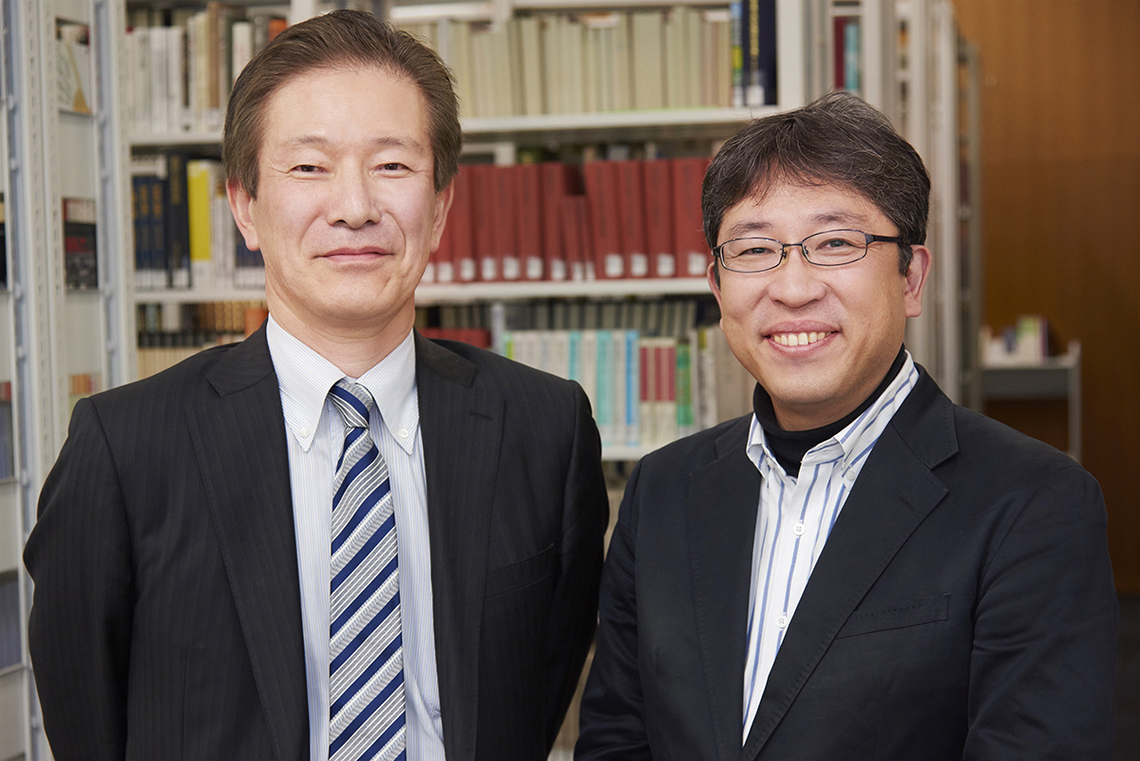
Takashi Uchiyama
Aoyama Gakuin University
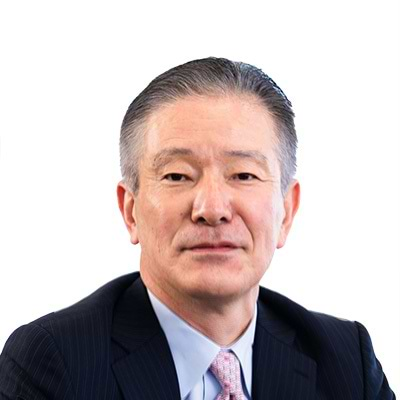
Ritsuya Oku
Representative of Media Vision Lab

dentsu Media Innovation Lab
Dentsu Inc.
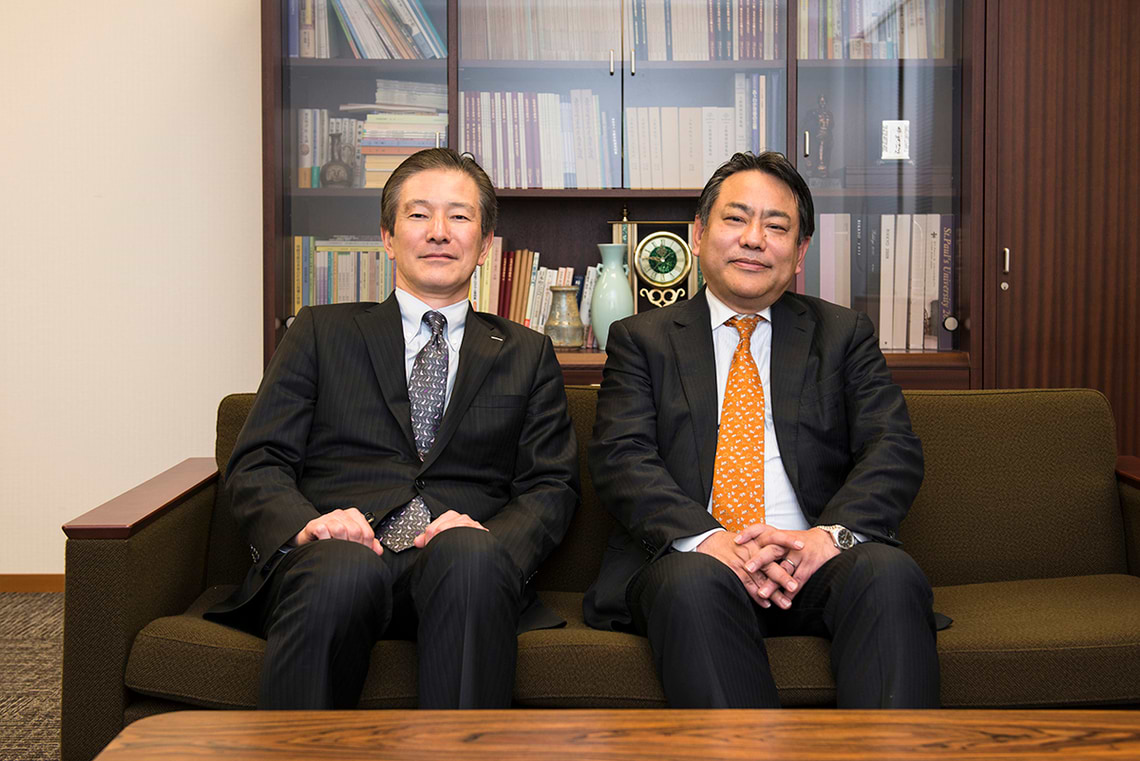
"2016 Japan Advertising Expenditures" reflects the ever-evolving media landscape. Professor Takashi Uchiyama of Aoyama Gakuin University, specializing in video content and media industry theory, and Ritsuya Oku of DENTSU SOKEN INC. outline key future trends for each media type and the current state of media engagement among university students.
Television advertising is holding strong in Japan
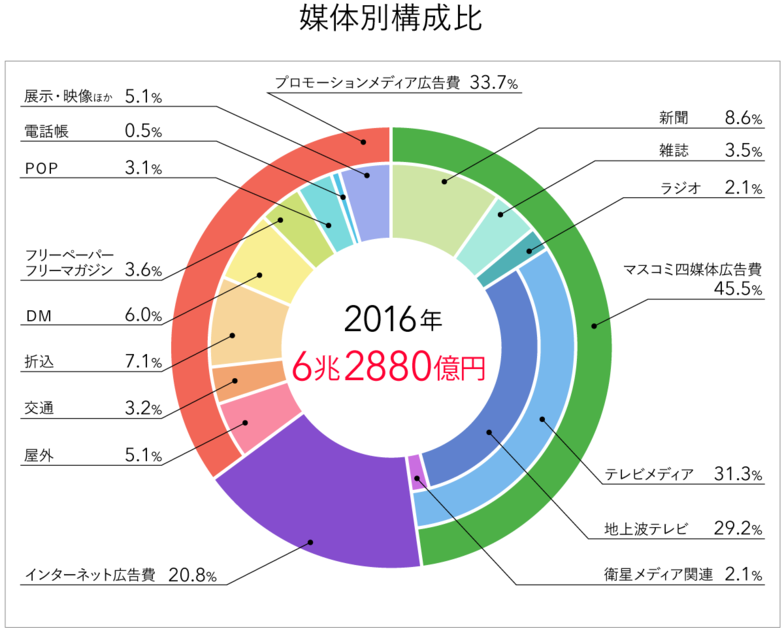
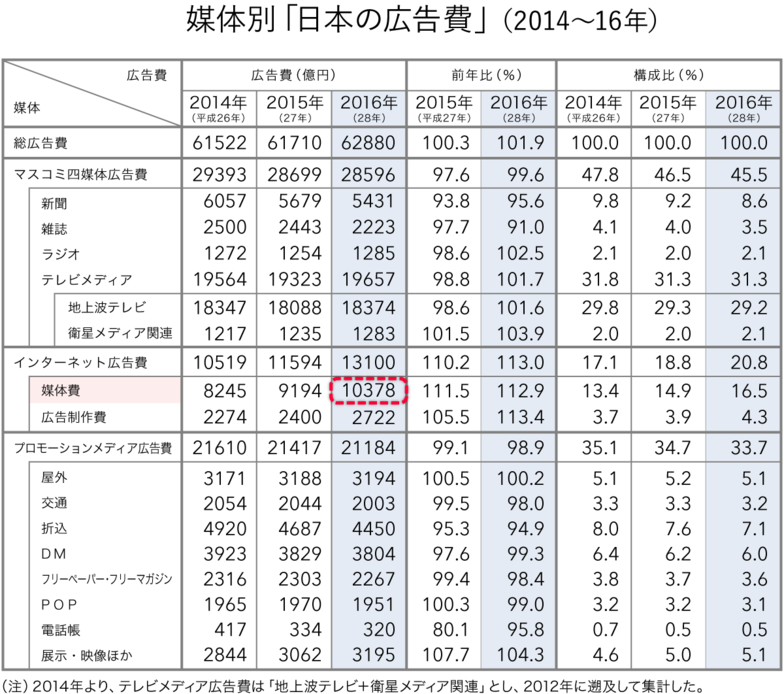
Oku:Japan's total advertising expenditure in 2016 was ¥6.288 trillion, a 101. 9% increase from the previous year, marking five consecutive years of positive growth. While internet advertising expenditure (combining media fees and production costs) exceeded ¥1 trillion in 2014, in 2016 media fees alone surpassed ¥1 trillion, continuing to lead the growth. What are your overall impressions?
Uchiyama: In advanced European nations like the UK, France, and Germany, we're seeing a reversal where online advertising spending has surpassed television advertising spending. In the UK, online ad spending overtook television back in 2009, so my first impression is that television remains strong in Japan. However, looking at growth rates, television is essentially flat while online is over 10%. I think we're in a countdown to that reversal happening here.
Oku: Professor Uchiyama specializes in visual content and media industry theory, and you're very close to your students. I'd like to hear your perspective on how the digital native generation interacts with media. To start, how are students reading newspapers these days?
Uchiyama: I think few students consciously read newspapers until around the first half of their third year. It's only when they become seniors, thinking "I need to write my thesis," "I need to gather data," or "It's job-hunting season," that they first reach for the newspaper digest or access database sites. Fundamentally, the net generation, the digital native generation, operates on the mindset of "everything starts with freemium" (laughs).
Oku: A notable example of newspaper usage was when an internet TV station ran its program listings as advertisements to boost awareness, ultimately achieving 10 million app downloads. Recognizing that newspaper TV listings are the gateway to TV viewing, I think this was a clever advertising strategy that effectively leveraged traditional media to promote a new online service.Next, magazines. With fewer neighborhood bookstores, the landscape surrounding magazines and books has changed significantly. How do students relate to magazines these days?
College girls who want to be seen as "special"
Uchiyama: I think fashion magazines popular with female students were holding their own much better two or three years ago. I don't know if they were actually buying them, but I had the sense they were at least looking at them. Lately, I feel Instagram's influence is much stronger.
Oku: Now, when women chase trends, they search using Instagram hashtags. Digital natives seem to believe that information found there is flat and fair. Isn't that replacing the trend-setting function magazines used to have?
Uchiyama: Through industry-academia collaboration with camera manufacturers, we're advancing a project called "Let's Increase Camera Girls." When it comes to what kind of photos they want to see on Instagram, it's basically the same categories women's magazines cover: gourmet, travel, and fashion. And they want to "enhance" and stage a "special me."There are many pancake shops around the university. They go out for lunch, snap photos with their smartphones first, and post them if they feel like it. What used to be done by professionals is now easily accessible to amateurs.
Oku: Magazines are also feeling the impact of the internet, right? The location of the Aoyama Gakuin campus near Shibuya and Omotesando is certainly a boost. Radio advertising spending has finally recovered from its long downtrend. I see this as a very positive trend, solely because the Radiko platform has borne fruit, providing crucial support for reaching young audiences.
Uchiyama: It's undeniable that radio has become a niche medium. Many students say, "I don't have a radio at home." When asked, "What would you do if an earthquake hit?", they reply, "I'd manage online." Amidst this, we expect Radiko's virtual nationwide broadcast capability to be the breakthrough. The first challenge is how to increase listeners. The key issue lies in content – whether we can develop new, compelling offerings.
Providing content tailored to young people's needs
Oku: TV advertising spending is up 101.7% year-on-year, finally showing signs of recovery from the stagnation since the Lehman Shock. What's the TV viewing situation like among students?
Uchiyama: We hear many stories about people learning something through TV, and about watching recorded shows. However, the idea of "going home specifically to watch this program" has become less common. I think the basic stance is that people want to control their own time and watch their favorite programs when it suits them.
Oku: The drama "We Married as a Job" was a hit, and it's said to have had very high timeshifted viewing. This might prove that expanding the scope of viewership capture can yield significant power.
Uchiyama: Nielsen in the U.S. announced it will provide Total Content Ratings, integrating TV viewing (including timeshifted viewing) with digital viewing across various platforms. I think the idea is to capture those who timeshift, place-shift, or device-shift, and then sell that rating to sponsors.
For example, a student living alone might say, "My computer handles everything," and not even have a TV at home.
Like Radiko, it means they can now count viewers who have shifted to PCs or smartphones, or rather, they are becoming able to count both the portion sold to sponsors during the on-air broadcast and the portion sold through the internet.
The future of internet advertising and simultaneous online streaming
Oku: Internet advertising, excluding production costs, exceeded 1 trillion yen in media fees alone. Performance-based advertising leveraging ad technology has been strong, meeting advertisers' needs.
Uchiyama: From a sponsor's perspective, there are advantages unique to this medium, such as click-guaranteed advertising. The ability to adjust placements dynamically, like with programmatic advertising, is also a strength. The strong performance of spot advertising over time slots in TV advertising likely reflects sponsors' desire to adapt their approach to changing environments. I believe ad technology is effectively capturing these needs.
Oku: While programmatic and video ads will likely continue driving growth, the question is who will be the next major player. The lines between advertising and non-advertising communication are blurring, and there are challenges in establishing rules, such as whether to disclose advertiser attribution. Currently, the internet has few constraints, but that's precisely what makes it exciting and appealing to younger audiences. Finally, what are your thoughts on future developments?
Uchiyama: When it comes to disseminating information online, there are cases closer to one-to-one private communication, and others where the goal is to broadcast information to an unspecified large audience, like a broadcaster. We need to differentiate between what constitutes private communication and what qualifies as a traditional media service, even if the degree varies. There is a growing sentiment that even when done online, activities resembling public media should be subject to appropriate actions, including ethical regulations. I expect similar movements will emerge regarding advertising.
Oku: In recent years, discussions about simultaneous online streaming of television broadcasts have also become quite active in Japan.
Uchiyama: In Europe, they're discussing this for two or three years ahead. Considering that television remains strong in Japan both as a medium and in terms of advertising scale, while infrastructure development lags behind, you could say we actually have more time. Isn't it possible to adopt a direction of carefully observing the moves of those ahead of us and adopting the best aspects?
Oku: There are many challenges in this area, and I hope we enter a phase of discussing how to realistically move forward. Particularly with NHK being proactive about simultaneous streaming towards 2020, how should we consider this?The "youth turning away from TV" phenomenon, from my perspective, also has an aspect of "TV turning away from youth." Content should be where the audience is. Creating an environment where content can be accessed aligns with NHK's principle of "broad and universal coverage" and is synonymous with the "reach" of the commercial broadcaster advertising model.
Was this article helpful?
Share this article


Newsletter registration is here
We select and publish important news every day
For inquiries about this article
Author
Takashi Uchiyama
Aoyama Gakuin University
Faculty of Integrated Cultural Policy
Professor
Ritsuya Oku
Representative of Media Vision Lab
Honorary Fellow, DENTSU SOKEN INC. / Director, Video Research Ltd. Media Design Institute
The Future of Media"2014 Japan Advertising Expenditures" Special InterviewSmartphones and the JapaneseShiodome Media Researcher CommentarySpecial Discussion: "Japan's Advertising Expenditures"The Near Future of Advertising from the Device's PerspectiveSmartphones: A Decade of Creative DestructionThe "Time Performance Era": How Should We Design Viewing Environments for Consumers?Information Media White Paper 2024: The Rapidly Changing Media Environment and Consumers
dentsu Media Innovation Lab
Dentsu Inc.
Insight MemoSpecial Discussion: "Japan's Advertising Expenditures"Explore the Amazing World of YouTube Creators with UUUMInformation Media White Paper 2024: The Rapidly Changing Media Environment and Consumers100 years since its birth. Radio, today...College Students and the Future of Media, Communication, and Advertising in Ten YearsInformation Media White Paper 2025: New Horizons in Communication Shaping the FutureInformation Media White Paper Special Report 2026: “The Current State of Evolving Information Trends”