Note: This website was automatically translated, so some terms or nuances may not be completely accurate.
 New Approaches Discovered Through Audience Research [2/4]
Rethinking communication through "casual conversation." Turning chance and waste into seeds of innovation!
Dentsu Inc. Media Innovation Lab's "Audience Research Institute" disseminates information addressing diverse societal interests related to audiences. Its purpose is to provide hints and insights for business expansion, as well as to develop new marketing knowledge and methodologies.
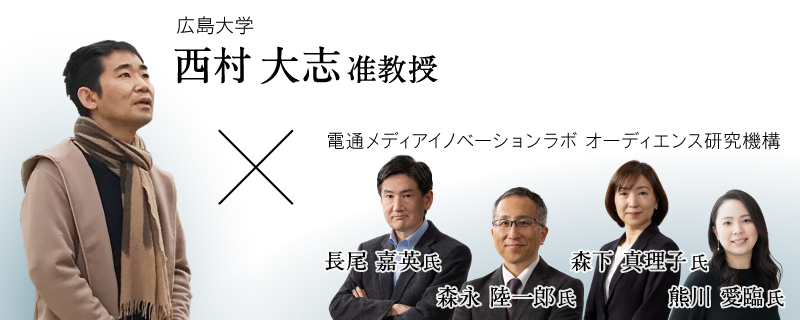
This time, we conducted an online "casual chat" with Hiroshima University Associate Professor Taishi Nishimura, co-author of works like "Sociology of Cinema" and an expert in communication theory and body theory. It was an experiment to see if seeds of innovation could be found in casual conversation. Surprisingly, the experiment revealed various approaches to audience research.
<Table of Contents>
▼Content and Physical Expression
▼Imagination Born from Constraints and a Society Allowing Diverse Interpretations
▼ How Far Does the Scope of Content Extend?
▼Communication Needs Rediscovered During the Pandemic
▼The Cost-Performance Era and the Risk of Something "Not Happening"
▼Turning the Rankings Upside Down
▼The Space for Serendipity is the Key
Nagao: We've invited Professor Nishimura for a roundtable discussion today. We hope to gain insights for new approaches to audience research. How should we proceed today?
Nishimura: How about keeping it casual, like a chat? I think informal discussions where everyone's on the same level tend to spark more ideas. In pyramid-style meetings, people often hesitate to speak up in front of superiors or wonder if their point is even worth bringing up. Even the old guys ranting at the izakaya might not just be complaining—they could be coming up with surprisingly good ideas.
Nagao: Will we actually get anything done? Let's start with the content discussion. Morishita-san, please.
Content and Physical Expression
Morishita: In my senior year of high school, I saw the musical "The Phantom of the Opera" at the Nissei Theatre. I was shocked, thinking, "Is this kind of world even possible?" Since then, I've been hooked on plays and musicals, and after graduating from university, I joined a theater troupe. Though, I was in charge of planning and production.
I was also profoundly impacted when I experienced Cirque du Soleil's water-themed production "O" in Las Vegas. Above all, I was amazed that human physical ability could express something on this scale.

Nishimura: You experience the stage with your whole body, don't you? Recently, popular content also tends to feature expressions through physical movement, doesn't it? That reminds me of the debate last year about whether a certain manzai routine counted as manzai. I thought manzai was rooted in language, but it was almost entirely physical expression. It sparked a debate, including about the very definition of manzai. Looking back historically, there were various forms before the talk-heavy manzai style. Expanding the perspective from language to the body raises questions for audience research from many angles.
Moreover, constraints or missing elements themselves seem to hold important keys to the audience's imagination. When a bald rakugo performer portrays a courtesan, the audience freely fills in or omits details, right? The more seasoned the audience, the more they consume content while doing this unconsciously.
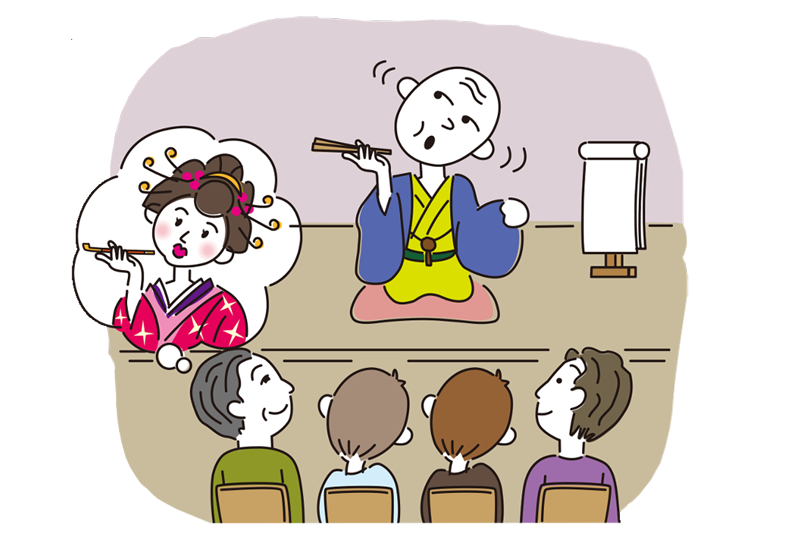
Toward a society that embraces the imagination born from constraints and allows diverse interpretations
Nagao: I once collaborated with a sound researcher. To summarize the conclusion: "Compared to presenting something visually, deliberately cutting the visuals and presenting only sound prompts humans to expand their associations more." This conclusion also connects to the potential of audio media like radio.
Nishimura: Lately, I feel there's a tendency to minimize the room for association and interpretation by the audience, the "receiving side," out of fear of misunderstandings or backlash. From an information and communication perspective, eliminating waste and removing impurities might be a requirement for efficient communication. But that also robs us of imagination and serendipitous encounters. Moreover, misunderstanding is part of understanding, isn't it?
This seems akin to the thinking of philosopher Shunsuke Tsurumi, known for his ideas on the "right to misunderstand" and "theory of marginal art." Audiences respond to content in diverse ways. The spread of intolerance toward this diversity of reactions may be unfortunate.
A system that can only perceive a 1 as a 1, a culture that won't tolerate misreading, might be losing a lot in the process. Is it truly beneficial to discard the blurred parts? I wonder if waste should be eliminated as much as possible in the first place.
Where does the scope of content end?
Nagao: When I was little, there was an uncle who came to show picture-story shows at the vacant lot in our neighborhood. I think we consumed the picture-story show as a fun content experience that encompassed everything – not just what was confined within the frames, but also the things outside, like the breeze blowing through the children watching, the candy we were eating, or the sunset glowing behind us.
Nishimura: Defining the scope of content is a major point. If we include surrounding experiences as part of the content, research could become more complex and interesting.
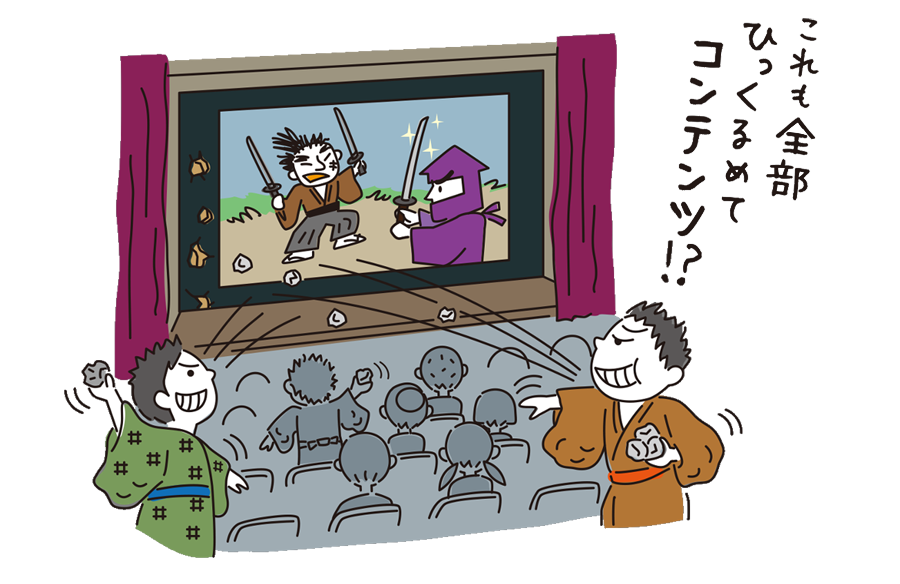
Reading an old cinema memoir, I came across a theater with holes all over the screen. Kids would bring stones to watch the movies. When the villain appeared on screen, they'd pull stones from their kimono sleeves and throw them wildly, cheering on the hero. It sounds pretty chaotic by modern standards, but it's a good hint. I wonder if there's a way to physically release stress in a movie theater.
Communication Needs Rediscovered During the Pandemic
Nagao: When analyzing statistical data, we often exclude so-called "outlier" behaviors... But perhaps it's precisely within those outliers that some truth worth uncovering lies dormant.
Nishimura: Today, avoiding outlier discussions would be more time-efficient. So, let's move closer to a routine meeting. Also, without a few deviants, a group doesn't really come alive. In highly homogeneous groups, people often understand each other without even talking.
I'm participating today as that disruptive element who might cause trouble for everyone. When I express surprise at things the regular members take for granted, it actually highlights that those things aren't so obvious after all. Perhaps it's precisely those seemingly unnecessary parts of communication that invigorate it.
Nagao: That's thought-provoking. Morinaga-san, do you have any thoughts on communication during the pandemic?
Morinaga: With more days working from home during the pandemic, I've been taking frequent "neighborhood walks" lately, and they're surprisingly enjoyable. I've become very friendly with an elderly woman who has a small dog, and I even have "conversations" (!? ) with the dog at her gate. Before, I was too busy to ever have life chatting with neighbors. Talking to a dog might make me look like a slightly odd old man (!? )... (laughs).
There's a house nearby completely covered in flowers, and I couldn't help but say, "It's so beautiful!!" to the person living there, which started a new conversation.

Nishimura: The pandemic has really made us rediscover the need for communication, hasn't it?
Amidst the isolation, a culture of connecting and helping each other is also expanding. Crowdfunding is booming too. I'm hooked on a shopping site where I interact with farmers and fishermen. It makes me happy when products from my favorite farmers, which weren't selling well, start selling out. I can't buy as much anymore, but somehow it makes me happy.
The Cost-Performance Era and the Risk of "Nothing Happening"
Nagao: Kumagawa-san, have you noticed any changes during these pandemic days?
Kumagawa: Well, first off, there's definitely more time spent not talking to people. I still can't even talk to other people's dogs. Speaking of shopping connections, I enjoy buying daily necessities, but I find myself obsessively checking product review sites and ranking sites online.
Nagao: Why do you end up looking at so many of those sites?
Kumagawa: Probably because I don't want to make mistakes. My mother, for example, goes to stores and carefully examines products with her own eyes and senses, sometimes buying things on a whim. I rely on other people's evaluations in reviews. I buy products based on the reviews and rankings from sites I reference, and sometimes I end up dissatisfied. I try to avoid sites I find unreliable, but lately, I'm getting a bit tired of it (laughs).

Nishimura: Everything gets ranked too much these days. Even search results themselves are ranked. Even in the Edo period, all sorts of rankings existed, so the ranking culture itself has been around surprisingly long. It's fine if it's lighthearted rankings like competitive eating charts enjoyed for entertainment, but online rankings nowadays are meticulously controlling people's actions, aren't they?
Nagao: That's definitely a factor. Ratings, rankings...
Nishimura: When shopping in person, an 8 out of 10 feels like a great deal. But online shopping doesn't work that way. We inevitably end up chasing that 10. The sheer number of choices creates fatigue and regret from having to choose. You buy an 8, then spot what seems like a 10 and regret it.
Shopping is like a game where not all the information is openly available. Like mahjong. So you try to read the reviews and aim for that 10-point item. But you can't be sure if the reviews themselves are trustworthy. At that point, you have to consider "luck" – something you can't fully control just by gathering more information. Considering "luck," aiming for an 8 or a 7 seems more sustainable as a game.
Nagao: Sustainability?
Nishimura: Aiming for a perfect 10 until you're exhausted might mean you're spending too much on the selection process itself. That kind of exhausting pursuit of perfection might actually be sacrificing many other things. I think this applies not just to shopping, but to life in general, or even business management. Also, how you approach choices changes depending on whether you see an activity with an element of luck as a one-time shot or as something you'll engage in repeatedly.
In recent years, "cost performance" has deeply controlled people. Not just shopping, but in extreme cases, even human relationships. It often feels like short-term cost performance. Applying this short-term cost performance mindset across broad areas of life reduces the diversity of relationships and the types of communication. Short-term efficiency might seem to increase, but long-term, I think "something stops happening." Weak networks that could be lifelines in emergencies get severed. And sustainability declines.
In business too, I think an approach focused solely on short-term efficiency carries the risk that something "won't happen." Things with low probability but the potential to grow tremendously might be crucial. Even if the probability is low, the difference in how they grow could be orders of magnitude greater – that's precisely what could become innovation. But most won't grow. We need to become more tolerant of that waste.
Flipping the rankings
Nishimura: In the real world, you might discover things by asking, "Why were they selling that?" or "Why did I buy this?" When I was a student, I used to seek out bad restaurants to eat at. "Bad" is surprisingly diverse and full of discoveries. Like food that should be freshly made but somehow tastes like leftovers from home, making you feel like you're visiting family. Or dishes flavored for a small, loyal clientele, making it hard for others to enjoy. Or free extras that clash terribly with the menu.
Nagao: "Tasteless" reminds me of something. Years ago, a famous copywriter was asked during a lecture, "Here's a clear bag filled with lots of chocolate balls. How can we make this product sell better than it does now?" His answer was, "Put just one incredibly tasteless ball inside. Then, the thrill of potentially getting that one tasteless ball will actually boost sales."
Nishimura: So that introduces a game element to eating candy. Humans get bored if it's always just the right answer, right?
The key is leaving room for chance.
Nishimura: If we avoid failure or deny it too much, we might miss out on unexpected opportunities. We should re-evaluate the value of chance over necessity. Even with "matching apps," wouldn't it be fun if there was one with a slightly skewed evaluation logic that "subtly avoids making perfect matches"? Like a dating app where you never actually meet anyone.

Nagao: That could be a business hint too. Today, it was really refreshing how our casual chat converged into new discoveries.
Nishimura: Seemingly meaningless chit-chat, walks, and observation are important, right? Especially, I want to do things that don't tire me out every now and then (laughs). I want to make sure I have opportunities to chat leisurely without worrying about the time. While relaxing my brain. Chit-chat isn't just casual; it's surprisingly creative. It's a bit awkward for me to say this since I brought it up.
[After the Small Talk Experiment]
In this roundtable (casual chat) session, we learned:
● The recipient's room for interpretation is crucial
● Pursuing only short-term efficiency risks stifling the emergence of something new
● Business insights can be extracted from casual observations
● Recognizing the hints hidden within casual conversation is also vital
And so on—we gained many insights. The key to reaching your audience lies hidden even in everyday casual conversations!
If you are interested, please contact Nagao at Dentsu Inc. Media Innovation Lab ( mediainnovation@dentsu.co.jp ).

Was this article helpful?
Share this article


Newsletter registration is here
We select and publish important news every day
For inquiries about this article
Author
Nishimura Taishi
Associate Professor, Hiroshima University Graduate School
Yoshihide Nagao
Dentsu Inc.
Dentsu Inc. Media Innovation Lab
Director (Audience Research Organization Leader)

Rikuichiro Morinaga
Dentsu Inc.
Dentsu Inc. Media Innovation Lab
Principal Researcher
Articles by this person
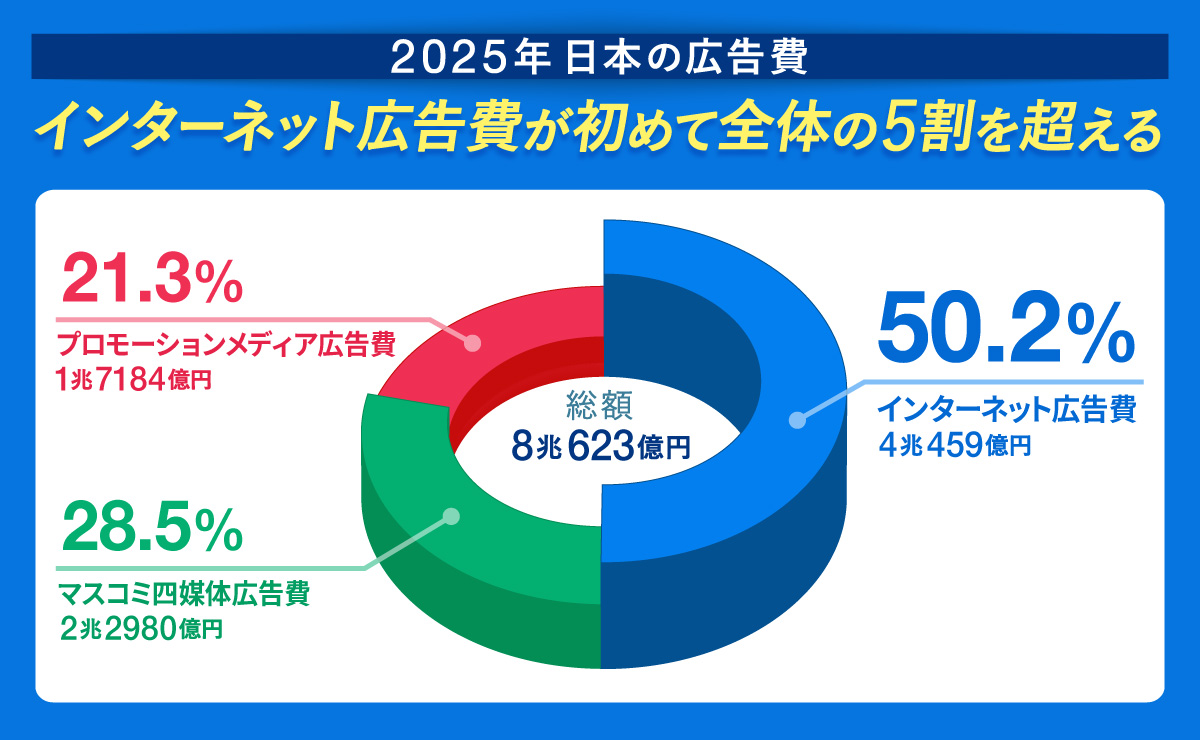
"2025 Japan Advertising Expenditures Analysis"──Exceeding 8 Trillion Yen for a Record High. Internet Advertising Expenditures Surpass 50% of Total Composition
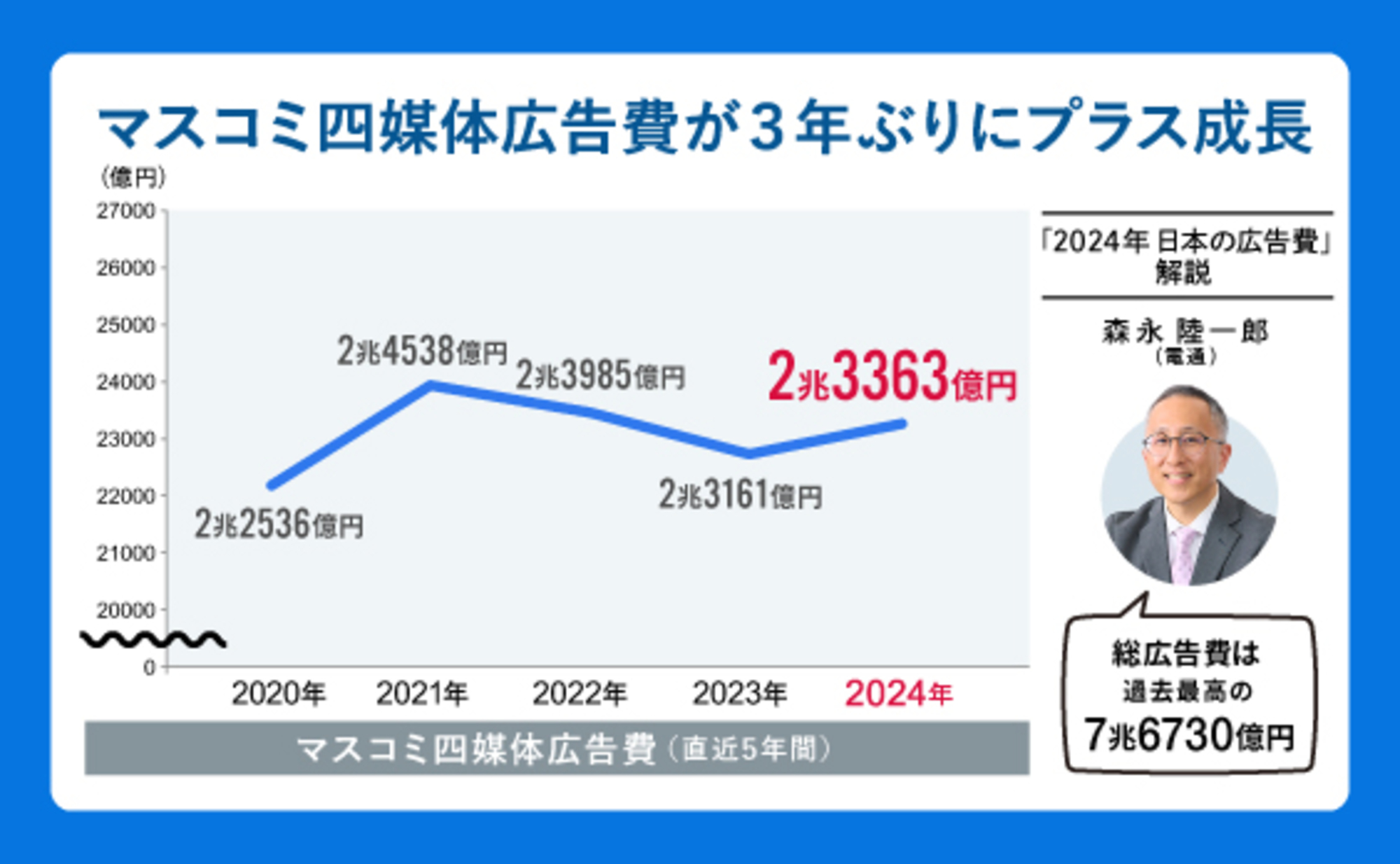
Explanation of "2024 Japan Advertising Expenditures"──Third Consecutive Year of Record Highs. Mass Media Advertising Expenditures Grow for First Time in Three Years
Mariko Morishita
Dentsu Inc.
Marketing Administration Center, Media Innovation Research Department (Dentsu Inc. Media Innovation Lab)
Insight MemoThe Reiwa "New" Era! Where is the Media Society Headed?How has media consumption changed in response to the COVID-19 pandemic?New Approaches Discovered Through Audience ResearchInformation Media White Paper 2022: Unraveling Media Consumption and Dissemination in the "With COVID-19" EraInformation Media White Paper 2023: What You Need to Know Now—The Past, Present, and Future of Media and SocietyInformation Media White Paper 2024: The Rapidly Changing Media Environment and Consumers100 years since its birth. Radio, today...Information Media White Paper 2025: New Horizons in Communication Shaping the FutureA Space for Collective ThoughtInformation Media White Paper Special Report 2026: “The Current State of Evolving Information Trends”

Ai Kumagawa
Dentsu Inc.
Dentsu Inc. Media Innovation Lab
Researcher